 MomSkoop

Every family has its quirks, but when parents visit their adult children, things can get a little tense. Baby Boomers grew up with a very different set of rules, expectations, and values than the generations that followed.
While most Boomer parents mean well, some of their habits can drive their adult kids absolutely crazy. If any of these situations sound familiar, you are definitely not alone.
1. Rearranging or Fixing Things Without Asking
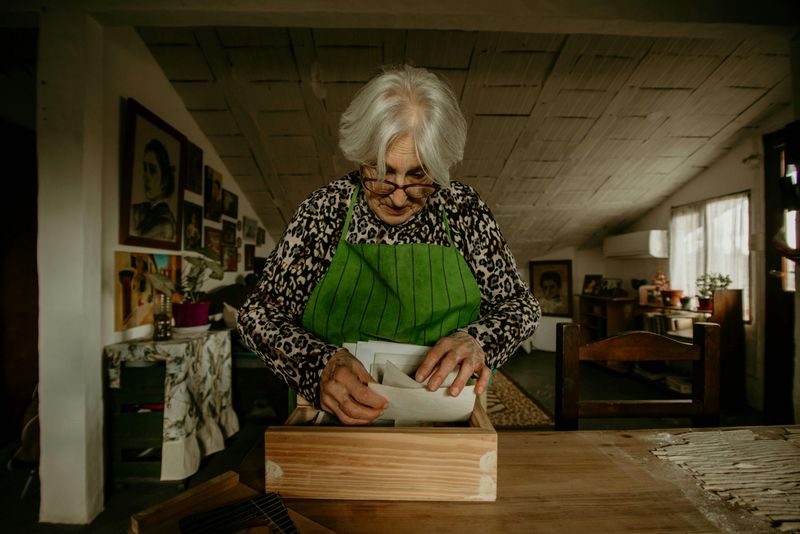
You walk into your kitchen and suddenly nothing is where you left it.
Sound familiar?
Many adult children know the feeling of coming home to find their cabinets reorganized, their décor shifted, or their storage systems completely overhauled by a well-meaning Boomer parent.
The problem is not the helpfulness itself — it is the assumption that their way is the better way.
Your home reflects your own system, your own logic.
When someone rearranges it without asking, it feels like a quiet message that your choices do not measure up.
A simple solution?
Ask parents to check before changing anything.
Clear communication can keep good intentions from turning into household friction.
2. Offering Constant Unsolicited Advice

Parenting tips at dinner.
Career suggestions during a casual walk.
Financial opinions while watching TV.
For many adult children, visits from Boomer parents can feel like a never-ending consulting session nobody signed up for.
What makes it sting is the delivery.
Advice that comes out as a directive — rather than an open conversation — sends the message that you are still being managed, not respected as a capable adult.
It is exhausting to constantly defend choices you have already thought through carefully.
Boomers often share advice out of love and genuine concern.
Naming that intention out loud, while also setting boundaries around it, can shift the whole dynamic toward something more respectful.
3. Commenting on Housekeeping Standards
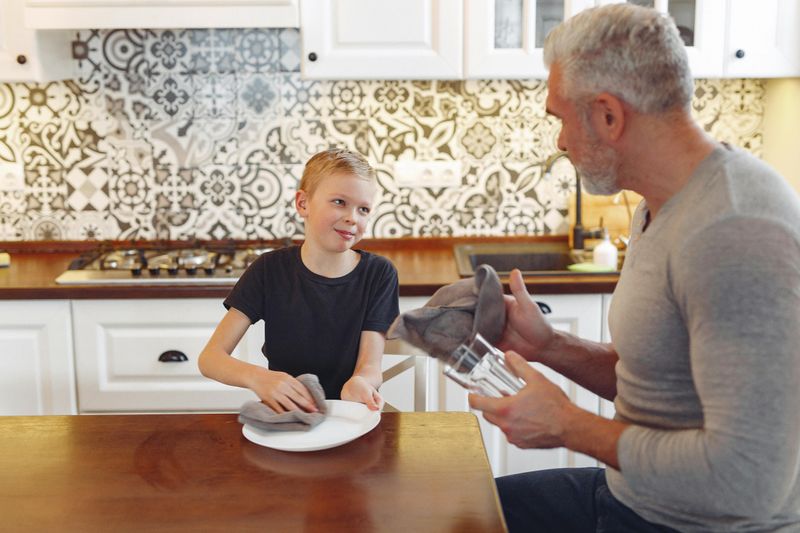
“We never left dishes in the sink overnight.” Five words.
Maximum damage.
Boomer parents have a remarkable talent for delivering criticism wrapped so tightly in a memory that it barely looks like a complaint at all.
Whether it is pointing out dust on the shelves, laundry piled on a chair, or a cluttered countertop, these comments chip away at confidence fast.
Adult children are juggling jobs, kids, relationships, and a hundred other responsibilities.
A spotless home is rarely the top priority.
Housekeeping standards are personal, not universal.
What looks like clutter to one person is simply a lived-in, busy household to another — and both are completely valid.
4. Ignoring Established Household Rules

Bedtime is 8 p.m. — until grandma arrives and suddenly it is 10 p.m. and everyone is eating ice cream.
Boomer grandparents have a long history of treating household rules like gentle suggestions rather than actual boundaries.
Screen-time limits get quietly ignored.
Dietary boundaries for the kids get brushed aside with “just this once.” Pet rules vanish the moment they walk through the door.
While grandparents often see this as spoiling with love, parents see it as having their authority undermined in their own home.
Boundaries exist for real reasons.
Respecting them, even if you disagree, is one of the most loving things a grandparent can do during a visit.
5. Treating the Visit Like a Home Inspection

Within twenty minutes of arriving, the chipped paint gets noticed.
Then the outdated appliances.
Then the landscaping choices.
Then the thermostat setting — which, apparently, is wrong.
Boomer parents can turn a simple family visit into something that feels suspiciously like a property evaluation.
Every comment might come from a genuine place of care, but the cumulative effect is exhausting.
Adult children end up feeling like they are constantly being graded on how well they maintain their own space.
Homes are living, evolving places — not showrooms.
Choosing to focus on the warmth of the visit rather than the condition of the baseboards makes for a much more enjoyable time for everyone involved.
6. Oversharing Personal or Family Information

Family dinners get awkward fast when a Boomer parent brings up someone’s salary, an old embarrassing story, or a health issue that was never meant to be public knowledge.
Oversharing is one of those habits that can catch everyone off guard mid-bite.
Sensitive topics — finances, medical history, past relationship drama — belong in private conversations, not dropped casually in front of partners, kids, or new acquaintances.
For adult children, it can feel like a total loss of control over their own narrative.
Privacy is not secrecy.
Every adult deserves the right to decide what gets shared about their own life and when.
Respecting that boundary is a form of genuine, grown-up love.
7. Assuming Extended Stays Without Clear Plans

“Oh, we figured we would just play it by ear.” Translation: nobody knows when this visit ends, and that is somehow supposed to be fine.
Vague departure plans are a classic source of stress between Boomer parents and their adult children.
Adult children have structured lives — work schedules, childcare routines, social commitments, and personal space they genuinely need.
An open-ended visit, however loving the intention, can throw everything off balance and create quiet resentment that builds by the day.
Setting clear timelines before a visit even begins is not rude — it is respectful.
Knowing when a visit ends actually helps everyone enjoy the time together far more freely and comfortably.
8. Comparing Everything to How We Did It

“Back in our day, we bought a house on one income.” “We never needed all those gadgets.” “Kids just played outside — no schedule needed.” Sound familiar?
The comparison game is practically a Boomer sport, and it rarely lands well.
Framing every modern choice as a step backward from some golden era sends a clear message: the way things are now is not quite good enough.
That stings, especially when adult children are doing their absolute best within an entirely different economic and cultural landscape.
Differences between generations are not failures — they are evolutions.
Approaching those differences with curiosity instead of critique turns a frustrating conversation into a genuinely interesting one.
9. Expecting to Be Hosted Rather Than Collaborating
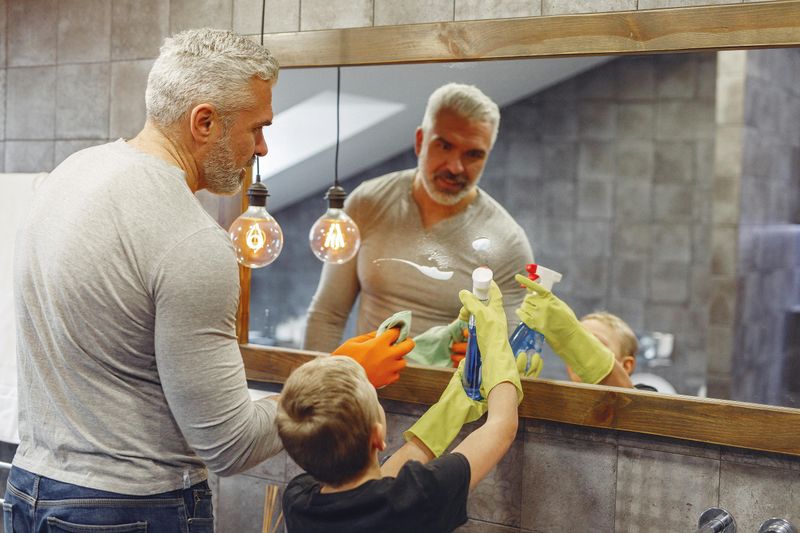
Some Boomer parents arrive and immediately shift into full guest mode — feet up, TV on, waiting to be served.
Meanwhile, their adult child is cooking every meal, handling all the cleaning, managing the kids, and running every errand solo.
This dynamic is genuinely draining.
Adult households are not hotels, and adult children are not staff.
When one person carries all the hosting weight while the other contributes nothing, even the most patient child starts to feel invisible and underappreciated.
Pitching in — offering to cook one dinner, washing dishes, picking up groceries — transforms a visit from a performance into a partnership.
Small acts of contribution go an incredibly long way toward making everyone feel valued.
10. Making Subtle Financial Commentary

“Must be nice.” Three words with an incredible amount of passive judgment packed inside.
Boomer parents sometimes have a habit of making offhand remarks about spending habits, home size, vacations, or anything that reads as extravagance to their eyes.
What makes it particularly frustrating is the subtlety.
It is rarely a direct accusation — just a raised eyebrow or a loaded comment that lingers in the air long after the conversation has moved on.
Adult children are left second-guessing perfectly reasonable choices.
Financial decisions belong to the people making them.
Unless someone is genuinely in crisis and asking for input, keeping money opinions to yourself is one of the kindest things a parent can do.