 MomSkoop

Sharing a meal is one of life’s simple pleasures, but certain habits can turn a pleasant dinner into an uncomfortable experience for everyone around you. Whether you’re eating with family, friends, or coworkers, small behaviors at the table can leave a big impression.
Some habits are so common that people don’t even realize they’re doing them. Being aware of how you eat can make mealtimes more enjoyable for everyone involved.
1. Chewing with Your Mouth Open

Few things at the dinner table are as off-putting as watching someone chew with their mouth wide open.
The sight and sound of visible, moving food can make even the hungriest person lose their appetite fast.
It’s one of the most talked-about table manners for good reason.
Most of us were reminded to close our mouths while chewing when we were kids.
Still, the habit tends to slip through, especially when someone is really hungry or distracted.
A quick mental reminder before each bite can go a long way.
Keeping your lips closed while chewing is a simple act of respect for the people around you.
Nobody needs a front-row view of your meal in progress.
2. Talking with Food in Your Mouth

Picture this: someone is right in the middle of a great story, but all you can focus on is the half-chewed food tumbling around in their mouth.
It’s distracting and honestly a little gross.
Conversations are great at the dinner table, but timing matters.
Talking while chewing makes it harder for others to understand what you’re saying, and it increases the chance of accidentally spitting food.
Neither of those outcomes makes for a pleasant meal.
Waiting until you’ve swallowed before speaking is the easiest fix.
Chewing, swallowing, then talking might feel like it slows down the conversation, but it actually keeps things cleaner and clearer.
Your tablemates will appreciate the effort more than you might expect.
3. Chewing or Slurping Loudly

Loud chewing and slurping are the kinds of sounds that can travel across a quiet room and make everyone cringe.
For people who are sensitive to certain noises, the experience can feel almost unbearable.
It’s a habit that often goes unnoticed by the person doing it.
Slurping liquids or crunching chips at full volume sends the message that you’re not thinking about the comfort of those nearby.
Even in casual settings, keeping eating sounds to a minimum is a sign of basic consideration.
Slowing down your pace can naturally reduce the noise.
Try taking smaller bites and sipping quietly instead of gulping.
Small changes like these make the whole table feel more relaxed and comfortable for everyone sharing the meal.
4. Using Your Phone Constantly at the Table
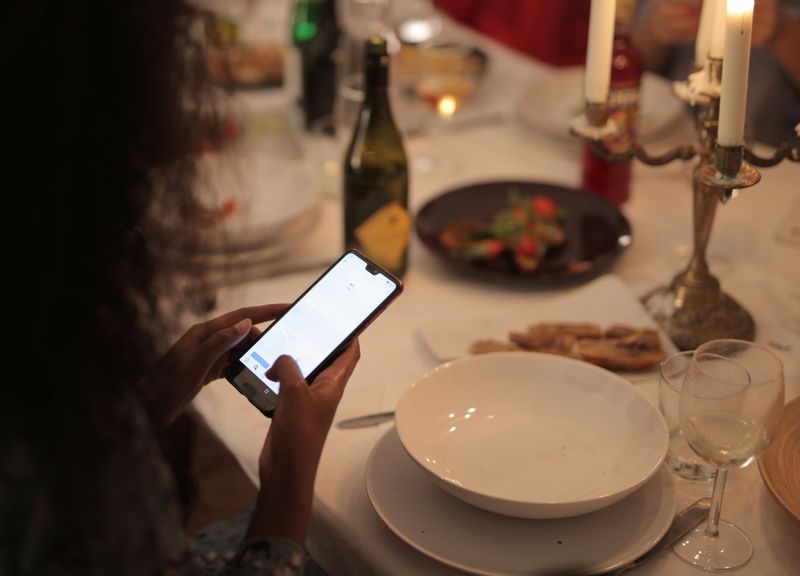
Phones have become such a big part of daily life that many people forget to put them down, even during meals.
Scrolling through social media or texting while others are eating sends a clear signal that the screen is more interesting than the company.
That feeling stings, even when it isn’t intentional.
Constant phone use at the table disrupts the natural flow of conversation and makes shared meals feel less connected.
Studies have shown that even having a phone visible on the table can reduce the quality of conversations.
Out of sight really does mean out of mind in the best way here.
Putting your phone away during meals shows respect and genuine interest in the people around you.
The notifications will still be there after dessert.
5. Reaching Across Other People for Food
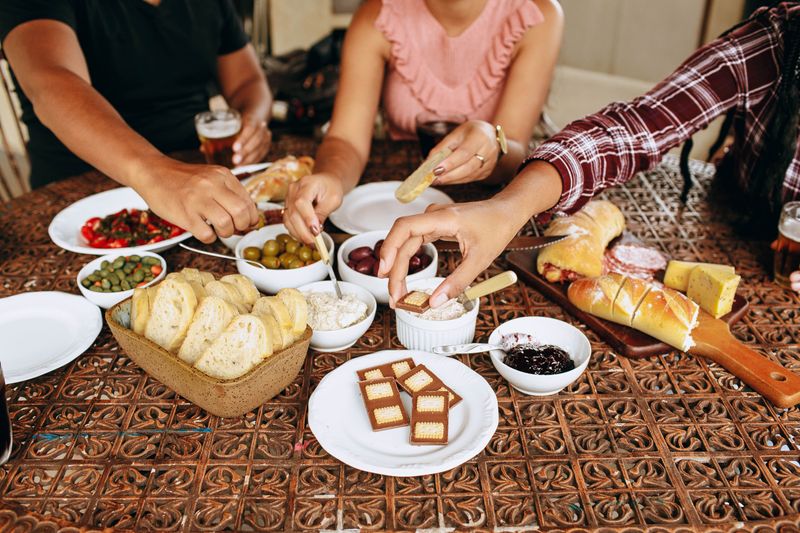
Stretching your arm across someone else’s personal space to grab the bread basket or salt shaker is one of those habits that feels harmless but can seriously bother others.
It’s physically intrusive and can disrupt the comfort of the person you’re reaching over.
The table has an unspoken order that most people appreciate.
Asking someone to pass the dish is a small act that takes only a few seconds, but it shows a lot of respect.
It keeps the flow of the meal smooth and avoids the risk of knocking over drinks or bumping into someone’s plate.
Good table etiquette isn’t about rigid rules.
It’s about making sure everyone feels comfortable and considered.
A simple “could you pass the…” goes a long way.
6. Taking Food from Someone Else’s Plate Without Asking

There’s a fine line between sharing food and just helping yourself without permission.
Swiping a fry or a piece of sushi from someone’s plate without asking might seem playful, but not everyone sees it that way.
Food is personal, and that boundary deserves a little more respect.
Some people are particular about their meals, whether it’s a dietary preference, a food allergy concern, or simply the fact that they were really looking forward to that last bite.
Taking from someone’s plate without asking dismisses all of that.
It can feel rude even if the relationship is close.
A quick “can I try one of those?” changes everything.
It turns a potentially awkward moment into a fun, shared experience that everyone can enjoy together.
7. Eating Extremely Slowly While Everyone Waits

Eating at a leisurely pace is perfectly fine, but taking so long that everyone else has finished and is just sitting there staring can create a seriously uncomfortable atmosphere.
The people around you might feel too polite to leave, which traps everyone in an awkward standstill.
There’s a difference between savoring food and losing track of time entirely.
When a group finishes long before you, it puts social pressure on both sides.
Others feel rude getting up, and you might feel guilty for holding things up.
Being a little more mindful of the group’s pace helps keep the energy at the table relaxed and enjoyable.
You can still enjoy every bite without making the meal feel like a waiting game for everyone else.
8. Making Negative Comments About Other People’s Food

Wrinkling your nose at what’s on someone else’s plate or saying “how can you eat that?” might feel like casual conversation, but it rarely lands that way.
Food choices are often tied to culture, upbringing, health needs, or personal taste.
Criticizing them can feel like a personal attack, even if that wasn’t the intent.
Nobody wants to feel judged for what they’ve ordered or cooked.
Negative comments about food can make the person feel self-conscious and ruin what should be an enjoyable moment.
The meal table is not the place for unsolicited food reviews.
Curiosity is always welcome, though.
Asking “what does that taste like?” shows interest without judgment.
Keeping the vibe open and respectful makes every shared meal more pleasant for the whole group.
9. Picking Your Teeth at the Table

After a satisfying meal, dealing with something stuck in your teeth is totally understandable.
But doing it openly at the table, especially with a toothpick or your fingers, is something most people find hard to ignore in the worst way.
It’s one of those habits that feels private for a reason.
Even if everyone has been there, watching someone pick at their teeth while others are still eating can be pretty off-putting.
It shifts the mood at the table quickly and makes the meal feel less appetizing.
A quick trip to the restroom solves the problem without making anyone uncomfortable.
Excusing yourself to handle it privately is the considerate move.
It takes less than a minute and keeps the atmosphere at the table pleasant for everyone still enjoying their food.
10. Leaving a Big Mess After Eating

Crumbs everywhere, sauce splattered on the table, napkins crumpled and tossed aside – leaving a disaster zone after eating shows little regard for the space or the people who have to clean it up.
Whether you’re at someone’s home or a shared workspace kitchen, the mess tells a story about your habits.
Cleaning up after yourself is one of the most basic forms of respect you can show in a shared environment.
It signals that you value the space and the people around you.
Nobody wants to sit down and face the aftermath of someone else’s meal.
Taking a moment to tidy your area before leaving costs almost nothing in time or effort.
That small habit builds trust and earns genuine appreciation from everyone sharing the space with you.