 MomSkoop

Hans Christian Andersen published “The Emperor’s New Clothes” in 1837, and its central joke still lands. A whole crowd praises invisible fabric because nobody wants to look like the only person who can’t see it. The person who finally tells the truth is a child. It suggests that pretending is a learned skill, picked up somewhere between recess and our first fancy dinner party. Grown-ups still play this game, just with different props.
We nod at things we secretly find confusing, salty, slow, or exhausting, and we hope our faces look convincing to the people sitting across the table. None of this makes anyone a bad person, because wanting to fit in is pretty normal. Still, it’s fun to ask, with a little honest thinking, which fancy pleasures are real for you and which ones are just invisible fabric.
1. Reading the Classics

Mark Twain once joked that a classic is a book people praise and don’t read.
He wrote that line in 1897, so the problem is clearly not new.
Long novels like Moby-Dick or War and Peace come with a reputation that arrives before page one.
Mentioning them at a party can make you sound well read, even if your bookmark has lived on page forty since spring.
Faking it usually happens through movie versions or quick online summaries.
The trouble starts when someone asks a simple follow-up question, like who your favorite character was.
Classic books aren’t a scam, though.
Many of them are funny, strange, and surprisingly modern once you get past the older language.
A practical trick is to try an audiobook or a graphic novel version first.
You can also start with shorter classics, such as Of Mice and Men or The Great Gatsby, which both run under two hundred pages.
If a famous book still bores you after a fair try, you’re allowed to put it down.
Honest taste makes for better book talk than a polished bluff, and nobody can quiz you on a book you openly skipped.
2. Slurping Raw Oysters

Few foods ask you to tip your head back and swallow a sea creature in front of other people.
Raw oysters manage it while looking elegant on a bed of crushed ice.
The taste is often described as briny, like a sip of the ocean.
Texture is the real hurdle, since a raw oyster is soft, slippery, and a bit wobbly.
Plenty of people order them because oysters signal special occasions and grown-up dining.
You’ll also hear that they work as a love potion, but that old belief has no solid backing.
They do bring real nutrition to the table, including zinc and vitamin B12.
That’s a nice bonus, though it won’t make the slippery part easier to enjoy.
If you’re curious but nervous, cooked versions are a gentler first step.
Fried oysters, oyster stew, and grilled oysters keep the flavor while giving the texture more structure.
Raw shellfish also carries a higher food safety risk, so pregnant people and anyone with a weakened immune system should check with a doctor first.
Beyond that, it’s perfectly fine to admit you’d rather have the shrimp cocktail, which nobody has ever had to swallow whole.
3. Spooning Up Caviar
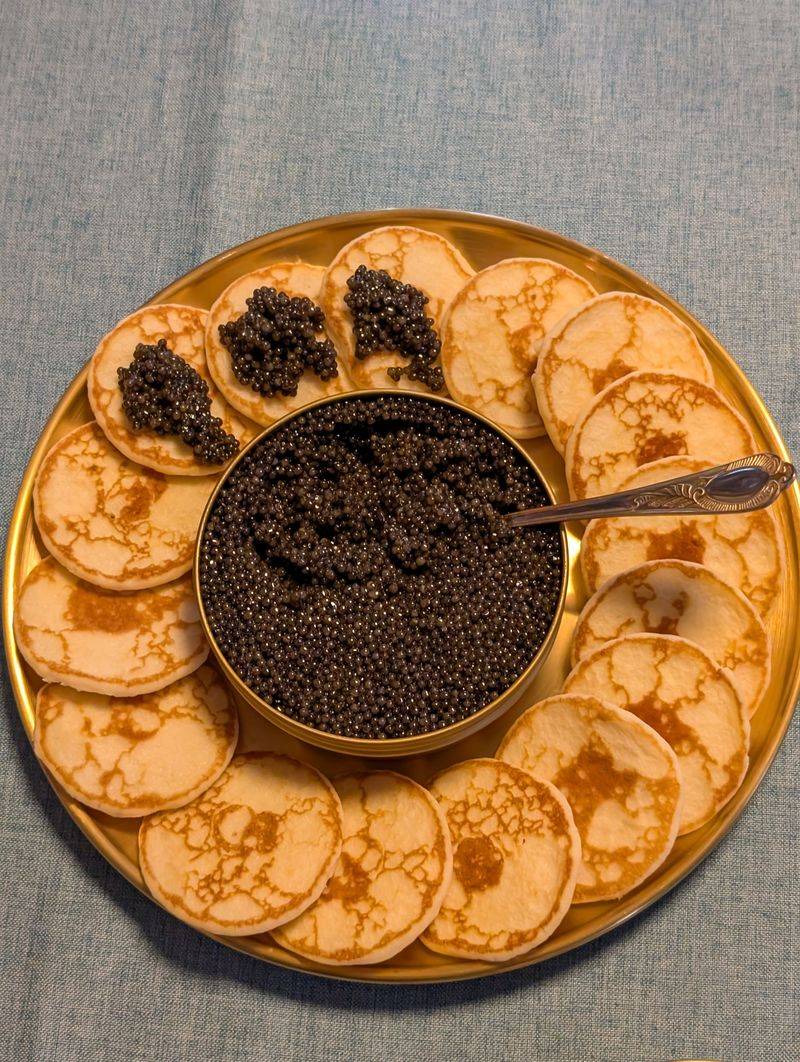
A tiny dollop of fish eggs can cost more than a full grocery run.
That price tag alone makes caviar feel like a test of good taste.
Real caviar comes from sturgeon, a group of ancient fish that has been swimming around for millions of years.
Wild sturgeon became so overfished that most caviar sold today comes from farms.
The flavor is salty and buttery, with little pearls that pop on the tongue.
Some people adore that burst, while others think it tastes like slightly fishy salt water.
Tradition adds to the drama, since caviar is often served with a mother-of-pearl spoon.
Caviar fans skip metal spoons because they feel metal clashes with the delicate flavor, which explains the fancy spoon.
Caviar is also commonly paired with blini, which are small pancakes, plus a little creme fraiche.
That combo softens the saltiness and can make a first taste less intense.
Budget matters here, and that’s fine.
Salmon roe, the big orange beads at sushi restaurants, gives you a similar pop for far less money, so you can decide whether you like the idea or just the price tag.
4. Staring at Abstract Art

In 1951, Robert Rauschenberg made a set of all-white paintings, and people are still arguing about them.
Moments like that explain why abstract art makes so many visitors nervous about saying the wrong thing.
Galleries can feel quiet and serious, and the wall labels sometimes use words most of us never say out loud.
Nodding slowly with your chin in your hand becomes the easiest way to blend in.
The good news is that abstract art doesn’t come with a single right answer.
Many abstract artists cared about color, shape, size, and feeling more than telling a clear story.
Mark Rothko’s huge blocks of color, for example, were meant to be seen up close.
He preferred his paintings hung low and viewed from a short distance so they could surround the viewer.
Next time you visit a museum, skip the pressure to understand and simply notice your reaction.
Ask yourself if the piece feels calm, loud, sad, or annoying, because each of those counts as a response.
You can also read the label after looking, not before.
Some pieces will still leave you cold, and saying so out loud is often more interesting than pretending to be moved.
5. Sitting Through the Opera

Operas can run for hours, and some are famous for testing patience.
Richard Wagner’s Ring cycle stretches across four separate operas and roughly fifteen hours of music.
That kind of commitment explains why opera has a reputation as the Olympics of culture.
Many people attend for the gowns, the chandeliers, and the photo in the lobby.
Language can be another barrier, since many famous operas are sung in Italian, German, or French.
Most major opera houses now show translated captions, often called surtitles, above the stage or on seat-back screens.
Those captions help a lot, because opera plots are often wild.
Expect secret identities, cursed rings, mistaken lovers, and characters who keep singing for several minutes after being badly hurt.
A smart way in is to start with a shorter or more popular show, like Puccini’s La Boheme or Mozart’s The Magic Flute.
Reading the plot summary ahead of time also makes the story much easier to follow.
Plenty of companies sell cheaper seats or student tickets, so you don’t need a fancy budget to test it.
If you still yawn through the second act, at least you’ll know your opinion came from a real chair and not a borrowed one.
6. Clapping at Classical Concerts

Clapping between movements of a symphony can earn you a few sideways glances.
That unwritten rule scares many first-time concertgoers more than the music itself.
Funny enough, the rule is fairly modern.
In Mozart’s time, audiences often clapped in the middle of pieces when they liked what they heard, and Mozart wrote happily in a letter about applause during one of his symphonies.
Some people attend mostly for the dressed-up crowd and the chance to look cultured.
Others drift into daydreams during the slow parts and wake up for the loud ending.
Classical music covers a lot of ground, so boredom with one piece doesn’t mean you dislike the whole genre.
A short, punchy work like Beethoven’s Fifth feels very different from a long, quiet piece for solo piano.
Movie soundtracks make a friendly bridge, too.
Many orchestras host film concerts where they play the score live while the movie runs on a big screen.
For a regular concert, read the program notes before the lights dim.
When in doubt about clapping, wait until the conductor lowers their arms and turns around, and you’ll blend right in.
Closing your eyes can also help you focus on the sound.
Just keep your snoring to a polite minimum.
7. Playing Golf for Business

Golf has a famous saying attached to it, often credited to Mark Twain, that calls the game a good walk spoiled.
Twain probably never said it, but the line survives because many players secretly relate.
The sport carries a strong link to business deals, private clubs, and corner offices.
That reputation pushes plenty of people onto the course who would rather be almost anywhere else.
Golf can also be tough on beginners.
The ball is small, the hole is far away, and a single round of eighteen holes often takes around four hours.
Pretending to love it gets tiring, especially when you’re digging your ball out of a sand trap for the third time.
Your face can only fake calm for so long.
Driving ranges and mini golf are lower-pressure options if you need to learn the basics.
Simulator venues like Topgolf also turn practice into a casual social outing with food and music.
If coworkers love golf, you can join for the cart ride and conversation rather than the score.
Being honest that you’re there for company tends to take the pressure off, and it may even make you the most relaxed person in the group.
8. Bragging About 5 AM Mornings

Sunrise selfies with a yoga mat and a steaming mug look peaceful online.
Behind some of those photos is someone who hit snooze three times first.
The early riser image has become shorthand for discipline and success.
Books and videos about morning routines push the idea that greatness starts before the sun comes up.
Bodies don’t all run on the same schedule, though.
People have different natural sleep patterns, often called chronotypes, and some folks simply feel sharpest later in the day.
Waking at 5 a.m. only works well if you also go to bed early enough for solid rest.
Forcing the alarm without changing bedtime usually just creates a very tired person with a very nice photo.
A better plan is to notice when you naturally have the most focus.
If that’s 10 a.m. or even evening, try building your important tasks around that window instead.
You can still borrow the parts of morning routines that appeal to you, like stretching or quiet reading.
Do them at a time that fits your life and your job, and keep the parts that help you feel ready.
Night owls get things done too.
They just tend to do it without a sunrise backdrop.
9. Sipping Black Coffee

Ordering coffee black can feel like a badge of honor at some cafes.
Skip the milk and sugar, the thinking goes, and you must have serious taste.
Coffee is naturally bitter, and plenty of people simply don’t enjoy that sharp edge.
Forcing it down with a straight face isn’t a personality trait, it’s just a hard morning.
Specialty coffee shops have added a new layer with tasting words like fruity, floral, or chocolatey.
Those notes come from things like where the beans grew and how they were roasted, so they’re real, but they can be hard to spot at first.
Lighter roasts often taste brighter and more acidic, while darker roasts lean smoky and bold.
Trying both side by side is an easy way to learn what you actually like.
Adding milk or a splash of cream is a common way coffee is enjoyed around the world.
Italians have the cappuccino, Spain has the cortado, and Vietnam has coffee made with sweetened condensed milk.
So go ahead and order the drink that tastes good to you.
A happy latte drinker probably enjoys their morning more than a grumpy person pretending to love a cup of bitterness.
10. Watching Slow Art-House Films

Some films are famous for long, quiet shots where very little happens.
Andrei Tarkovsky’s Stalker, released in 1979, runs about two hours and forty minutes and moves at a deliberately slow pace.
Movies like that often show up on critics’ best-ever lists, which adds pressure to love them.
Admitting you checked your phone during a long shot of a field can feel like failing a test.
Pretending is tempting because film talk can get very technical, with words like auteur and mise-en-scene flying around.
Nodding along feels safer than asking what those terms mean.
Slow movies ask for a different kind of attention than action films.
They often want you to sit with a mood, a sound, or a face instead of racing toward the next plot twist.
A helpful trick is to watch with no distractions and to read a short, spoiler-free summary first.
Shorter international films can also be a friendlier starting point than a three-hour classic.
Your taste is allowed to change, too, so a movie that bores you now might click years later.
Until then, there’s no shame in loving popcorn blockbusters, because a fun night at the movies is a sophisticated choice when it actually makes you happy.