 MomSkoop
Food trends have changed a lot over the years, and some dishes Gen X grew up eating might seem strange to younger generations. During the 1970s and 1980s, convenience foods, canned ingredients, and budget-friendly meals were common in many households. What seemed perfectly normal back then might not look so appetizing today.
While younger generations may question some of these unusual flavors and textures, Gen X remembers them as part of everyday life. From family dinners to school lunches, these foods bring back plenty of nostalgia. Here are 11 foods Gen X grew up eating that younger people might find unappealing.
1. Liver and Onions
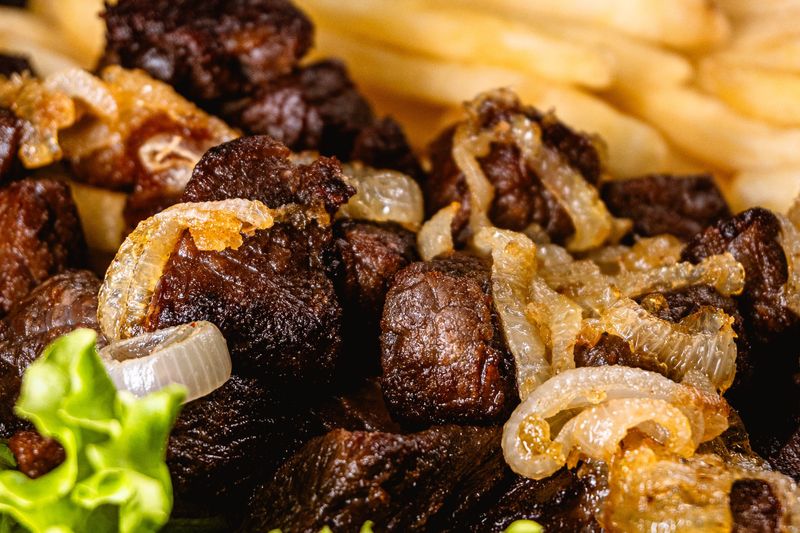
Few dinners could clear a kitchen of kids faster than a skillet of liver sizzling next to a pile of onions.
The smell alone told Gen X exactly what was coming, and plenty of them started bargaining for cereal.
Parents had solid reasons for serving it.
Liver was cheap and packed with iron, protein, vitamin A, and B vitamins, making it a smart pick during the Great Depression and World War II.
The trouble is the flavor, which is strong and slightly metallic, plus a texture that can turn grainy or rubbery if overcooked.
Younger eaters raised on chicken nuggets and mild ground turkey often find that combination hard to love.
Many cooks used an old trick to soften the blow by soaking the liver in milk before cooking.
That step tames some of the sharp taste and helps tenderize the meat.
Other cuisines dress it up too, with French versions adding butter and bacon and Italian cooks sometimes splashing in vinegar.
If you want to try it, slice it thin, cook it quickly, and let the onions get deeply golden and sweet.
Pair it with mashed potatoes for a softer landing.
You might end up surprised, or at least proud you finished the plate.
2. Tuna Noodle Casserole
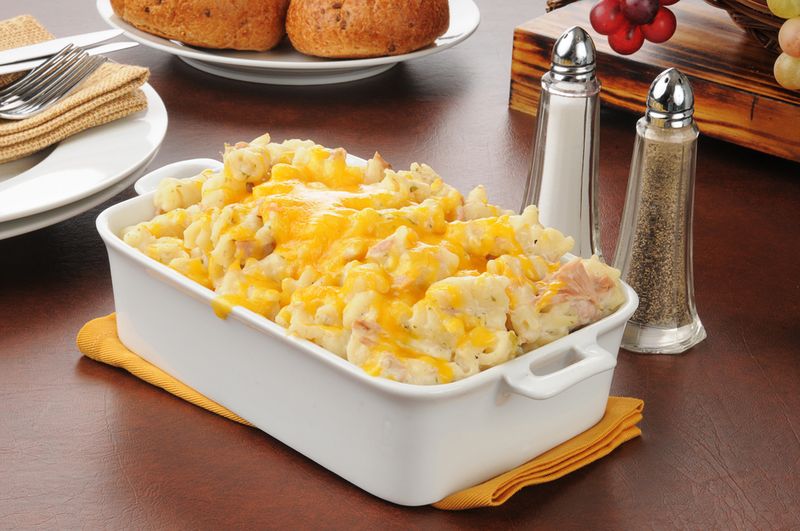
Somewhere in the 1950s, a can of tuna met a can of cream of mushroom soup, and the potluck table was never the same.
Add egg noodles, milk, and a handful of peas, and you had dinner for a crowd.
The dish caught on because it used pantry staples that busy households already kept around.
It also traveled well, which made it a regular sight at church suppers, school events, and neighborhood gatherings.
Then came the crunchy topping, usually buttered breadcrumbs or crushed potato chips.
For many Gen X kids, picking off those chips was the best part of the meal.
Younger diners tend to see it differently.
The soft noodles, flaked fish, and thick sauce can feel bland and mushy, and condensed soup carries a lot of sodium.
Looks don’t help either, since a beige casserole doesn’t exactly shine in a phone photo.
Next to bright grain bowls and fresh salads, it can seem stuck in another decade.
Want to give it a modern update?
Try a homemade mushroom sauce, fresh herbs, a squeeze of lemon, and extra peas for color, and the old favorite suddenly tastes a lot less like a time machine.
3. Gelatin Salad with Vegetables
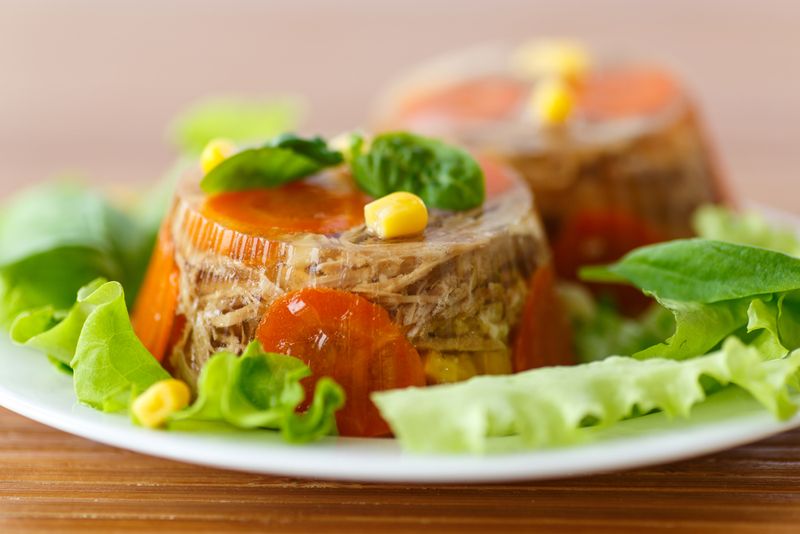
Shredded carrots, celery, and cabbage floating inside lime gelatin once counted as fancy food.
In the 1950s and beyond, a tall molded salad on the table meant the host had put in serious effort.
Home refrigerators were becoming common, and gelatin companies marketed their products hard.
Molds came in rings, stars, and fluted towers, turning ordinary ingredients into a shiny centerpiece.
The dishes were also cheap and could be made a day ahead.
That made them a favorite at family reunions, church functions, and holiday dinners where Gen X kids stared at them with suspicion.
Retro cookbooks show just how far the trend went, with molded salads holding shrimp, olives, and even hard-boiled eggs.
Compared to those, a carrot and celery version looks almost tame.
Today, the idea of crunchy vegetables trapped in sweet, wobbly gelatin strikes many younger people as strange.
The mix of savory and sugary flavors feels confusing, and many recipes lean heavily on sugar.
Some vegetarians also skip it because standard gelatin comes from animal collagen.
Plant-based options like agar exist, though they set a little differently.
Curious anyway?
Try an unflavored base with lemon juice and crisp cucumbers, and you’ll at least start a lively conversation at the next potluck.
4. Creamed Chipped Beef on Toast
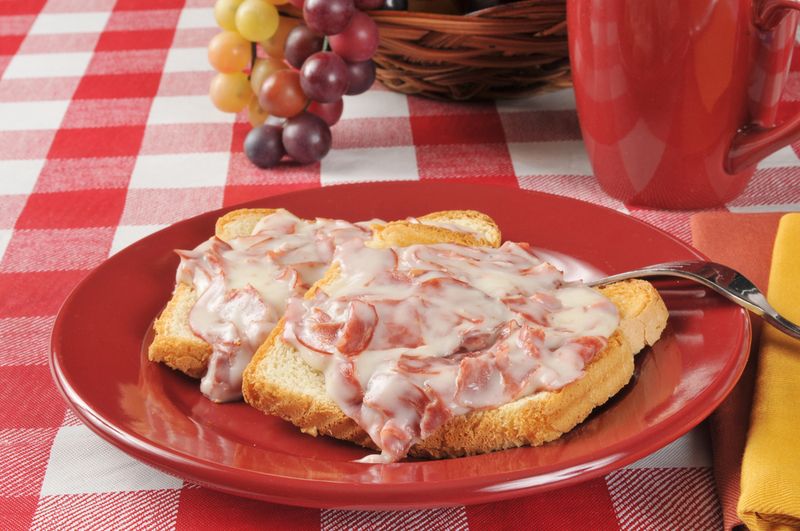
Military slang gave this breakfast a nickname that most families didn’t repeat at the table.
Service members called it SOS, and the polite version is ‘stuff on a shingle.’
The dish features thin slices of dried, salted beef stirred into a thick white gravy of butter, flour, and milk.
The mixture gets spooned over toast, which plays the role of the shingle.
Armies relied on it because dried beef stored well and stretched far.
After World War II, plenty of veterans kept making it at home, and families leaned on it to make a little meat go a long way.
Younger diners often struggle with the look of it, since gray-pink beef in pale gravy isn’t much of a showstopper.
The beef is also very salty, and the nickname doesn’t exactly sell it.
Fans argue that it’s pure comfort on a cold morning, and they have a point.
The creamy sauce and crisp toast make a hearty, filling combination.
For a better result, rinse the dried beef briefly to cut the saltiness.
A crack of black pepper and a slice of thick, well-toasted bread go a long way toward winning over skeptics.
5. Corned Beef Hash
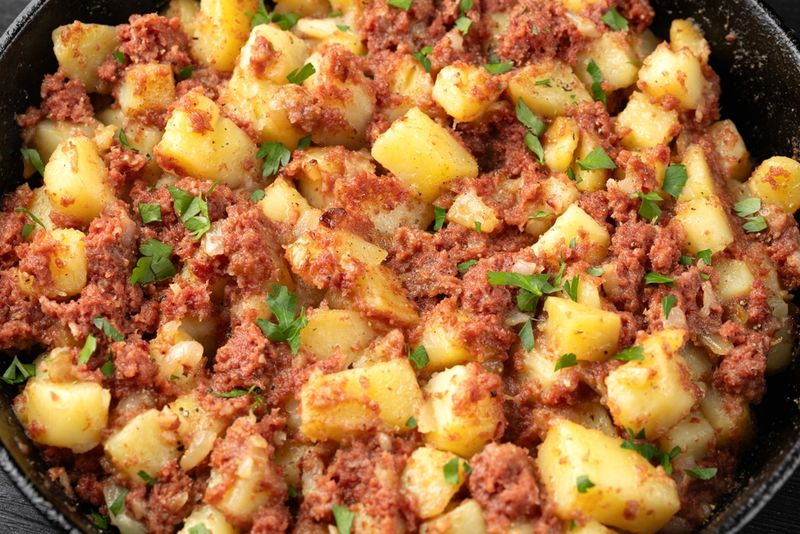
Open a can of corned beef hash and you’ll meet a pinkish, crumbly mix that won’t win any beauty awards.
Fry it hard in a hot skillet, though, and it develops a crisp, salty crust that diner regulars swear by.
The idea of hash goes back centuries in Britain as a smart way to use up leftover meat and potatoes.
In the United States, it became an affordable protein for working families and a handy fix for St. Patrick’s Day leftovers.
Canned versions made it even easier, and the shelf-stable product fed soldiers during World War II.
By the time Gen X was eating breakfast, hash with a fried egg on top was a diner staple.
Younger eaters tend to balk at the processed meat and mushy, shapeless texture.
The heavy salt content also stands out for anyone watching their sodium.
A homemade batch changes the picture.
Dice leftover corned beef, cube some cooked potatoes, add onions, and press the mixture flat in the pan without stirring too often.
That patience pays off with crunchy edges and tender centers.
Top it with a runny egg, and the yolk becomes a ready-made sauce.
6. Bologna Sandwiches
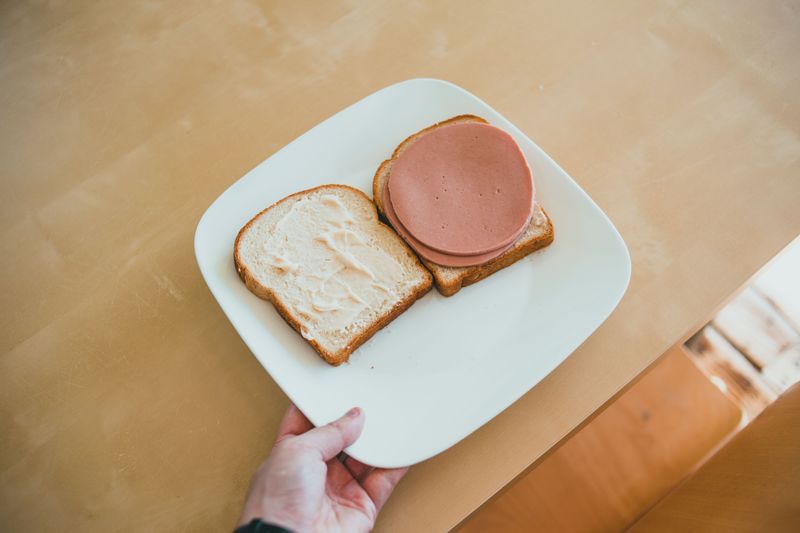
Brown paper lunch bags once held the same simple formula: white bread, a slice or two of bologna, and a swipe of mustard or mayo.
For many Gen X kids, that was lunch more days than not.
Bologna earned its spot by being cheap, easy, and kid-friendly.
It helped families get through the Great Depression and wartime rationing, and school lunch programs served it often by the mid-1960s.
Younger shoppers often call it mystery meat, since it’s a finely ground, processed blend of beef, pork, chicken, or turkey.
The soft, uniform texture and mild flavor don’t do much to change that impression.
Some kids back then got creative by frying a slice until it puffed up into a little dome.
Cutting a slit in the edge kept it flat, and the crispy result tasted far better than the cold version.
If you’re nostalgic, try fried bologna on toasted bread with a slice of cheese.
Higher-quality deli bologna or mortadella gives the idea a grown-up twist.
7. Cottage Cheese with Canned Peaches
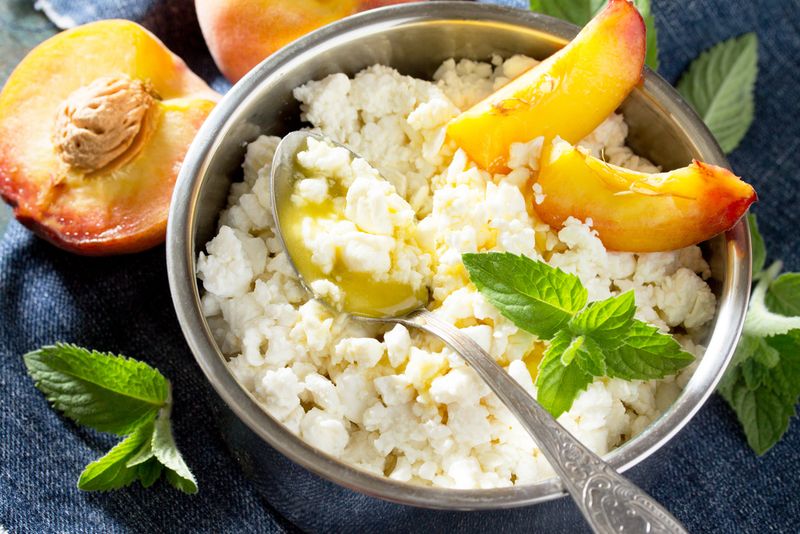
Diet menus of the 1970s had a favorite plate: a scoop of cottage cheese, a canned peach half, and maybe a leaf of iceberg lettuce.
Restaurants and home cooks both served it as the sensible choice for light eating.
The pairing made sense at the time.
Cottage cheese offered plenty of protein, canned peaches were cheap and available year-round, and the whole thing took about thirty seconds to assemble.
Younger people often get stuck on the curds.
That lumpy, wet look reads as spoiled to some eyes, even though it’s exactly how cottage cheese is supposed to appear.
Canned peaches bring their own issues, since fruit packed in heavy syrup is soft and very sweet.
Next to fresh fruit, it can taste more like dessert than a light lunch.
Here’s a fun twist, though: cottage cheese has found new fans in recent years, showing up in whipped dips, protein bowls, and homemade ice cream recipes.
The old pairing just needed a makeover.
Blend the cottage cheese smooth if the curds bother you, and choose peaches packed in juice instead of syrup.
A sprinkle of cinnamon or chopped pecans finishes it nicely.
8. Salisbury Steak with Gravy
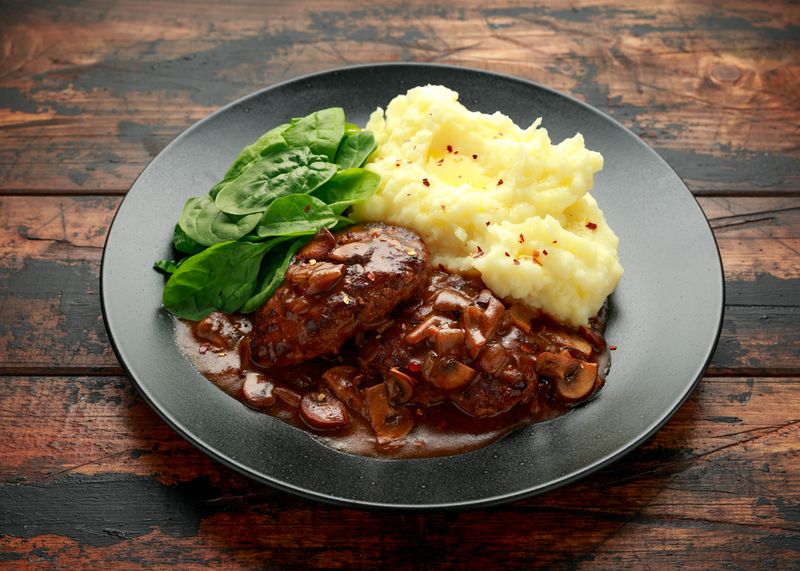
A 19th-century doctor named James Henry Salisbury pushed ground beef as a health food, and his name stuck to the patty.
He believed it helped with digestive troubles, and he described the meat in less tempting terms as muscle pulp of beef.
About a century later, the dish found its true home in a foil tray.
Gen X kids ate it in school cafeterias, usually swimming in brown gravy next to mashed potatoes.
Busy parents appreciated how fast it went from freezer to table.
That convenience came with a cost to its reputation.
Fillers, spongy textures, and a slightly processed taste earned it the dreaded mystery meat label among some diners.
Younger people who grew up with fresh burgers and steakhouse options may see it as a sad, grayish puck.
It doesn’t help that its looks rarely win any beauty contests.
Made from scratch, though, it’s basically a seasoned hamburger steak with onion gravy.
Use good ground beef, a little breadcrumb, and sliced mushrooms in the sauce, and you’ll see why it lasted so long.
9. Ambrosia Salad
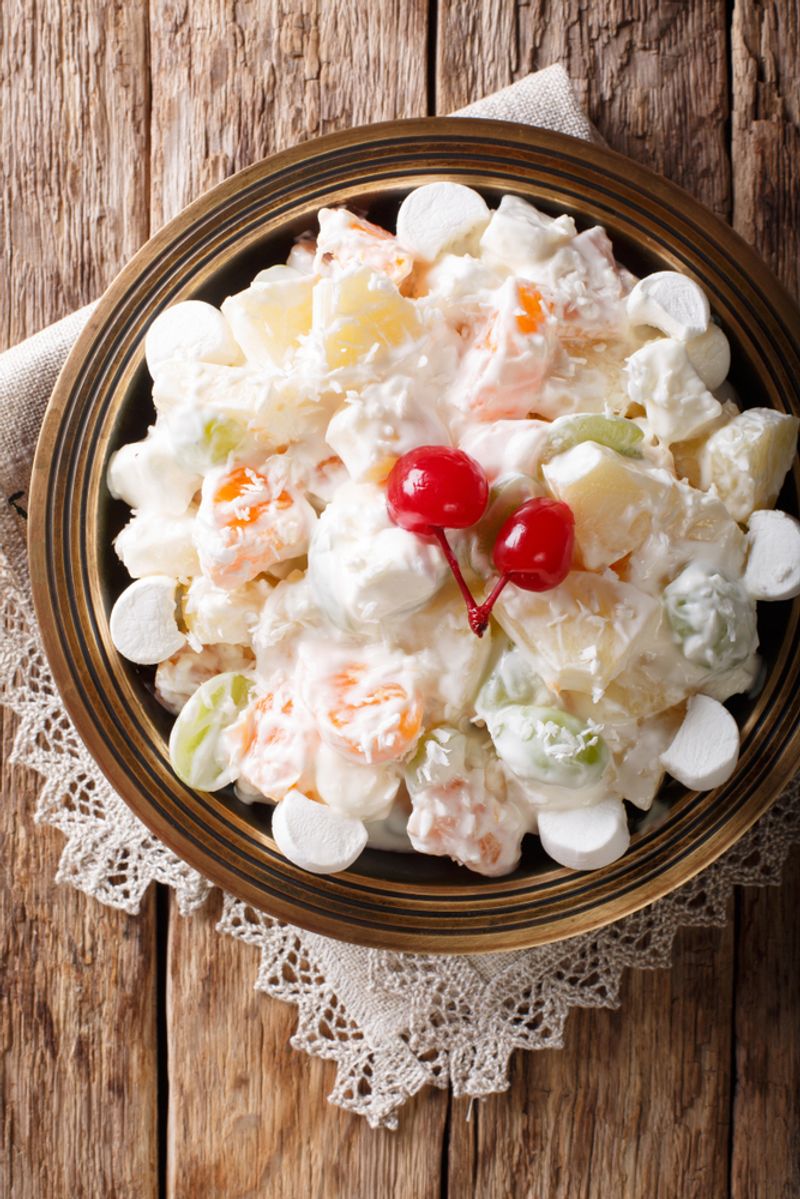
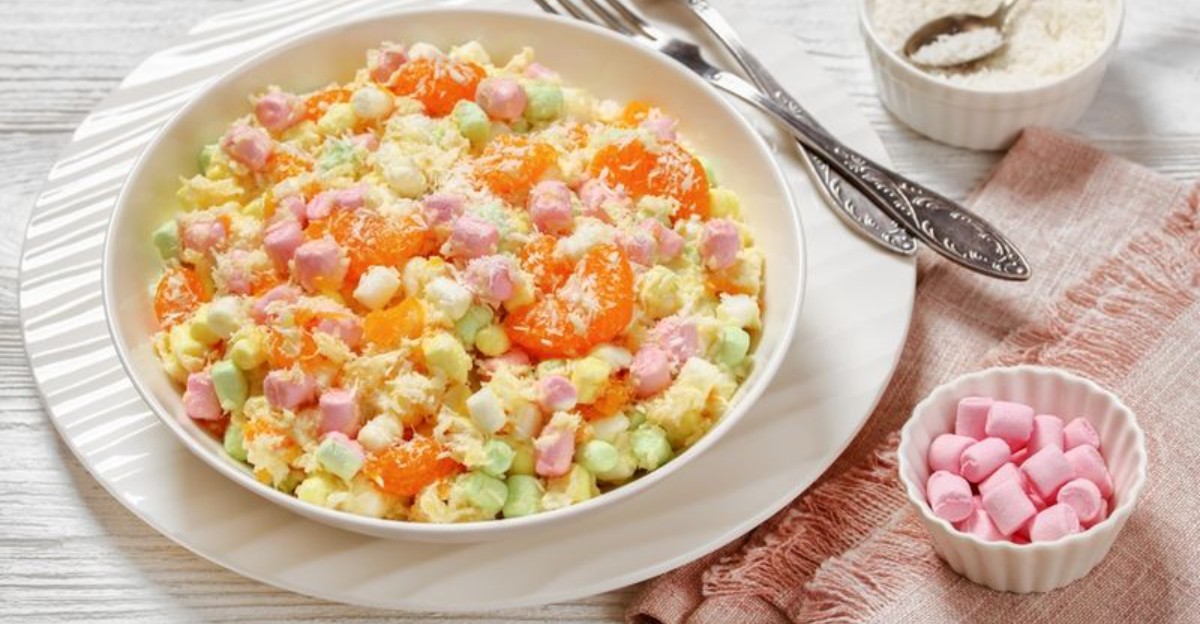
Mini marshmallows, shredded coconut, and maraschino cherries in one bowl might sound like a dare.
In much of the American South, though, this fluffy mix has been a holiday tradition for generations.
The earliest known mention of ambrosia appeared in an 1867 cookbook.
Back then, oranges and coconut felt exotic and a little luxurious, so the dish carried a special-occasion feel.
Over the 20th century, the recipe grew sweeter and creamier.
Pineapple, mandarin oranges, sour cream, and later Cool Whip joined the party, making it simple to whip up for a crowd.
Younger diners frequently call it too sweet and oddly mixed.
The shapeless, pastel look doesn’t photograph well, and it’s hard to tell whether the bowl belongs with the side dishes or the desserts.
That identity crisis is part of the fun, honestly.
Few foods manage to be both a salad and a candy dish at the same family dinner.
For a fresher version, swap in real orange segments, fresh pineapple, and toasted coconut.
Lightly sweetened Greek yogurt or real whipped cream keeps the creamy texture while cutting back on sugar, and toasted pecans add welcome crunch.
10. Green Bean Casserole
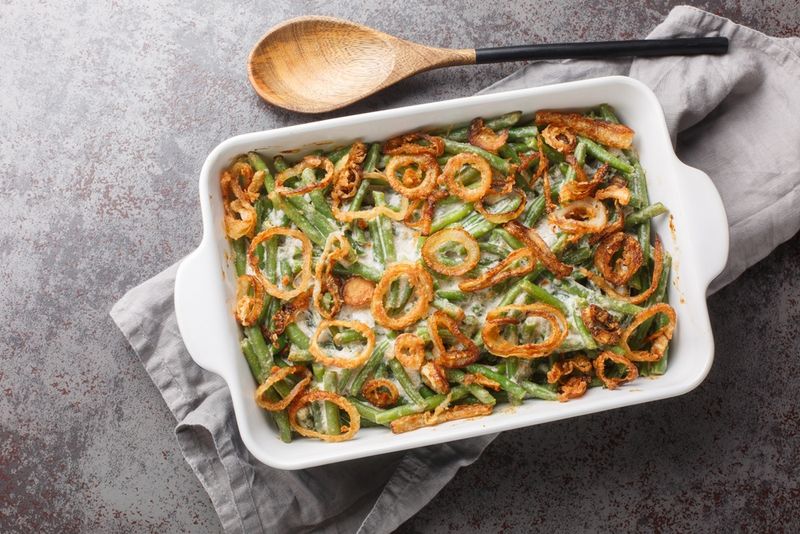
Dorcas Reilly was working in the Campbell Soup Company test kitchen in 1955 when she created a side dish that would land on countless Thanksgiving tables.
Her recipe used green beans, cream of mushroom soup, and crispy fried onions.
She designed it with ingredients most households already had on hand.
The recipe spread quickly once Campbell’s printed it on cans of its Cream of Mushroom soup.
By the time Gen X kids were filling holiday plates, it was a fixture.
The crunchy onions get most of the love, and younger eaters often admit they’d happily eat those alone.
The soft beans and gloopy canned sauce are a tougher sell for people who prefer crisp, fresh vegetables.
Condensed soup also adds a lot of salt, which some families now try to reduce.
Even so, the dish keeps showing up because it’s quick, familiar, and easy to double.
To update it, blanch fresh green beans so they keep some snap.
Make a quick mushroom sauce with butter, flour, and milk, then pile on the fried onions near the end of baking so they stay crunchy.
11. Meatloaf with Ketchup Glaze
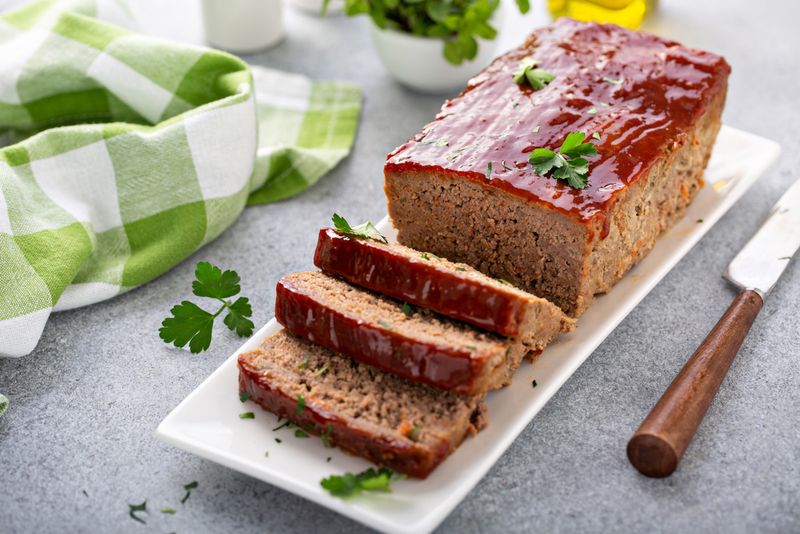
Meatloaf made a promise to struggling families during the Great Depression: a little ground meat could feed a lot of people.
Mix in breadcrumbs or oats, an egg, and chopped onion, and one pound suddenly went much further.
The habit stuck through World War II and well beyond.
By the time Gen X arrived, meatloaf was a standard weeknight dinner in many American homes, often followed by meatloaf sandwiches the next day.
The glossy topping became its signature.
Most versions use ketchup mixed with brown sugar and sometimes mustard, brushed on before baking so it turns sticky and sweet.
Younger diners often point to the name first, since meat and loaf aren’t words that sound delicious together.
Pop culture hasn’t helped either, regularly treating meatloaf as the dinner kids groan about.
A poorly made loaf can also come out dry, dense, or too sugary on top.
Those bad experiences tend to stick around longer than the good ones.
A few tweaks make a big difference.
Use beef that isn’t too lean, avoid overmixing, and check for an internal temperature of 160 degrees so it’s cooked through without drying out.