 MomSkoop
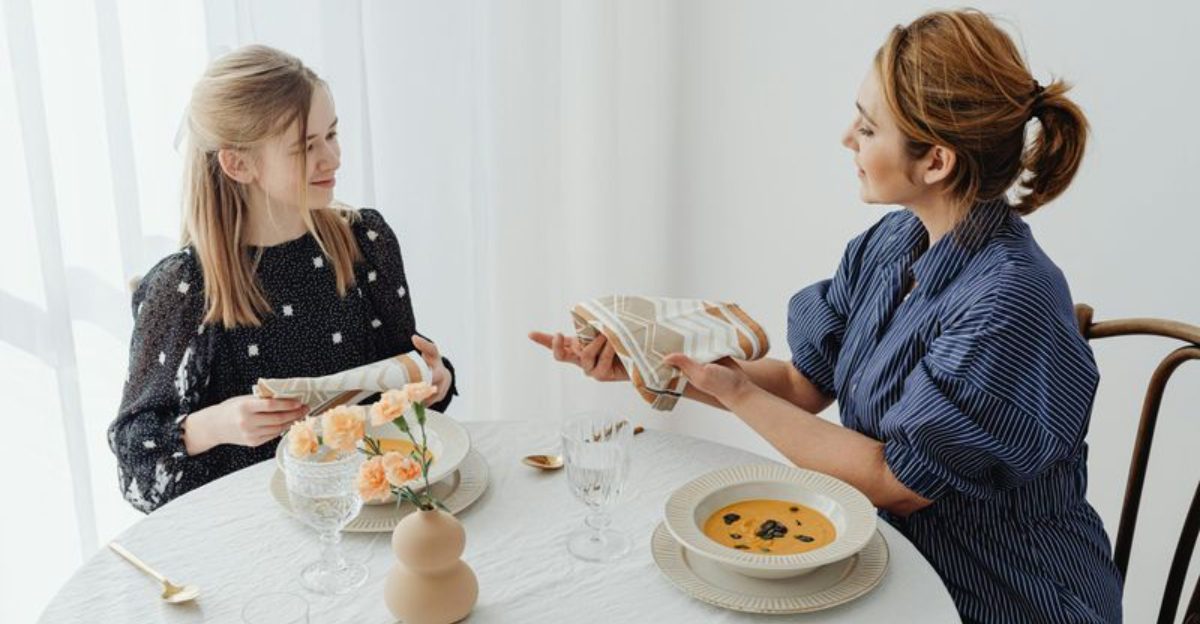
Good table manners might seem old-fashioned, but they still reveal a lot about someone’s background.
Certain dining habits are often taught from a young age in homes where formal meals and etiquette are valued. These subtle behaviors can quietly signal that someone grew up with privilege and exposure to refined social settings.
1. Waiting for Everyone to Be Served Before Starting to Eat
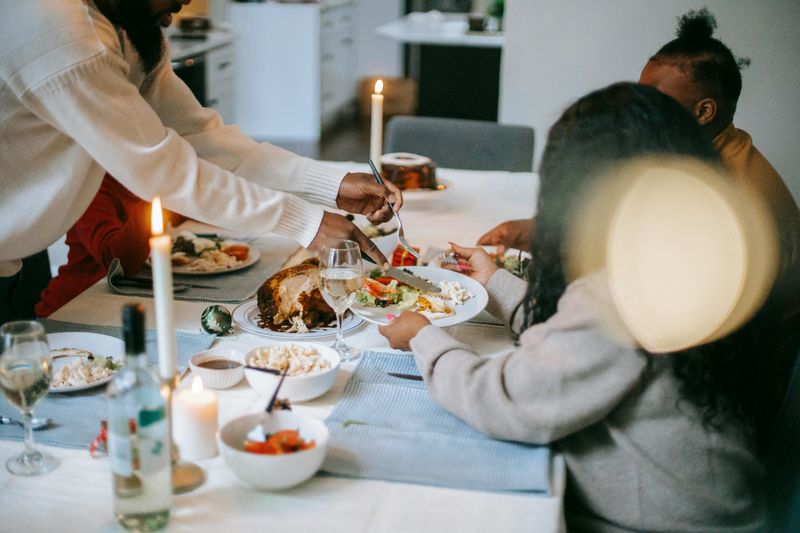
Patience at the dinner table speaks volumes about upbringing.
Many families with formal dining traditions teach children to wait until every person has their plate before picking up a fork.
This practice shows respect for the group and values the communal experience over individual hunger.
People who grew up with this rule don’t even think about it anymore—it’s automatic.
They sit comfortably, making light conversation while others are still being served.
Meanwhile, someone unfamiliar with this custom might dive right in, not realizing the silent signal they’re sending.
This habit is especially common at formal dinners, holiday gatherings, and upscale restaurants where pacing matters.
2. Using Utensils from the Outside In Without Hesitation
Ever noticed someone glance nervously at their silverware before choosing which fork to use?
That hesitation often reveals unfamiliarity with formal place settings.
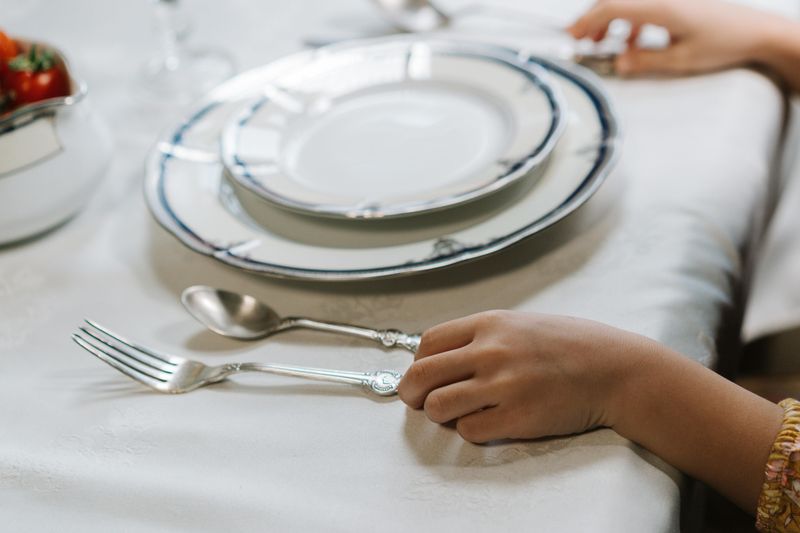
Those raised with proper table training know the golden rule: start with the outermost utensil and work your way inward with each course.
This system makes perfect sense once you understand it.
The salad fork sits farthest left, followed by the dinner fork.
Spoons and knives are arranged similarly on the right side.
Children from privileged backgrounds learn this early, often through family dinners or etiquette classes.
By adulthood, they navigate even the most elaborate table settings with quiet confidence, never second-guessing which utensil comes next.
3. Keeping Elbows Off the Table While Eating

“Elbows off the table!” is a phrase many children hear, but not everyone follows it into adulthood.
This rule has roots in both practicality and politeness.
Resting elbows on the table while eating can look slouchy and takes up space that belongs to plates and glasses.
Here’s where it gets interesting: between courses, resting your forearms or elbows at the table edge is actually acceptable.
The key is knowing when to do which.
People from formal households understand this distinction instinctively.
They sit upright during meals, hands in lap or lightly resting on the table edge.
This posture looks refined without seeming stiff, striking that perfect balance between comfort and elegance.
4. Taking Small, Unhurried Bites and Chewing with Mouth Closed

Watching someone eat can tell you plenty about their upbringing.
Those taught proper manners from childhood take modest bites and chew thoroughly with lips sealed.
This isn’t about being prissy—it’s about consideration for others at the table who shouldn’t have to witness someone’s chewing process.
Eating slowly also serves a social purpose.
Meals in privileged settings are meant for conversation and connection, not just fuel.
Smaller bites make it easier to respond when someone asks a question mid-meal.
This habit becomes second nature over time.
People who practice it don’t rush through their food or talk with their mouths full, creating a more pleasant dining experience for everyone involved.
5. Placing the Napkin on the Lap Immediately After Sitting Down
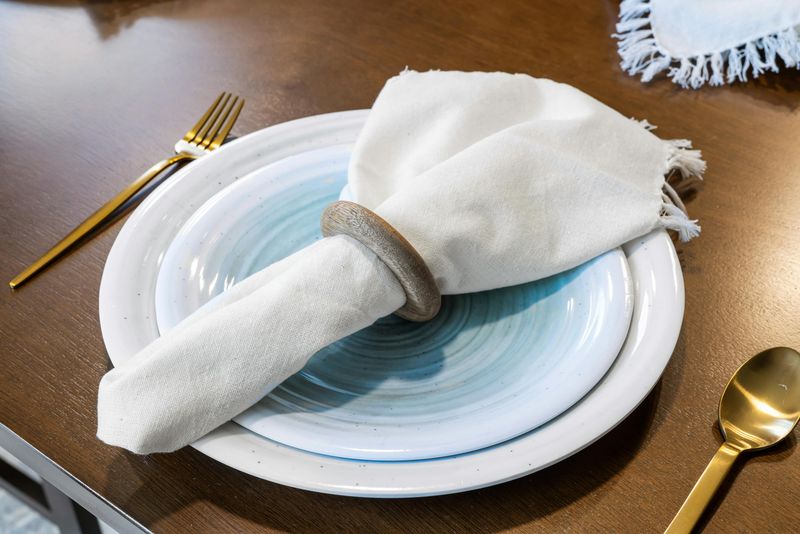
Some people sit down at a restaurant and leave their napkin untouched until food arrives.
Others unfold it and place it on their lap within seconds of being seated.
That quick, automatic gesture often indicates formal training.
The napkin-on-lap rule serves practical purposes—it catches crumbs and protects clothing from spills.
But it’s also a signal that you understand dining protocol.
In upscale establishments, servers notice who does this immediately versus who needs reminding.
Children from privileged backgrounds learn this early, often at family dinners where presentation matters.
By adulthood, it’s muscle memory.
They barely register doing it, but others certainly notice the polished habit that sets them apart from casual diners.
6. Dabbing the Mouth with the Napkin Instead of Wiping

There’s a difference between wiping your mouth and dabbing it, and that distinction matters in formal settings.
Wiping suggests scrubbing or aggressive cleaning, while dabbing is gentle and discreet.
People raised with refined manners use their napkin to lightly touch the corners of their mouth, removing food particles without making a production of it.
This technique looks more graceful and draws less attention.
It’s especially important when wearing lipstick or when seated at a business dinner where every movement is subtly observed.
The dab-don’t-wipe rule might seem trivial, but it’s one of those tiny details that separate casual diners from those trained in proper etiquette.
Once you notice it, you’ll see it everywhere.
7. Holding Cutlery Properly Rather Than Gripping It
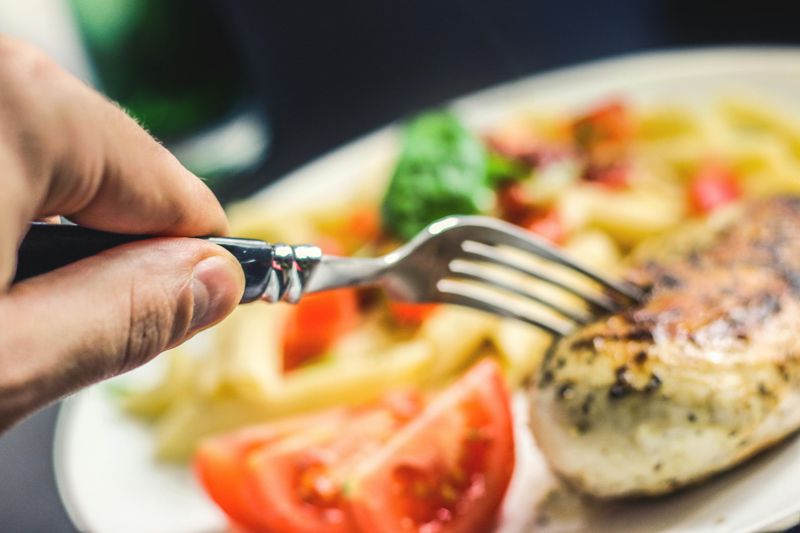
Watch how someone holds their fork and knife—are they gripping the handles like tools or holding them with relaxed fingers?
Proper cutlery technique involves holding utensils with a light, controlled grip rather than clutching them in a fist.
The index finger extends slightly along the handle for balance and precision.
This method looks more elegant and actually provides better control when cutting food.
It’s a hallmark of European and formal American dining styles, taught in homes where table manners matter.
People unfamiliar with this technique often hold their fork like a shovel or grip their knife tightly.
Those from privileged backgrounds handle cutlery with effortless grace, a subtle signal of their refined upbringing and formal training.
8. Saying Please and Thank You to Servers Consistently

How someone treats restaurant staff reveals their true character and upbringing.
People raised in privileged environments often learn early that courtesy extends to everyone, regardless of their role.
They say “please” when ordering and “thank you” every time a server refills water or clears a plate.
This isn’t about being fake—it’s genuine respect for people doing their jobs.
Wealthy families who value manners teach children that politeness costs nothing and means everything.
These habits stick for life.
You’ll notice these individuals make eye contact with servers, speak warmly, and express appreciation naturally.
It’s not performative; it’s ingrained.
This consistent kindness often distinguishes those raised with true class from those simply trying to appear sophisticated.
9. Speaking at a Moderate Volume and Avoiding Talking with Food in the Mouth

Dinner conversation has its own etiquette, and volume control is part of it.
People from formal backgrounds speak at a moderate level that can be heard by their immediate companions without broadcasting to the entire restaurant.
Loud, boisterous talking often signals unfamiliarity with refined dining environments.
Equally important is the timing of speech.
Those trained in proper manners finish chewing and swallowing completely before responding to questions or joining conversations.
They’d rather pause briefly than speak with food visible in their mouth.
These habits create a more pleasant atmosphere for everyone.
Conversations flow smoothly, and fellow diners aren’t subjected to loud interruptions or unappetizing views.
It’s consideration wrapped in elegance.
10. Knowing Where to Place Cutlery to Signal Being Finished

Did you know your silverware can communicate with the wait staff?
In formal dining, how you position your fork and knife tells servers whether you’re still eating or finished with your meal.
When done, place both utensils diagonally across the plate with handles at four o’clock and tips at ten o’clock.
If you’re just pausing between bites, rest your knife and fork in an inverted V shape on the plate.
This signals “I’m still working on this” without saying a word.
Most people leave their utensils scattered randomly, forcing servers to guess their intentions.
Those from privileged backgrounds use this silent language automatically, another subtle marker of their refined upbringing and formal dining education.
11. Engaging in Polite Table Conversation Without Controversial or Crude Topics

Table talk matters as much as table manners.
People raised in privileged settings learn early which topics suit mealtime conversation and which don’t.
Politics, religion, money, and crude humor are typically off-limits, especially at formal dinners or with mixed company.
These subjects can make guests uncomfortable and ruin the pleasant atmosphere meals should create.
Instead, those with refined upbringings steer conversations toward neutral, engaging topics: travel experiences, cultural events, shared interests, or lighthearted stories.
They read the room and adjust accordingly.
This skill requires social intelligence and consideration for others.
It’s about making everyone feel included and comfortable, hallmarks of true sophistication that go far beyond just knowing which fork to use.