 MomSkoop

Growing up emotionally is one of the most powerful things a person can do. It is not about age — it is about learning to let go of habits, thoughts, and behaviors that hold you back.
Emotionally mature people make a conscious choice to release what no longer serves them, and that choice changes everything. Here are eleven things they have the wisdom to leave behind.
1. The Need to Always Be Right

Imagine arguing for an hour just to “win” — even when deep down you know you might be wrong.
Emotionally mature people recognize that clinging to being right often costs more than it is worth.
Relationships, peace of mind, and real understanding matter far more than scoring a point.
Letting go of this need takes courage.
It means being willing to say, “You know what, I see your point.” That simple act can transform a tense moment into a genuine connection.
Choosing understanding over ego is not weakness — it is one of the clearest signs of emotional strength.
Mature people know that being kind often matters more than being correct.
2. Toxic Relationships That Drain Energy

Not every relationship deserves a permanent seat at your table.
Some connections quietly drain your energy, chip away at your confidence, and leave you feeling worse than before.
Emotionally mature people recognize these patterns early and make the hard but necessary choice to step back.
Walking away from toxic relationships does not mean you stop caring about someone.
It means you value your mental and emotional health enough to protect it.
That is an act of self-respect, not selfishness.
Surrounding yourself with people who lift you up rather than tear you down changes the entire quality of your life.
Mature people understand that boundaries are not walls — they are bridges to healthier, more honest connections.
3. The Habit of Blaming Others

Blame is an easy exit — it shifts the spotlight away from yourself and onto someone else.
For a while, it feels relieving.
But emotionally mature people know that blame keeps you stuck in the same patterns without ever growing past them.
Taking ownership of your choices, even the messy ones, is genuinely freeing.
When you stop waiting for others to fix what went wrong, you reclaim your own power.
You become the author of your story rather than a character at the mercy of everyone around you.
Accountability is not about beating yourself up.
It is about being honest, learning from experience, and moving forward with more wisdom than you had before.
That shift alone is transformative.
4. Seeking Constant Validation From Others

There is a version of you that used to refresh social media posts waiting for likes, or replay conversations wondering if someone approved of what you said.
Many people live there for years.
Emotionally mature individuals gradually stop outsourcing their sense of worth to other people.
Building inner confidence is not an overnight project.
It starts with small moments — trusting your own judgment, celebrating your own progress, and realizing that not everyone needs to agree with your choices for those choices to be valid.
When your self-worth stops depending on someone else’s opinion, life becomes remarkably lighter.
Mature people know that the most important approval they will ever earn is their own, and that truth is genuinely liberating.
5. Holding On to Grudges

Carrying a grudge is like drinking something bitter every single day and expecting the other person to feel it.
Grudges are heavy, exhausting, and quietly corrosive.
Emotionally mature people understand this, and they choose forgiveness — not because the other person deserves it, but because they deserve peace.
Forgiveness does not mean pretending nothing happened or welcoming someone harmful back into your life.
It means releasing the emotional grip that resentment has on you so you can actually move forward without dragging the past everywhere you go.
Research consistently shows that letting go of resentment improves both mental and physical health.
Mature people know that holding a grudge punishes themselves far more than it ever punishes anyone else.
6. The Fear of Vulnerability

For a long time, showing emotion felt like handing someone a weapon.
Many people grow up believing that vulnerability equals weakness.
Emotionally mature individuals have learned the opposite — that real connection is only possible when you are willing to be seen, truly seen, without a mask on.
Opening up does not mean oversharing with everyone.
It means choosing the right moments and the right people to be honest with about how you actually feel.
That kind of authenticity builds trust faster than any perfectly curated version of yourself ever could.
Brene Brown famously said that vulnerability is the birthplace of connection.
Emotionally mature people have internalized that truth and stopped letting fear of judgment keep them isolated behind emotional walls.
7. Catastrophizing Every Setback

One bad day does not equal a bad life, but it can feel that way when your brain turns every setback into a disaster.
Catastrophizing — imagining the absolute worst outcome — is an exhausting mental habit that emotionally mature people work hard to break.
When something goes wrong, they pause before spiraling.
They ask themselves: “Is this actually as bad as it feels right now?” More often than not, the answer is no. That small pause creates space for perspective, problem-solving, and calm instead of panic.
Building this skill takes practice and patience.
But over time, emotionally mature people develop a quiet trust in their ability to handle whatever comes their way — and that trust makes all the difference.
8. People-Pleasing at Their Own Expense

Saying yes when you mean no is a slow way to lose yourself.
People-pleasing often starts as kindness but quietly becomes a pattern of self-abandonment — agreeing, overcommitting, and shrinking so that others stay comfortable.
Emotionally mature people recognize when they have crossed that line.
Learning to say no is one of the most respectful things you can do — for yourself and for others.
When your yes actually means yes, it carries real weight.
People around you begin to trust your honesty instead of wondering what you actually want.
Boundaries are not selfish.
They are how you show up fully in your relationships without burning out.
Mature people understand that you cannot pour from an empty cup, and they stop pretending otherwise.
9. Living Entirely in the Past or Future
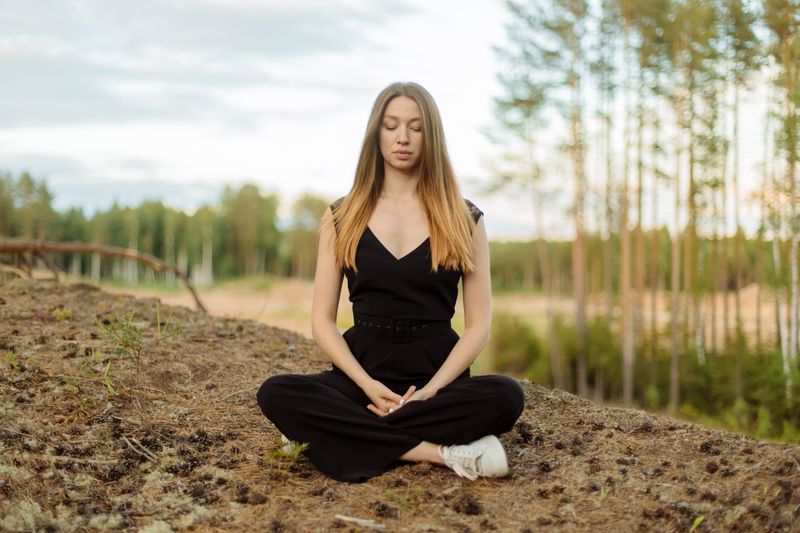
Replaying old regrets or constantly worrying about what has not happened yet are two sides of the same exhausting coin.
Neither the past nor the future is where your actual life is happening.
Emotionally mature people work to anchor themselves in the present, even when it is uncomfortable.
This does not mean ignoring lessons from the past or skipping planning for the future.
It means not letting either one steal your attention from what is right in front of you.
The present moment is the only place where real change, connection, and joy can actually occur.
Mindfulness practices, journaling, and simply slowing down help build this skill.
Mature people choose to be here — fully, intentionally here — and that makes their lives richer.
10. Reacting Without Thinking

Has a sharp text or a heated remark ever made a situation dramatically worse?
Most of us have been there.
Reacting impulsively — especially when emotions are running high — tends to create more damage than the original problem ever caused.
Emotionally mature people learn to pause before they respond.
That pause is everything.
It creates just enough space between the feeling and the action to make a more thoughtful choice.
Instead of saying something in anger that cannot be taken back, they breathe, reflect, and then speak with intention.
Emotional regulation is not about suppressing feelings.
It is about choosing how and when to express them.
Mature people know that a well-timed, measured response almost always leads to a better outcome than a reactive one.
11. The Idea That Growth Should Always Feel Comfortable

Growth rarely feels good in the moment.
It tends to feel awkward, uncertain, and sometimes downright scary.
One of the quietest but most powerful shifts emotionally mature people make is accepting that discomfort is not a signal to stop — it is often a signal that something meaningful is happening.
Avoiding discomfort at all costs keeps people small.
Choosing the familiar over the necessary is how years pass without real change.
Mature people learn to sit with the unease of growth instead of running from it every time things get hard.
Think of it like building a muscle.
The burn during the workout is not enjoyable, but it is proof that something is getting stronger.
Emotional maturity is built the same exact way — through challenge, not comfort.