 MomSkoop

Insecurity can sneak into even the strongest relationships, making it hard to say what you really mean. Sometimes, instead of saying “I feel insecure,” people express it through questions, comments, or self-doubt.
Women especially may use certain phrases that hint at deeper worries without fully naming them. Recognizing these phrases can help both partners communicate more honestly and build stronger trust.
1. Do you still find me attractive?

Asking this question can feel like standing on a tightrope.
When a woman asks if she is still attractive, she is often searching for reassurance that her partner still values her the way they once did.
Attraction changes over time, and that can be scary.
She may not be fishing for a compliment as much as she is hoping to feel seen and wanted again.
If your partner asks this, try not to brush it off with a quick answer.
Take a moment to be specific and sincere.
Telling her exactly what you find beautiful can go a long way toward easing the worry behind the question.
2. Are you sure you’re not mad at me?

Asking this more than once in a conversation is a telltale sign that something deeper is going on.
A woman who keeps checking whether her partner is upset is often afraid that conflict is hiding just beneath the surface.
This kind of worry usually comes from past experiences where problems were swept under the rug or where anger showed up without warning.
It can make someone feel like they need to constantly monitor the emotional temperature around them.
Patience and open communication are key here.
Reassuring her calmly and encouraging honest conversations can help her feel safe enough to stop bracing for tension that may not even exist.
3. I’m probably overthinking this

“I’m probably overthinking this” is one of those phrases that does double duty.
On the surface, it sounds like self-awareness.
Underneath, it is often a way of dismissing her own feelings before anyone else can.
Women who say this frequently may have learned that their concerns were not taken seriously in the past.
So they pre-apologize for having feelings at all, hoping to avoid being called “too sensitive” or “dramatic.”
Rather than agreeing that she is overthinking, try asking what is on her mind.
Giving her space to share without judgment can help her trust that her thoughts are worth voicing.
Small moments of validation add up over time in a big way.
4. She’s so much prettier than me

Comparison is one of insecurity’s favorite tricks.
When a woman says someone else is prettier, she is rarely making a simple observation.
More often, she is measuring herself against an invisible standard and feeling like she falls short.
Social media has made this even harder, flooding feeds with filtered photos and highlight reels that feel impossible to compete with.
The comparison trap can make even confident women question their worth.
Gently reminding her that beauty is not a competition can help, but be careful not to dismiss her feelings.
Acknowledging that the pressure to measure up is real, and then redirecting focus to what makes her uniquely wonderful, tends to land much better than a quick “you’re prettier.”
5. You’d tell me if something was wrong, right?

There is a lot packed into this small question.
When a woman asks whether you would tell her if something was wrong, she is really asking whether she can trust you to be honest with her.
Fear of being kept in the dark often comes from past experiences of being blindsided.
Maybe a relationship ended without warning, or problems were hidden until they became too big to fix.
That history can make transparency feel like a luxury rather than a given.
The best response is not just a “yes.” Make it a habit to check in openly and share how you are feeling regularly.
Consistent honesty over time is the only thing that truly answers this question in a lasting way.
6. I don’t think I’m good enough for that

Self-doubt has a way of showing up right when an opportunity knocks.
A woman who says she is not good enough is often holding herself back before anyone else gets the chance to.
This phrase can pop up in careers, relationships, social situations, and personal goals.
It is a sign that her inner critic is louder than her confidence right now.
Sometimes this stems from past failures, critical voices in her upbringing, or simply not having had enough people believe in her out loud.
Encouragement works best when it is specific.
Instead of a broad “of course you are,” point to real examples of her strengths and past wins.
Concrete reminders can quiet that inner critic more effectively than general praise ever will.
7. Why didn’t you text me back sooner?

A delayed text can feel like a small thing to one person and a very big deal to another.
When a woman asks why you did not reply sooner, she may be expressing worry that she is not a priority in your life.
Anxiety around response times is often tied to attachment styles.
Someone who has felt abandoned or ignored in past relationships may read silence as rejection, even when it is just a busy afternoon.
Rather than getting defensive, try acknowledging her feelings first.
A simple explanation paired with a reassurance that she matters can defuse the tension quickly.
Over time, small habits like a quick “I’ll text you later” can prevent the anxiety from building in the first place.
8. Do you actually like spending time with me?

Few questions reveal vulnerability quite like this one.
Asking whether someone actually enjoys your company takes courage, because the honest answer matters enormously to the person asking it.
A woman who voices this concern is likely picking up on signals, real or imagined, that her presence is not fully welcomed.
She might notice distracted behavior, shorter conversations, or less enthusiasm and start to wonder if she is the reason.
Take this question seriously rather than laughing it off.
Be genuine about what you enjoy when you are together, and follow up with action.
Planning time together intentionally, being present without distractions, and showing enthusiasm for shared moments speaks far louder than words alone ever could.
9. I look terrible today
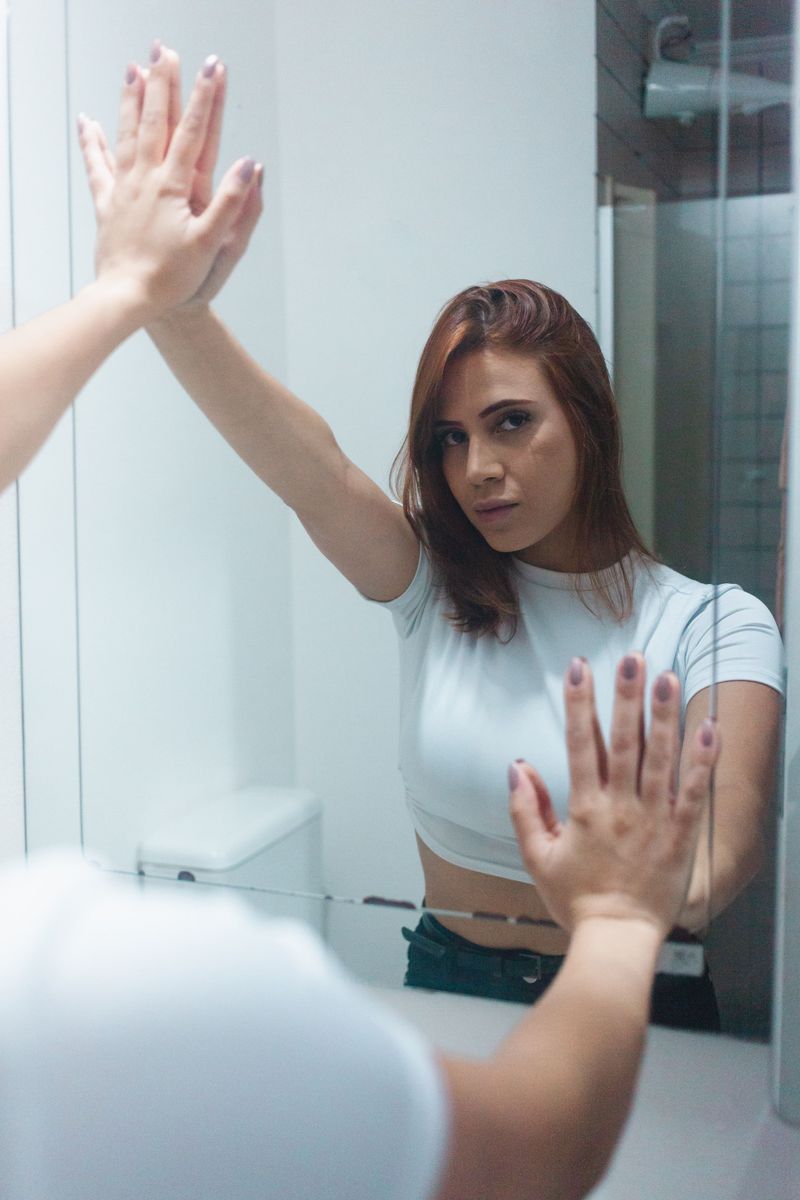
“I look terrible today” is rarely just about how someone looks.
More often, it is an invitation.
She may be hoping someone will push back, offer a kind word, or simply notice that she is not feeling her best.
Bad body image days happen to almost everyone, but for women who struggle with insecurity, they can be frequent and exhausting.
The pressure to look a certain way is constant, and on tough days, the gap between expectation and reality can feel enormous.
Responding with a genuine compliment helps, but so does asking how she is feeling overall.
Sometimes a bad appearance day is really a signal that she needs rest, comfort, or just someone to sit with her for a while.
10. You probably wish I were more like her

Projecting a partner’s supposed preferences onto another person is a classic sign of deep insecurity.
When a woman says “you probably wish I were more like her,” she is revealing a fear that she is fundamentally not enough as she is.
This thought pattern is often fueled by comparison, past rejection, or critical comments that stuck around long after they were said.
She may not actually believe you want someone else, but the fear is loud enough to say it out loud.
Avoid getting frustrated or denying it flatly.
Instead, redirect the conversation toward what you genuinely appreciate about her specifically.
Helping her see herself through your eyes, rather than through a comparison, is a far more healing response.
11. I’m sorry, was that stupid?

Apologizing for her own thoughts before anyone has had a chance to respond is a habit rooted in low self-worth.
When a woman asks if what she said was stupid, she is bracing for criticism that may never actually come.
This pattern often develops in environments where her ideas were dismissed, mocked, or ignored.
Over time, she learned to shrink herself before others could.
The apology becomes a shield, a way of saying “I know I might be wrong, please be gentle.”
The most helpful response is calm and affirming.
Tell her the thought was valid, interesting, or worth exploring.
Over time, consistently responding with respect rather than judgment helps her build the confidence to share without apologizing first.