 MomSkoop

Walking into a crowded room can feel like stepping onto a stage when you never signed up for the show. For introverts, that moment before opening the door is filled with a swirl of thoughts, worries, and silent negotiations with themselves.
It’s not that they don’t want to be there — it’s just that social situations take a little more mental preparation. If any of these thoughts sound familiar, you’re definitely not alone.
1. Can I Still Leave Before Anyone Notices?

That split-second temptation to turn around and walk back to the car is something most introverts know all too well.
Just before reaching the door handle, a quiet voice whispers: “Nobody has seen you yet.
You could still go home.” It’s not about being antisocial — it’s about the sheer weight of what feels like stepping into sensory overload.
Funny enough, this thought usually lasts only a few seconds before logic kicks in.
You came here for a reason.
Maybe it’s a friend’s birthday, a work event, or a family gathering you couldn’t skip.
The escape fantasy fades, and your hand reaches for the door.
Still, the thought was real, valid, and very, very introvert.
2. How Many Conversations Am I Going to Have to Survive?
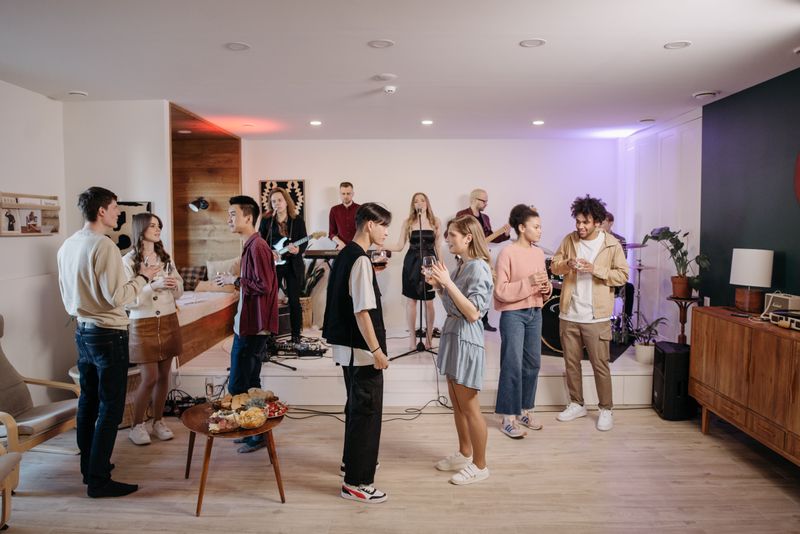
Before a single word is exchanged, the mental math has already begun.
How many people are inside?
How many of them will expect a full conversation?
Will there be group introductions, one-on-one catch-ups, or — worst of all — mingling with strangers?
Introverts don’t dislike people.
They just find constant conversation genuinely tiring in a way that’s hard to explain to extroverts.
Every interaction uses energy, and there’s only so much in the tank.
Counting potential conversations isn’t pessimistic — it’s practical planning.
Think of it like budgeting.
You want to enjoy the event without running completely empty by 8 p.m.
Knowing what you’re walking into helps you pace yourself like a pro.
3. Please Let There Be Someone I Recognize

Spotting one familiar face in a sea of strangers can feel like finding solid ground after treading water.
For introverts, knowing at least one person in the room transforms the entire experience from daunting to manageable.
That one person becomes a social anchor — someone to stand with, laugh with, and survive the event alongside.
Without that anchor, every corner of the room feels uncertain.
You’re calculating where to stand, who to approach, and how to avoid looking like you’re just staring at your phone the whole night.
A friendly face changes everything.
It’s not neediness — it’s just how introverts recharge during social situations.
One trusted person makes the whole room feel a little less like enemy territory.
4. Where Is the Quietest Spot in This Room?

Room-scanning is practically a survival skill for introverts.
The moment they step inside, their eyes sweep the space like a radar system — locating the nearest quiet corner, the least-crowded wall, or the spot farthest from the speakers.
It’s not antisocial behavior; it’s self-preservation.
Finding a low-traffic zone gives introverts a place to breathe, observe, and regroup between conversations.
Standing in the middle of a buzzing crowd with noise coming from every direction is genuinely exhausting for someone who processes the world deeply.
The corner by the bookshelf?
Perfect.
Near the snack table where people pass through but don’t linger?
Even better.
Introverts are strategic like that, and honestly, they usually end up having the best view of the whole room.
5. Please Don’t Make Me Do the Introduction Round Again

“Hi, I’m [name], and I work in [job].” Repeat.
Smile.
Nod.
Repeat again.
For many introverts, the group introduction round feels like a low-key nightmare dressed up as a friendly activity.
It’s not shyness — it’s the sheer repetitiveness of having to perform the same script over and over for a room full of people they may never see again.
Small talk takes real mental effort.
Crafting responses, reading social cues, deciding when to laugh — it all adds up fast.
By the fifth introduction, the brain is already running low on social fuel.
Introverts tend to thrive in deeper, one-on-one conversations rather than surface-level group exchanges.
Getting through the intro gauntlet is often the hardest part of any crowded event.
6. What’s the Minimum Acceptable Time Before I Can Leave?

Before the coat is even off, the exit strategy is already forming.
Not because the event will definitely be terrible — but because having a plan makes everything feel more manageable.
Knowing you can leave after an hour gives introverts the mental permission to actually enjoy the time they’re there.
There’s something freeing about setting a personal time limit.
It removes the open-ended dread of “how long will this go on?” and replaces it with a clear, controlled boundary.
Introverts aren’t being rude by planning their departure early — they’re being honest about their energy levels.
Arriving with an exit strategy isn’t giving up before you start.
Think of it as giving yourself permission to show up fully, knowing the door is always there when you need it.
7. What If I Accidentally Interrupt Someone Mid-Conversation?

Joining a group mid-conversation is a social art form that introverts often find genuinely stressful.
There’s always that moment of hovering — waiting for the right pause, trying to read whether the group is open to a new addition, and silently panicking about accidentally cutting someone off mid-sentence.
The fear isn’t irrational.
Social timing matters, and introverts tend to be highly tuned into other people’s feelings.
The last thing they want is to make someone feel interrupted or dismissed.
So instead of jumping in, they wait.
And wait.
And sometimes wait so long that the group naturally disperses before they ever got a word in.
It’s a relatable struggle that most introverts have experienced at least once — usually at the worst possible event.
8. I Just Need a Few Minutes to Adjust First

Rushing straight into the crowd feels wrong in the same way jumping into cold water without testing it first feels wrong.
Introverts often need a brief settling-in period — a moment to scan the room, absorb the energy, and mentally prepare before approaching anyone.
This isn’t stalling; it’s calibration.
Those few minutes near the entrance or beside the drinks table serve a real purpose.
The introvert is reading the room — figuring out who’s there, where conversations are happening, and what kind of night this is shaping up to be.
By the time they make their first move, they’ve already mapped the social landscape.
It might look like hesitation from the outside, but on the inside, it’s actually a very deliberate and smart process.
9. I Hope Nobody Thinks I’m Being Unfriendly
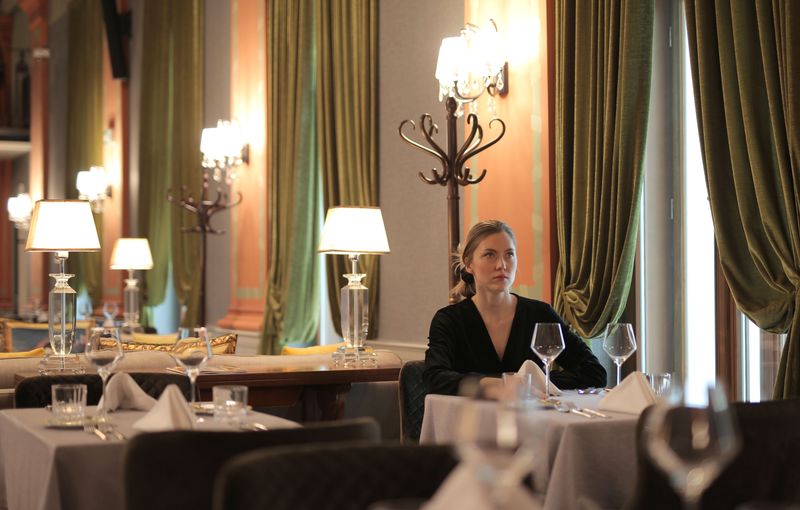
Resting thinking face is a real phenomenon for introverts.
When they’re processing, observing, or simply recharging, their expression can look distant or uninterested — even when they’re actually enjoying themselves.
The worry that others might misread their quietness as coldness or arrogance is genuinely common.
Introverts often care deeply about how they come across to others, which makes this thought particularly frustrating.
They want to be warm and approachable; they just express it differently.
A thoughtful question, an attentive listen, or a genuine laugh matters more to them than filling every silence with chatter.
Being reserved isn’t the same as being unfriendly — and most introverts spend a surprising amount of mental energy hoping the people around them understand that difference.
10. Maybe I’ll Just Listen More Than I Talk Tonight

Deciding to be the listener rather than the talker is often a conscious and comfortable choice for introverts.
There’s genuine skill in being fully present during a conversation — asking the right follow-up questions, noticing what someone didn’t say, and making the other person feel truly heard.
Introverts tend to be exceptionally good at all of this.
Listening more than talking doesn’t mean being passive.
It means choosing depth over volume.
While some people fill silence with noise, introverts fill it with attention.
Conversations with an introvert often feel meaningful precisely because they’re not performing or competing — they’re genuinely engaged.
Choosing to observe and absorb rather than dominate the room is a quiet kind of confidence that doesn’t always get the credit it deserves.
11. This Will Probably Be Fun Once I Settle In
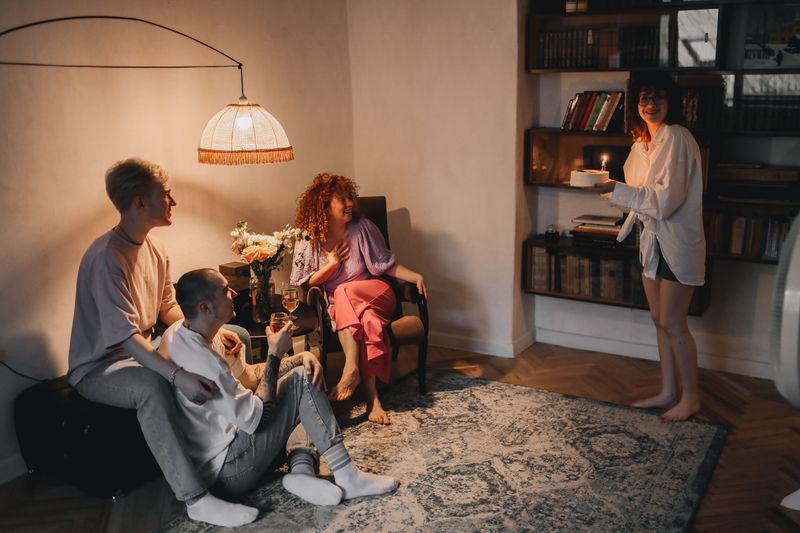
Somewhere between the parking lot panic and the second hour of the event, something shifts.
The noise becomes background.
The strangers become people.
The overwhelming crowd becomes a collection of individual conversations, and suddenly — it’s actually pretty good in here.
This quiet realization is one introverts know well, even if they forget it every single time before the next event.
The initial resistance doesn’t mean the evening is doomed.
Most introverts can look back at events they dreaded and admit they ended up having a genuinely great time.
That knowledge is worth holding onto.
Next time the pre-party anxiety kicks in, remember: the warm-up is just part of the process.
Once you’re settled, comfortable, and talking to the right people, the whole night can surprise you.