 MomSkoop

Realizing someone doesn’t share your feelings can be one of the most uncomfortable experiences in life. How you respond in those moments says a lot about your character and emotional maturity.
Some behaviors, even when they come from a genuine place, can push people further away and even damage your own well-being. Knowing what NOT to do is just as powerful as knowing what the right move is.
1. Constantly Texting or Calling Them
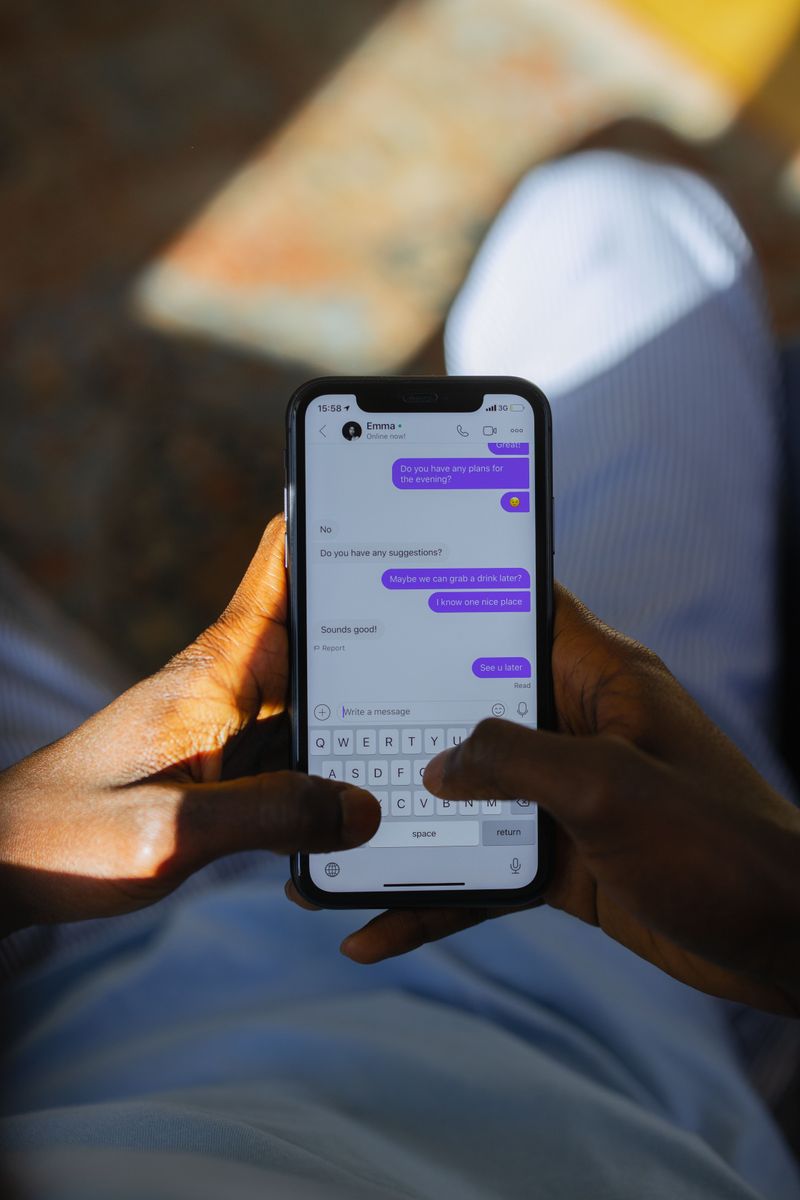
Picture this: you send a text, wait an hour, then send another, and another.
Before long, you have sent ten messages without a single reply.
Bombarding someone with calls and texts when they are clearly not responding sends a signal that you are not respecting their boundaries.
Reaching out repeatedly after silence is not persistence — it is pressure.
The other person begins to feel trapped, and your chances of any positive outcome shrink with every unanswered message.
Give people the space they are clearly asking for, even when they are not saying it out loud.
Your energy deserves to go somewhere it is welcomed and appreciated.
2. Trying to Convince Them to Like You

Attraction is not a debate you can win.
No matter how well you argue your case or list your best qualities, you simply cannot talk someone into developing feelings for you.
Emotions do not work like a logical equation that just needs the right formula to solve.
When someone tells you they are not interested, trying to persuade them often comes across as dismissive of their feelings.
It sends the message that what YOU want matters more than how THEY feel.
That is not a great foundation for any kind of relationship.
Respect is far more attractive than a perfectly crafted argument.
Accept their answer gracefully, and your self-respect will thank you later.
3. Ignoring Obvious Rejection

Some rejections come wrapped in polite packaging. “I’m really busy lately,” “I see you as a friend,” or “I’m not looking for anything right now” are phrases people use when they hope to let someone down gently.
Taking these at face value is not pessimistic — it is respectful.
Choosing to ignore these signals and holding on to a sliver of hope can lead you down a frustrating path.
You may invest more time, emotion, and energy into something that was never going to happen.
Meanwhile, the other person grows more uncomfortable with every interaction.
Reading situations clearly is a skill worth developing.
When the signs point to “no,” believe them the first time around.
4. Showing Up Unexpectedly at Their Location

Spontaneity is charming when it is welcome.
But showing up at someone’s home, workplace, or regular hangout spot without an invitation — hoping to manufacture a “coincidence” — crosses a line that most people find deeply unsettling.
Even if your intentions are completely innocent, unexpected appearances feel intrusive to the person on the receiving end.
It signals that you have been tracking their routine, which can quickly move from awkward to alarming.
No one should feel like they are being followed in their own everyday life.
Healthy connections are built on mutual enthusiasm, not strategic appearances designed to create forced moments.
If someone wants to see you, they will make that happen on their own terms.
5. Overanalyzing Every Interaction

A double-tap on your photo.
A reply with a smiley face.
A “hey” after three days of silence.
When you like someone who is not reciprocating, even the smallest signals can feel enormous.
The mind starts building stories around crumbs of attention, and suddenly a casual emoji becomes a sign of hidden feelings.
Overanalyzing interactions like these creates false hope that keeps you stuck.
You end up living inside your own head rather than seeing the situation clearly.
Friends get exhausted hearing every detail, and you exhaust yourself trying to decode messages that often mean nothing special at all.
Step back and look at the big picture.
Actions over time tell the real story, not individual moments taken out of context.
6. Using Guilt or Emotional Pressure

“After everything I’ve done for you” and “You’ll regret this one day” are phrases designed to make someone feel bad for simply having their own feelings.
Using guilt as a romantic tool is manipulative, even when it comes from a place of genuine hurt.
Pain does not justify making someone else responsible for your emotions.
Emotional pressure puts the other person in an impossible position.
They have to choose between their authentic feelings and your comfort — and resentment builds no matter which way they lean.
Relationships forced through guilt are fragile and unhealthy from the start.
Handling rejection with dignity is genuinely hard, but it protects both people involved.
Your feelings are valid; using them as leverage is not.
7. Becoming Overly Available for Them

Dropping your entire life to be available the moment someone might need you sounds devoted, but it actually works against you.
When you cancel plans, skip opportunities, and keep your schedule wide open just in case they reach out, you are quietly putting your own life on hold for someone who has not asked you to.
Ironically, being too available often makes you less appealing.
People tend to value what feels a little rare.
More importantly, this habit chips away at your own happiness and growth over time.
Your goals, friendships, hobbies, and mental health should never take a back seat to someone who has made their disinterest clear.
Keep living your life fully — that is always the right move.
8. Trying to Make Them Jealous

The jealousy strategy has been around forever, and it almost never works the way people hope.
Posting carefully curated photos, flirting with others in public, or mentioning new “admirers” in conversation are all tactics aimed at sparking a reaction.
The goal is to make the other person suddenly realize what they are missing.
In reality, this approach usually reads as performative and a little desperate.
Even if it triggers a short-lived reaction, any connection built on jealousy is built on insecurity — not genuine interest.
Authentic attraction grows from real moments and honest connection.
Chasing someone’s attention through manufactured scenarios is exhausting and rarely leads anywhere meaningful.
Channel that energy into actually enjoying your own life instead.
9. Asking Mutual Friends to Persuade Them

Recruiting a mutual friend to put in a good word — or worse, to pressure someone into giving you a chance — turns a private matter into a group project nobody signed up for.
Your friends get caught in the middle, and the person you like feels cornered and embarrassed.
This approach almost always backfires.
It can make you look insecure and unwilling to accept a clear answer.
It also puts your mutual friends in an unfair position where any response they give risks damaging one of their relationships.
If someone is not interested, no amount of third-party convincing will change that.
Handle romantic situations directly and maturely.
Keeping things between the two of you shows far more emotional intelligence than outsourcing the conversation.
10. Monitoring Their Social Media Obsessively

Checking someone’s Instagram story the second it posts.
Noticing every new follower they add.
Refreshing their profile to see if they have been active since your last message.
Sound familiar?
Social media makes it dangerously easy to keep tabs on someone, and it can quietly consume hours of your day.
The problem is that obsessive monitoring keeps you emotionally attached to someone who has mentally moved on.
Every post they make becomes something you analyze, and moving forward becomes nearly impossible when you are constantly watching their life unfold online.
Muting or unfollowing someone is not dramatic — it is healthy.
Creating some digital distance gives your mind the breathing room it needs to actually heal and refocus on your own path forward.
11. Refusing to Accept No as a Final Answer

There is a big difference between being persistent in life and refusing to accept someone’s decision about their own feelings.
Asking someone out a second time after a clear rejection is not charming or flattering — it tells them that their “no” was not taken seriously the first time.
Continuing to push after a firm answer has been given shows a lack of respect for that person’s autonomy.
It can make them feel unsafe and causes unnecessary discomfort in shared social spaces, especially if you two have overlapping friend groups or work environments.
Accepting “no” gracefully is one of the most mature things a person can do.
It preserves your dignity and leaves the other person feeling respected — which always matters, regardless of the outcome.
12. Neglecting Your Own Well-Being

Rejection stings, and it is completely normal to feel hurt for a while.
But when that hurt starts pulling you away from your friends, your goals, your sleep schedule, and the things that used to bring you joy, it has crossed into territory that deserves attention.
Fixating on someone who is not interested can quietly steal months of your life.
You stop showing up for yourself while waiting for someone else to show up for you.
That trade-off is never worth it, no matter how strong the feelings are.
You deserve relationships that are mutual and energizing, not one-sided and draining.
Taking care of your mental and emotional health is not giving up — it is choosing yourself, which is always the right place to start.