 MomSkoop

Marriage can be complicated, and communication is not always straightforward.
Some husbands express frustration or anger indirectly through certain phrases that sound harmless on the surface but carry hidden resentment.
Therapists who work with couples have identified specific statements that often signal passive-aggressive behavior, and recognizing these patterns can help partners address underlying issues before they damage the relationship.
1. Fine. Do whatever you want.

When your husband says this, he is likely not fine at all.
Relationship counselors point out that this phrase often masks genuine disappointment or disagreement.
Instead of expressing his true feelings openly, he gives what sounds like permission but is actually a withdrawal from the conversation.
The tone usually gives it away—there is an edge of resignation or irritation underneath the words.
Healthy communication requires both partners to say what they really mean.
When someone repeatedly uses this phrase, they are avoiding conflict on the surface while letting resentment build underneath.
Addressing the real issue requires creating a safe space where honest feelings can be shared without judgment or defensiveness.
2. I’m not mad.

Body language often tells a different story when this phrase comes out.
Therapists recognize this as a classic denial statement—someone insists they are calm while their clenched jaw, tight shoulders, or cold tone suggest otherwise.
Partners who hear this phrase frequently may feel confused or dismissed because the words do not match the behavior.
Passive-aggressive individuals use this denial to avoid taking responsibility for their emotions.
They want their partner to know something is wrong without having to admit it directly.
Real emotional honesty means acknowledging feelings even when they are uncomfortable.
Encouraging your spouse to express anger or frustration in healthy ways can prevent these indirect communication patterns from becoming habitual and damaging to trust.
3. Wow, okay.

Sarcasm drips from these two simple words when used in certain contexts.
Marriage therapists hear this phrase often from partners who feel criticized or dismissed but refuse to engage in direct confrontation.
The statement functions as a conversation ender—it shuts down dialogue while simultaneously expressing judgment or disbelief.
Your husband might use this when he disagrees with a decision but does not want to argue about it openly.
The passive-aggressive nature lies in the implied criticism without actual engagement.
Couples benefit from learning to replace dismissive responses with genuine questions or statements.
Asking what specifically bothers him or encouraging him to share his perspective creates opportunities for understanding rather than breeding silent resentment that poisons the relationship over time.
4. Must be nice.
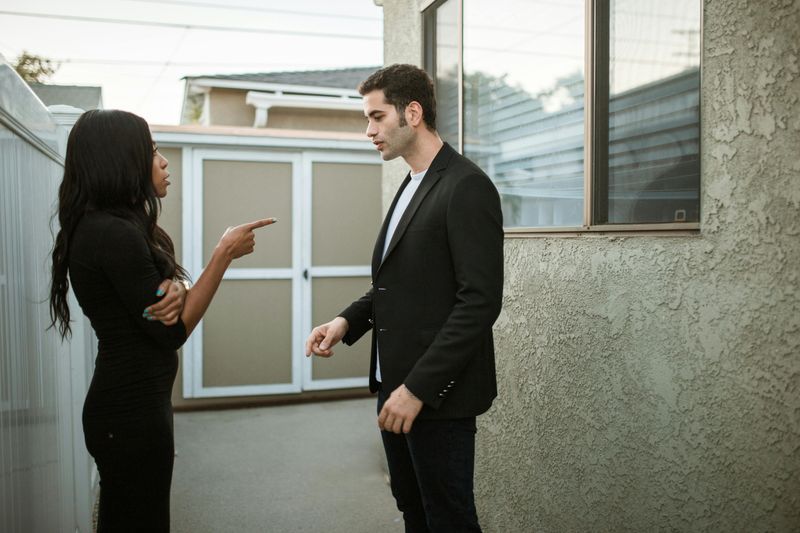
Jealousy and resentment hide behind this seemingly innocent observation.
Therapists identify this phrase as a passive way to express envy or feeling undervalued without directly addressing the underlying emotions.
Your husband might say this when you get time to yourself, receive recognition at work, or enjoy something he feels denied.
Rather than celebrating your happiness or discussing his own needs, he makes a comment designed to make you feel guilty.
The phrase carries an accusation—that your life is easier or better than his.
Healthy partnerships celebrate each other’s successes and openly discuss feelings of being overwhelmed or underappreciated.
Encouraging direct conversation about needs and frustrations helps both partners feel heard and valued instead of building walls of resentment through snide remarks.
5. I guess I’ll just do it myself.

Martyrdom takes center stage with this declaration.
Counselors recognize this as a way to communicate dissatisfaction while simultaneously refusing help and building a case for victimhood.
When your husband says this, he is expressing that he feels unsupported or that things are not being done to his standards.
However, instead of asking for what he needs or accepting assistance, he rejects both and takes on the burden alone—with the intention of holding it against you later.
The phrase creates guilt while avoiding productive conversation.
Partnerships thrive on shared responsibility and clear communication about expectations.
When someone repeatedly plays the martyr, it prevents genuine teamwork and creates an unhealthy dynamic where one person collects grievances instead of solving problems together through honest dialogue.
6. If that’s what you want…

Conditional agreement rarely signals true consent.
Relationship experts point out that this phrase transfers all responsibility for the decision onto the partner while the speaker maintains the right to resent the outcome.
Your husband avoids stating his own preference or objection, instead appearing to go along with your wishes.
Later, if things do not work out well, he can point to this moment as proof that it was your idea, not his.
The passive-aggressive element lies in the refusal to participate genuinely in decision-making.
Strong relationships require both partners to voice opinions and take ownership of joint decisions.
Creating an environment where disagreement is safe and compromise is valued helps prevent this type of indirect communication that ultimately undermines trust and shared responsibility.
7. Forget it.

Abrupt withdrawal characterizes this conversation stopper.
Therapists see this phrase as a way to punish a partner by refusing to continue communication while signaling that something is definitely wrong.
When your husband says this, he is choosing to shut down rather than work through whatever issue arose.
The phrase often comes after he feels misunderstood or dismissed, but instead of persisting in explaining his feelings, he gives up in a way that feels punitive.
The message is clear: you have failed to understand him, and now he will not help you try.
Productive communication requires persistence and patience from both people.
Encouraging your spouse to take a break when emotions run high, with the agreement to return to the conversation later, prevents this kind of permanent shutdown that leaves issues unresolved.
8. I was just joking.

Humor becomes a weapon when criticism gets disguised as a joke.
Marriage counselors frequently encounter this defense mechanism where hurtful comments get dismissed as harmless fun after they land.
Your husband might make a cutting remark about your cooking, appearance, or decision-making, then retreat behind this phrase when you express hurt feelings.
The passive-aggressive nature lies in delivering the criticism while denying responsibility for its impact.
He gets to say what he really thinks while avoiding accountability.
Genuine humor brings people together rather than tearing them down.
Partners should be able to distinguish between playful teasing and veiled insults.
Establishing boundaries around what feels funny versus hurtful, and expecting sincere apologies when lines get crossed, protects the emotional safety essential for intimacy.
9. No, it’s fine. Really.

Repetition and emphasis signal that things are not fine at all.
Therapists recognize this doubled-down denial as an attempt to end discussion while making displeasure abundantly clear through tone and body language.
The addition of really serves to convince—or perhaps to convince himself—that he has accepted the situation.
In reality, your husband is communicating dissatisfaction while refusing to engage constructively.
He wants you to know he is unhappy without having to explain why or work toward a solution.
Authentic communication requires alignment between words and feelings.
When partners notice this kind of contradictory message, gently calling attention to the disconnect and inviting honest conversation can help.
Creating safety for vulnerability allows real feelings to surface instead of festering beneath false reassurances that fool no one.
10. You always do this.

Sweeping generalizations replace specific feedback in this accusatory statement.
Relationship experts warn that words like always or never escalate conflicts and prevent productive problem-solving.
When your husband uses this phrase, he is expressing frustration about a pattern he perceives, but the exaggeration makes it impossible to address the actual concern.
The passive-aggressive element lies in making a global character judgment rather than discussing a specific behavior or incident.
It feels like an attack rather than a request for change.
Effective communication focuses on particular situations and behaviors rather than absolute statements about personality.
Helping your partner rephrase concerns in specific terms—what happened, when, and how it affected him—transforms blame into opportunities for understanding and genuine behavior modification that strengthens the relationship.
11. Whatever.
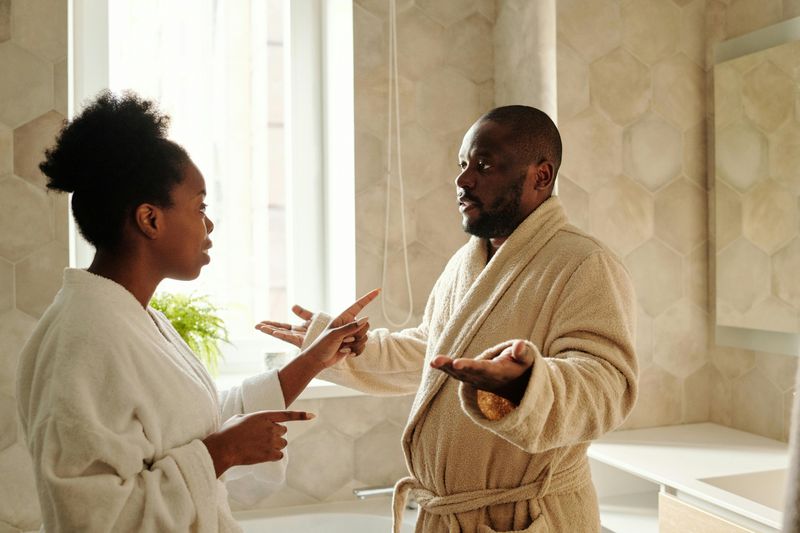
Dismissiveness reaches its peak with this single word.
Counselors identify this as one of the most relationship-damaging responses because it communicates total disregard for the conversation and the partner’s feelings.
Your husband uses this when he wants to end the discussion without resolution or compromise.
The word conveys that he does not care about the outcome or your perspective.
The passive-aggressive nature is in the appearance of giving in—you can have your way—while actually expressing contempt and emotional withdrawal.
Respect forms the foundation of lasting partnerships.
When either person resorts to dismissive language, it erodes that foundation.
Addressing this pattern requires acknowledging the hurt it causes and establishing ground rules for disagreements that honor both people’s dignity and the importance of working through differences together.
12. I don’t care.

Apathy expressed through these three words often masks deep hurt or frustration.
Therapists understand that when someone claims not to care about something their partner clearly values, they are usually protecting themselves from vulnerability or expressing anger indirectly.
Your husband might use this phrase when he feels powerless, unheard, or defeated in the relationship.
Rather than admitting those difficult emotions, he withdraws into claimed indifference.
The passive-aggressive quality lies in refusing to engage while simultaneously communicating displeasure through emotional unavailability.
Caring and investment are what separate intimate partnerships from mere cohabitation.
When a spouse repeatedly claims not to care, it signals serious disconnection that needs attention.
Exploring what lies beneath the apathy—often fear, hurt, or exhaustion—can help partners reconnect and rebuild the emotional engagement that makes relationships meaningful and fulfilling.