 MomSkoop

Phrases like these get passed down at kitchen tables, grocery store checkouts, and drive-thru lanes that the car somehow never enters. A few short words can carry an entire household budget inside them.
Hearing them as a kid could feel frustrating, funny, or a little confusing, depending on the day. Looking back, many of them sound more like survival strategies than simple rules. Some may make you laugh, and a few might hit closer to home than expected.
1. Money Doesn’t Grow on Trees

Somewhere out there, a kid once pointed at a toy and got a botany lesson instead.
The tree in question never produced cash, no matter how hard anyone looked.
The idiom became popular in the United States around the late 1800s or early 1900s.
Its message is simple: money takes effort to earn, so spend it with care.
For children in tight-budget homes, the line often showed up right after a request at the store.
It worked like a quick reminder that a paycheck came from long shifts, not from a magic backyard.
Plenty of adults admit the phrase annoyed them as kids.
Many also say it taught them to pause before buying something on impulse.
You can keep the useful part and drop the guilt if you ever pass it on.
Try pairing the saying with a real example, like how many work hours a new pair of sneakers costs.
That small math lesson turns a brush-off into a conversation kids can actually understand.
It also shows them that saving and spending are choices, not punishments, which might make the phrase sound a lot friendlier the next time someone says it.
2. Waste Not, Want Not

In many low-income homes, the idea reached far beyond the dinner plate.
Bread heels became bread pudding, and the last bit of shampoo got a splash of water to go one more round.
Margarine tubs rarely held margarine for long.
Grandma’s freezer could feel like a mystery box full of reused containers holding soup, sauce, or something nobody could identify.
Habits like these can save real money for anyone, not just families watching each cent.
Planning meals around leftovers, freezing ripe bananas, and reusing jars are easy places to start.
The trick is knowing when frugal turns into stressful.
Keeping a stale cracker out of guilt helps no one, so feel free to let go of the stuff that no longer serves you.
3. Tighten Your Belt

Few idioms are as literal as this one once was.
The image comes from people losing weight when food ran short and pulling their belts to a tighter notch.
Today, the phrase usually means cutting back on spending.
Families say it, businesses say it, and governments say it during budget debates.
At home, a parent announcing belt-tightening could mean fewer takeout nights, shorter showers, or a holiday season with smaller piles of gifts.
Kids often picked up on the mood even before anyone explained the details.
If you’re facing a lean stretch now, the phrase can be a starting point for a calm plan instead of a panic button.
Write down fixed bills first, then look at flexible costs like subscriptions, snacks, or gas trips you could combine.
Cutting back works best when it feels temporary and clear.
Telling kids, in age-appropriate terms, what changes and why can make the whole thing feel less scary for the youngest members of the household.
4. Make Ends Meet

Picture this saying as a tiny tug-of-war between payday and the bills.
The goal isn’t getting ahead, just keeping both sides close enough to touch.
In a lot of homes, the words were spoken quietly, maybe on the phone or near a stack of envelopes.
Children didn’t always know the numbers, but they could hear the strain.
Making ends meet often meant small sacrifices adding up.
A parent might skip lunch, pick up extra shifts, or juggle which bill got paid first that month.
Adults who grew up hearing it sometimes carry an impressive skill set.
They can often build a budget on a napkin and spot an overpriced item from across the aisle.
If that sounds like you, give yourself credit for those skills.
They came from tough circumstances, but they can now help you build a cushion instead of just covering the basics.
5. Stretch a Dollar

Some parents could make twenty bucks behave like fifty.
Watching them shop was basically a lesson in financial gymnastics.
Stretching a dollar usually meant coupons clipped from Sunday papers, store brands instead of name brands, and big pots of soup that lasted for days.
Rice and beans earned their reputation for a reason.
Many people raised this way still compare unit prices without thinking.
Grabbing the bigger box only feels right if the price per ounce checks out.
You can borrow these tricks no matter your income.
Store loyalty apps, cooking in batches, and shopping with a written list are simple ways to keep your spending in line.
There’s also a creative side worth celebrating here.
Turning leftover chicken into tacos, then soup, then a casserole takes real kitchen skill, even if the kids at the table rolled their eyes by night three.
6. Every Penny Counts

That jar of loose change on the dresser wasn’t decoration.
In plenty of homes, it was a backup plan.
The saying has unclear origins, but the idea is easy to grasp.
Small amounts of money pile up over time, so no coin is too tiny to matter.
Kids raised with this motto often learned to check couch cushions and car seats with real enthusiasm.
A quarter found in a coat pocket could feel like winning a small lottery.
Coin jars sometimes covered a school field trip, a gas fill-up, or a few groceries before payday.
Rolling those coins at the kitchen table could even become a family activity.
The lesson still works in adult life.
Rounding up purchases into savings or putting aside a few dollars each week can build an emergency fund slowly.
Just keep the phrase from turning into constant worry.
Counting cents is helpful when it supports a goal, but you don’t need to feel bad about the occasional treat once your bills are covered.
7. We Can’t Afford That

Four words, and the toy goes right back on the shelf.
Many kids heard this one more often than they heard the ice cream truck.
Sometimes the meaning was literal.
Other times, it was a shorthand for “that money is already going to rent” or a softer way to say no.
Hearing it constantly can leave children feeling uneasy about money.
Some kids start to believe the family might not afford basics, even when the bills are covered.
Parents usually use the line to manage expectations or skip a tough explanation in the middle of a store.
That’s understandable when you’re tired and the checkout line is long.
If you use it with your own kids, small tweaks can help. “That’s not in our plan this month” or “Let’s add it to your wish list” explains priorities without sounding like an emergency.
Older children can also handle a simple peek behind the curtain.
Showing them how the grocery budget works might turn a frustrating no into a lesson in choosing what matters most.
8. Let’s Wait Until It’s On Sale

Patience was practically a shopping strategy in some households.
The coat you wanted in October might arrive in January, right when the clearance tags appeared.
Many low-income families plan purchases around sales, coupons, and discount racks.
Groceries, school clothes, and birthday gifts all might wait for the right price drop.
Bargain hunting takes real time and energy, though.
Comparing weekly ads, driving to a second store, and checking prices online adds up to a lot of unpaid work.
Kids who tagged along often became skilled deal detectives.
Some can still spot a yellow clearance sticker from three aisles away.
The habit can save serious money as an adult.
Holiday sales, end-of-season markdowns, and price tracking tools make waiting a smart move for big purchases.
One caution worth keeping in mind: a sale only helps if you needed the item in the first place.
Buying three discounted gadgets you never use costs more than skipping them, no matter how loud the red tag looks.
9. We Have Food at Home
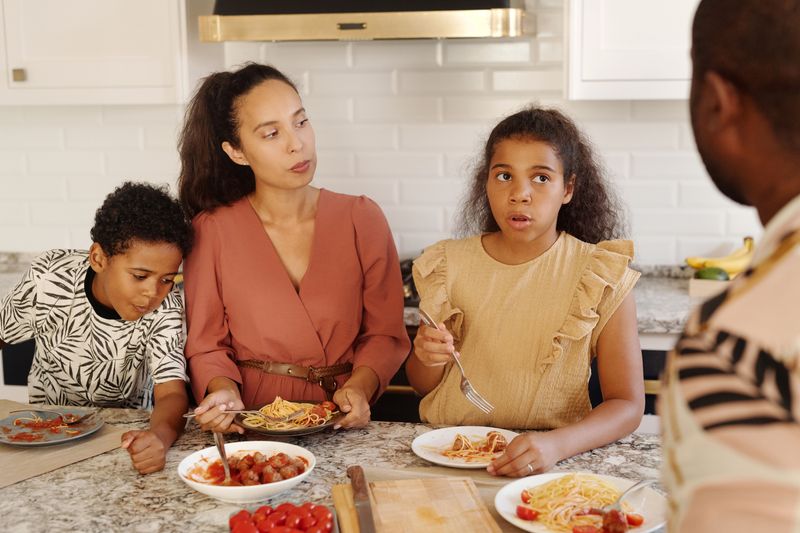
The golden arches would glow in the distance, and the car would keep right on driving.
Then came the classic line from the front seat.
This phrase became a running joke for a reason.
It shows up in countless memes, but for many families it carried real budget math behind it.
Eating out wasn’t a casual choice when groceries were already bought and counted.
A single fast food run for a family could cost as much as several home-cooked dinners.
Food at home also meant using what was already paid for before it spoiled.
Skipping the drive-thru protected both the budget and the leftovers waiting in the fridge.
Of course, “food at home” sometimes meant peanut butter sandwiches or a mystery casserole.
Kids rarely found that as exciting as fries in a paper bag.
As an adult, the phrase can work as a handy money check.
Keeping a few quick meals ready, like frozen soups or pasta, makes it easier to say it to yourself after a long day.
10. Maybe for Your Birthday

Birthdays in some homes worked like a giant waiting room for wishes.
Anything spotted in March could be tucked away for a special day months later.
Its close cousin, “We’ll see,” often meant something similar.
Both phrases can gently delay a decision without a flat no.
Parents sometimes put off saying no to soften a child’s disappointment.
Over time, many kids figured out what those vague answers usually meant.
Still, “maybe for your birthday” could come with real follow-through.
A gift saved for and wrapped months later often felt extra special because of the wait.
If you use these phrases, being honest goes a long way.
Kids tend to trust a clear “not this year” more than a maybe that quietly fades away.
A wish list on the fridge can help, too.
It gives children a place to put their wants, teaches them to rank what matters, and gives relatives some useful gift ideas when birthdays roll around.
11. You Don’t Really Need That

Brand-name sneakers, the hot new backpack, the gadget half the class owned.
Each one could be met with the same calm reply from a parent.
Sometimes the statement was simply true.
Nobody needs a third pair of light-up shoes.
For a kid trying to fit in, though, “need” felt different.
Social pressure at school could make missing out on popular items sting more than adults realized.
Some people raised with this line grew up feeling like money gaps were a personal flaw.
What other kids had could look normal, while their own situation felt like falling short.
Talking it through can soften the impact.
Parents might acknowledge the feeling first, saying something like “I get why you want it,” before explaining the budget.
As an adult, separating needs from wants remains a practical skill.
You might keep the phrase as a quick check before buying, while also allowing room for things that make your life a bit more fun when money allows.
12. I Shouldn’t

A friend offers dessert, and the reply pops out before any thought happens.
For some adults, turning down treats is a reflex built in childhood.
In homes where money stayed tight, spending on one person often meant less for someone else.
Kids picked up on that and learned to say no before anyone had to.
That habit can stick around long after finances improve.
Some people feel uneasy buying themselves even small comforts, as if each treat comes with a bill attached.
Recognizing the pattern is a solid first step.
Ask yourself whether the purchase fits your budget today, not the one your family had years ago.
Small, planned splurges can help ease that old guilt.
Setting aside a little “fun money” each month gives you permission to enjoy something without second-guessing it.
Gratitude for how you were raised and kindness toward your present self can exist side by side.
The next time someone offers you a slice of cake, “Yes, thank you” might be the most budget-friendly answer of all.