 MomSkoop

Some questions sound casual but hit like a gut punch. Women across all walks of life have experienced that moment when a question lands so wrong that they mentally check out of the entire conversation.
These questions often come wrapped in curiosity or concern, but underneath, they carry assumptions, judgment, or plain old nosiness. Knowing which questions cross the line can help everyone communicate with more respect and awareness.
1. Why are you still single when you’re actually pretty attractive?

Compliments with a hidden sting are still stings.
This question assumes that attractiveness is the only requirement for being in a relationship, which completely ignores personality, timing, personal goals, and life circumstances.
It also suggests that being single is a problem that needs solving.
Women hear this and immediately feel reduced to their appearance.
The underlying message is that something must be wrong with them if no one has “claimed” them yet.
That framing is both outdated and insulting.
Relationships are deeply personal, and not every woman is actively seeking one.
A better approach is simply asking how someone is doing rather than questioning their relationship status as if it were a flaw.
2. When are you finally going to settle down, get married, and start a family?

Few questions shut a woman down faster than this one.
Packed into a single sentence are three major life decisions being treated like overdue homework assignments.
Marriage and children are not universal goals, and treating them as inevitable milestones dismisses a woman’s right to chart her own path.
The word “finally” makes it worse.
It implies she is behind schedule on someone else’s timeline, which can feel deeply dismissive of the life she is actively building.
Some women want marriage and kids.
Others do not.
Many are still figuring it out.
What all of them deserve is the freedom to make those choices without fielding interrogations at every family gathering or casual dinner party.
3. Have you always been this ambitious, or are you trying to prove something?

Ambition in women is still treated like a personality quirk that requires an explanation.
This question implies that working hard toward goals is suspicious behavior unless there is some emotional wound driving it.
Men are rarely asked if their drive comes from unresolved issues.
The question plants a seed of self-doubt.
Suddenly, a woman who was proud of her accomplishments is being asked to justify whether her success is even authentic.
That mental shift is exhausting and unfair.
Hard work does not need a backstory.
Women are ambitious because they have goals, talents, and a desire to grow, just like anyone else.
Questioning the motive behind their drive is a subtle way of undermining their achievements.
4. How do you balance your career without neglecting your personal life?

Here is what makes this question frustrating: it is almost never asked to men.
The assumption baked in is that a woman with a career is automatically at risk of neglecting something, usually her family, her relationships, or herself.
That assumption carries a heavy double standard.
Women absorb this question and hear an accusation dressed up as concern.
It implies that their professional ambitions come at someone else’s expense, placing guilt on their shoulders before they have even answered.
Everyone juggles responsibilities.
The difference is that women are constantly asked to justify how they manage it, as if their time and energy belong to others first.
Asking this question without asking men the same thing reveals the bias behind it.
5. Are you worried you’re running out of time to have children?
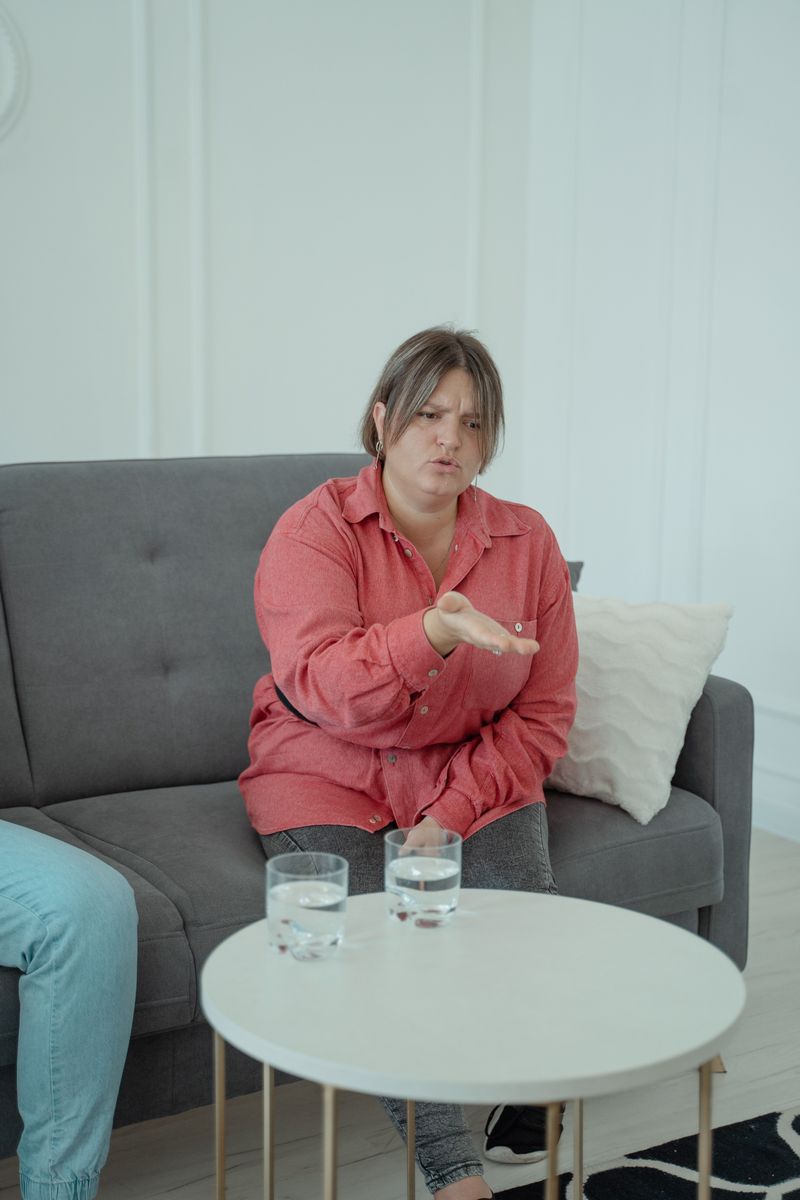
Biological clocks make for terrible conversation starters.
This question zeroes in on a woman’s age and fertility as if those are the most important things about her.
For women who want children and are struggling, it can be genuinely painful.
For those who do not want kids, it is just plain intrusive.
There is a long history of women being defined primarily by their reproductive capacity, and this question keeps that tradition alive in the most uncomfortable way possible.
It treats a deeply personal medical and emotional topic as casual small talk.
Whether a woman plans to have children, cannot have them, or simply does not want them is nobody else’s business.
That topic belongs to her, not to curious acquaintances with misplaced concern.
6. What do you bring to the table besides your career?

This one has a sharp edge.
Asking a woman what she brings to the table beyond her career implies that her professional success is not enough, or worse, that it is somehow a liability.
It often comes up in dating contexts, where ambition in women is still viewed with suspicion by some.
Flip the question around and ask it to a man, and it sounds absurd.
But women are routinely expected to prove their softness, their domesticity, or their emotional availability alongside their accomplishments, as if being well-rounded is a uniquely female obligation.
Every person brings a full, complex self to any relationship or situation.
Reducing someone to a checklist of qualities and demanding justification is not curiosity.
It is a quiet form of dismissal that most women recognize immediately.
7. Don’t you think you’re a little intimidating to most men?

Framing a woman’s confidence as a problem for men to overcome is a classic move.
This question takes everything she has worked for, her education, her presence, her self-assurance, and repackages it as a warning label.
The message is clear: tone it down so others feel comfortable.
Women who get asked this often feel a pull to shrink themselves.
That pull is exactly the problem.
No one should have to dim their light to make others feel better, and suggesting they should is a form of social pressure disguised as friendly advice.
Confidence is not intimidation.
A woman who knows her worth is not responsible for managing the insecurities of others.
The right people will be inspired by her, not threatened, and those are the people worth keeping around.
8. Who are you trying to impress with that outfit?

Getting dressed is a personal act of expression, not a performance for an audience.
When someone asks who a woman is trying to impress, they strip away her agency and assume her choices are driven by external validation rather than her own taste and comfort.
Women dress for countless reasons: mood, occasion, confidence, creativity, or simply because they liked what they saw in the mirror.
Suggesting that her outfit requires a target audience reduces her self-expression to a bid for attention, which is both reductive and a little insulting.
Style is one of the most personal forms of communication.
Asking this question implies that a woman looking good must have an ulterior motive, when the real answer is often the simplest one: she wore it because she wanted to.
9. Why can’t women just be direct about what they want?
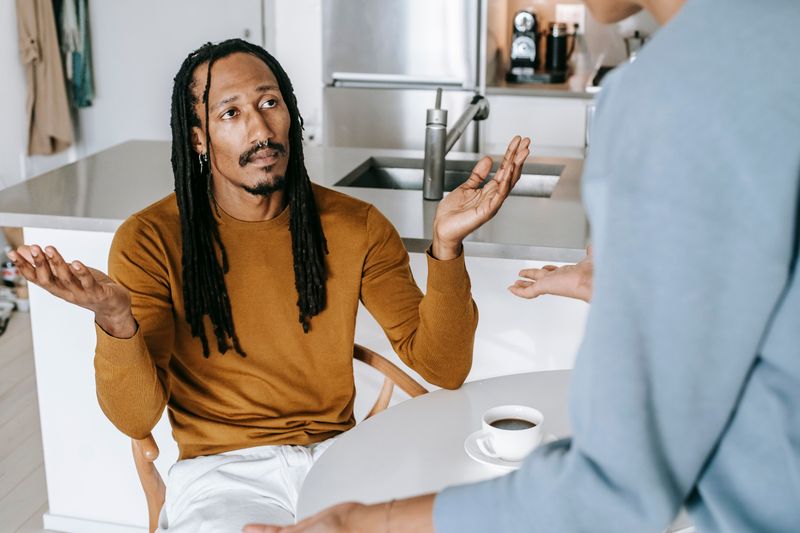
Generalizing an entire gender’s communication style into a complaint is a guaranteed way to end a real conversation before it starts.
This question does not actually want an answer.
It is a vent wrapped in a question mark, and most women can tell the difference immediately.
There is rich irony here, too.
Asking why someone is not direct, while being indirect about your frustration, is a contradiction most women notice right away.
It also ignores the fact that when women are direct, they are often labeled as aggressive, bossy, or difficult.
Communication styles vary by person, culture, and context, not by gender.
Blaming an entire group for a communication disconnect avoids the more productive question: how can we listen better and meet each other halfway instead of pointing fingers?
10. If a man paid for everything, would you quit working?

This question assumes that work is something women tolerate rather than something they genuinely value.
It treats financial independence as a temporary situation a woman is enduring until a man rescues her from it.
That framing is both patronizing and wildly out of touch with how most women think.
Many women work not just for income but for purpose, identity, growth, and connection.
The idea that a paycheck from someone else would erase all of that reveals a fundamental misunderstanding of what careers mean to people who have built them intentionally.
Asking this also implies that a woman’s professional life is negotiable based on what a man decides to offer.
Her career belongs to her.
It is not a placeholder, and no financial arrangement changes that simple truth.
11. What were you doing that led to that situation happening?

When something bad happens to a woman, this question shifts the focus from the event to her behavior.
It is the conversational equivalent of looking for reasons why she deserved it.
That instinct to find fault in the victim rather than the situation is deeply harmful and widely recognized by women.
It might be asked with genuine curiosity, but the effect is the same regardless of intent.
The woman on the receiving end is suddenly defending herself instead of processing what happened to her.
That is an unfair and painful position to be put in.
Supportive responses focus on the person, not the circumstances they may or may not have influenced.
Asking what someone did to invite harm is not concern.
It is blame with a question mark, and women are exhausted by it.
12. Why aren’t you smiling? You’d look so much prettier if you smiled more.

Telling a woman to smile is one of the oldest and most persistent forms of unsolicited feedback.
It assumes her face exists for the visual pleasure of others and that her natural resting expression is somehow a problem requiring correction.
Most women have heard this more times than they can count.
The “prettier if you smiled” addition makes it worse.
Now her appearance is being graded based on compliance.
The message is that she earns attractiveness by performing happiness for someone else’s benefit, which is a deeply uncomfortable thing to communicate, even if it sounds casual.
A woman’s face is her own.
Her expressions are authentic responses to her inner world, not a public service.
Demanding a smile is not a compliment.
It is a small but telling reminder that some people still see women as decorative rather than fully human.