 MomSkoop

Walk into the home of a genuinely sharp thinker, and you’ll notice something different right away. It’s not about fancy furniture or expensive gadgets — it’s about the choices they make in how they set up their space.
Smart people tend to surround themselves with things that feed their curiosity, sharpen their focus, and keep their minds active. Take a look at what you’re likely to spot in their homes.
1. A Diverse Book Collection

Shelves packed with books on wildly different topics are practically a signature of a curious mind.
You’ll find novels sitting beside science textbooks, history books wedged next to philosophy, and biographies stacked alongside poetry collections.
It’s not about showing off — it’s about feeding a hunger to understand the world from every angle.
Reading broadly helps smart people connect ideas across different fields, which is often where the most creative thinking happens.
A book on ancient history might spark an idea that solves a modern problem.
That kind of cross-pollination is hard to get any other way.
If your bookshelf only has one type of book, it might be time to branch out.
2. A Dedicated Reading Nook or Quiet Corner
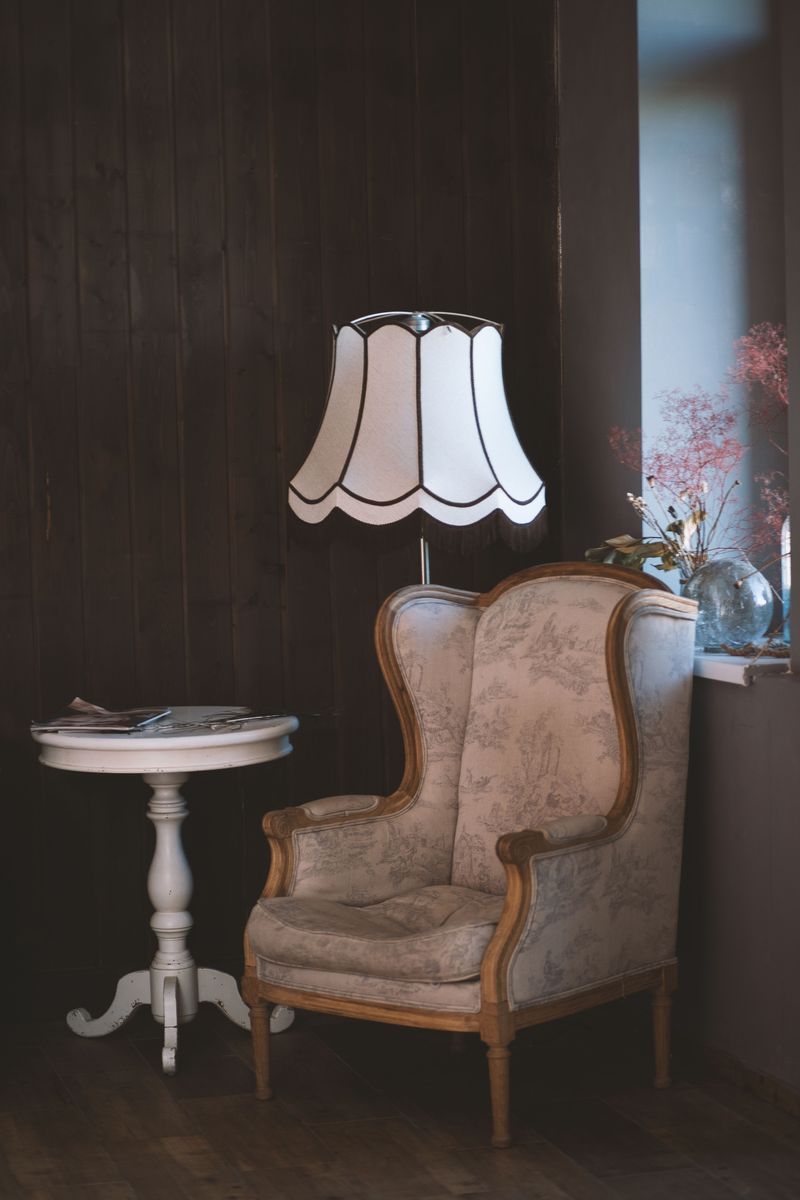
There’s something almost sacred about having one spot in your home that’s just for thinking.
Smart people tend to carve out a quiet corner — maybe an armchair by a window, or a small nook tucked away from the noise of the rest of the house.
That space becomes a kind of mental sanctuary.
Having a dedicated spot for reading and reflection trains your brain to shift into focus mode the moment you sit down.
It’s the same idea behind why athletes have pre-game rituals.
Over time, your mind starts to associate that chair or corner with deep, undistracted thought.
Even a small, well-chosen spot can make a surprisingly big difference in how well you think.
3. Notebooks and Journals

Albert Einstein carried a notebook.
Charles Darwin filled journals obsessively.
There’s a long tradition of brilliant people writing things down, and it’s not a coincidence.
Putting thoughts on paper forces your brain to slow down and actually process what you’re thinking, rather than letting ideas float away half-formed.
Journals and notebooks in a smart person’s home are rarely pristine.
They’re full of scribbles, crossed-out lines, rough sketches, and sudden bursts of inspiration.
Some pages might look like a mess, but that mess is actually organized thinking in progress.
Whether it’s a fancy leather journal or a cheap spiral notebook, what matters is the habit of capturing ideas before they slip away.
Try it for a week and see what happens.
4. Puzzles and Brain Games
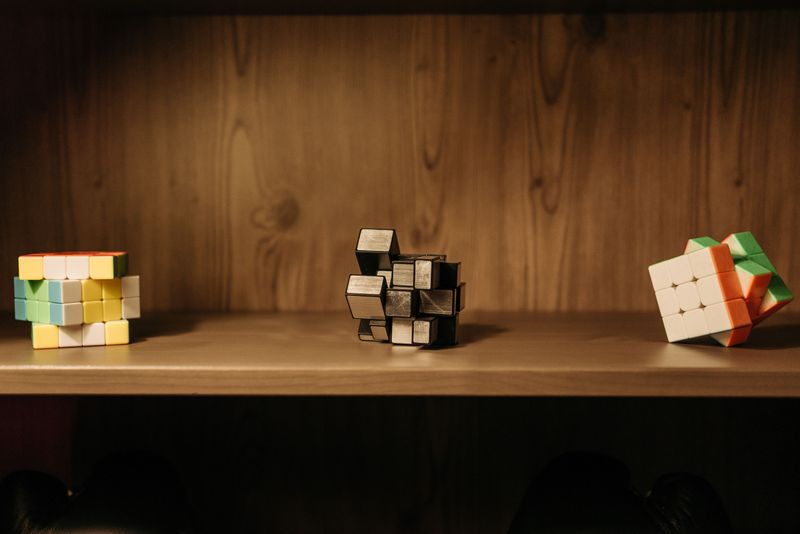
Chess sets, Rubik’s Cubes, sudoku books, crossword puzzles — these aren’t just toys.
They’re mental workouts, and sharp thinkers tend to genuinely enjoy them.
There’s real satisfaction in cracking a puzzle that seemed impossible at first, and that satisfaction is tied to the brain releasing dopamine when it solves something tricky.
Brain games also build skills that carry over into real life.
Chess teaches strategic thinking and patience.
Crosswords strengthen vocabulary and memory.
Logic puzzles sharpen problem-solving instincts.
Smart people often keep these around not because they’re trying to be smart, but because they find them genuinely fun.
If you haven’t picked up a puzzle lately, you might be surprised how quickly you get hooked once you start.
5. Indoor Plants

Plants might seem like a simple decorating choice, but there’s solid research behind why smart people tend to keep them around.
Studies have shown that indoor plants can reduce stress, improve mood, and even boost concentration.
Some plants also help filter air pollutants, making the environment cleaner to breathe and easier to think in.
Beyond the science, there’s something grounding about caring for a living thing.
Tending to plants builds patience and attentiveness — qualities that also show up in good thinking.
Plus, a room with greenery just feels different.
It’s calmer, more alive, and more inviting.
You don’t need a greenhouse to get the benefits — even one or two well-placed plants can shift the energy of a room in a noticeable way.
6. Art and Meaningful Decor

Not every smart person’s home looks like an art gallery, but you’ll usually find something on the walls or shelves that means something.
It might be a print of a painting they love, a photograph from a meaningful trip, or an object picked up somewhere that tells a story.
The point isn’t decoration for its own sake — it’s about surrounding yourself with things that spark thought.
Art has a way of asking questions without words.
A good painting can make you think about history, emotion, or the way someone else sees the world.
Smart people tend to be drawn to decor that does something — that makes them pause, wonder, or feel.
Filling your space with objects that carry meaning is a quiet but powerful way to keep your mind engaged every day.
7. Educational Materials and Reference Tools

Walk into the home of a lifelong learner and you’ll often spot a globe on the shelf, a world map on the wall, or a stack of reference books that actually gets used.
These aren’t props — they’re tools.
Smart people tend to keep learning resources close by because curiosity doesn’t wait for a convenient moment to strike.
Having a globe nearby when a news story mentions a country you can’t quite place, or a reference book on hand when a conversation raises a question you can’t answer, keeps knowledge-seeking part of everyday life.
Language-learning apps, flashcard sets, and scientific models serve the same purpose.
The goal is to make learning feel natural and accessible rather than something that only happens in a classroom or scheduled study session.
8. A Musical Instrument

Learning to play an instrument is one of the most well-documented ways to strengthen the brain.
It builds coordination, memory, pattern recognition, and emotional intelligence all at once.
That’s likely why you’ll find a piano, guitar, violin, or some other instrument in so many homes of intellectually curious people — they know the payoff is real.
Playing music also offers something that few other activities can match: it demands your full attention.
You can’t check your phone while learning a new chord progression.
That total focus is almost meditative, and it gives your brain a different kind of workout than reading or problem-solving.
Even picking up an instrument as an adult and playing badly at first is worth it.
The struggle itself is part of what makes it so good for your mind.
9. An Organized, Functional Workspace
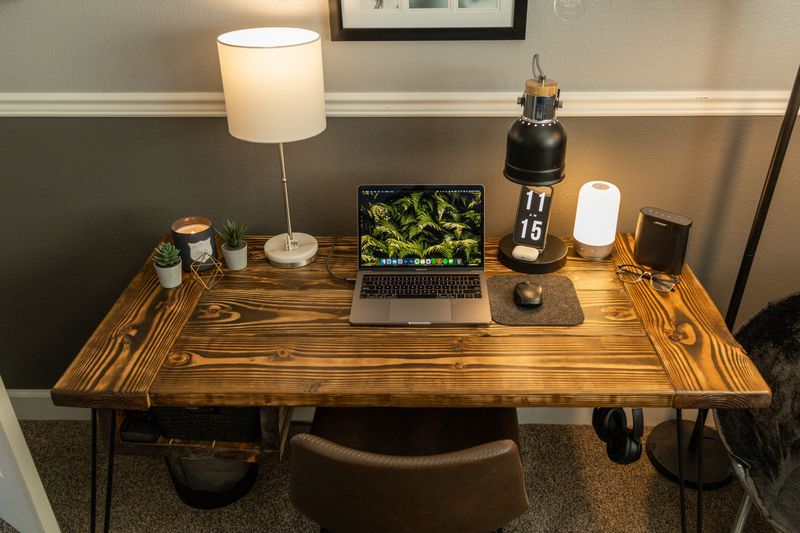
Clutter isn’t just visually distracting — research suggests it actually competes for your brain’s attention, making it harder to focus.
Smart people tend to maintain workspaces that are clean, functional, and set up specifically for getting things done.
Every item on the desk has a reason to be there.
An organized workspace also signals something important to your own brain: this is where serious work happens.
That psychological cue helps you shift into a focused mindset faster.
It doesn’t have to be perfectly minimalist or Pinterest-worthy — it just needs to work for the person using it.
The right chair, good lighting, easy access to tools you actually use, and a surface clear enough to spread things out when needed.
That combination is surprisingly powerful for sustained, deep thinking.
10. Quality Lighting

Good lighting might be the most underrated thing in a productive home.
Natural light has been shown to improve mood, regulate sleep cycles, and boost alertness during the day.
Smart people tend to position their reading and working spots near windows, and they invest in quality lamps for evenings and cloudy days.
Eye strain from poor lighting is a real productivity killer.
When your eyes are working overtime to see clearly, your brain has less energy for the actual thinking.
Adjustable lighting is especially useful — bright and cool-toned for focused work, warmer and dimmer for winding down in the evening.
It sounds like a small detail, but the quality of light in your space genuinely affects how well your brain performs hour after hour throughout the day.
11. Technology Designed for Learning

Smart people use technology intentionally.
Instead of spending hours scrolling through social media, they’re more likely to be halfway through an online course, listening to an educational podcast, or reading long-form articles on a topic they want to understand better.
Their devices are tools, not just entertainment machines.
E-readers, tablets, and laptops loaded with educational apps and subscriptions to learning platforms are common sights in intellectually active homes.
The internet contains an almost incomprehensible amount of knowledge — the difference lies in how you choose to access it.
Building a habit of using your screen time to actually learn something, even for just 20 minutes a day, compounds in a remarkable way over months and years.
Technology for learning is a genuine superpower when used with purpose.
12. A Minimal-Distraction Environment
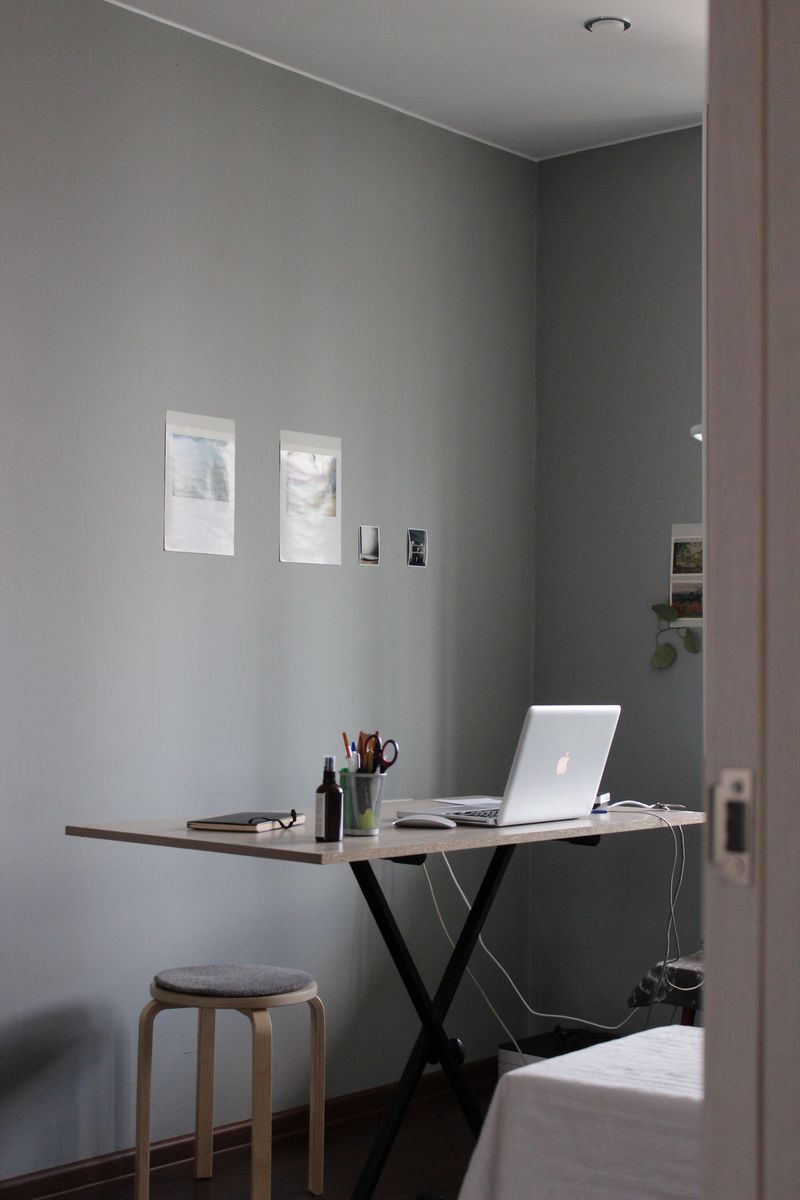
Here’s something that might surprise you: many exceptionally smart people deliberately limit entertainment noise in their homes.
Fewer TVs blaring in the background, fewer notification sounds competing for attention, fewer visual distractions scattered around.
The goal isn’t to live like a monk — it’s to protect mental space for thinking that actually goes somewhere.
Deep work — the kind that produces real insights and breakthroughs — requires stretches of uninterrupted focus.
That’s hard to achieve in a space constantly buzzing with stimulation.
Smart people tend to design their environments so that concentration is the default, not the exception.
Even simple changes, like putting your phone in another room while you work or reading, can shift the quality of your thinking in ways that feel almost immediate.