 MomSkoop

Growing up feeling different from everyone around you can be a lonely experience. Whether you felt too quiet, too intense, too nerdy, or just somehow out of place, that feeling shapes you in ways you might not fully notice until later.
The good news is that many people who felt like outsiders as kids end up developing some surprisingly powerful traits. Here are 12 traits that often grow from that experience of feeling different.
1. Strong self-awareness

Some kids spend their lunch break replaying every conversation they had that morning, wondering why they reacted the way they did.
That habit of self-examination, while sometimes exhausting, builds something powerful over time: a deep understanding of who you are.
People who felt different growing up often become highly self-aware adults.
They know their triggers, their values, and their blind spots better than most.
They have spent years asking themselves hard questions like “Why do I feel this way?” or “What do I actually want?”
That kind of inner knowledge is genuinely rare.
It helps with decision-making, relationships, and personal growth in ways that people who never questioned themselves may struggle to access.
2. Independence

When you grow up feeling like you never quite fit the group, you stop waiting for the group to validate your choices.
You learn to think for yourself, make your own decisions, and trust your own judgment, even when others disagree.
Independence becomes a survival skill first, and a strength second.
Kids who felt different often figured out early that following the crowd was not going to make them happy, so they stopped trying.
Over time, that habit of going their own way becomes a genuine asset.
As adults, these people are often confident thinkers who do not need constant approval to move forward.
They can lead, create, and problem-solve without being held back by the need to fit in.
3. Heightened empathy

Knowing what it feels like to sit alone at lunch, to be left out of a conversation, or to have your excitement met with blank stares – that experience stays with you.
And it often turns into one of the most meaningful gifts a person can carry.
People who felt different growing up tend to notice when others feel excluded or misunderstood.
They pick up on the quiet kid in the corner, the person whose joke landed wrong, or the colleague who seems uncomfortable in the meeting.
They notice because they have been there.
That heightened empathy makes them excellent friends, partners, and coworkers.
They create spaces where other people feel genuinely seen, which is something the world always needs more of.
4. Sharp observational skills

Before joining any social situation, some kids instinctively scan the room.
They watch who is laughing with whom, who looks tense, and what the unspoken rules seem to be.
This is not shyness exactly – it is strategy built from experience.
Growing up feeling different teaches you to read people carefully.
When you are not automatically accepted, you learn to observe first and act second.
Over time, this becomes a finely tuned skill that most people never deliberately develop.
Adults who grew up this way are often remarkably perceptive.
They notice body language, tone shifts, and social dynamics that others miss entirely.
In careers involving communication, leadership, or creative work, this skill becomes a serious competitive advantage.
5. Creativity
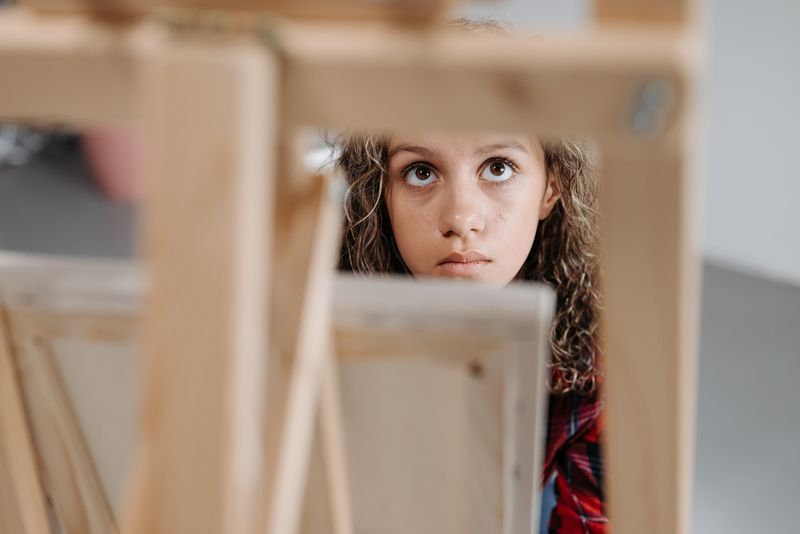
When the mainstream world does not feel like home, many kids build their own world instead.
They write stories, draw elaborate characters, build things, compose music, or disappear into elaborate fantasy universes they have invented entirely on their own.
Feeling different often pushes people toward unconventional thinking.
Without the pressure to conform to what everyone else finds interesting, they follow their curiosity wherever it leads.
That freedom to wander mentally is actually a core ingredient of creativity.
Research consistently shows that people who think differently, literally and figuratively, tend to make more original connections between ideas.
Many artists, writers, inventors, and innovators describe feeling like outsiders growing up.
That sense of not quite fitting in may have been the spark all along.
6. Adaptability

Moving between different friend groups, classrooms, or social situations without a guaranteed place in any of them teaches flexibility fast.
Kids who felt different often had to figure out how to function across wildly different environments just to get through the school day.
That experience builds adaptability in a lasting way.
As adults, they tend to be comfortable in unfamiliar settings, quick to adjust their communication style, and able to connect with people from many different backgrounds.
They are not thrown off easily when plans change or situations shift.
Adaptability is consistently ranked as one of the most valuable traits in the modern workplace.
People who spent their childhoods navigating social uncertainty often arrive at adulthood with this skill already well-developed and ready to use.
7. Sensitivity to rejection

Here is a trait that cuts both ways.
Growing up feeling different often means experiencing rejection more frequently or more painfully than others.
Over time, the nervous system can become finely tuned to even small signs of disapproval or exclusion.
This sensitivity can be a real challenge in adulthood.
A brief pause before someone responds, a slightly flat tone in a message, or being left off a group invitation can trigger a level of anxiety that feels disproportionate to the situation.
It is not weakness – it is a learned response from real experiences.
Understanding this pattern is the first step toward managing it.
Many people work through rejection sensitivity with therapy, self-reflection, or simply by building relationships where they feel consistently safe and valued.
8. People-pleasing tendencies

When fitting in feels like a constant effort, one common response is to become whoever the room needs you to be.
You laugh at jokes you do not find funny, agree with opinions you privately disagree with, and shrink the parts of yourself that seem to make others uncomfortable.
People-pleasing often starts as a way to reduce social pain.
If being yourself leads to exclusion, changing yourself feels like a reasonable solution, especially when you are young and the social stakes feel enormous.
The challenge is that this pattern can persist long into adulthood, making it hard to set boundaries or stay true to your own needs.
Recognizing people-pleasing as a coping strategy rather than a personality flaw is often the first step toward building more honest, balanced relationships.
9. A strong commitment to authenticity

Not everyone who felt different growing up responds by shrinking.
Some go the opposite direction entirely.
After years of trying to fit a mold that never quite worked, they make a firm decision: they would rather stand alone as themselves than blend in as someone they are not.
This commitment to authenticity can become one of the most defining traits a person carries.
It shows up in how they dress, how they speak, what work they choose, and who they let into their lives.
There is a quiet boldness to it that others often find magnetic.
Authenticity is not about being dramatic or deliberately different.
It is simply the result of a person who has done the hard work of figuring out who they actually are, and choosing that version of themselves on purpose.
10. Comfort with solitude

Spending a lot of time alone as a kid – whether by choice or circumstance – teaches you something that many people never learn: your own company can actually be pretty good.
You develop interests, inner conversations, and a relationship with your own mind that becomes genuinely enjoyable.
Adults who grew up feeling different often have a high tolerance for solitude that others find surprising.
They do not need constant social stimulation to feel okay.
They can spend a weekend alone and come out of it feeling refreshed rather than lonely.
This is a genuine advantage in a noisy, overstimulating world.
The ability to sit with yourself, to think clearly without external input, and to enjoy quiet is something many people spend years in therapy trying to develop.
11. Deep, meaningful relationships
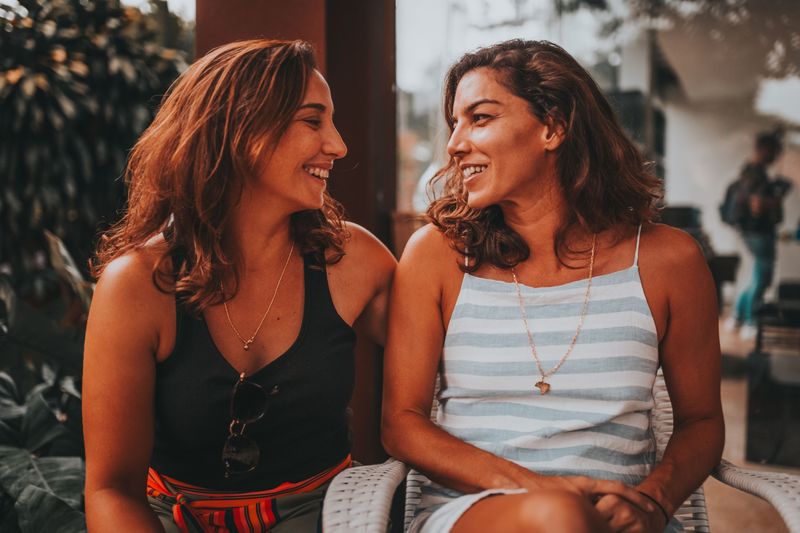
Quality over quantity is not just a preference for people who grew up feeling different – it is practically a philosophy.
When surface-level social interactions never quite satisfied, you naturally start seeking something with more substance.
Small talk feels hollow; real connection feels like oxygen.
As adults, these individuals tend to invest deeply in a small number of relationships rather than spreading themselves thin across many casual ones.
They are the friends who actually remember what you told them three months ago, who show up when things get hard, and who ask questions that go beyond the surface.
Those kinds of friendships are rare and valuable.
The capacity for deep connection, built through years of longing for it, becomes one of the most beautiful things these individuals have to offer.
12. Resilience

Feeling different is not easy, and it does not always get easier right away.
But navigating that discomfort over months and years quietly builds something that is hard to teach any other way: the ability to keep going despite social pressure, criticism, or the feeling that you do not belong.
Resilience, in this context, is not about being unaffected.
It is about learning to tolerate discomfort without falling apart.
People who felt different growing up often have a high threshold for uncertainty and a practiced ability to recover from setbacks that others find destabilizing.
That strength tends to show up across every area of adult life, from careers to relationships to personal challenges.
The kid who survived feeling like an outsider often becomes the adult who handles hard things with quiet, steady determination.