 MomSkoop

Some masculine behaviors, while common, can come across as intimidating or even unsettling to women. Understanding why these behaviors feel threatening is the first step toward healthier interactions between people.
Whether these actions are intentional or not, they can create tension and discomfort in everyday situations. Knowing what to look out for can help both men and women navigate social dynamics with more awareness and respect.
1. Using Physical Size to Dominate a Space

Some men instinctively spread out, taking up as much space as possible, whether on public transit, in meetings, or during arguments.
This behavior, sometimes called “manspreading,” can feel like a power move even when it is not intentional.
For women, being physically overshadowed can trigger feelings of vulnerability.
A man who expands his presence through wide stances or outstretched arms can make others feel crowded and small.
Body language communicates a lot without words.
Being mindful of how much space you occupy in shared environments shows respect for the people around you, and that kind of awareness goes a long way in building trust.
2. Speaking in an Unusually Loud or Forceful Voice
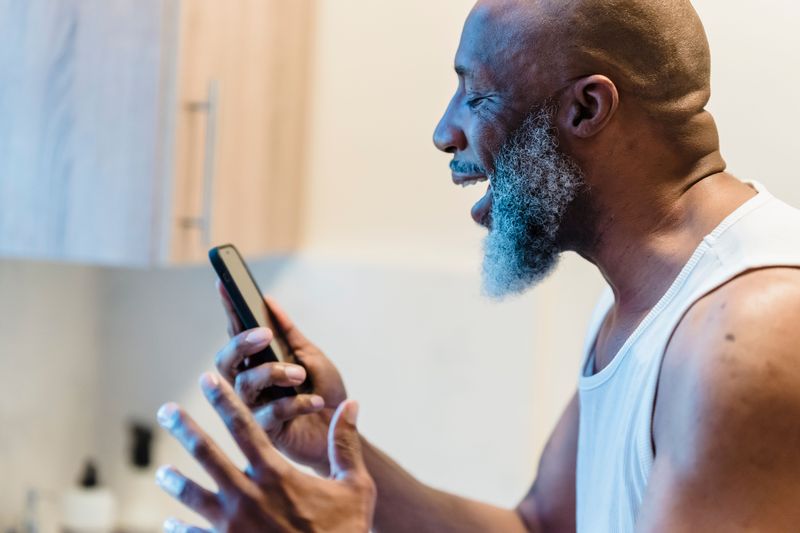
A raised voice can feel like a warning signal, even when no real danger exists.
When a man consistently speaks at high volume or with a sharp, forceful tone, it can put those around him on edge.
Women often report feeling anxious or shut down when someone speaks to them this way.
The loudness itself becomes a barrier to honest communication, making it hard to respond calmly or feel heard.
Volume and tone are powerful tools.
Speaking at a steady, moderate level signals confidence without aggression.
Learning to adjust your voice based on the situation is a simple but meaningful way to make conversations feel safer and more balanced for everyone involved.
3. Standing Too Close During Disagreements

Personal space is a basic human need, and crossing that boundary during a heated moment sends a strong message.
When a man steps closer during a disagreement, it can feel like a physical warning rather than a conversational move.
Women often interpret this closeness as a subtle form of intimidation, even if the man believes he is simply being assertive.
The body reads proximity as a threat long before the mind processes it logically.
Respecting someone’s personal space, especially during conflict, is a sign of emotional maturity.
Keeping a comfortable distance allows both people to think clearly and respond without feeling physically pressured or cornered.
4. Showing Aggression Toward Objects When Angry

Punching walls, slamming doors, or throwing objects might feel like a release of frustration, but to someone watching, it looks a lot like a preview of something worse.
This kind of displaced aggression is deeply unsettling.
For many women, witnessing this behavior triggers a fear response that is hard to shake.
Even if the anger is not directed at them, the unpredictability of it creates a lasting sense of unease and distrust.
Healthy anger management does not involve taking it out on your surroundings.
Finding constructive outlets like exercise, journaling, or talking through feelings helps build emotional control and shows the people around you that you are safe to be near.
5. Driving Aggressively to Demonstrate Confidence

Road rage and aggressive driving are often used as ways to signal dominance and fearlessness.
Speeding, tailgating, or cutting off other drivers might feel thrilling to the driver, but it is terrifying for passengers.
Women who are passengers during aggressive driving frequently report feeling trapped and powerless.
The inability to exit a moving vehicle makes the situation feel especially alarming, and any protest is often dismissed as overreacting.
Driving is a shared responsibility, and how you handle a vehicle says a lot about how you handle pressure in general.
Calm, controlled driving is not a sign of weakness – it shows respect for everyone on the road, including the person sitting next to you.
6. Turning Every Disagreement Into a Competition

Some men approach disagreements like they are playing to win rather than trying to understand.
Every difference of opinion becomes a contest, and losing the argument feels like a personal defeat.
This competitive mindset shuts down real conversation.
Women often feel like their perspectives are being steamrolled rather than considered, which leads to frustration and emotional withdrawal from the relationship.
Healthy disagreements are about finding common ground, not declaring a winner.
When you shift your focus from being right to being curious about the other person’s point of view, conversations become less stressful and far more productive.
That shift alone can completely change the tone of a relationship.
7. Refusing to Show Vulnerability

There is a long-standing idea that real men do not cry, do not admit fear, and certainly do not ask for help.
This wall of emotional unavailability can feel cold and isolating to the people who care about them.
When a man refuses to show any vulnerability, it creates a lopsided dynamic.
Women may feel pressure to suppress their own emotions to match his energy, or they may feel like they are carrying the emotional weight of the relationship alone.
Opening up takes courage, and that is worth acknowledging.
Sharing fears, doubts, or feelings does not make someone weak – it makes them human.
Emotional honesty builds deeper connections and makes relationships feel like a safe space for both people.
8. Using Prolonged Staring to Assert Dominance

Eye contact is a normal part of communication, but when it crosses into a prolonged, unblinking stare, it becomes something else entirely.
That kind of intense gaze can feel predatory rather than confident.
Women often describe this experience as deeply uncomfortable, almost like being sized up or challenged.
The stare communicates a desire to unsettle rather than connect, and most people pick up on that distinction quickly.
Confident eye contact is warm and natural, breaking occasionally and returning with ease.
Staring someone down to assert power sends the wrong message entirely.
Practicing relaxed, genuine eye contact creates connection rather than tension, and that is a far more effective way to command respect in any room.
9. Making Threatening Jokes or Comments

“It is just a joke” is one of the most commonly used excuses for saying something genuinely hurtful or scary.
Jokes that hint at violence, control, or aggression are rarely as harmless as the person telling them believes.
For women, these kinds of comments can feel like a test or a warning.
Even when delivered with a laugh, the underlying message lands clearly – and it does not feel funny from the receiving end.
Humor should bring people together, not leave someone wondering if they are safe.
Paying attention to how your jokes land, and being willing to hear feedback without getting defensive, reflects emotional intelligence and genuine respect for the people you are speaking with.
10. Treating Physical Confrontations as a Way to Prove Toughness

Growing up, many boys are taught that fighting proves strength.
That lesson follows some men into adulthood, where physical confrontation becomes a default response to feeling disrespected or challenged.
Watching a man escalate quickly to physical threats or altercations is frightening for women nearby.
It signals poor impulse control and a willingness to cause harm, which are not qualities that make anyone feel safe.
Real strength shows up in restraint.
Walking away from a fight, de-escalating a tense situation, or choosing words over fists takes far more self-control than throwing a punch.
That kind of composure earns lasting respect in a way that brawling simply never will.
11. Becoming Highly Territorial Around Other Men

Jealousy that turns into territorial behavior can look like protection on the surface, but it often feels like control underneath.
When a man becomes visibly hostile toward other men who interact with his partner, it creates a tense and suffocating environment.
Women in these situations often feel like property rather than partners.
The constant monitoring of who talks to them, who looks at them, or who gets too close becomes exhausting and emotionally draining over time.
Trust is the foundation of any healthy relationship.
A partner who feels secure does not need to mark his territory or intimidate other men.
Building that kind of inner confidence creates a relationship dynamic where both people feel free, valued, and genuinely respected.
12. Dismissing Fear or Caution as Weakness

“You are overreacting” or “Stop being so scared” are phrases that shut down legitimate feelings fast.
When a man consistently dismisses fear or caution, he sends the message that emotions are inconvenient rather than valid.
Women who regularly hear their concerns brushed aside start to doubt their own instincts.
Over time, that self-doubt can erode confidence and make it harder to speak up, even in situations that genuinely require caution.
Fear is not a character flaw – it is a survival tool.
Acknowledging someone else’s worry, even if you do not share it, shows empathy and emotional awareness.
That kind of validation strengthens trust and makes the other person feel genuinely seen and heard.
13. Using Physical Strength to Intimidate Others

Physical strength is not inherently intimidating, but when it is used as a tool to control or frighten others, it becomes a serious problem.
Blocking a doorway, grabbing an arm, or simply looming over someone are all ways strength gets weaponized.
For women, these moments can be deeply alarming.
The awareness of a physical size difference is already present in many interactions, and when a man leans into that difference deliberately, it confirms a fear that was already there.
Strength used with care and restraint is admirable.
Using it to make others feel small or trapped is not toughness – it is a lack of self-awareness.
Choosing gentleness when you could choose force is one of the most quietly powerful things a person can do.