 MomSkoop
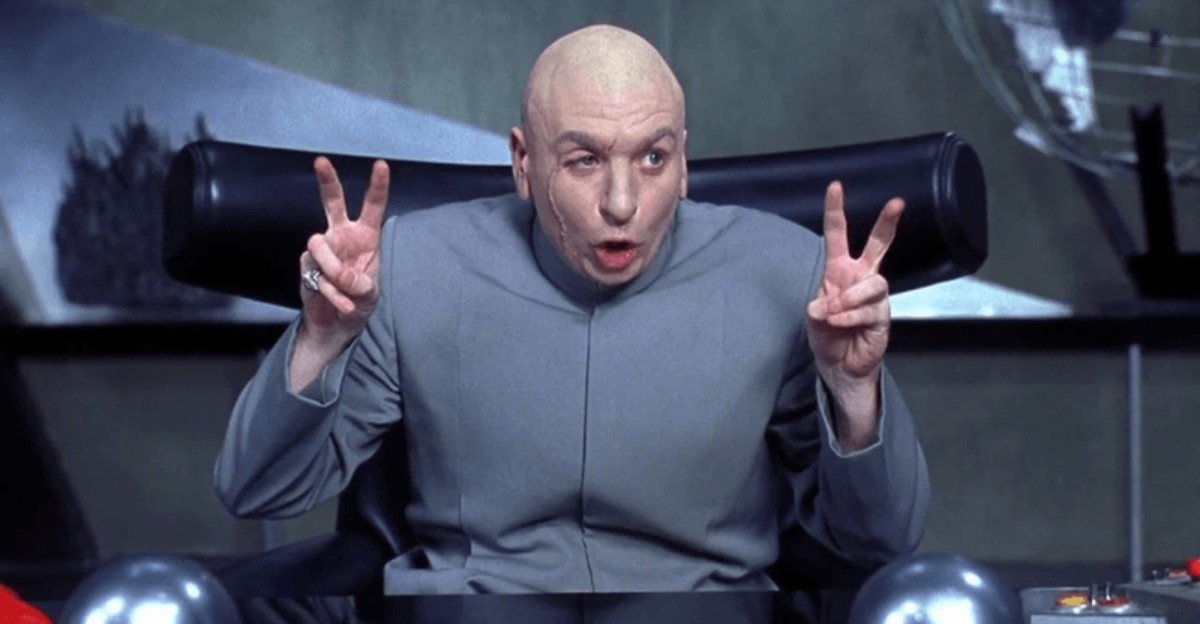
One of the most celebrated villain performances of the 1990s lasted only about 16 minutes on screen, and it still won Best Actor. That decade kept proving that a bad guy didn’t need endless scenes to steal a whole movie. The era’s troublemakers came in strange packages, including liquid metal, hand-drawn ink, and one very chatty voice on a landline. A few were regular folks in sweaters, which somehow made them even scarier than the monsters.
I love revisiting these characters because many of them hold up better than the heroes who fought them. Their best lines still pop up in everyday conversation, often from people who never saw the movies. My list mixes chilling thrillers with animated classics and a few big comedies, so any movie night has options. Which 1990s villain did you secretly root for the first time around?
1. Hannibal Lecter
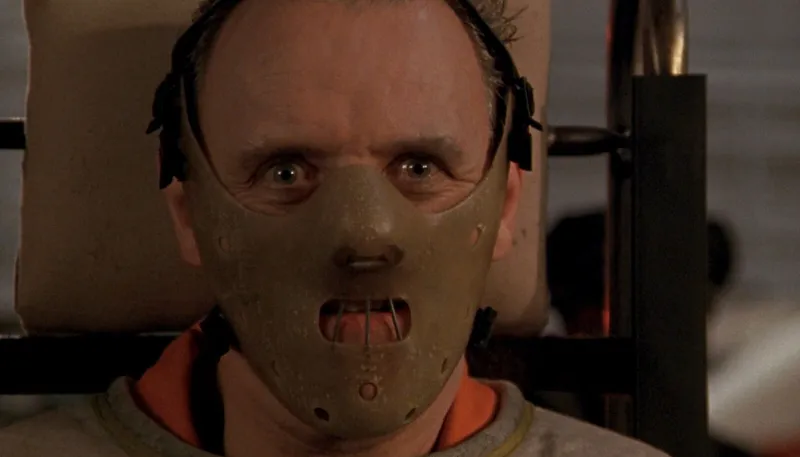
Sixteen minutes is barely enough time to fold laundry, yet Anthony Hopkins used about that much screen time to win Best Actor.
His Dr. Hannibal Lecter in The Silence of the Lambs remains one of the most studied villain turns in movie history.
The film opened on February 14, 1991, which is a bold choice for a Valentine’s Day date night.
Jonathan Demme directed it from Ted Tally’s script, based on the 1988 novel by Thomas Harris.
Lecter is a brilliant psychiatrist locked in a high-security cell, and FBI trainee Clarice Starling, played by Jodie Foster, needs his help catching another criminal.
Their conversations through the glass carry the whole movie.
Watch how little Hopkins moves.
He barely blinks, keeps his voice calm, and holds eye contact so long that you might start squirming on your couch.
The film swept the five biggest Oscars: Best Picture, Director, Actor, Actress, and Adapted Screenplay.
It’s the only horror film to pull off that feat so far.
For a fresh viewing, pay attention to what Lecter notices about Clarice before she says a word.
The scariest thing about him is how closely he listens.
2. T-1000
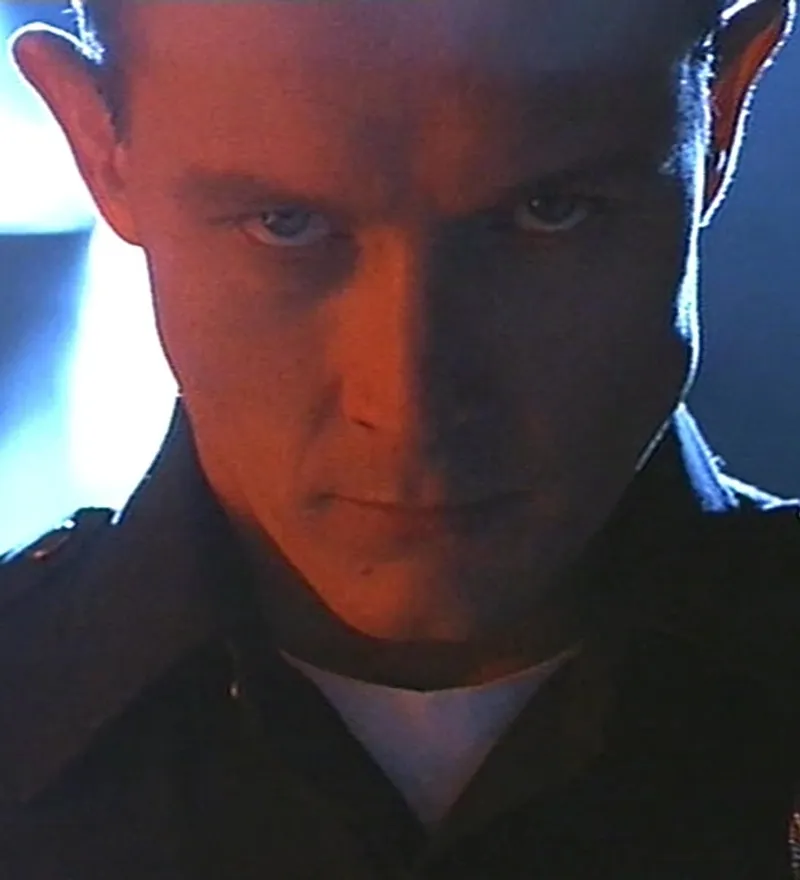
Arnold Schwarzenegger was the big muscle in Terminator 2: Judgment Day, so James Cameron made the new villain lean, quiet, and alarmingly polite.
Robert Patrick played the T-1000, a shape-shifting machine made of liquid metal.
The movie arrived on July 3, 1991, and audiences got a look at computer effects that felt like magic at the time.
Industrial Light & Magic created the morphing shots, while Stan Winston Studio built practical effects for the gooier moments.
Patrick trained hard for the part, including martial arts and endurance work.
He practiced firing weapons without blinking and developed a smooth, steady run that made the character seem like he could never get tired.
That running style is the detail to watch on a rewatch.
He chases a kid on a dirt bike on foot, and the kid’s head start suddenly looks tiny.
Terminator 2 earned over $520 million worldwide and won four Academy Awards, mostly for its technical work.
Plenty of later blockbusters borrowed from its effects playbook.
The T-1000 still works because the effects serve a simple idea.
You can’t reason with it, and you can’t outrun it.
3. Scar
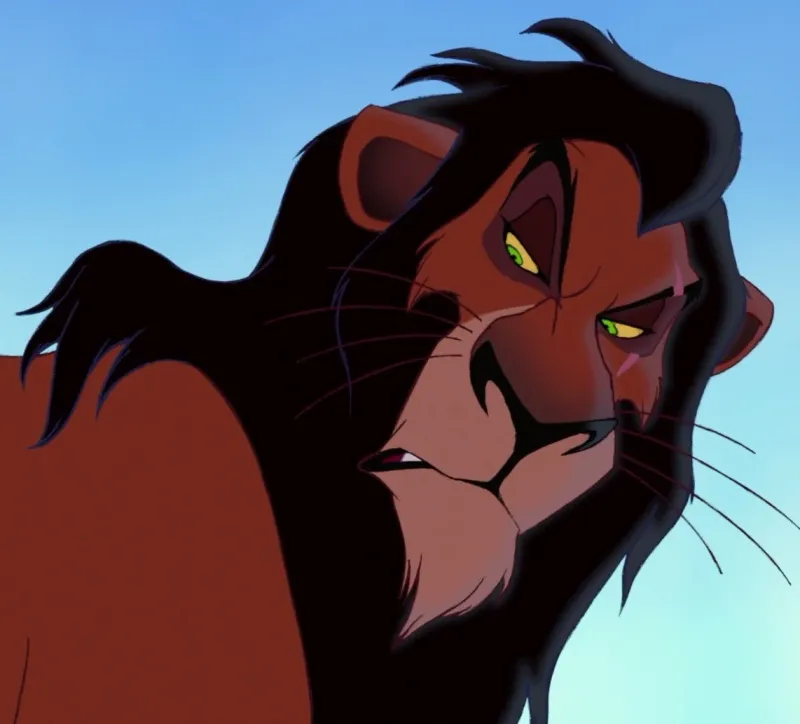
Plenty of families have a relative who sulks at reunions, but few take it as far as Scar.
Jeremy Irons voiced Mufasa’s jealous younger brother in Disney’s The Lion King, released June 24, 1994.
Directors Roger Allers and Rob Minkoff drew inspiration from Shakespeare’s Hamlet for the story.
Scar plays the Claudius role, the uncle who schemes his way onto the throne.
Irons gives him a dry, bored, very British voice, as if ruling the Pride Lands is an inconvenience he deserves anyway.
Lines that could sound silly coming from a cartoon lion land with real bite.
His big song, Be Prepared, features marching hyenas and plenty of green fog.
Irons strained his voice during recording, and Jim Cummings, who also voiced the hyena Ed, reportedly stepped in to finish part of it.
Pay attention to the character design too.
Scar is thin, dark-maned, and drawn with sharp angles, while Mufasa looks broad and golden.
Kids often remember him as simply mean, but adults catch the jealousy and manipulation underneath.
Rewatching as a grown-up makes his talks with young Simba much creepier.
Families watching together may want a heads-up about the stampede scene.
It still hits hard, even if you know what’s coming.
4. Annie Wilkes
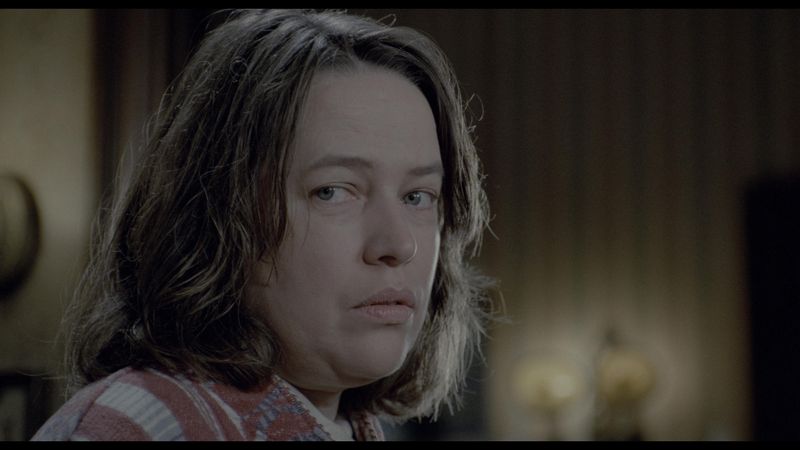
Few movie lines turn a compliment into a threat quite like ‘I’m your number one fan.’ Kathy Bates delivered it as Annie Wilkes in Misery, which Columbia Pictures released on November 30, 1990.
Rob Reiner directed the adaptation of Stephen King’s 1987 novel, with a screenplay by William Goldman.
James Caan plays Paul Sheldon, a novelist Annie rescues after a car crash in the snow.
At first, she seems like a helpful nurse with a fondness for her pet pig and old-fashioned manners.
Then she reads his new manuscript and learns what he did to her favorite character, Misery Chastain.
Bates swings from sweet to furious in seconds, and that sudden switch is the scariest effect in the film.
She uses goofy made-up curse words like cockadoodie, which somehow makes her more unsettling.
Her work earned the Academy Award for Best Actress.
Misery remains the only film based on a Stephen King novel to win an Oscar.
Annie has no superpowers, no mask, and no haunted house.
She’s just a person with a sweater, a typewriter, and very strong opinions about how stories should end.
Fair warning for squeamish viewers: one scene involving a sledgehammer is famous for good reason.
Keep a pillow nearby.
5. Ghostface
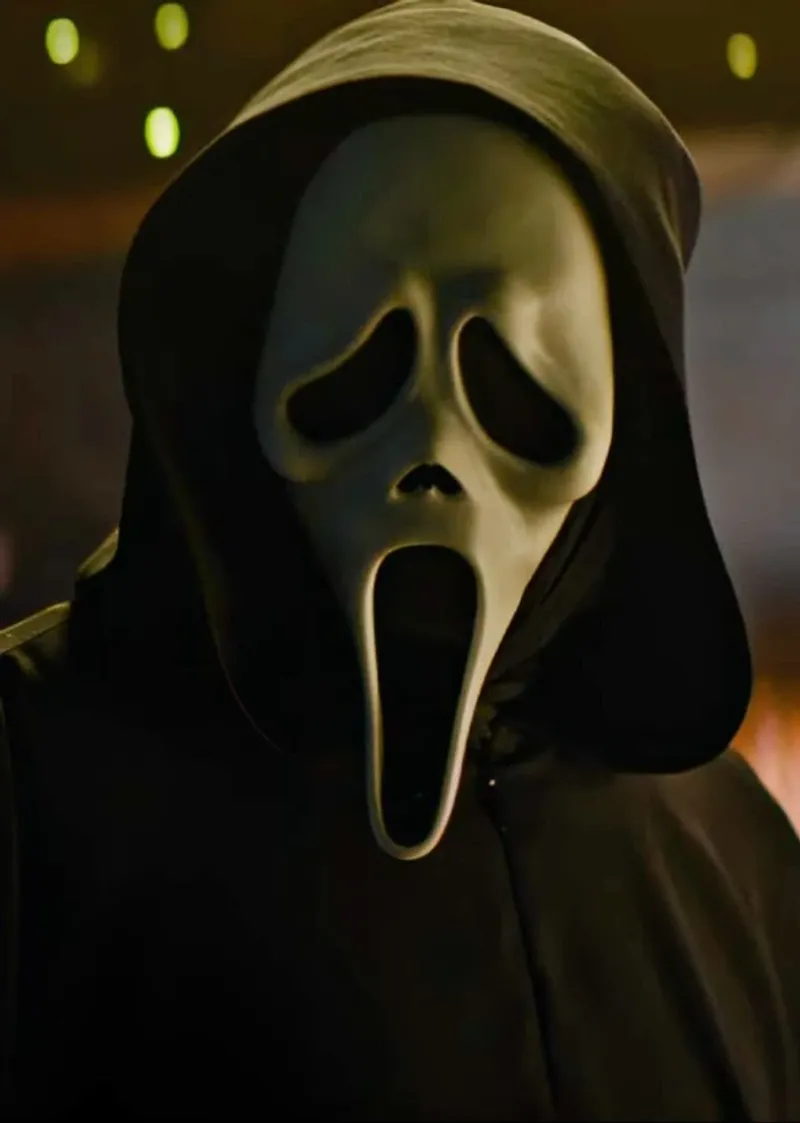
A ringing landline was harmless in 1996 until Scream made answering the phone feel like a risky move.
Wes Craven directed, Kevin Williamson wrote the script, and the film opened on December 20, 1996.
The masked villain, known as Ghostface, hides behind a white mask that looks like a melting scream.
The real weapon, though, is the voice on the other end of the line.
Roger L.
Jackson provides that voice, and he developed the delivery during his first audition.
He sounds friendly, teasing, and menacing at once, like a quiz host who got a little too into the job.
Movie trivia is part of the threat.
Ghostface asks horror questions, and the characters who know the genre’s rules have a better shot at surviving.
Neve Campbell stars as Sidney Prescott, with Courteney Cox, David Arquette, Matthew Lillard, Rose McGowan, and Skeet Ulrich rounding out the cast.
Drew Barrymore appears in the famous opening scene, which sets the tone fast.
Scream grossed about $173 million worldwide and gave the slasher genre a fresh jolt.
Jackson has voiced Ghostface across the franchise, so the phone calls keep sounding familiar.
Skip spoilers if a friend hasn’t seen it yet.
The who-is-it guessing game is half the fun.
6. Keyser Söze
Spoiler-free promise: this section keeps the big secret locked up.
The Usual Suspects, released August 16, 1995, builds its whole story around a crime boss who may or may not exist.
Bryan Singer directed, and Christopher McQuarrie won the Oscar for Best Original Screenplay.
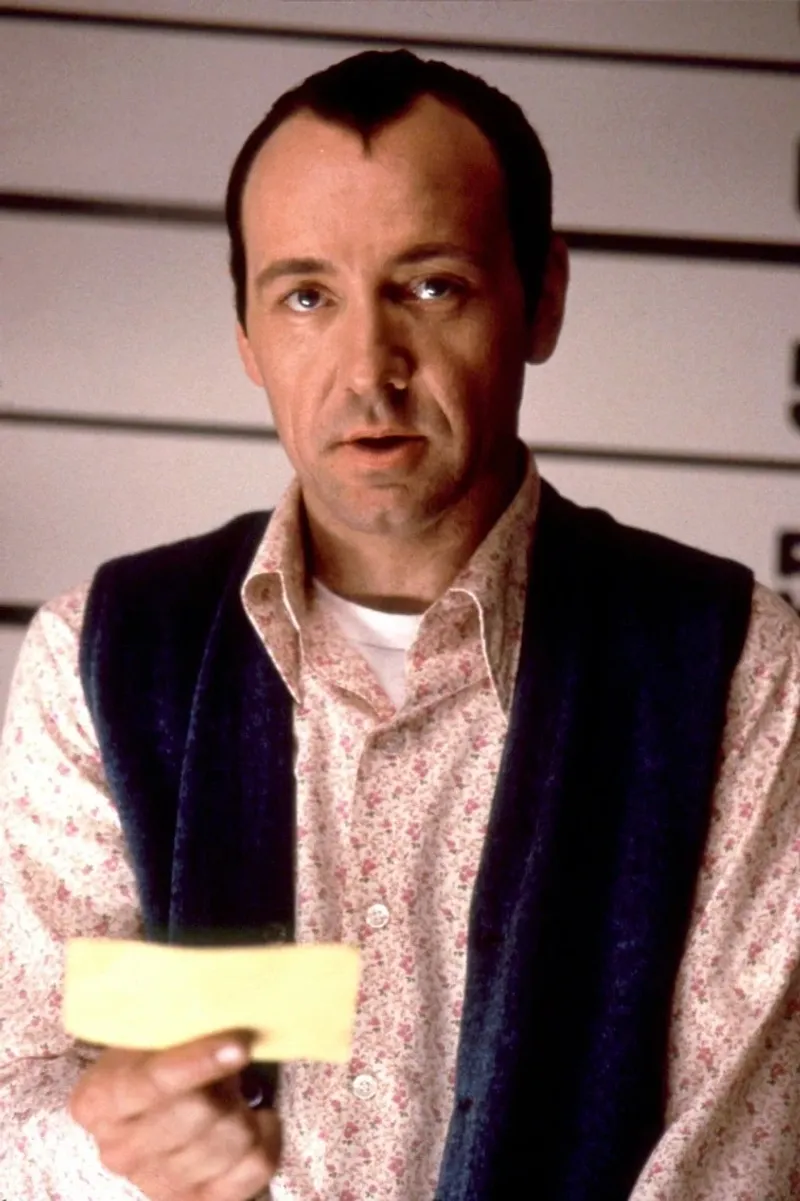
The story unfolds through a police interrogation of Roger Verbal Kint, a small-time con man played by Kevin Spacey.
Verbal tells a winding tale about five criminals who meet in a police lineup.
As he talks, the legend of Keyser Söze grows bigger, stranger, and more frightening.
A famous line compares Söze to the Devil and his greatest trick.
You’ll hear versions of it in parodies, reviews, and late-night arguments about plot twists.
Spacey won the Academy Award for Best Supporting Actor for the role.
Gabriel Byrne, Benicio del Toro, Stephen Baldwin, Kevin Pollak, and Chazz Palminteri fill out the cast.
If you already know the ending, a second viewing turns into a fun hunt for clues.
If you don’t, stay away from the internet until you’ve watched it.
7. Jafar
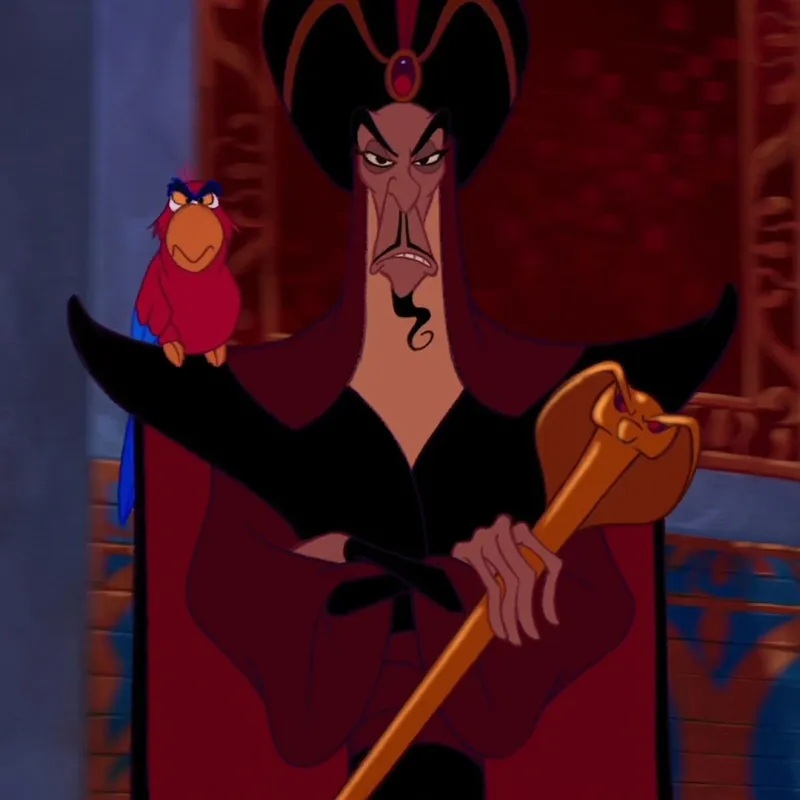
Tall, thin, and armed with a cobra-headed staff, Jafar looks like he was designed to cast a shadow over an entire palace.
Jonathan Freeman voiced the royal vizier in Disney’s Aladdin, released in November 1992.
Jafar wants the Sultan’s throne and the genie’s lamp, and he’s not shy about hypnotizing people to get them.
Freeman gives him a silky, smug voice that sounds like he’s always enjoying a private joke.
His sidekick Iago, voiced by Gilbert Gottfried, handles the loud complaining Jafar is too dignified to do himself.
The pairing works like a classic comedy duo with a criminal plan.
Andreas Deja, the Disney animator who also supervised Gaston and Scar, led the animation for Jafar.
You can spot a similar sharp elegance in the way those villains move.
Freeman’s connection to the role didn’t end with the film.
He returned for the sequel The Return of Jafar and later played the character in the Broadway musical.
Kids usually remember the giant snake transformation near the end.
Adults tend to notice how much of his scheming happens through flattery and polite manners.
That makes him a fun villain to watch as a family.
He’s dramatic enough for little viewers and sly enough for the grown-ups.
8. Gaston
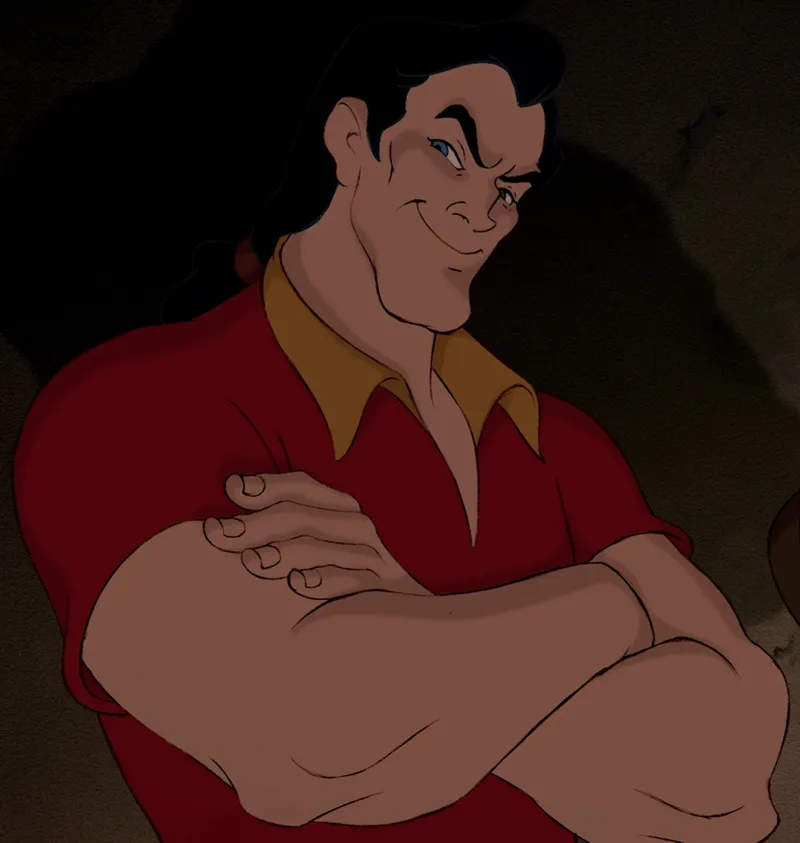
Four dozen eggs a day as a lad, and five dozen as an adult.
That’s Gaston’s own bragging in his signature song, and it tells you plenty about the guy.
Richard White voiced the vain hunter in Disney’s Beauty and the Beast, released in 1991.
The film became the first animated feature nominated for the Academy Award for Best Picture.
Gaston starts out as the town celebrity, admired for his looks and his trophy-covered walls.
Belle turns down his proposal, and his wounded pride slowly shapes him into a real threat.
That shift makes him worth revisiting.
He’s a reminder that charm and popularity can hide a pretty ugly temper.
His sidekick LeFou, voiced by Jesse Corti, fuels the ego with a whole musical number.
The song Gaston is so catchy that you may end up humming a tribute to a villain.
Later, The Mob Song shows him turning a crowd against the Beast with a few angry words.
It plays very differently once you notice how easily the villagers follow him.
For a fun rewatch, count how many times Gaston admires his own reflection.
Bring snacks, but maybe skip the eggs.
9. Hades
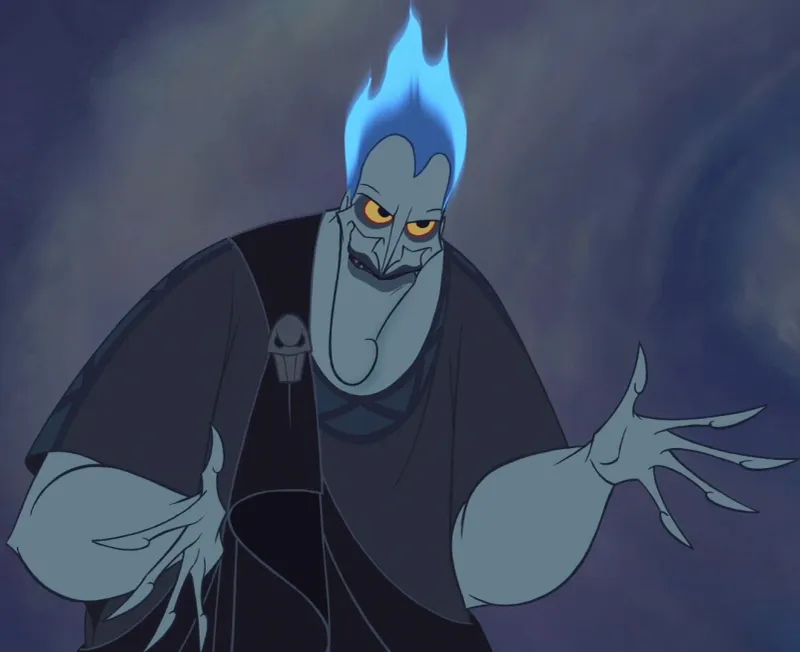
Most rulers of the underworld brood quietly, but this one talks like a salesman racing to close a deal before lunch.
James Woods voiced Hades in Disney’s Hercules, released in 1997.
Woods delivers lines at lightning speed, with jokes, insults, and sarcastic asides stacked on top of each other.
Plenty of his dialogue sounds loose and off the cuff, which fits a god who never stops talking.
Watch his hair, which is a blue flame most of the time.
When he loses his temper, it bursts into bright orange-red fire.
His goofy henchmen, Pain and Panic, are voiced by Bobcat Goldthwait and Matt Frewer.
They spend most of the film fumbling assignments and getting scolded.
Hades has a clear goal: overthrow Zeus and take over Mount Olympus.
Hercules stands in the way, so Hades tries just about any trick to get rid of him.
What sets him apart from many Disney villains is his comic timing.
He’s menacing, but he’s also the funniest character in plenty of his scenes.
The film borrows freely from Greek myths, so treat it as a playful remix rather than a history lesson.
Your mythology teacher may wince, but you’ll probably laugh.
10. Agent Smith
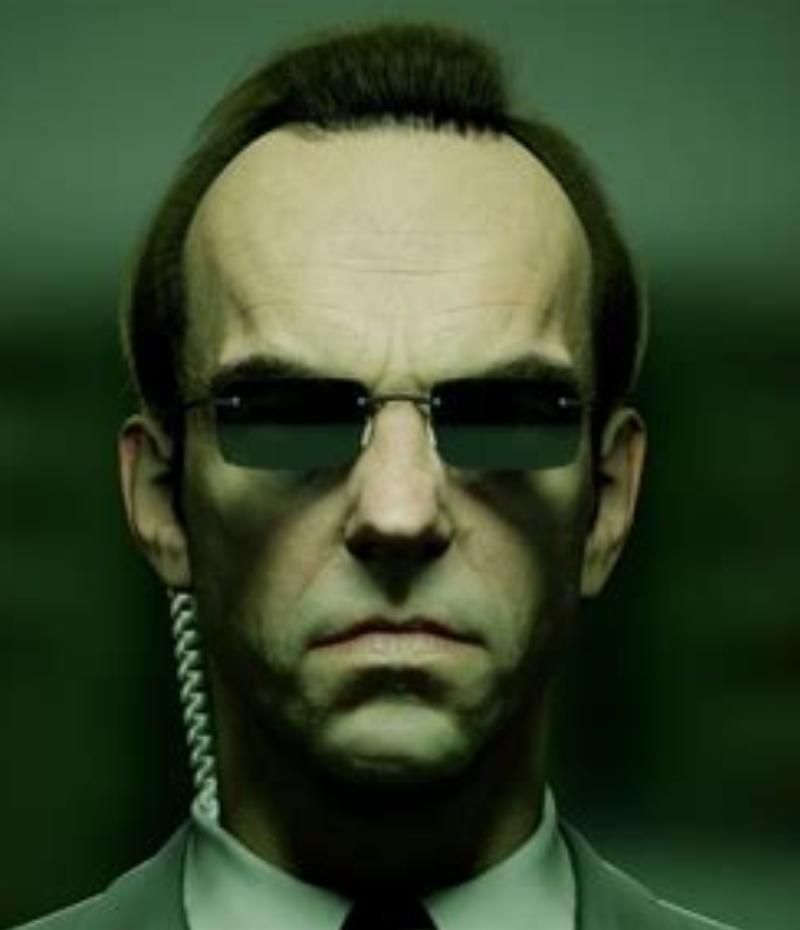
Sunglasses, a black suit, and an earpiece have rarely seemed as threatening as they do on Agent Smith.
Hugo Weaving played the program in The Matrix, which opened on March 31, 1999.
Lana and Lilly Wachowski wrote and directed the film, which follows Keanu Reeves as Neo, a hacker who learns his world is a computer simulation.
Smith’s job is to keep that secret safe and stop anyone who fights the system.
Weaving speaks in slow, precise phrases, and the way he says Mr. Anderson has become a popular bit for impressions.
He makes a machine sound almost bored with humanity.
One standout scene features Smith comparing humans to a virus while Morpheus is held captive.
It’s creepy, but it also gives the villain an actual point of view.
The movie won four Academy Awards, including Best Visual Effects.
Weaving returned as Smith in The Matrix Reloaded and The Matrix Revolutions, both released in 2003.
Pay attention to his posture compared with Neo’s.
Smith stays stiff and upright, like a man allergic to relaxing.
A rewatch is also a time capsule of 1999 tech, chunky phones and all.
The landlines matter more than you might expect.
11. Dr. Evil
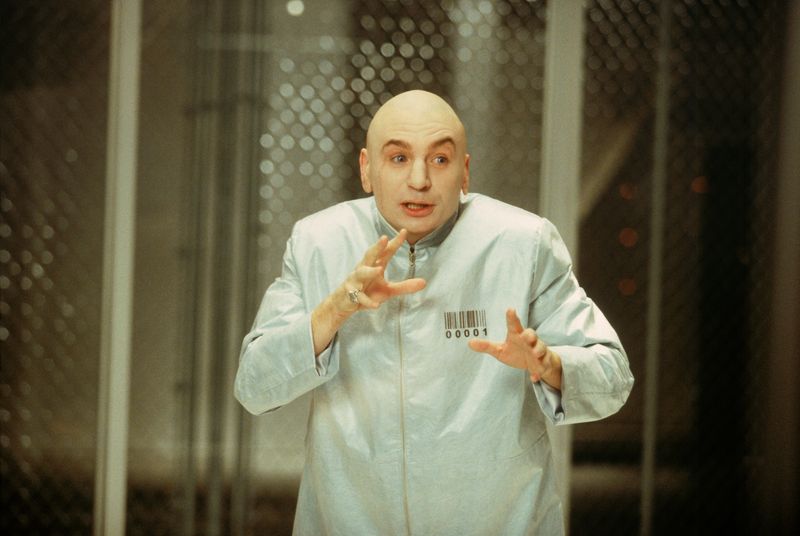
One million dollars.
Dr. Evil delivers that ransom demand with his pinky at his lip, and the joke is that the amount sounds tiny in the 1990s.
Mike Myers plays both Dr. Evil and the hero in Austin Powers: International Man of Mystery, released in 1997.
The villain is a playful spoof of the bald masterminds from old spy movies.
Dr. Evil wakes up after decades in a frozen state and finds the world has changed without him.
His big schemes keep bumping into modern reality, and he struggles to keep up.
His hairless cat, Mr. Bigglesworth, sits on his lap like a fluff-free version of a classic Bond villain’s pet.
His loyal right-hand man Number Two, played by Robert Wagner, tries to steer him toward smarter business moves.
The pinky gesture still pops up in jokes about outdated prices and big talk.
You may have seen someone do it without knowing exactly where it came from.
Myers returned as Dr. Evil in two sequels, released in 1999 and 2002.
The character got even sillier with each film.
Comedy villains can age poorly, but this one still lands.
His silly menace works because he takes himself so seriously.
12. Sid Phillips
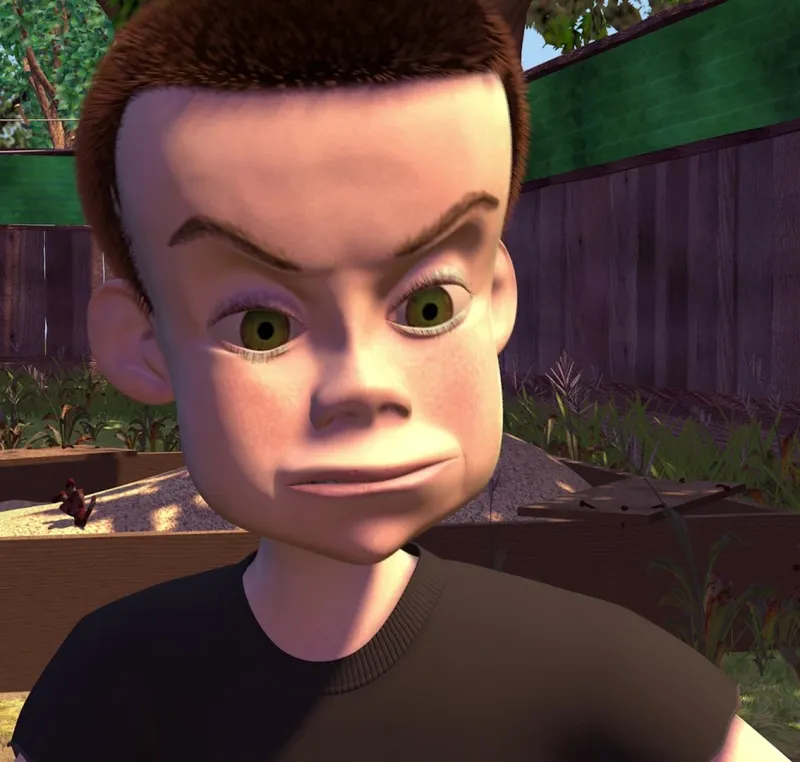
Toys rarely get scared, but in Toy Story they have good reason to fear the kid next door.
Sid Phillips, voiced by Erik von Detten, takes apart toys and rebuilds them into strange mixed-up creations.
Pixar released Toy Story on November 22, 1995, and it was the first feature film made entirely with computer animation.
Sid’s messy bedroom became one of its most memorable sets.
His mutant toys, like a baby doll head on a spidery metal body, look scary at first.
Then the film flips expectations in a clever way that rewards patient viewers.
Sid also has a growling dog named Scud and a skull shirt that signals trouble.
Even his little sister Hannah sees her doll swiped for his experiments.
Grown-up viewers often notice something kids miss.
Sid isn’t truly wicked, just an inventive kid who doesn’t realize toys have feelings.
Fans got a fun surprise in Toy Story 3.
Sid shows up briefly as a garbage collector, with von Detten returning to voice him.
By the final scene, you may wonder whether your own childhood toys held a grudge.
Maybe apologize to that action figure you once launched off the roof.
13. The Joker
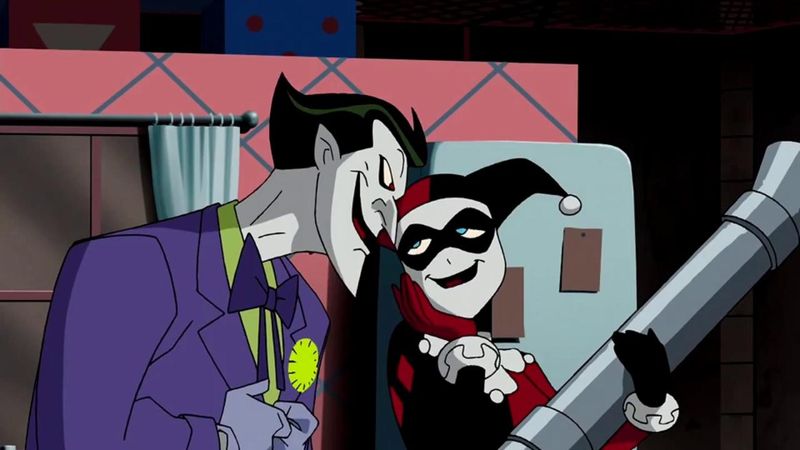
Mark Hamill spent years as Luke Skywalker, so few people expected him to become the creepiest laugh on Saturday morning TV.
Starting in 1992, his Joker on Batman: The Animated Series surprised everyone.
Hamill treated the laugh like a musical instrument.
He changed it to match the mood, going from giggles to booming cackles depending on the scene.
Many fans still call his version the best Joker of all time.
Looking for a fun weekend?
Stream a few episodes and listen closely.
You will hear how voice acting alone can make a cartoon villain unforgettable.