 MomSkoop

Every family gathering seems to have that one moment when a well-meaning comment turns into a heated debate. Baby Boomers, the generation born between 1946 and 1964, grew up in a very different world, and some of their favorite sayings can rub younger people the wrong way.
These phrases often come from a place of genuine care, but they can feel dismissive or out of touch to Millennials and Gen Z. Understanding why these expressions spark tension can actually help bridge the gap between generations.
1. Back in My Day…
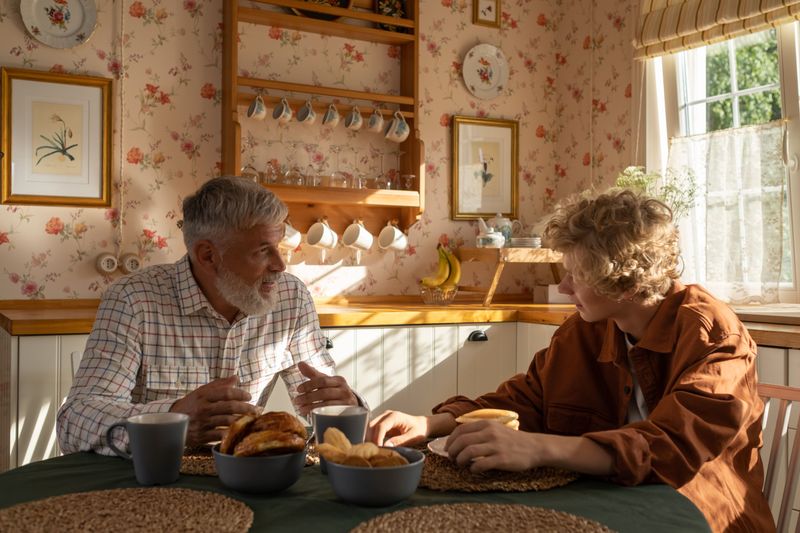
Few phrases signal an incoming lecture quite like “Back in my day…” It instantly sets up a comparison where the past wins and the present falls short.
For younger listeners, it can feel like their experiences are being erased before they even get a chance to speak.
The truth is, every generation faces its own unique set of challenges.
Rising costs, shifting job markets, and global pressures make today very different from decades past.
Comparing the two without context rarely leads to a fair conversation.
Try swapping this opener with curiosity instead.
Asking “What is it like for you now?” opens a real dialogue and shows respect for the listener’s lived experience.
2. Kids These Days Have It Too Easy

Saying this phrase almost always lands like a slap.
Young people today deal with student loan debt, a brutal housing market, mental health pressures, and social media scrutiny around the clock.
Calling that “easy” tends to shut down conversation fast.
Comfort and ease are not the same thing.
Having access to technology or modern conveniences does not erase the emotional and financial stress many young adults carry daily.
Each generation faces its own version of hard.
Boomers who replace this phrase with genuine questions often discover surprising common ground.
Asking “What is the hardest part of your life right now?” shows real interest and builds trust instead of resentment.
3. Respect Your Elders

Respect is a two-way street, and younger generations know it.
When this phrase gets dropped into a disagreement, it often feels less like wisdom and more like a conversation-stopper designed to end debate without addressing the actual issue.
Many young people genuinely admire their elders, but they also believe respect should be earned through actions, not automatically granted because of age.
That shift in thinking is not rudeness.
It reflects a broader cultural change in how relationships work.
Modeling respectful behavior, listening carefully, and acknowledging a young person’s viewpoint goes much further than demanding deference.
Mutual respect creates stronger bonds across generations than any top-down rule ever could.
4. Nobody Wants to Work Anymore

This phrase exploded in popularity during and after the pandemic, but it stings every time someone says it.
Workers who left low-wage, high-stress jobs were not being lazy.
Many were rethinking what fair compensation and healthy working conditions actually look like.
Younger workers have watched corporations prioritize profits over people for decades.
Choosing not to accept poor treatment is a calculated decision, not a character flaw.
Framing it as laziness dismisses very real economic frustrations.
A more useful question might be: “What would make work worth it for people?” That kind of thinking leads to actual solutions, like better wages and flexible schedules, rather than just frustration on both sides.
5. Pull Yourself Up by Your Bootstraps

This old expression was meant to inspire self-reliance, but it has a serious flaw: it assumes everyone starts from the same place.
When systemic barriers like racial inequality, poverty, or disability are part of someone’s reality, individual effort alone rarely closes the gap.
Research consistently shows that where you are born, who your parents are, and what community you grow up in have enormous influence on your life outcomes.
Hard work matters, but it does not operate in a vacuum free of social or economic context.
Acknowledging that some people face steeper hills is not making excuses.
It is being honest about how the world actually works, and that honesty is the first step toward meaningful support.
6. We Didn’t Have All These Problems Growing Up

Nostalgia has a sneaky way of editing out the hard parts.
The postwar era that Boomers often romanticize also included racial segregation, gender discrimination, the Cold War, and widespread poverty.
Those were not small problems, and they affected millions of people deeply.
When someone says this phrase, it can feel like younger people’s struggles are being dismissed as overblown or imagined.
Climate anxiety, mass shootings, and crushing student debt are real issues that deserve serious attention, not comparison contests.
Every era has its darkness.
Recognizing that past generations also faced genuine hardship, just different hardship, makes for a much more honest and compassionate conversation between the people sitting on opposite sides of the generational divide.
7. You’re Too Sensitive

Labeling someone “too sensitive” is a fast way to end a conversation without actually hearing them.
For younger generations raised with growing awareness of mental health and emotional intelligence, this phrase feels like a direct attack on their right to have feelings at all.
What looks like oversensitivity from the outside is often a healthy, informed response to genuine pain.
Therapy, social media, and education have helped many young people name their emotions more clearly than previous generations were ever taught to do.
Rather than dismissing feelings, asking “Can you help me understand why this bothers you?” opens a real exchange.
Emotional awareness is not weakness.
It is actually one of the most valuable skills a person can develop.
8. Because I Said So

Authority without explanation has a short shelf life.
Younger generations, shaped by access to information and a culture that values transparency, tend to push back hard when reasons are withheld. “Because I said so” feels authoritarian rather than wise.
Children and young adults who understand the reasoning behind a rule are far more likely to follow it willingly and internalize its value.
Explanation builds trust and teaches critical thinking, both of which are more useful long-term than blind obedience.
Sharing the “why” behind decisions does not undermine authority.
It actually strengthens it by showing that the person in charge has thought things through.
That kind of leadership earns genuine respect, not just reluctant compliance from someone who has no other choice.
9. That’s Just Common Sense

“Common sense” is rarely as common as people think.
What feels obvious to one person is often shaped by their specific upbringing, culture, and life experiences.
Calling something obvious can make the other person feel foolish for not already knowing it.
Younger people often approach problems with research, data, and diverse perspectives rather than relying on gut instinct or tradition.
That is not a lack of common sense.
It is a different, and often more thorough, way of thinking through complex situations.
Replacing “that’s just common sense” with “here’s how I think about it” invites a real exchange of ideas.
It treats the other person as a capable thinker rather than someone who simply missed something everyone else apparently already knew.
10. When I Was Your Age, I Already Owned a House

Home ownership comparisons hit particularly hard right now.
In the 1970s and 1980s, a modest income could realistically cover a mortgage.
Today, median home prices in many U.S. cities have outpaced wage growth by enormous margins, making that same goal feel impossibly out of reach.
Telling a young person they should already own a home ignores decades of economic shifts.
Stagnant wages, soaring tuition debt, and skyrocketing real estate prices have fundamentally changed what is achievable for Millennials and Gen Z, even with disciplined saving habits.
Swapping the comparison for practical encouragement, like sharing what budgeting strategies actually worked, creates something useful.
Solidarity and knowledge go much further than a benchmark that no longer reflects the economic reality most young adults are living through.
11. You Spend Too Much Time on Your Phone

Screen time criticism is one of the most common flashpoints between generations.
What looks like mindless scrolling from across the table might actually be a young person connecting with friends, managing their mental health, pursuing creative projects, or doing schoolwork.
Smartphones are the primary communication and information tool for younger generations.
Dismissing that without understanding how they are being used misses a lot of context.
It is a bit like someone criticizing Boomers for spending too many evenings watching television.
A better approach is genuine curiosity: “What are you up to on there?” That simple question can lead to surprisingly rich conversations about creativity, community, and how young people navigate their digital and real-world lives at the same time.
12. Everything Was Better Back Then

Nostalgia is powerful, but it tends to be selective.
The “good old days” that Boomers often reference were genuinely great for some groups of people, but deeply painful for others.
Women had fewer rights, LGBTQ+ individuals faced open discrimination, and racial inequality was legally enforced in many places.
Progress is real, even when it comes with trade-offs.
Cleaner air regulations, expanded civil rights, medical breakthroughs, and greater social inclusion are all things that make today better for millions of people who were left out of that nostalgic golden era.
Holding space for both the good and the complicated parts of the past makes for a much richer conversation.
History is not a highlight reel, and honest reflection on it tends to bring generations closer together.
13. Hard Work Is All You Need to Succeed

Hard work absolutely matters, but it has never been the only ingredient in success.
Networking, inherited wealth, geographic location, access to quality education, and even plain luck all play significant roles in where a person ends up in life.
Studies on economic mobility show that children born into lower-income households face statistically steeper odds of climbing the economic ladder, regardless of how hard they work.
Ignoring that reality does not motivate people.
It just makes them feel like failures for circumstances outside their control.
Celebrating effort while also acknowledging structural barriers is not pessimism.
It is realism, and it leads to smarter conversations about how to actually help people build the lives they are working so hard to create for themselves.