 MomSkoop

When Cornelius Vanderbilt passed away in 1877, he ranked among the richest people in America. Less than a century later, a big family reunion of roughly 120 descendants reportedly included no millionaires at all. That story gets told a lot in money circles, and I understand why.
A giant pile of cash clearly isn’t enough on its own to keep a family steady for generations. The families who stay comfortable for decades usually hand down something less flashy: habits, skills, connections, and a few very specific ways of looking at the world. Plenty of those lessons cost nothing, which is the part that interests me most. Anyone can borrow pieces of their playbook, whether there’s a trust fund involved or not.
1. Money Smarts at an Early Age

Allowance day can be a sneaky little classroom.
In many wealthy households, kids hear words like asset, liability, and interest long before they hear about prom.
The basic idea is simple: an asset puts money in your pocket, while a liability takes money out.
A rental property is an asset, and a shiny car loan is usually a liability.
Parents also explain the difference between helpful debt and harmful debt.
A mortgage on a home that may grow in value can build wealth, while a high-interest credit card balance mostly builds stress.
Some families open custodial investment accounts for their kids or let them help run a small side business.
Watching ten dollars slowly turn into eleven teaches more than a lecture ever could.
You can copy this at almost any income level.
Try letting your kids track a savings goal on paper, or show them how compound interest stacks up with a free online calculator.
Talking openly about money helps too, even when the numbers are small.
Kids who learn early that money is a tool, not a mystery, usually have a head start when grown-up bills arrive.
2. An Owner’s Mindset

Ask a kid from a business family where money comes from, and the answer might surprise you.
It often isn’t a paycheck but a solution to someone’s problem.
That’s the heart of the entrepreneurial lesson.
Value gets created when you fix something annoying, make something useful, or save people time.
Families with this mindset talk business at dinner the way other households talk sports.
A kid might pitch a dog-walking idea, test it on three neighbors, and tweak the price after a slow week.
Failure is part of the curriculum, which is refreshing.
A lemonade stand that flops still teaches pricing, marketing, and the painful truth about rainy Saturdays.
The bigger shift is learning to think like an owner instead of only an employee.
Owners ask who benefits, what it costs, and how the thing could run without them standing there.
You can encourage this without starting a company.
Let your child design a small project, set a budget, and keep the profit, even if the profit is four dollars and a lot of pride.
Plenty of grown-ups never get this practice until their thirties.
A teenager who already knows how to spot a need has a pretty handy head start.
3. A Real Work Ethic

Some of the richest parents on the planet make their teenagers get summer jobs.
Yes, real jobs, with name tags, early shifts, and the occasional grumpy customer.
The reasoning is straightforward.
A fortune can be handed over, but drive and responsibility have to be practiced.
Working for someone else teaches lessons a bank account can’t.
You learn to show up on time, take feedback without sulking, and feel the weight of a dollar you earned yourself.
Many wealthy families see too much cushioning as a risk.
Parents who solve each problem for their kids may accidentally raise adults who freeze when the first big problem shows up.
The pride piece matters too.
Buying your own sneakers with your own paycheck feels different from getting them as a gift, and kids notice that difference fast.
You can build this at home in small ways.
Give children real chores with real standards, let them earn extra money for bigger tasks, and resist redoing their work behind their backs.
Discipline grows from repetition, not speeches.
A kid who learns to finish boring tasks now will thank you later, though probably not out loud and probably not soon.
4. A Habit of Giving Back

Some kids get a seat on a charity board before they get a driver’s license.
Families with private foundations often invite younger members to join giving committees and help pick causes.
That seat comes with homework.
Kids read proposals, compare groups, and argue about where the money will do the most good.
The skills involved are surprisingly grown-up.
Judgment, teamwork, leadership, and accountability get a workout when you have to explain why one food bank deserves a grant over another.
Philanthropy also gives a scattered family a reason to sit at the same table.
Many families write a shared mission statement, which forces everyone to name what they actually care about.
Big money isn’t required to copy the idea.
Try a family giving jar where each person adds coins, then hold a short meeting to decide where the jar goes.
Volunteering counts just as much as writing a check.
Sorting donations at a shelter or cleaning up a local park on a Saturday morning shows kids that time and effort are gifts too.
The quiet bonus is perspective.
Kids who help others regularly see more of their own community, and that view tends to stick.
5. A Love of Learning

Bookshelves in wealthy homes often do a lot of heavy lifting.
Learning in these families rarely stops at report cards.
School grades matter, but so do money skills, emotional smarts, and practical know-how.
Parents may pay for coaches, workshops, specialized courses, and stacks of books on topics that never show up on a test.
A helpful way to think about it is as a toolbox.
Each new skill adds another tool, and more tools mean more choices when life gets complicated.
Curiosity gets treated like an asset worth protecting.
Kids are encouraged to ask questions, chase odd interests, and keep learning long after graduation.
Families who pass down knowledge and culture along with money often have an easier time keeping that money around.
A well-read heir is less likely to fall for a flashy scheme.
Library cards are free, which is fantastic news.
Podcasts, community classes, museum free days, and online tutorials can stretch a curious mind without stretching a budget.
Try making learning a family habit rather than a chore.
Share one interesting thing you learned at dinner, and see who can top it by dessert.
6. Connections and Social Capital

A single phone call can open a door that a resume can’t.
Wealthy families know this, so they pass down relationships along with the furniture.
This web of connections is often called social capital.
It includes ties inside the family and links to the wider community, from business partners to neighbors and school friends.
Kids may tag along to fundraisers, dinners, or work events where they learn names and practice small talk.
Over time, those faces become mentors, references, and sometimes future coworkers.
Social capital also covers how well family members work with one another.
A family that can make shared decisions without a shouting match has a real advantage over one that can’t.
The good news is that networks aren’t only for the wealthy.
You can help your kids build theirs through clubs, teams, volunteering, and simple habits like thanking people who help them.
Teach them to follow up, too.
A short thank-you note after an interview or a favor makes people remember you kindly.
Relationships grow slowly, a bit like savings.
Small, steady deposits of kindness and reliability can pay off for decades.
7. Real Estate Know-How

Plenty of family fortunes started with a single duplex.
Real estate shows up again and again in wealthy families because it can do two jobs at once.
A rental property can bring in monthly income while the building itself may rise in value over the years.
Families often teach kids to care about cash flow, meaning money coming in after the bills are paid.
Children in these families might hear conversations about tenants, repairs, property taxes, and neighborhoods.
Some even help paint a unit or show an apartment, which teaches more than a textbook.
The long view is the big lesson here.
Property is usually held for years, not flipped on a whim, and patience gets rewarded more often than panic.
Real estate also comes with risks, and smart families talk about those openly.
Vacancies, surprise repairs, and market dips can turn a dream property into a headache.
Owning buildings isn’t required to share the lessons.
Walk your kids through how your rent or mortgage works, or look at local listings together and talk about what makes a place valuable.
Location, upkeep, and nearby schools can spark a surprisingly fun family debate.
Who knew curb appeal could be a dinner topic?
8. Art, Heirlooms, and Collectibles

Grandma’s painting might be worth more than the house it hangs in.
Art, jewelry, rare memorabilia, and other collectibles make up a big slice of wealth for many rich families.
These objects carry three kinds of value at once.
There’s the money value, the historical value, and the sentimental value that makes people tear up at estate sales.
Estate planners increasingly treat collections as a serious part of handing down a legacy.
Families catalog pieces, insure them, and decide ahead of time who gets what to avoid future squabbles.
The skill being passed down is often appreciation, not just ownership.
Kids learn the story behind a piece, how to care for it, and why it matters to the family.
You can start your own version on a small scale.
A box of letters, a quilt, a vintage watch, or a stack of old family photos can become heirlooms with the right care and labeling.
Write down the stories while the people who know them are still around.
A label that says who owned something and why it mattered turns clutter into history.
Visiting free museums together builds an eye for art too.
Bonus: no one has to dust the gallery.
9. Family Traditions
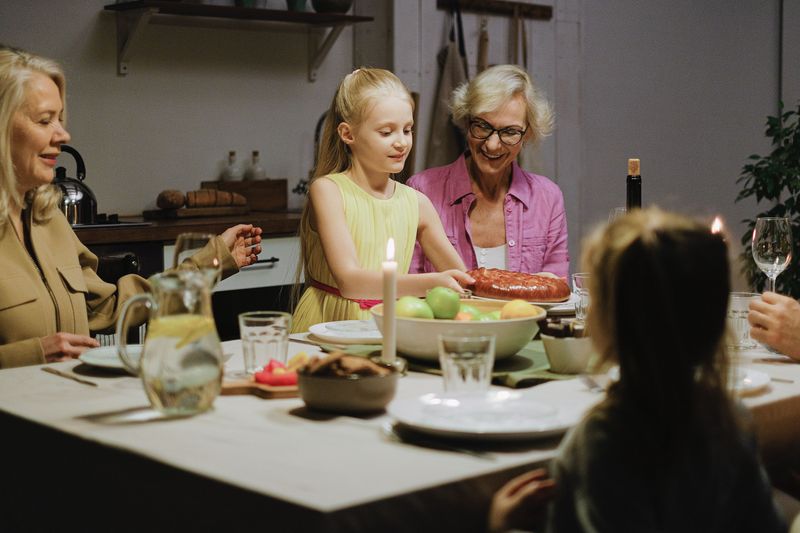
Sunday dinner might be the most underrated wealth-building tool around.
Many wealthy families lean hard on rituals, from holiday gatherings to the formal handoff of a grandparent’s ring at a big family event.
Traditions give a family a shared identity.
When kids know what their family stands for and how it celebrates, they feel part of something bigger than themselves.
Some households keep structured mornings, quiet reading time, or regular family meetings.
Others hold annual reunions where older relatives share stories about how the family got started.
Rituals also prepare heirs for responsibility.
A kid who has watched the same giving ceremony for ten years understands that the family name comes with duties.
Routine sounds dull, but it builds connection.
Showing up for the same tradition year after year creates memories and gives relatives a reason to keep in touch.
You can invent a tradition this week.
Pancake Saturdays, a yearly photo in the same spot, or a birthday letter from parents can become treasured rituals.
Pick something you’ll actually stick with.
A small tradition kept for decades beats a fancy one that fizzles by February.
Write the traditions down somewhere safe.
Future grandkids will want the pancake recipe.
10. Healthy Daily Routines

Wealth is a lot less fun if you’re too tired to enjoy it.
Some affluent families treat sleep, movement, and stress care as part of the family inheritance.
Bedtime routines are a common example.
Lights go down, screens go away, and the evening slows into reading, stretching, or a long bath.
Light exercise often shows up too.
An evening walk or a yoga session can become a family habit that kids carry into adulthood.
Emotional health gets attention in these homes as well.
Talking about feelings, learning to handle conflict, and asking for help when things get hard are treated as strengths, not weaknesses.
A home spa or a personal trainer isn’t part of the requirement.
A regular bedtime, a walk around the block after dinner, and a family rule that phones charge outside bedrooms cost zero dollars.
Kids pick up habits by watching, so modeling matters.
If parents treat rest as lazy, children often learn the same message.
Keep the routines flexible and realistic for your household.
A habit that fits your schedule is far more useful than a perfect plan nobody follows.
Bath salts are optional.
Consistency is the real luxury here.
11. Good Manners and Social Ease
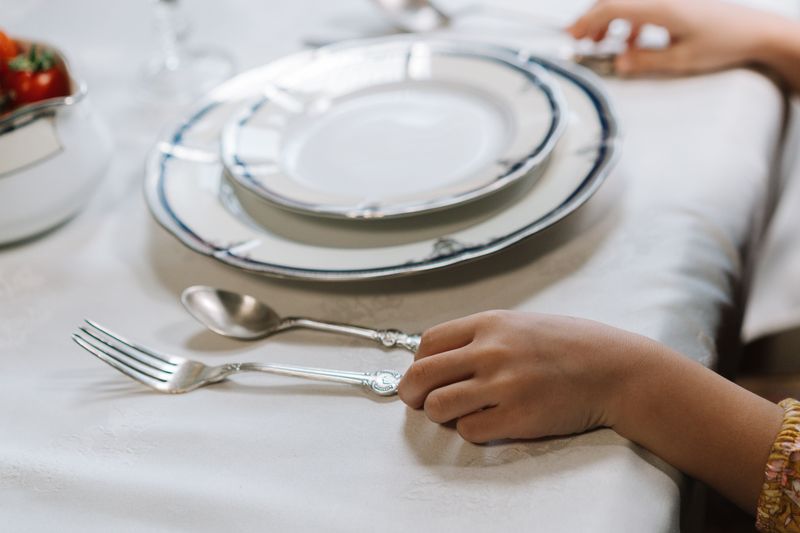
Knowing which fork to use is less about snobbery than it sounds.
Wealthy families often teach manners because confidence in social settings opens doors.
The basics are simple.
Look people in the eye, offer a firm handshake, remember names, and say thank you like you mean it.
Kids from these homes may practice at formal dinners, family events, or business gatherings with adults.
Repetition turns awkward moments into easy ones.
Good etiquette is really about making others comfortable.
A person who listens well and includes the quiet guest is remembered far longer than one who name-drops.
Thank-you notes deserve a special mention.
A handwritten card after a gift or an interview still stands out because so few people send them.
You can teach these skills at your own kitchen table.
Try a once-a-month fancy dinner where kids set the table, practice conversation, and take turns asking questions.
Keep it playful rather than strict.
A little role-play, like pretending to meet a new boss or a famous author, makes practice feel like a game.
Social grace travels well.
It works at job interviews, weddings, and the next awkward family reunion.
12. A Name Worth Protecting

One careless post can follow a family name for years.
Ultra-wealthy families tend to treat reputation as an asset, right next to stocks and property.
A good name can bring better business deals, stronger partnerships, and more trust in a family’s charity work.
A damaged one can slam those same doors shut.
Families may plan their public image with the same care they give their investments.
Kids learn early that their actions online and offline reflect on parents, grandparents, and cousins.
That can sound like pressure, and sometimes it is.
The healthier version focuses on character, honesty, and keeping promises, not just looking good.
Social media is a big part of the conversation now.
Before posting, kids in these families are often taught to ask whether a stranger, a college, or a future boss should see it.
Any family can pass down a name worth protecting.
Talk with kids about what your family stands for, and praise them when they act in line with those values.
A strong reputation is built slowly and can be lost quickly.
Teaching kids to own their mistakes and make things right is one of the best protections around.
13. Resilience When Things Change

Markets crash, businesses stumble, and families go through rough seasons.
The families that last are usually the ones that know how to bend without breaking.
Resilience is the ability to adapt when life changes.
It covers money shocks, emotional upheavals, and big milestones like weddings, moves, and new generations taking charge.
Open communication sits at the center.
Families who talk honestly about problems can make plans before small cracks turn into deep ones.
Some families invest in workshops on stress management or conflict resolution.
Others rely on regular family meetings where each person gets a turn to speak.
Adaptability matters just as much.
A family that can shift roles, rethink plans, and try new approaches keeps functioning when the old way stops working.
You can build this skill with kids during everyday setbacks.
When a plan falls apart, talk through what went wrong and brainstorm a new path instead of rushing to fix it for them.
Physical well-being supports resilience too, since rested bodies handle stress better.
Simple habits like sleep and movement give the whole family a steadier base.
Money can be lost, but the ability to recover tends to travel well.
That might be the most valuable thing a family hands down.