 MomSkoop

Personal style and appearance are important forms of self-expression, yet men can sometimes feel pressured to change how they look to meet their partner’s expectations. From hairstyles and clothing choices to facial hair and grooming habits, even small decisions can become sources of disagreement in a relationship. While it’s natural for partners to have preferences, those opinions shouldn’t come at the expense of someone’s confidence, comfort, or individuality.
A healthy relationship allows both people to feel accepted for who they are rather than constantly trying to fit someone else’s idea of attractiveness. Men deserve the freedom to make decisions about their own appearance without feeling criticized, controlled, or judged by the person they love. Here are 14 appearance choices men should feel comfortable making for themselves, without unnecessary pressure from their partners.
1. Hair Length and Style

Long hair once signaled power in ancient Greece, while Romans leaned toward short, tidy cuts.
The 1960s brought long hair back as a symbol of rebellion.
Clearly, men’s hair has never stood still for long.
Today, the menu is huge.
A man might pick a buzz cut, a fade, a modern mullet, a flowing look, or a messy shag.
Each one says something different, and he gets to decide what message he wants to send.
A partner might love his curls and dread the idea of clippers.
That’s a fair feeling to share once.
Repeated nudging, guilt trips, or deals like “cut it and I’ll be happier” cross into pressure, though.
Hair is also one of the lowest-risk experiments around.
If a style flops, it grows back in a few months.
That makes it a great place for a man to test his own taste.
Here’s a practical tip for couples.
Talk about why a style matters to him before offering an opinion.
Maybe long hair feels like freedom, or short hair saves him time on busy mornings.
Once you know the reason, it’s easier to respect the choice.
Plus, you might end up liking the new look more than expected.
2. Facial Hair
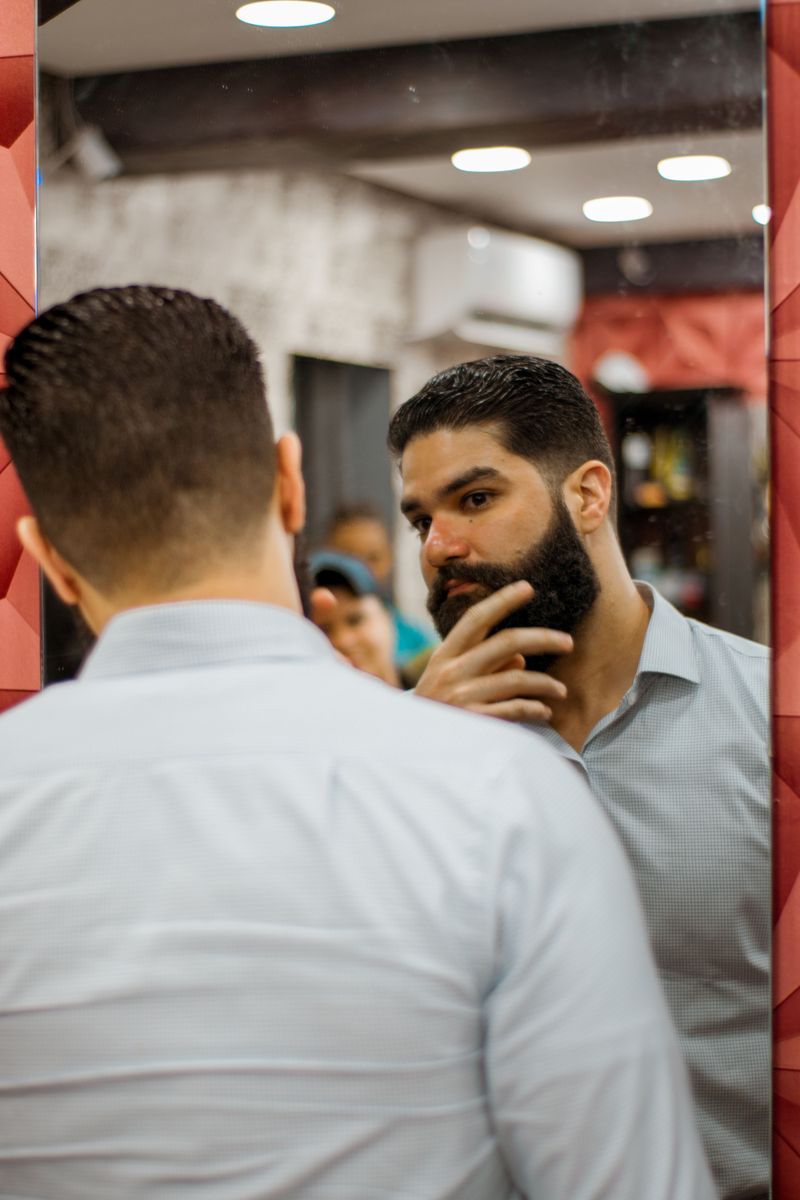
Egyptian pharaohs wore ceremonial false beards to show their royal status.
Meanwhile, ordinary Egyptian men often shaved for cleanliness.
Even back then, facial hair was a personal and cultural statement.
Beards have swung in and out of fashion ever since.
Both World Wars pushed many soldiers to shave so gas masks could seal properly.
Then beatniks and hippies brought whiskers roaring back in the 1950s and 60s.
Now a man can choose from goatees, Van Dykes, mustaches, full beards, or a clean shave.
Some guys grow a beard because it suits their face.
Others simply hate shaving every morning, which is a perfectly fine reason.
Partners sometimes have strong feelings here, especially about scratchy kisses.
Sharing that honestly is fine.
Turning it into an ultimatum is a different story.
A middle path often works.
He might keep the beard but try a softening beard oil or a shorter trim that feels gentler.
That’s a choice he makes, not one he’s forced into.
Remember, facial hair grows on his face.
It’s his daily routine and his reflection in the mirror.
Letting him own that call shows trust, and trust looks good on anybody.
3. Hair Color

Henna was dyeing hair in ancient Egypt long before boxed color hit store shelves.
Egyptians used it to add red tones and to hide gray strands.
So yes, men coloring their hair is an old tradition.
Modern guys have taken that idea in fun directions.
Some go platinum, some try bold blue, and some just blend away a few grays.
Each option is a small creative choice with low stakes.
On the flip side, plenty of men now let their gray grow in proudly.
The “silver fox” look has become a popular style on its own.
If he loves his natural gray, that’s his decision too.
Gray hair can feel drier and coarser, so a little care helps.
Purple shampoo can cut down yellow tones, and a hydrating conditioner keeps strands softer.
Those are easy tweaks for a sharp finish.
A partner might say, “You’d look younger if you colored it.” The reverse happens too, with someone begging for a return to natural.
Either way, the person sitting in the salon chair should be the one who decides.
Color fades, grows out, or gets cut away.
That flexibility makes it a smart playground for personal style.
4. Skincare Routine
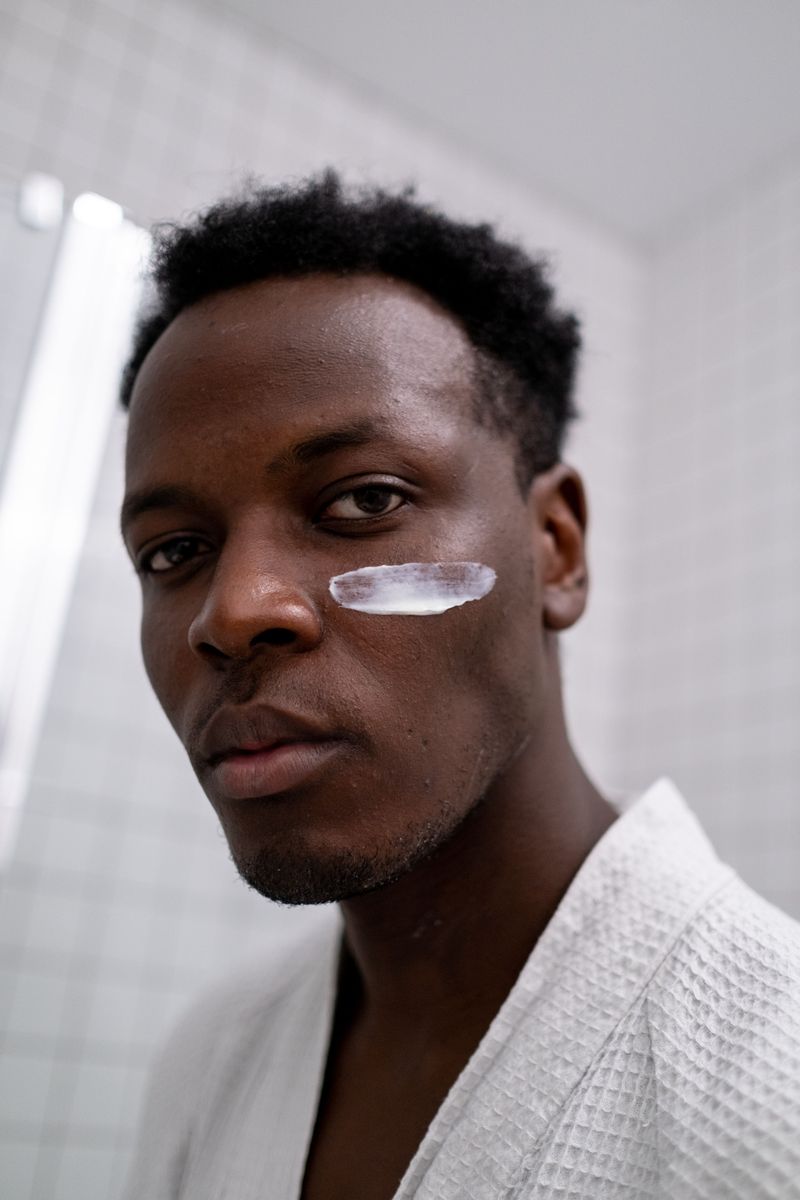
Bathroom shelves have gotten a lot more crowded for many men lately.
Cleansers and moisturizers top the list of popular picks.
Some guys now use several products each morning without a second thought.
South Korean men are well known for detailed routines with lots of steps.
Others prefer a quick rinse and a dab of lotion.
Both approaches are valid, and neither needs a partner’s approval.
Teasing is the most common form of pressure here.
Jokes about “stealing her products” or “spending too long in the mirror” can make a man feel silly.
Over time, that might push him to skip care he actually enjoys.
The opposite can happen too.
Some partners push serums and masks onto a guy who just wants soap and water.
Simple is fine if it works for him.
A friendly approach is to swap tips rather than give orders.
Share a product you like and let him decide whether to try it.
He may surprise you by adopting a whole routine.
Skin care is personal, from scent preferences to texture likes and dislikes.
Letting him build a routine at his own pace keeps things relaxed.
Clean, comfortable skin is the goal, not a perfect ten-step shelf.
5. Makeup and Nail Polish

Kohl eyeliner was common for men in ancient Egypt.
Roman men used red ochre on lips and cheeks too.
Makeup for guys is old news, even if it feels new to some people.
Things shifted in Victorian England, when makeup became linked mainly with women.
Then glam rock stars like David Bowie and Boy George tossed those rules aside with eyeliner and bold lips.
Harry Styles has kept painted nails in the spotlight for a new generation.
A man who wants a swipe of concealer, some guyliner, or black nail polish isn’t doing anything strange.
He’s following a very long tradition of self-expression.
Still, this is where partners sometimes push back hardest.
Comments like “that’s not manly” can sting.
They also suggest his identity is up for review, which isn’t fair.
It’s okay to be surprised, but it’s kinder to stay curious.
Ask what he likes about it.
Maybe painted nails feel playful, or a little concealer helps on a tired morning.
Those are reasonable reasons.
Nail polish comes off with remover in minutes.
Makeup washes away at night.
Few style experiments are this easy to undo, so why not let him enjoy them?
6. Jewelry and Accessories
Henry VIII loved heavy gold chains and big gemstones.
In Tudor England, that bling showed off royal status.
Men in ancient Egypt and Mesopotamia also wore gold necklaces, rings, and armlets.
Fast forward, and punk and heavy metal fans brought chunky jewelry back in the 1970s and 1980s.
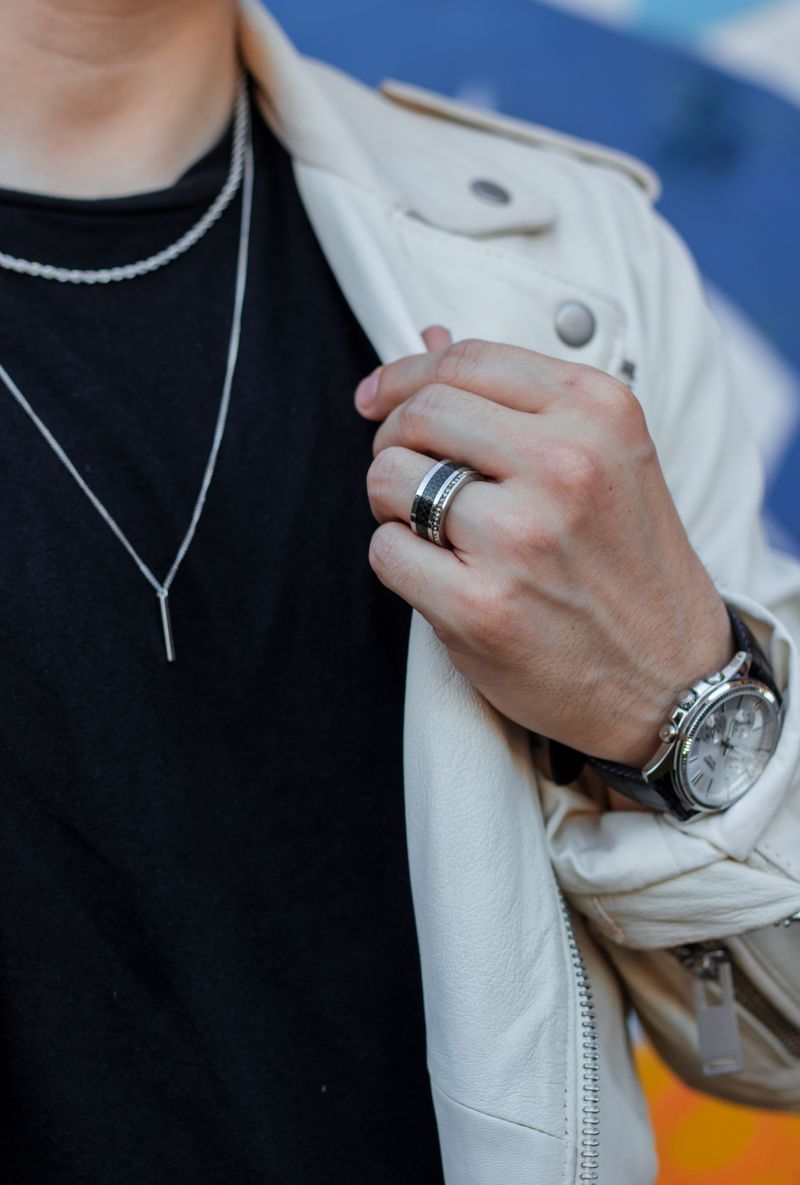
Today a man might wear a thin chain, stacked rings, a beaded bracelet, or a single signet ring.
The range is wide and very personal.
Some partners worry jewelry looks “too much.” Others want him to wear more of it.
Either way, the comfort and taste of the wearer should lead the decision.
Jewelry often carries meaning, too.
A ring might belong to a grandparent, or a bracelet might mark a trip or a friendship.
Asking him to remove something sentimental can hurt more than you’d guess.
For guys just starting out, one piece is an easy entry point.
A simple chain or watch adds detail without much fuss.
He can add more later if he likes the feel.
Let him find his own level of shine.
Some men stay minimal forever, and some go full Tudor.
Both are allowed.
7. Tattoos

More than 5,000 years ago, Ötzi the Iceman already had tattoos on his body.
Across history, ink has marked family ties, bravery, protection, and big life events.
Among the Maori of New Zealand, ta moko shows ancestry and status.
Western sailors and soldiers made tattoos popular in the 18th and 19th centuries.
The 1940s are often called a golden era for tattooing because so many men served in uniform.
Today, tattoos are widely seen as art and personal storytelling.
A tattoo is a permanent choice, so partners naturally have feelings about it.
Sharing those thoughts makes sense.
Demanding veto power over someone else’s skin does not.
A smart move for any tattoo is to wait a bit before booking.
Live with the design for a few weeks and see if you still love it.
Research artists, look at healed work, and pick a placement you’re happy with.
Partners can help by being sounding boards instead of gatekeepers.
Ask about the meaning behind the design.
You might learn a story you never heard.
His body is his canvas.
Supporting that choice, even if you’d pick different art, says a lot about respect.
8. Ear Piercings

Carvings from ancient Persia show soldiers and royal figures wearing earrings.
Sailors later wore gold earrings, partly as portable wealth.
William Shakespeare is often painted with a single gold earring.
So the idea that earrings belong only to women is fairly new.
In India, many families pierce the ears of baby boys and girls alike.
Clearly, men with earrings have plenty of company in history.
Today, a man might choose a tiny stud, a small hoop, or several piercings along the ear.
The ear he picks is usually just a matter of taste.
There’s no secret code he has to follow.
Some partners find piercings edgy or unprofessional.
That opinion is fine to hold quietly, but pushing him to skip one he wants is another matter.
A piercing usually closes up if he changes his mind later.
For first-timers, a reputable studio and good aftercare are the main things to focus on.
Clean hands and patience help a new piercing heal well.
Follow the piercer’s instructions closely.
A small hoop or stud is a quick way to add personality.
Letting him make that call is easy, and it costs nothing but a little open-mindedness.
9. Clothing Fit and Silhouette
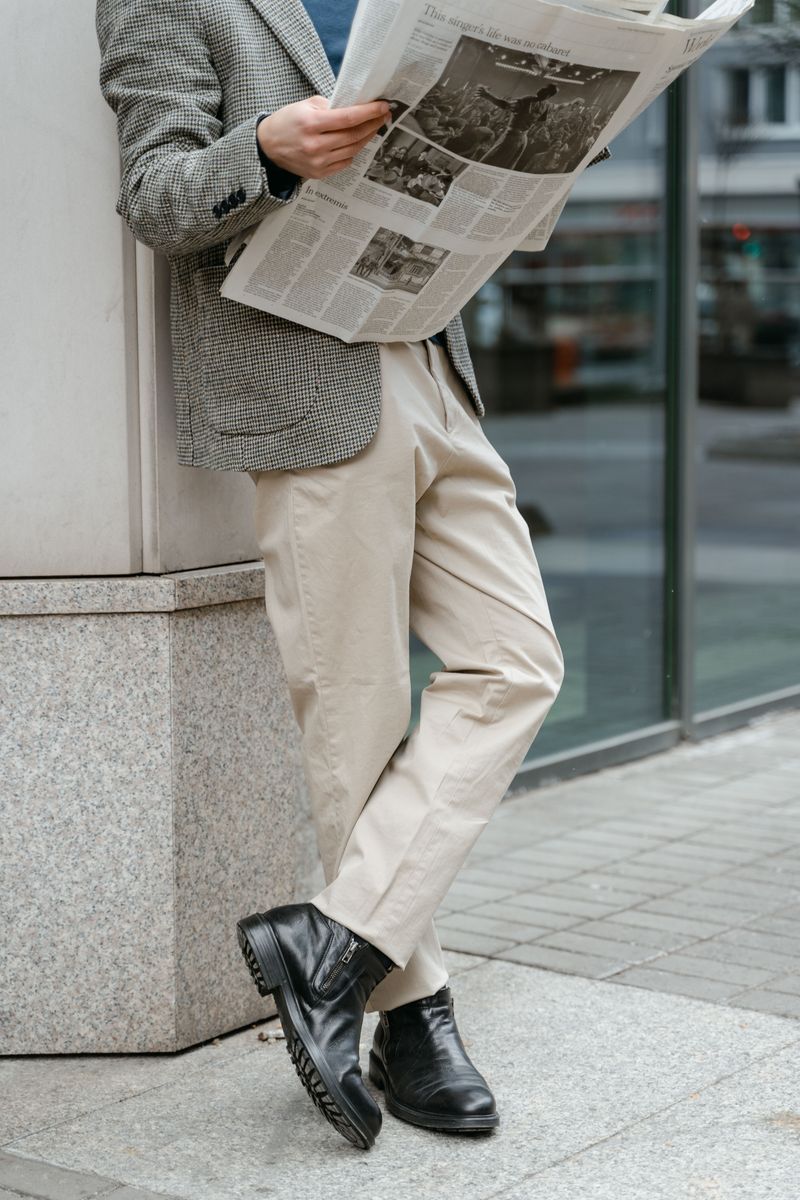
Wide-legged trousers swept into style in the 1920s after World War I.
The 1980s gave us power suits with big shoulders and pleated pants.
Then the 2000s and 2010s squeezed menswear into ultra-slim cuts.
Fit trends keep cycling, which is good news for guys who like a particular shape.
One man loves slim jeans, while another wants roomy trousers he can move in.
Neither is wrong.
Partners often try to nudge fit.
You’ll hear lines like “those are too baggy” or “you’d look better in something tighter.” A single suggestion is fine, but constant edits can make a man feel uneasy in his own clothes.
Comfort matters here more than many people admit.
If a fit feels too snug or too sloppy to him, he probably won’t wear it happily.
Clothes that feel right usually show up in his posture.
A useful middle ground is shopping together with him in charge.
He picks, you cheer, and nobody plays stylist without permission.
That keeps the trip fun.
Fashion history proves almost every silhouette eventually returns.
If he likes his chunky trousers now, they might be right on trend again soon.
10. Color Choices in Clothing

Disco-era menswear in the 1970s came in bright colors and wild patterns.
Then many closets drifted back to navy, charcoal, and black.
The pendulum swings, and individual taste swings with it.
Pastels like powder blue, pale pink, mint, and lavender show up often in men’s spring and summer clothes now.
They look fresh paired with white, beige, or gray.
Even a pastel tie or pocket square adds a light touch.
Some partners love seeing color on a guy.
Others think pink or lavender is “not his thing.” The truth is, he gets to decide what his thing is.
Plenty of men prefer a neutral wardrobe, too.
Black, gray, and navy mix and match easily, which saves time.
If he’s happiest in a sea of charcoal, that’s a valid style.
Trying a new color can be a low-pressure experiment.
Start with a T-shirt or socks before buying a whole bright suit.
If it clicks, great, and if not, the risk was small.
A partner’s job here is simple.
Compliment what you like, skip the eye rolls, and let him wear yellow if yellow makes him smile.
11. Footwear

Heels started out as men’s shoes.
Persian riders wore them to keep feet steady in stirrups.
Later, King Louis XIV made red heels a sign of high status at his court.
Shoes for men have kept evolving since then.
Oxfords and Derbys ruled formal outfits in the 1920s through the 1940s.
The Beatles helped make Chelsea boots popular in the 1960s, and platform boots stomped through the 1970s.
Today’s choices include sneakers, loafers, boots, sandals, and more.
Some guys love chunky sneakers, while others swear by worn-in leather boots.
Footwear says a lot about personality.
Shoes are also tied to comfort, which makes pressure extra tricky.
A partner might hate his old running shoes, but if his feet feel good in them, that counts.
Pain is a high price for someone else’s taste.
Here’s a gentle approach for couples.
If you think a pair is past its prime, mention it once and let him decide.
He might replace them, or he might keep wearing them proudly.
And if he wants Cuban heels or cowboy boots, history is firmly on his side.
Men wore heels first, after all.
12. Body Hair Grooming

Ancient Egyptians removed body hair for cleanliness and appearance.
Greek athletes often did the same to show off muscles.
Romans used plucking, shaving, and creams.
The word “manscaping” appeared in the early 21st century.
It covers trimming, shaving, or waxing areas like the chest, back, arms, and legs.
Some men go fully smooth, and others keep things natural or lightly trimmed.
Partners can feel strongly about body hair in either direction.
One might ask for less, another might miss it after a wax.
Both preferences are allowed, but the person with the hair gets the final word.
Grooming can also affect comfort.
Some guys find shaving leads to itchy regrowth or irritation.
Others feel cooler and cleaner without the hair.
Those physical details should guide the choice more than outside pressure.
If he decides to trim, simple tools like a body trimmer with a guard are easy to use.
If he skips it, nothing needs fixing.
Natural is a perfectly good option.
Body hair is about as personal as appearance gets.
Respecting his choice keeps the conversation relaxed and the relationship comfortable.
13. Fragrance
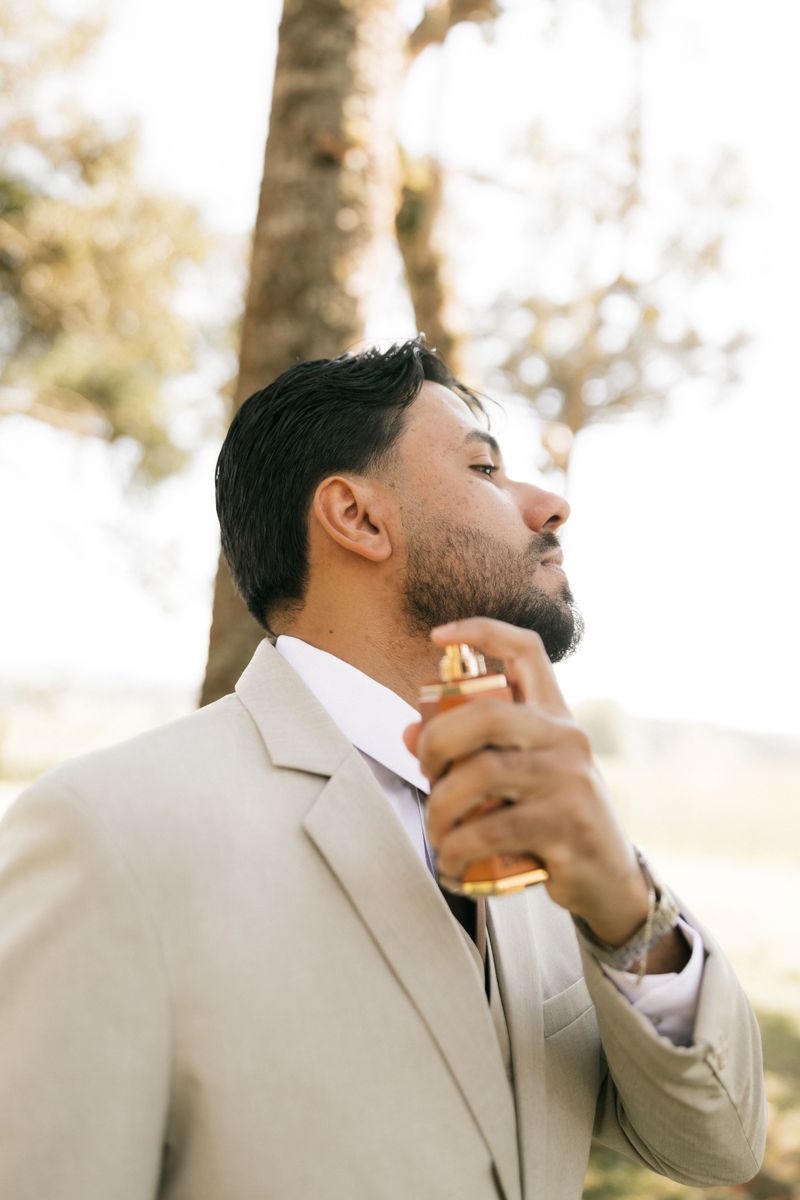
Caron released Pour Un Homme in 1934, one of the first fragrances marketed just for men.
Before that, perfume was often shared by men and women.
Eau de Cologne was popular with men back in the 18th century.
Modern men have far more choices than old barbershop lavender.
Notes like vanilla, leather, coconut, and cherry now appear in many men’s scents.
Gender-neutral fragrances have grown popular too.
Scent is tricky because partners smell it up close.
If a fragrance gives someone a headache, that’s worth saying kindly.
Allergies and sensitivities matter.
Outside of that, his scent is his signature.
A partner who swaps out his cologne without asking might be erasing something he loves.
Fragrance can tie into memories, moods, and personal identity.
Layering is a fun way to customize.
He might pair a woody scent with a citrus one for something nobody else wears.
Testing on skin, not paper, gives a better sense of how a scent develops through the day.
If you want to share preferences, try a fragrance shop date.
Smell a few options together and let him pick the winner.
You’ll both learn something about each other’s noses.
14. Eyeglass Frames

The earliest corrective glasses showed up in Italy in the late 13th century.
Back then, frames were made from materials like wood, bone, and leather.
Style wasn’t much of a concern.
By the 1920s, round tortoiseshell and metal frames became fashion statements.
Aviators and browline frames grew popular with men in the 1940s and 1950s.
The 1960s and 1970s brought oversized shapes and bold colors.
Glasses sit right in the middle of a man’s face.
That makes them one of the most visible choices he can make.
It also makes them a common target for partner opinions.
Of course, it’s fine to say “those look great” or “maybe try a few more.” But pushing him toward frames he doesn’t feel like himself in can backfire.
He’s the one wearing them for hours every day.
Practical points matter, too.
Frames should sit comfortably on the nose and ears and not slide around.
A good optician can help with sizing and adjustments.
So let him pick thick black frames, thin wire ones, or clear plastic.
When he looks in the mirror and recognizes himself, the frames have done their job.