 MomSkoop
When someone asked Raymond Chandler who was responsible for one character’s fate in a movie based on his own novel, he reportedly admitted he didn’t know. The movie got made anyway, and audiences have happily stayed confused for decades. That story tells you a lot about detective films. The best ones aren’t always about the answer, because the mood, the dialogue, and the slow pileup of clues can matter just as much.
A clever camera move, a twisty structure, or a tired gumshoe in a rumpled coat can echo through screens for generations. The fourteen picks below stretch across more than eighty years of shadowy streets, rainy cities, and very suspicious mansions. Grab your magnifying glass and see how many of these cinematic fingerprints you already recognize.
1. The Maltese Falcon
Hollywood had already tried filming Dashiell Hammett’s novel twice before 1941, and neither version stuck.
The third attempt, a directing debut for screenwriter John Huston, finally got it right.
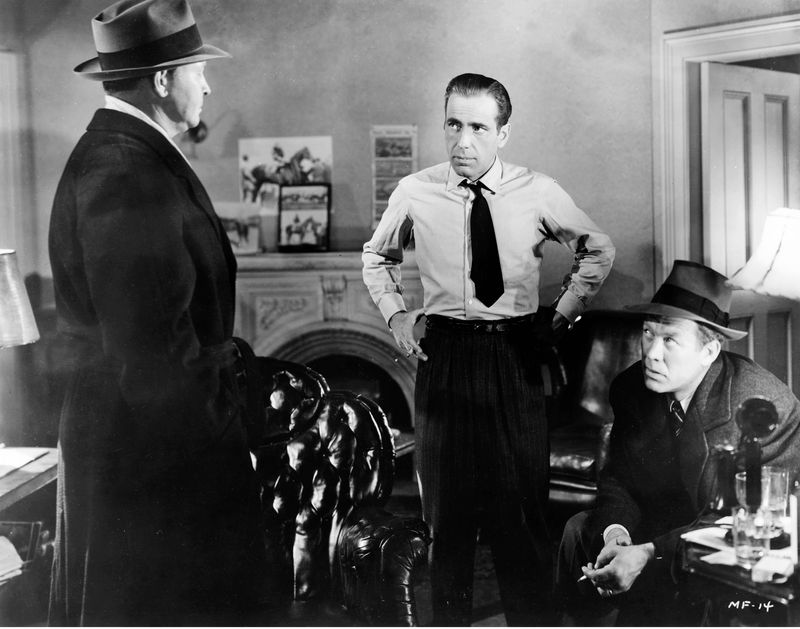
Humphrey Bogart plays Sam Spade, a San Francisco private eye who trusts nobody and jokes through danger.
His cool, prickly attitude became a blueprint for the hard-boiled detective you still see in crime stories today.
Mary Astor matches him as Brigid O’Shaughnessy, a client whose stories change almost as often as her names.
Peter Lorre and Sydney Greenstreet round out a gang of schemers, and Greenstreet earned an Oscar nomination in his very first film role.
The whole gang is chasing a jewel-covered bird statue, but the statue itself barely matters.
Filmmakers call that kind of plot device a MacGuffin, and this movie shows how well one can expose greed in its characters.
Many film fans point to this movie as one of the earliest major entries in film noir.
Listen for Bogart’s closing line about “the stuff that dreams are made of,” which still lands with surprising weight.
Here’s a small tip: pay attention to the camera angles during the tense hotel room scenes.
Low shots make Greenstreet’s character feel enormous and in control, which is a sneaky bit of visual storytelling.
2. The Big Sleep
Confused by the plot?
You’re in excellent company, because even Raymond Chandler reportedly couldn’t say who was responsible for one chauffeur’s fate when asked.
Howard Hawks directed this 1946 adaptation of Chandler’s first Philip Marlowe novel.
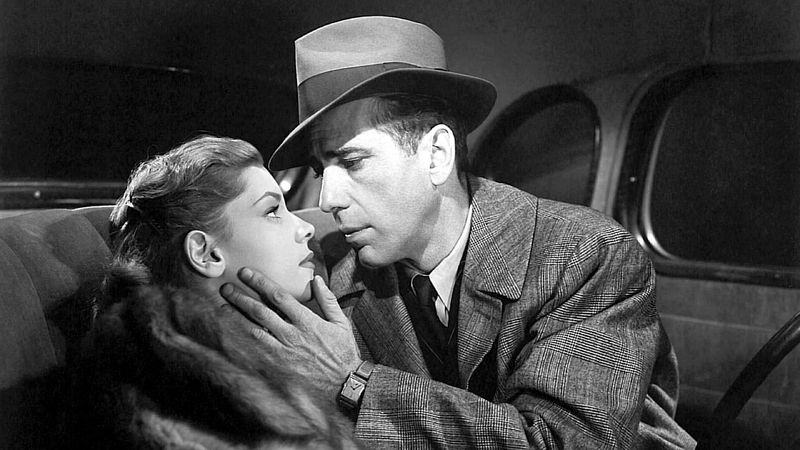
Humphrey Bogart plays Marlowe, a sharp-tongued private detective hired by a wealthy general to handle a blackmail problem involving his wild younger daughter.
Things spiral fast, pulling Marlowe through gambling dens, secret photographs, and a crowd of shady characters around Los Angeles.
The twists pile up so quickly that keeping track becomes part of the fun.
The real fireworks come from Bogart and Lauren Bacall, who plays the general’s older daughter, Vivian.
The pair had married in 1945, and their quick, teasing exchanges crackle in a way scripted chemistry rarely does.
The screenplay also has a famous name attached, since novelist William Faulkner shared writing credit with Leigh Brackett and Jules Furthman.
That literary firepower helps explain why the dialogue still sounds so clever.
A viewing tip worth borrowing: stop trying to solve the case on a first watch.
Let the mood, the banter, and the smoky atmosphere carry you, then go back later and connect the dots.
3. Rear Window
A broken leg and a pair of binoculars turn out to be all the tools one amateur sleuth needs.
Alfred Hitchcock’s 1954 thriller keeps you stuck in a single apartment, and somehow that makes it more gripping.
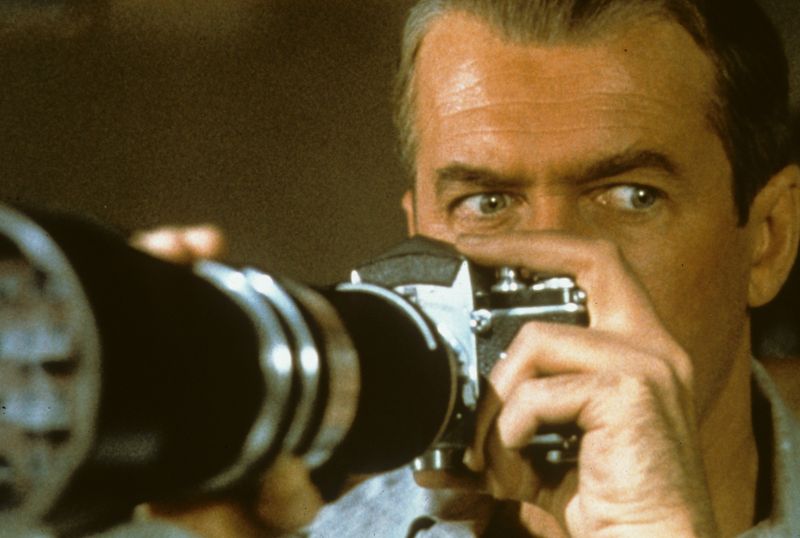
James Stewart plays L.B. “Jeff” Jefferies, a news photographer recovering in a wheelchair in Greenwich Village.
Bored out of his mind, he starts watching his neighbors and grows convinced one of them has done something terrible.
Hitchcock shows nearly the entire story from Jeff’s view across the courtyard.
You see only what he sees, so you end up just as nosy and just as unsure as he is.
Paramount built a huge apartment courtyard set for the film, filled with windows and tiny side stories.
A lonely woman, a hopeful songwriter, and a pair of newlyweds each get their own little drama.
Grace Kelly brings plenty of spark as Lisa, Jeff’s stylish girlfriend, who proves far braver than he expects.
Thelma Ritter steals scenes as his blunt nurse, Stella.
The movie’s lasting lesson for storytellers is simple.
A tight setting and a limited point of view can build more suspense than any chase scene, and later thrillers have borrowed that trick again and again.
4. Vertigo
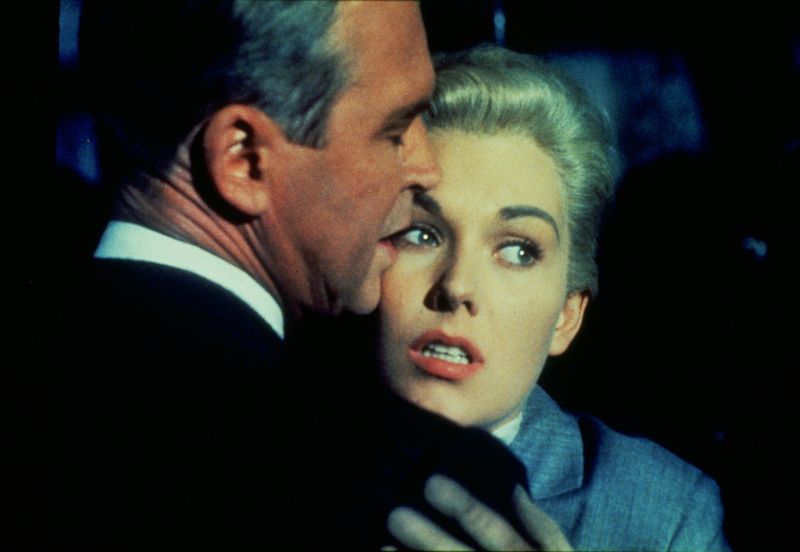
In 2012, a major Sight and Sound critics’ poll named this Hitchcock film the greatest movie ever made, ending Citizen Kane’s fifty-year run at the top.
Not bad for a 1958 release that drew mixed reactions at first.
James Stewart returns as John “Scottie” Ferguson, a former San Francisco police detective with a severe fear of heights.
An old friend hires him to follow his wife, Madeleine, played by Kim Novak, who seems to be behaving strangely.
What starts as a quiet surveillance job slowly turns into an obsession.
The film becomes less about solving a case and more about how far one man will go to hold on to an illusion.
Hitchcock’s team created a famous camera move to show Scottie’s dizziness, zooming in while pulling the camera back.
Filmmakers still call it the dolly zoom or the Vertigo effect, and you’ll spot it in plenty of later movies.
Bernard Herrmann’s swirling score and the bold use of green and red add to the dreamlike mood.
The San Francisco locations, including views of the Golden Gate Bridge, make the city feel like a character too.
Give it patience, since the pace is slower than modern thrillers.
The payoff rewards viewers who enjoy a mystery that lingers in the mind.
5. Chinatown
Water rights might sound like the dullest topic for a thriller.
Somehow, screenwriter Robert Towne turned a fight over Los Angeles water into one of the most admired scripts Hollywood ever produced.
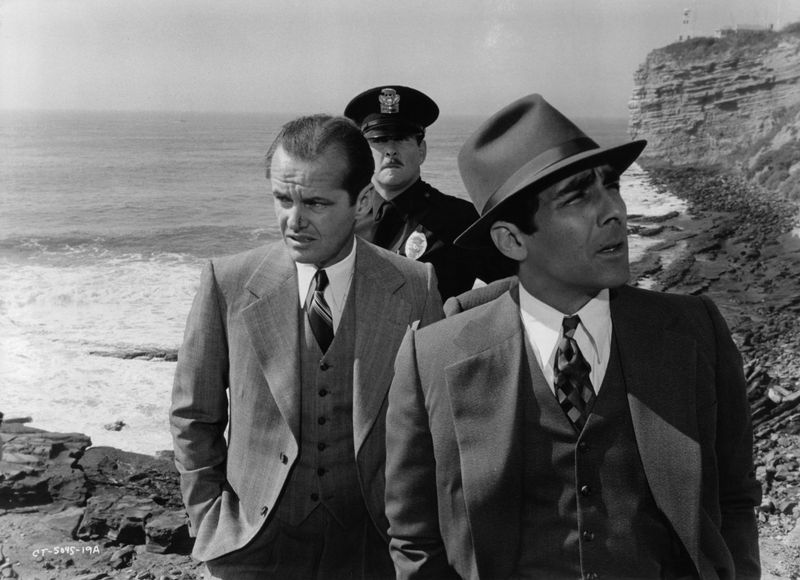
Roman Polanski directed this 1974 neo-noir, set in 1937, with Jack Nicholson as private investigator J.J. “Jake” Gittes.
Jake usually handles cheating spouse cases, but one job drags him into a scheme far bigger than he imagined.
Faye Dunaway plays Evelyn Mulwray, a guarded woman with secrets, and director John Huston appears as her powerful father, Noah Cross.
Seeing the man behind an earlier noir classic on this list play the villain is a fun bit of film history.
Towne won the Academy Award for Best Original Screenplay, and the film earned eleven nominations in total.
Its last line, “Forget it, Jake. It’s Chinatown,” still gets quoted whenever someone wants to describe a hopeless situation.
Without spoiling anything, the ending refuses to tie things up neatly.
That bold choice showed later crime writers that a story could close on a sting instead of a victory.
Watch Jake’s bandaged nose through much of the film.
It’s a small, slightly funny detail that keeps reminding you how nosy detectives pay a price.
6. The French Connection
Forget polished heroes in pressed suits.
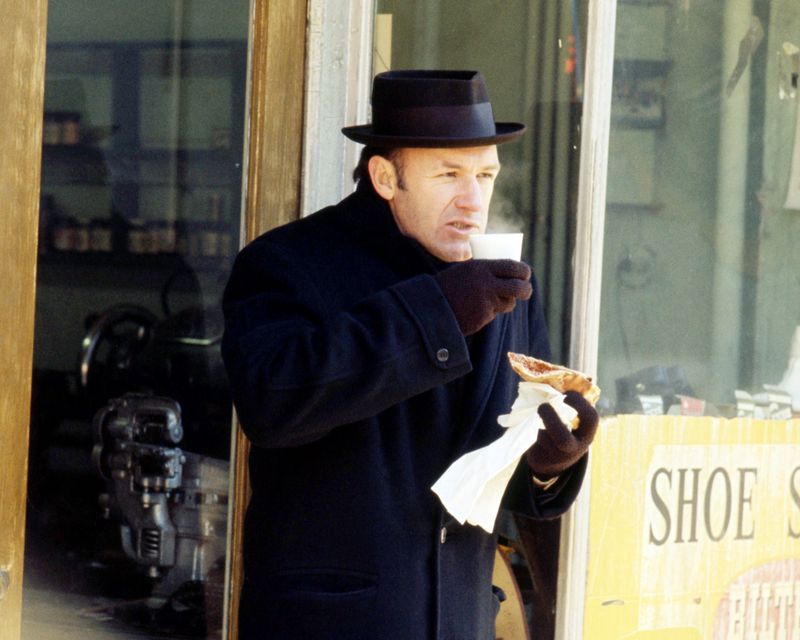
Gene Hackman’s Jimmy “Popeye” Doyle is rude, stubborn, and often wrong, yet you can’t take your eyes off him.
William Friedkin’s 1971 film follows two New York narcotics detectives, Doyle and Buddy “Cloudy” Russo, played by Roy Scheider.
They chase a smooth French smuggler connected to a massive heroin shipment.
The characters were based on real detectives Eddie Egan and Sonny Grosso, whose case inspired Robin Moore’s book.
Both men even appear in the film in small roles.
The famous chase sees Doyle racing a car beneath an elevated subway train in Brooklyn.
Friedkin shot much of it on real streets, and the result feels raw and dangerous rather than staged.
The film won five Oscars, including Best Picture, Best Director, and Best Actor for Hackman.
Editing and Adapted Screenplay rounded out the haul, which is quite a sweep for such a gritty film.
Its shaky, documentary-style camera work and real locations shaped decades of police dramas on film and TV.
If a cop show ever felt messy and street-level, this movie probably helped make that possible.
Keep an eye on the cold, gray Brooklyn winter backdrop.
The setting does as much storytelling as the dialogue.
7. Blade Runner
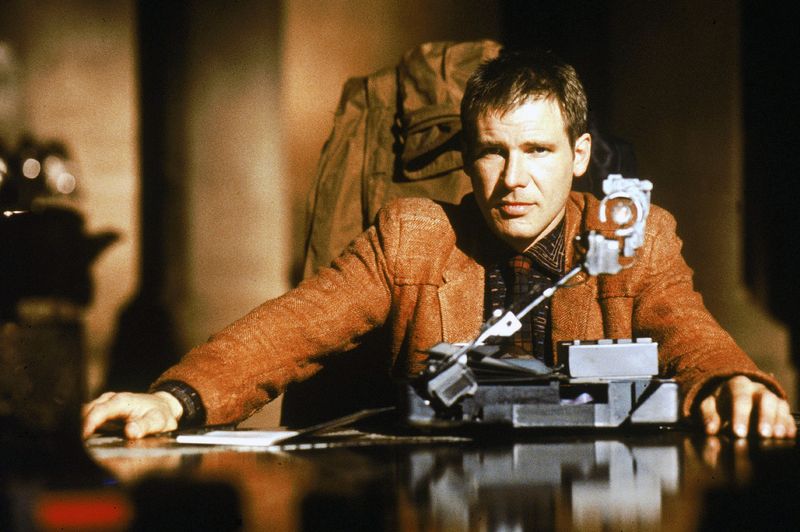
Rain, neon, and floating billboards make up the Los Angeles of this 1982 film, which imagined the far-off future of 2019.
We’ve now passed that date, and flying police cars still aren’t a thing.
Ridley Scott directed this adaptation of Philip K. Dick’s novel Do Androids Dream of Electric Sheep?
Harrison Ford plays Rick Deckard, a weary officer called a blade runner who tracks down escaped artificial humans known as replicants.
At heart, the story works like an old-school detective tale.
Deckard narrates in some versions, questions suspects, follows clues, and wanders shadowy streets like a futuristic Philip Marlowe.
Rutger Hauer gives a memorable turn as Roy Batty, the replicant leader, and his “tears in rain” speech near the end still moves viewers.
The film raises big questions about memory and what makes someone human.
Box office returns were modest at first, but the look of the film shaped cyberpunk movies, anime, and video games for decades.
A sequel, Blade Runner 2049, arrived in 2017 with Ford returning.
Pick your version carefully, since several cuts exist.
Many fans prefer The Final Cut from 2007, which drops the voice-over and matches Scott’s own vision.
8. The Silence of the Lambs
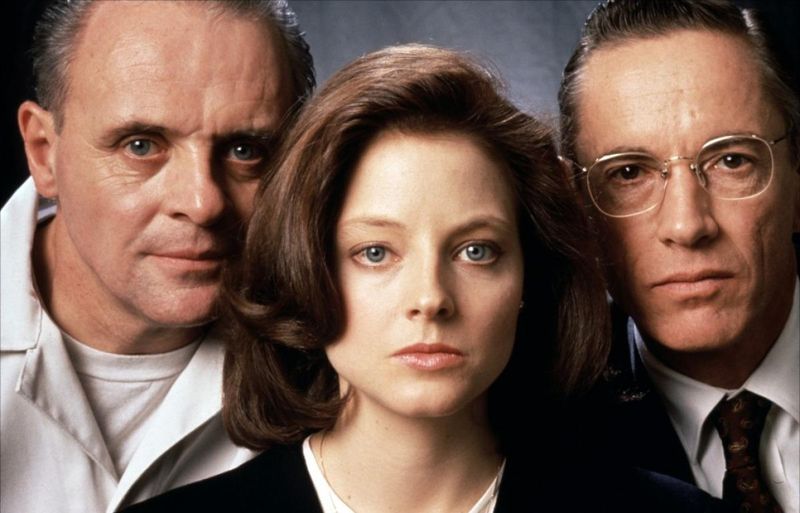
Anthony Hopkins appears on screen for only around sixteen minutes, yet he won Best Actor.
That fact alone tells you how much his Hannibal Lecter dominates this 1991 thriller.
Jodie Foster plays Clarice Starling, an FBI trainee sent to interview Lecter, a brilliant psychiatrist locked in a high-security hospital.
The bureau hopes his insights can help catch a dangerous criminal nicknamed Buffalo Bill.
Their conversations play like chess matches through thick glass.
Lecter trades clues for personal stories from Clarice, and you’re never sure who holds the stronger hand.
Director Jonathan Demme often frames characters looking straight into the camera.
The effect makes you feel watched and questioned, as though you’re sitting in Clarice’s chair.
The film won the five top Oscars: Best Picture, Director, Actor, Actress, and Adapted Screenplay.
Only two films had done that before: It Happened One Night and One Flew Over the Cuckoo’s Nest.
Clarice also stands out as a capable young woman surrounded by men who underestimate her.
Small scenes, like her riding in an elevator among taller male trainees, quietly show that pressure.
Based on Thomas Harris’s novel, the movie helped make criminal profiling a popular subject for later films and shows.
Fair warning, though, some scenes are intense for younger viewers.
9. Seven
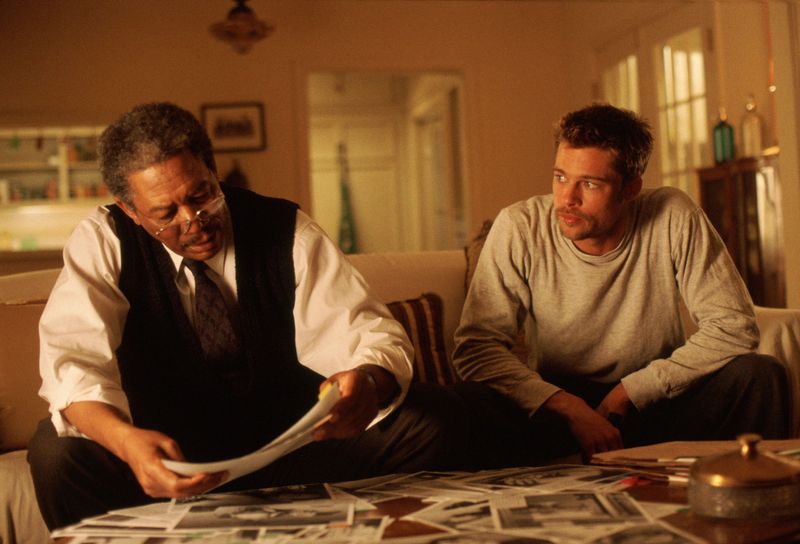
Two detectives, one week, and a case built around the seven deadly sins.
David Fincher’s 1995 thriller sets up its premise fast and never lets the tension loosen.
Morgan Freeman plays William Somerset, a careful detective days away from retirement.
Brad Pitt plays David Mills, his hot-headed new partner who just moved to the city with his wife, Tracy, played by Gwyneth Paltrow.
The city itself is never named, and it seems to rain constantly.
That gloomy, damp setting gives the film a heavy mood that sticks with you long after the credits.
Somerset prefers libraries and patience, while Mills wants action now.
Watching their opposite styles clash, then slowly blend, is one of the film’s biggest pleasures.
Andrew Kevin Walker wrote the screenplay, and its grim ending became one of the most talked-about finales of the decade.
Avoid spoilers if you haven’t seen it, since the final scenes work best as a surprise.
Even the opening titles became famous, with scratchy text and jittery images set to Nine Inch Nails.
Kyle Cooper designed that sequence, and title designers borrowed its style for years.
Fair warning for sensitive viewers, this one is dark.
If you like your mysteries bleak and thoughtful, though, it belongs high on your list.
10. The Usual Suspects
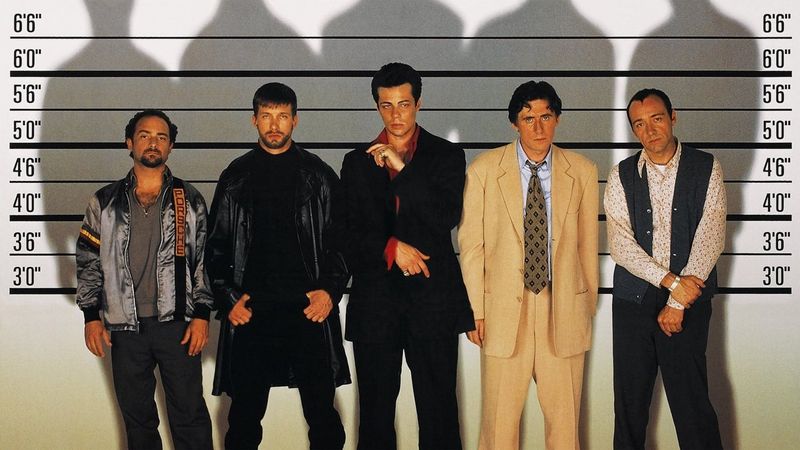
Five criminals meet in a police lineup, and that awkward moment sets off a chain of disasters.
Bryan Singer’s 1995 film turns that setup into a famous puzzle.
Most of the story is told by Roger “Verbal” Kint, a small-time con man played by Kevin Spacey.
He recounts events to customs agent Dave Kujan, played by Chazz Palminteri, after a violent night on a ship at the docks.
Gabriel Byrne, Stephen Baldwin, Benicio del Toro, and Kevin Pollak round out the crew.
Above them looms the shadowy name Keyser Söze, a crime boss some characters doubt even exists.
Christopher McQuarrie won the Oscar for Best Original Screenplay, and Spacey won Best Supporting Actor.
The script’s structure keeps you guessing about which details you can actually trust.
The famous ending changed how many viewers watch thrillers, since it made audiences rethink earlier scenes.
Without giving anything away, a second viewing feels like a completely different film.
Pay close attention to the office where Verbal tells his story.
It’s a fun detail to revisit once you know where the film is headed.
The line “the greatest trick the Devil ever pulled was convincing the world he didn’t exist” comes from this movie.
It still pops up whenever people discuss clever deceptions.
11. L.A. Confidential
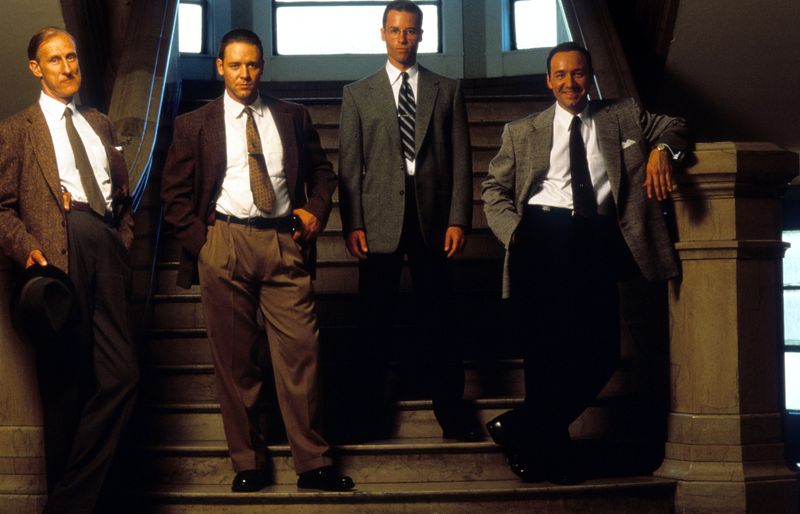
Glamour on the outside, rot underneath.
Curtis Hanson’s 1997 film shows 1950s Los Angeles as a sunny postcard hiding a very crooked police department.
Based on James Ellroy’s novel, the story follows three officers with clashing styles.
Guy Pearce plays Ed Exley, a rule-following climber, while Russell Crowe plays Bud White, a tough cop with a fierce sense of justice.
Kevin Spacey completes the trio as Jack Vincennes, a smooth officer who advises a TV cop show.
A shocking crime at a coffee shop called the Nite Owl eventually pulls the three together.
Kim Basinger won the Oscar for Best Supporting Actress as Lynn Bracken, and Hanson and Brian Helgeland won for Best Adapted Screenplay.
The film’s bad luck was competing the same year as Titanic for Best Picture.
What makes it special is how none of the leads is a pure hero.
Each man bends the rules in different ways, and you end up rooting for them anyway.
Danny DeVito also adds sleazy humor as Sid Hudgens, a gossip magazine publisher digging up dirt.
His tabloid headlines help connect the city’s scandals.
Watch for the period details, from the cars to the hairstyles.
They make the twisty plot feel grounded in a real time and place.
12. Memento
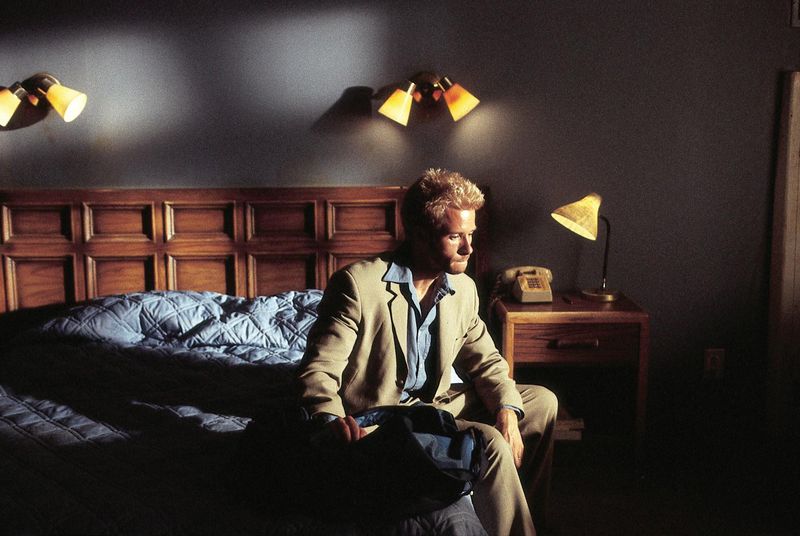
Tattoos, Polaroid photos, and scribbled notes serve as Leonard Shelby’s entire memory system.
Guy Pearce plays Leonard, a man who can’t form new memories after an attack on him and his wife.
Christopher Nolan wrote and directed this 2000 thriller, based on a short story by his brother, Jonathan Nolan.
Leonard is hunting the man he blames for that attack, but he forgets his progress every few minutes.
The structure is the clever part, since the color scenes play in reverse order while black-and-white scenes move forward.
The two timelines meet near the end, and the effect puts you in Leonard’s confused shoes.
Since you begin each scene not knowing what came before, you feel his frustration directly.
You can never be quite sure who’s helping him and who’s using him.
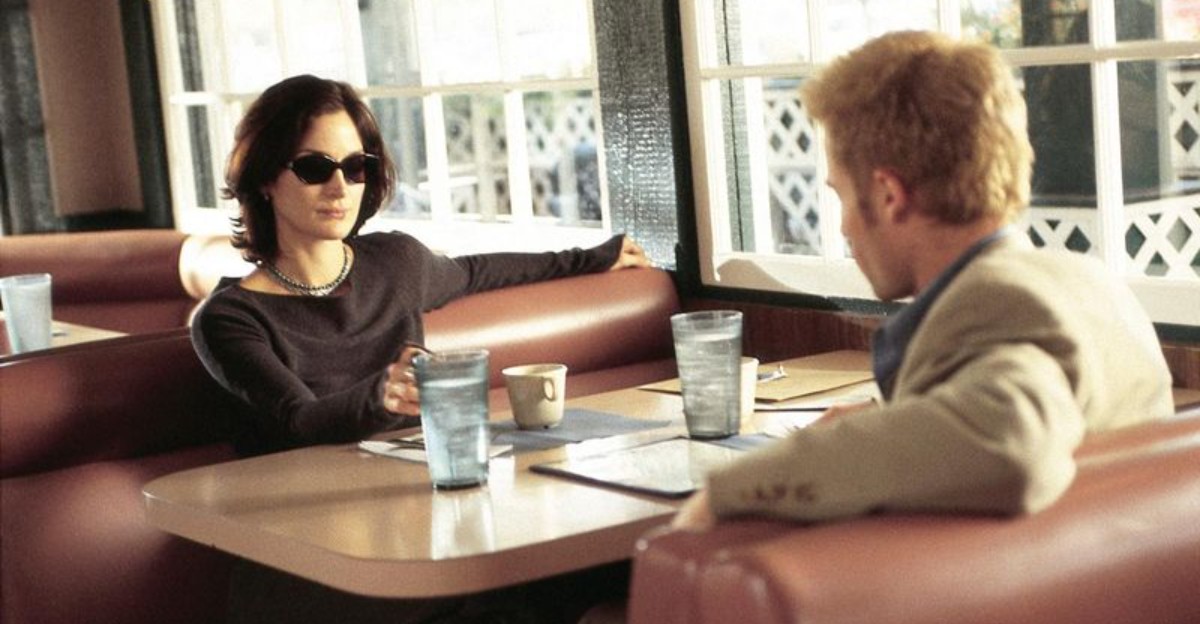
Carrie-Anne Moss and Joe Pantoliano play two people in Leonard’s life whose motives stay murky.
Their shifting attitudes keep you guessing until the final minutes.
The screenplay earned an Oscar nomination, and the film helped launch Nolan toward bigger projects like The Dark Knight and Inception.
Many fans watch it twice, once to experience it and once to untangle it.
Try keeping a little notebook during your first viewing.
Leonard would definitely approve.
13. Zodiac
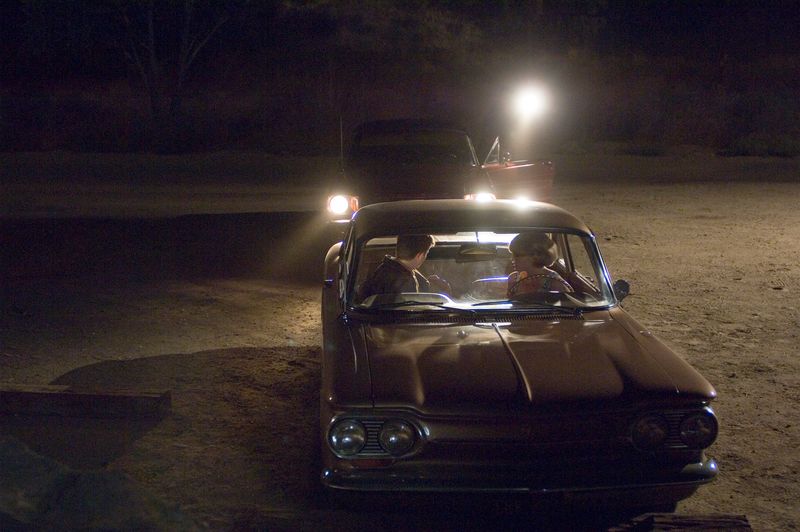
Some mysteries never get a neat ending, and David Fincher’s 2007 film is brave enough to admit it.
The real Zodiac case in the San Francisco Bay Area remains officially unsolved.
Jake Gyllenhaal plays Robert Graysmith, a San Francisco Chronicle cartoonist who becomes fixated on the coded letters the Zodiac sent to newspapers.
Mark Ruffalo plays Inspector Dave Toschi, and Robert Downey Jr. plays crime reporter Paul Avery.
The script draws on Graysmith’s own books about the case.
Instead of chasing big thrills, the film focuses on paperwork, handwriting comparisons, phone calls, and years of dead ends.
That approach makes it feel more like a true investigation than a typical thriller.
You watch obsession slowly take over these men’s careers and family lives.
Fincher recreated late 1960s and 1970s San Francisco with careful detail, from newsrooms to clothing.
He also shot the film digitally, an unusual choice for a major studio movie back then.
Running over two and a half hours, it asks for patience.
The reward is a gripping look at how hard real detective work can be.
Watch the basement scene with the lights low.
It’s one of the tensest moments Fincher has ever filmed, and nothing violent even happens.
14. Knives Out
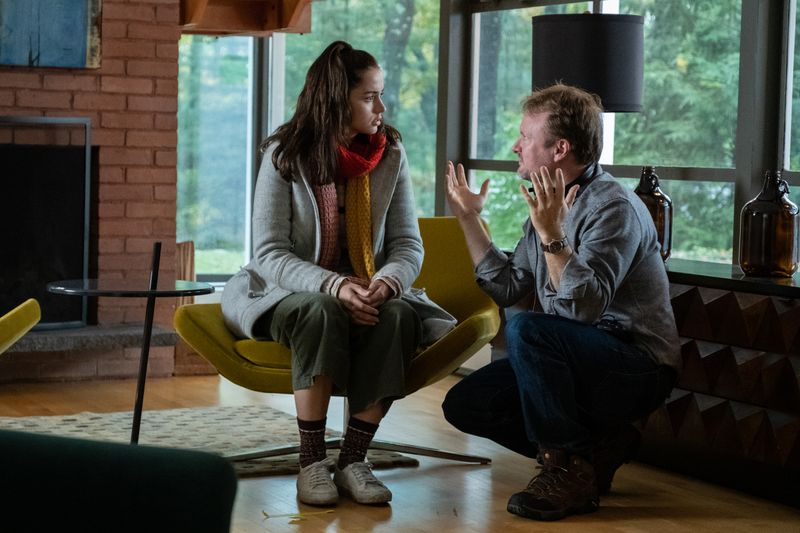
A wealthy mystery novelist, a house full of greedy relatives, and a detective with a thick Southern drawl.
Rian Johnson’s 2019 film takes the classic whodunit and gives it a playful modern shake.
Daniel Craig plays Benoit Blanc, a private investigator hired by an unknown client after novelist Harlan Thrombey, played by Christopher Plummer, passes away the night of his 85th birthday party.
Johnson also wrote the screenplay, which earned an Oscar nomination.
Ana de Armas plays Marta, Harlan’s caring nurse, who becomes the heart of the story.
She has a strange condition that makes her throw up whenever she lies, which turns out to be hugely useful for a detective.
Chris Evans, Jamie Lee Curtis, Toni Collette, and Don Johnson play members of the squabbling family.
Each relative has a motive, a grudge, or a secret, and watching them turn on each other is half the fun.
The movie honors Agatha Christie-style puzzles while weaving in sharp commentary about money and class.
Its success led to sequels Glass Onion in 2022 and Wake Up Dead Man in 2025.
For your next movie night, try pausing before the final reveal and letting each person share a guess.
Blanc would surely enjoy the suspense, and so will your friends.