 MomSkoop
For five straight years, one musical about a singing governess held the title of highest-grossing film in history. That record belonged to a 1965 release, and plenty of Baby Boomers saw it on a big screen more than once. Many of the films Boomers still love arrived before they were even born. Television reruns turned 1930s and 1940s classics into family traditions, so a movie from 1939 could feel brand new in a 1960s living room.
Other favorites landed right when Boomers were teenagers or young adults. Those releases shaped date nights, summer vacations, and the songs people still hum in the car today. This mix of old and new tells a story about a whole generation. Some picks are sweeping epics, while others are pure popcorn fun, and a few might surprise you.
1. The Sound of Music
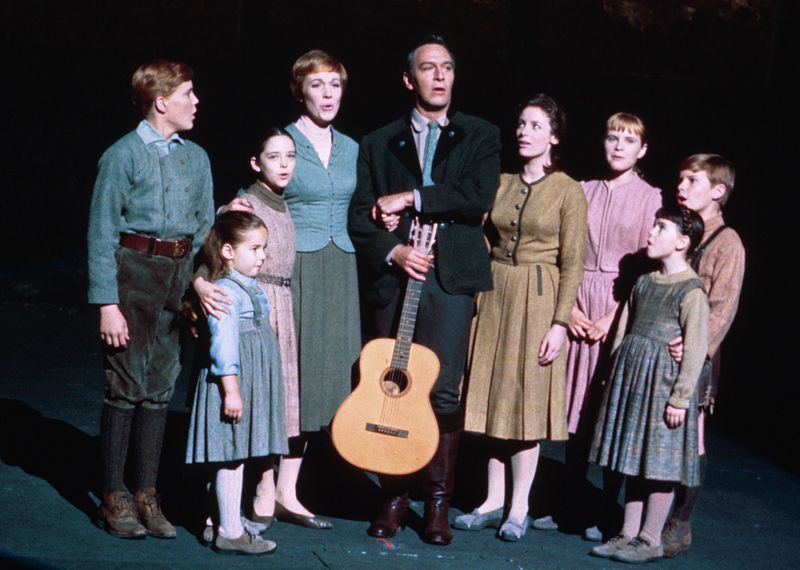
Few movie openings are as recognizable as a camera sweeping over the Austrian Alps toward a singing Julie Andrews.
That 1965 moment kicked off a musical that went on to rule the box office for years.
Directed by Robert Wise, the film follows Maria, a young postulant who leaves her abbey to become governess for the seven children of Captain Georg von Trapp, played by Christopher Plummer.
She fills the strict household with music, wins over the kids, and eventually marries the captain.
The story is set in Salzburg in the late 1930s, and the family finally escapes after Austria is taken over by the Nazis.
It reigned for five years as the highest-grossing film ever made.
It also earned five Academy Awards, including Best Picture, which is a pretty strong report card for a movie about a governess with a guitar.
For Boomers, the songs are often the real draw.
Tunes like Do-Re-Mi and My Favorite Things became sing-along staples at home and in school.
Planning a family movie night with grandkids?
You could pick this one, since the story works for many ages and the scenery alone is worth the running time.
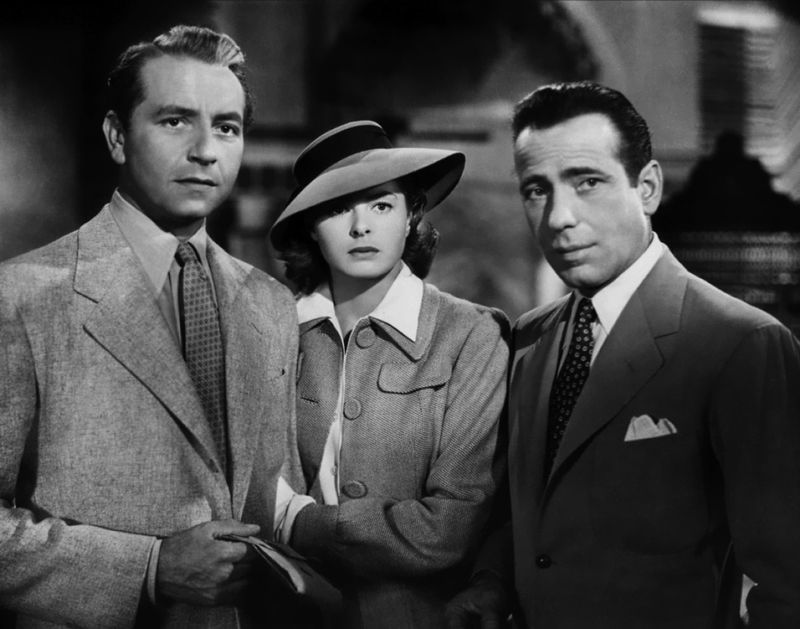
2. Casablanca
Quote a line from Casablanca at a dinner party, and someone at the table will probably finish it for you.
A movie from 1942 that still lives in everyday conversation deserves some credit.
Michael Curtiz directed this World War II romance starring Humphrey Bogart as Rick Blaine.
Rick runs a busy nightclub in Vichy-controlled Casablanca and tries hard to stay out of other people’s troubles.
That plan falls apart when his former love, Ilsa Lund, played by Ingrid Bergman, walks in with her husband, Resistance leader Victor Laszlo, played by Paul Henreid.
The couple needs help escaping the Nazis.
Rick has to choose between his own heart and a bigger cause, and the tension builds beautifully.
The film was a hit right away and has stayed popular for decades.
Many critics place it among the greatest movies ever made.
Boomers often met this one through television and revival screenings, and the sharp dialogue keeps it fresh.
In my view, the chemistry between Bogart and Bergman is what makes it so rewatchable.
Watching it again?
Pay attention to the quick, clever exchanges, because the script packs jokes into scenes you might remember as purely serious.
3. Gone With the Wind
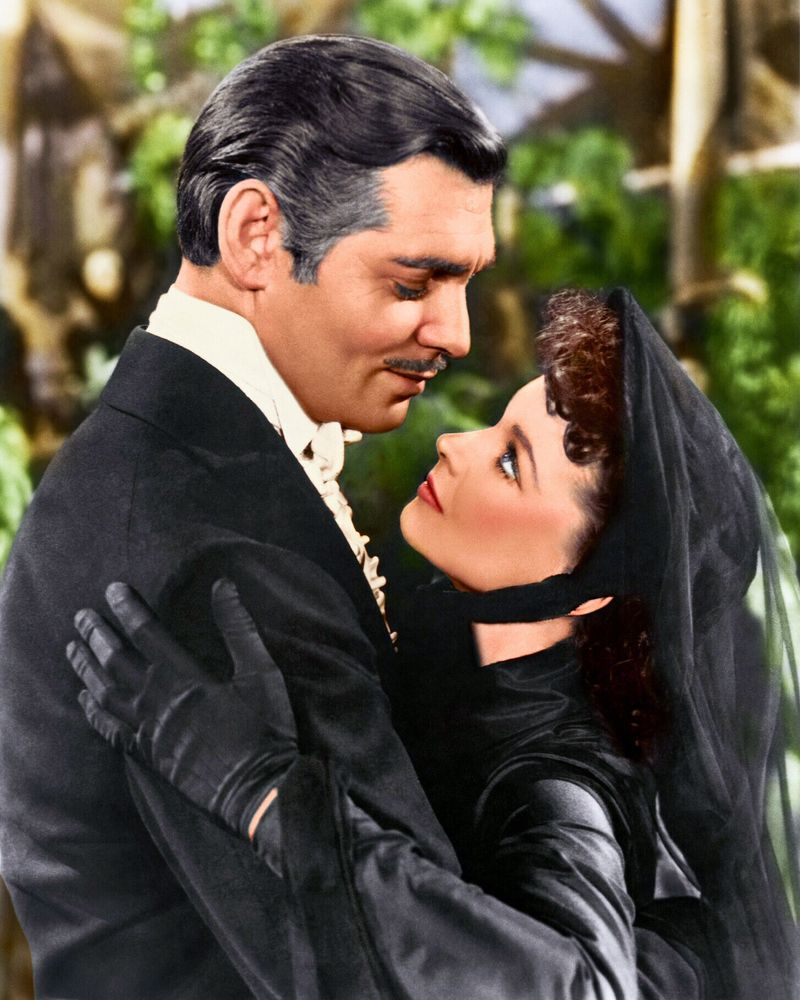
Adjusted for inflation, no movie has ever out-earned a 1939 Civil War epic.
That fact alone shows how many people bought tickets over the years.
Victor Fleming directed this historical romance starring Vivien Leigh as Scarlett O’Hara and Clark Gable as Rhett Butler.
Leslie Howard plays Ashley Wilkes, and Olivia de Havilland plays Melanie Hamilton.
The story follows strong-willed Scarlett as she struggles through love, loss, and survival during the Civil War and Reconstruction.
The film won 10 Academy Awards, including Best Picture.
It was also re-released in theaters again and again, which is how many Boomers saw it on a big screen long after 1939.
Television broadcasts kept it in living rooms too.
For a lot of families, watching it became an event, partly because the running time is close to four hours.
Modern viewers often discuss how the movie portrays slavery and the South, and those conversations matter.
Watching it with that history in mind can make for a thoughtful discussion with friends or family.
A practical tip: plan for the intermission.
Grab a snack, stretch your legs, and get ready for Scarlett’s second half, which is every bit as dramatic as the first.
4. The Godfather
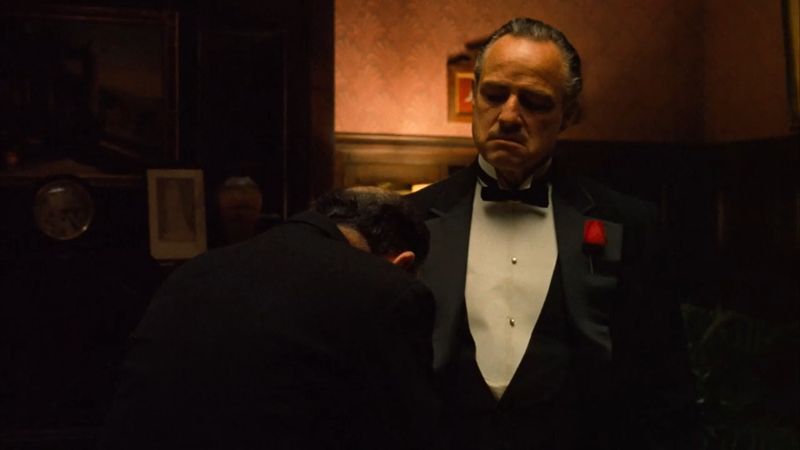
An offer you can’t refuse started out as a line in a 1972 movie.
Today people toss it around at work meetings and family barbecues without a second thought.
Francis Ford Coppola directed this crime epic, adapted from Mario Puzo’s 1969 novel.
Marlon Brando plays Vito Corleone, the head of a powerful crime family.
Al Pacino plays his youngest son, Michael, who starts as the family outsider and slowly becomes its ruthless leader.
The supporting cast is loaded.
James Caan, Robert Duvall, and Diane Keaton all turn in memorable work.
It was the highest-grossing film of 1972 and won three Academy Awards, including Best Picture.
Boomers were young adults back then, so many saw it in theaters as a major event of the year.
The dark, golden look of the movie and Nino Rota’s mournful score help set the mood.
Personally, I think Pacino’s quiet transformation is the most gripping part, because it happens one small decision at a time.
Watching with someone new to it?
Set aside an evening, skip your phone, and let the slow build do its work.
5. Jaws
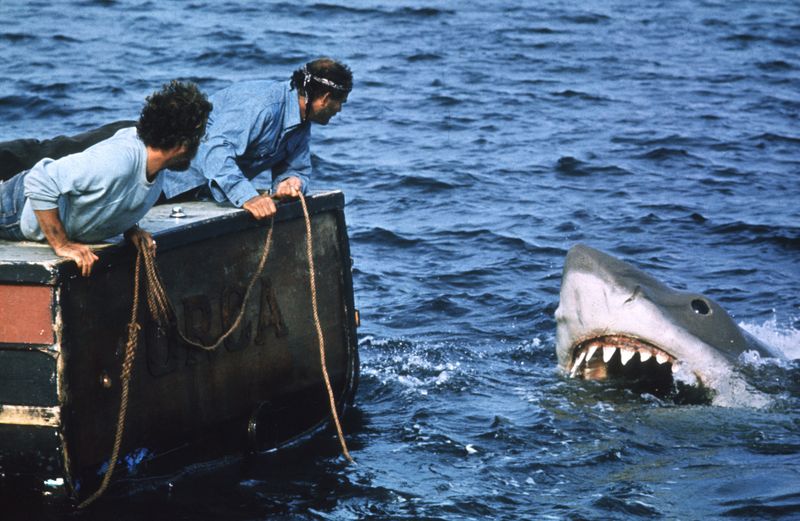
Two simple notes of music made a whole generation nervous about going into the ocean.
That ominous John Williams theme still gets a laugh, and maybe a shiver, at beach towns today.
Steven Spielberg directed this 1975 thriller about a great white shark terrorizing a fictional New England resort town.
Roy Scheider plays Police Chief Martin Brody, Richard Dreyfuss plays marine biologist Matt Hooper, and Robert Shaw plays salty shark hunter Quint.
The three men head out on a small boat to stop the shark, and things get very tense.
Jaws is widely seen as the first summer blockbuster.
It broke box office records and changed how Hollywood released and marketed big movies.
For Boomers, it was a summer moment to remember.
Plenty of people still joke that they swam a little closer to shore after seeing it.
The characters are a big part of the fun.
Quint’s grumpy stories and Hooper’s eager science talk make the boat scenes play like a quirky road trip on water.
Looking for a summer movie night?
Show it to someone who has never seen it, then watch them flinch every time the music starts.
6. Star Wars
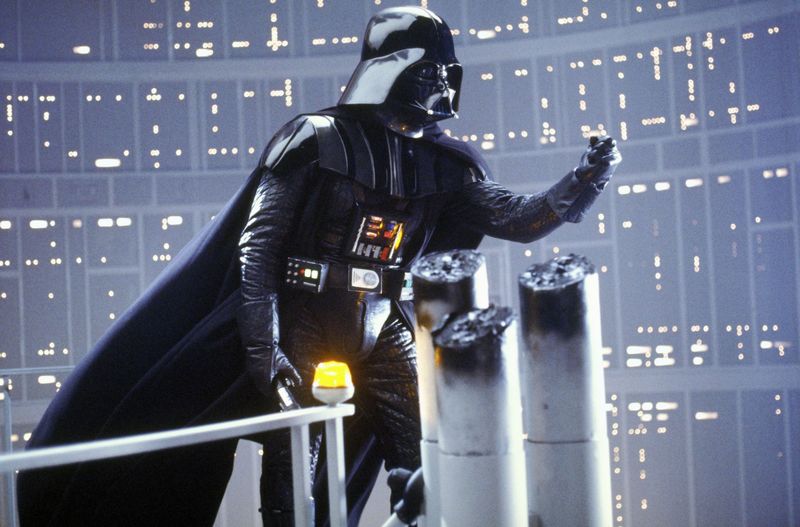
A farm boy, a smuggler, and a princess walked into a galaxy far, far away in 1977.
Movies and toy aisles never looked quite the same afterward.
George Lucas wrote and directed this space adventure, later retitled Star Wars: Episode IV – A New Hope.
Mark Hamill plays Luke Skywalker, Harrison Ford plays Han Solo, and Carrie Fisher plays Princess Leia.
Alec Guinness plays Obi-Wan Kenobi, who teaches Luke about the mysterious Force, while Peter Cushing plays the cold Grand Moff Tarkin.
The plot follows a mission to rescue Leia and deliver stolen plans for the Empire’s Death Star.
Simple setup, huge payoff.
The movie helped launch the blockbuster era and changed movie merchandising forever.
Many Boomers were in their twenties and thirties at the time, so they saw it as adults, then later shared it with their own kids.
That two-generation connection is a big reason it stays popular in Boomer households.
It’s a story parents and grandparents can enjoy alongside younger fans without feeling left out.
Fun tip: if you own an older home video copy, compare it with a newer version.
Lucas made changes over the years, and spotting differences can be a fun family game.
7. Grease
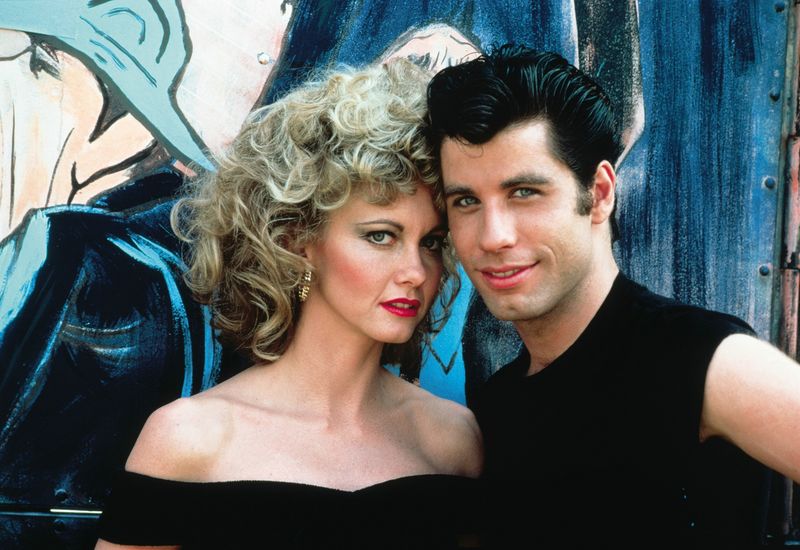
Released in 1978 but set in the 1950s, Grease gave Boomers a chance to laugh at their own teenage years.
Leather jackets, poodle skirts, and car races suddenly felt fun all over again.
Randal Kleiser directed this musical starring John Travolta as Danny Zuko and Olivia Newton-John as Sandy Olsson.
The two share a summer romance, then discover they attend the same school, Rydell High.
Danny wants to look cool for his T-Birds pals, while Sandy finds herself around the sassy Pink Ladies.
The movie became the highest-grossing musical of the 20th century.
Its soundtrack sold more than 30 million copies, which explains why Summer Nights still pops up at karaoke parties.
Timing helped a lot.
The late 1970s had a big wave of nostalgia for the 1950s, and Boomers who grew up in that decade were ready to relive it.
Honestly, the songs carry this one.
You Are the One That I Want and Greased Lightnin’ are tough to sit through without tapping your feet.
Hosting friends?
A Grease sing-along night is an easy, budget-friendly idea, and costumes are optional but highly encouraged.
8. It’s a Wonderful Life
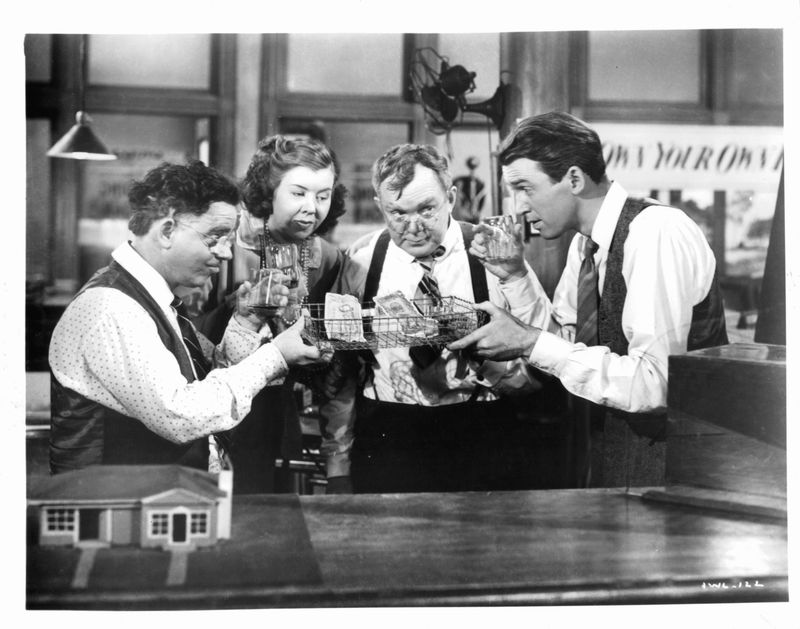
Here’s a surprise: this beloved Christmas movie was a box office disappointment when it opened in 1946.
Television eventually rescued it, and now many families can’t imagine December without it.
Frank Capra directed the film, which stars James Stewart as George Bailey.
George has spent years giving up his dreams to help his hometown of Bedford Falls.
On Christmas Eve, deep in despair, he feels his life has no meaning.
Then an angel named Clarence, played by Henry Travers, steps in.
He shows George what the town would look like if George had never been born, and the difference is eye-opening.
Donna Reed plays George’s loving wife, Mary.
Lionel Barrymore plays greedy Mr. Potter, a villain you’ll enjoy booing.
Repeated TV broadcasts, especially starting in the 1970s, turned the movie into a holiday ritual for Boomer households.
Watching it on a snowy evening became as expected as stringing lights.
The message about small kindnesses adding up still lands.
After the credits roll, it might nudge you to call an old friend or thank a neighbor who helped you out years ago.
9. The Wizard of Oz
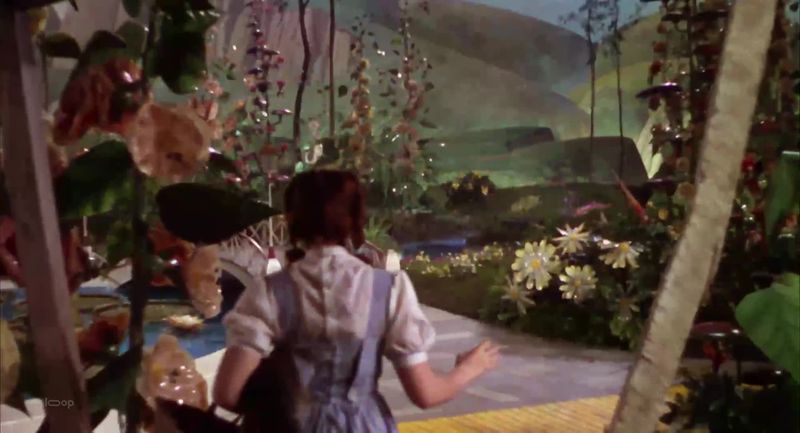
Once a year, for many Boomer kids, the whole family gathered around the TV to follow the yellow brick road.
Those broadcasts made a 1939 film feel like their own.
Directed mainly by Victor Fleming, the musical stars Judy Garland as Dorothy Gale, a Kansas farm girl swept away by a tornado.
She and her dog Toto land in the magical Land of Oz.
To get home, Dorothy travels to the Emerald City to ask the Wizard for help.
Along the way she teams up with the Scarecrow, the Tin Man, and the Cowardly Lion.
Ray Bolger, Jack Haley, and Bert Lahr play the trio, while Margaret Hamilton steals scenes as the Wicked Witch of the West.
The film wasn’t an instant money-maker.
Its popularity grew after its first TV broadcast in 1956, and it has aired many times since.
In 1989, it was among the first movies chosen for the Library of Congress’s National Film Registry.
Not bad for a story about a girl and her little dog.
Sharing it with grandkids?
Point out the switch from sepia Kansas to colorful Oz, which still delights young viewers.
10. To Kill a Mockingbird
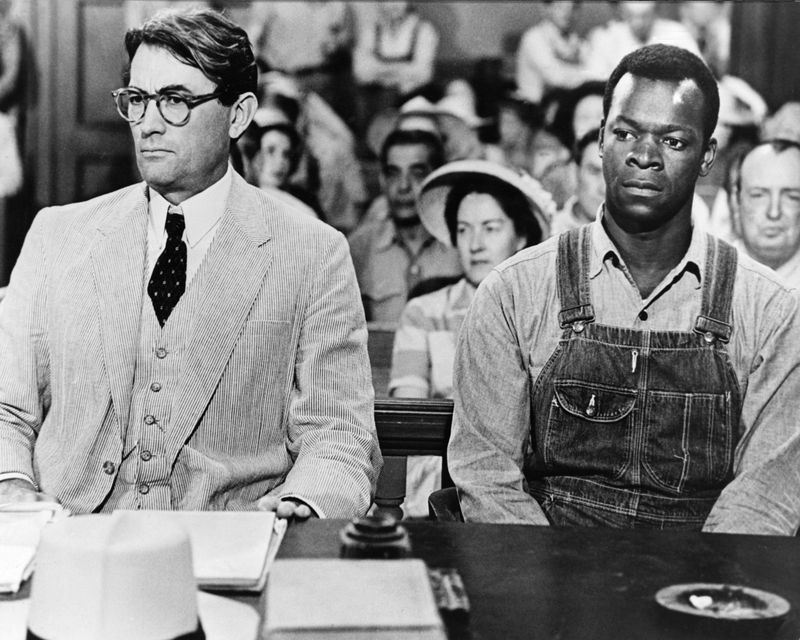
The American Film Institute named Atticus Finch the greatest movie hero of the 20th century.
Gregory Peck earned that honor without a cape or a single punch thrown.
Robert Mulligan directed this 1962 drama based on Harper Lee’s novel.
Set in Depression-era Alabama, the story is seen through the eyes of young Scout Finch, played by Mary Badham.
Her widowed father, lawyer Atticus Finch, defends a Black man falsely accused of a crime against a white woman.
The film handles prejudice, courage, and growing up with care.
Phillip Alford plays Scout’s brother Jem, and Robert Duvall makes his film debut as the mysterious Boo Radley.
It was a box office success, earning more than six times its budget.
It was also selected for the National Film Registry for its cultural, historical, and artistic importance.
Many Boomers read the novel in school, then met the movie soon after.
That classroom link keeps it familiar, since teachers still assign the book today.
A nice idea for book lovers: read the novel and watch the film back to back.
Comparing the two can spark great talks with family members of any age.
11. Lawrence of Arabia
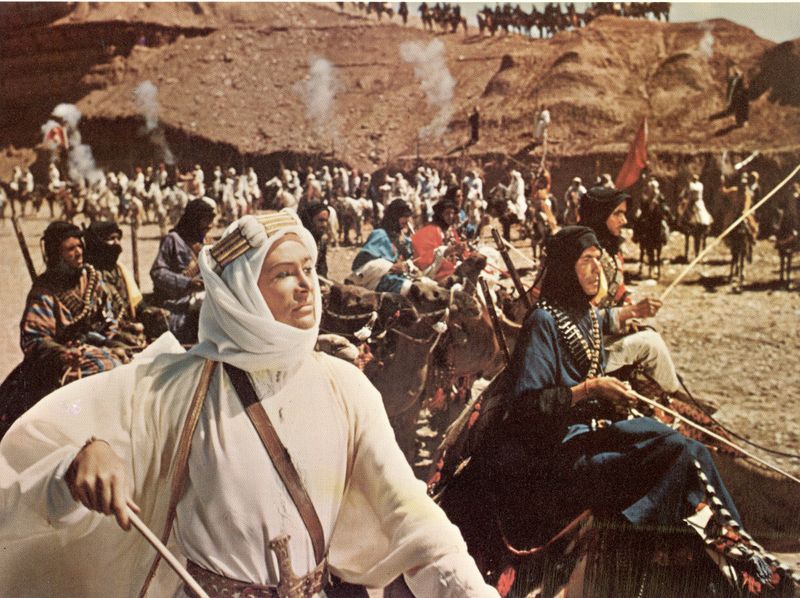
Sand, sky, and a man in flowing white robes fill some of the most famous wide shots in movie history.
Directed by David Lean, this 1962 epic practically begs for the biggest screen you can find.
Peter O’Toole stars as T.E. Lawrence, a British officer sent to Arabia during World War I.
He helps unite Arab tribes in their revolt against the Turks and leads daring raids across the desert.
The film also shows his struggle with his own identity and the violence of war.
The supporting cast is excellent.
Alec Guinness, Anthony Quinn, and Omar Sharif all play key roles.
It won seven Academy Awards, including Best Picture and Best Director.
The role made O’Toole a star almost overnight.
Maurice Jarre’s sweeping music matches the huge landscapes.
In my opinion, the scenes of riders slowly appearing over the dunes are worth the long running time by themselves.
Fair warning: this film runs close to four hours.
If you have a large TV or a local theater showing a restored print, that’s the way to go, and snacks are definitely recommended.
12. 2001: A Space Odyssey
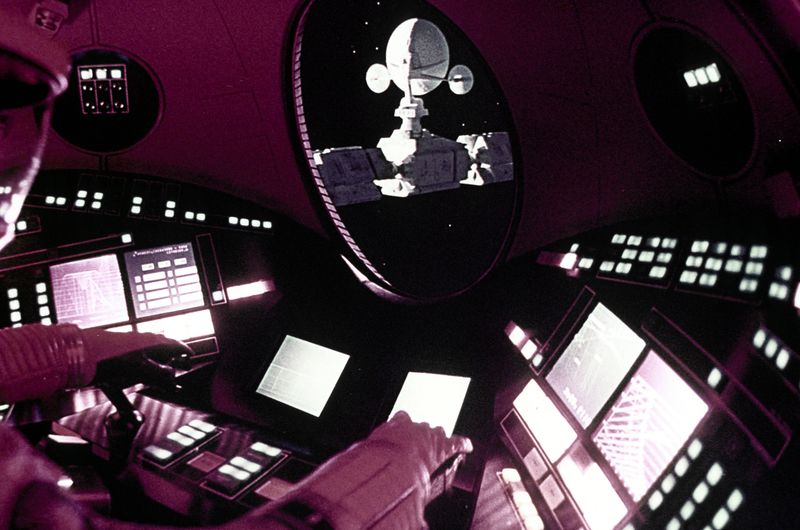
A calm computer voice saying I’m sorry, Dave still gives people chills.
That voice belongs to HAL 9000, voiced by Douglas Rain, in Stanley Kubrick’s 1968 science fiction landmark.
Kubrick produced and directed the film, which stars Keir Dullea as Dr. David Bowman and Gary Lockwood as Dr. Frank Poole.
The story follows a mission to Jupiter to investigate a strange alien monolith.
It touches on human evolution, technology, and life beyond Earth.
Dialogue is sparse, and long stretches play out to classical music.
Some viewers find that hypnotic, while others need a nap afterward.
The film arrived a year before the Moon landing, so space was on everyone’s mind.
Its realistic look at spaceflight and pioneering effects still impress.
Boomer filmmakers like Steven Spielberg and George Lucas have praised its influence.
Its fingerprints show up in plenty of later space movies.
Watching it for the first time?
Go in patient and curious rather than expecting fast action.
The ending is open to interpretation, which makes it a great movie to debate over coffee the next morning.
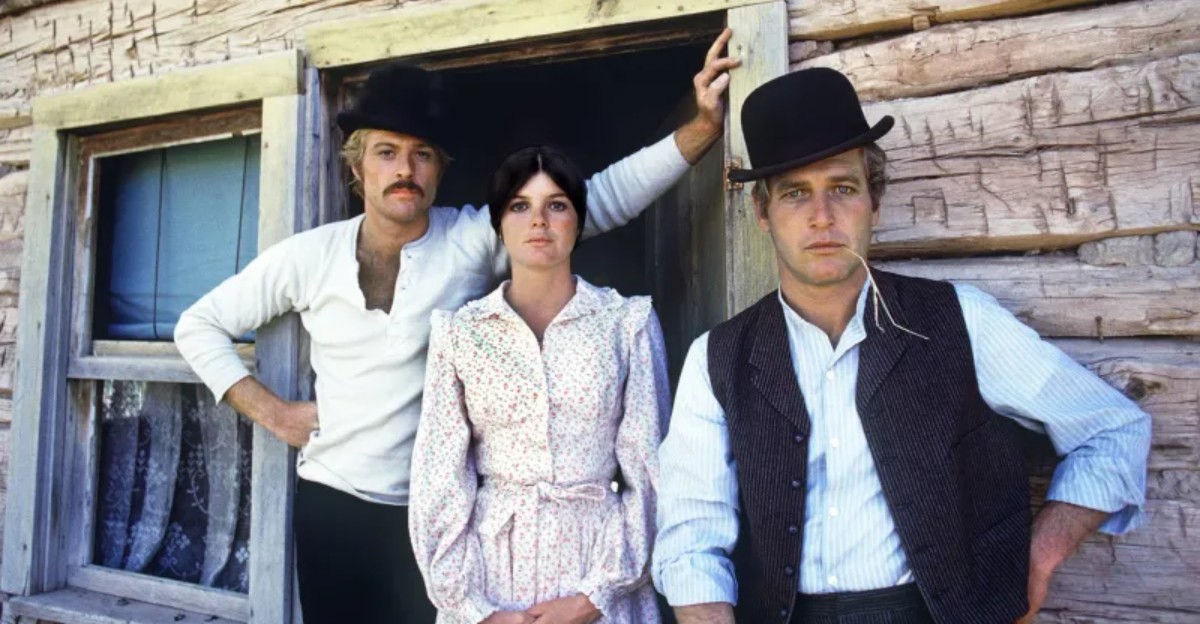
13. Butch Cassidy and the Sundance Kid
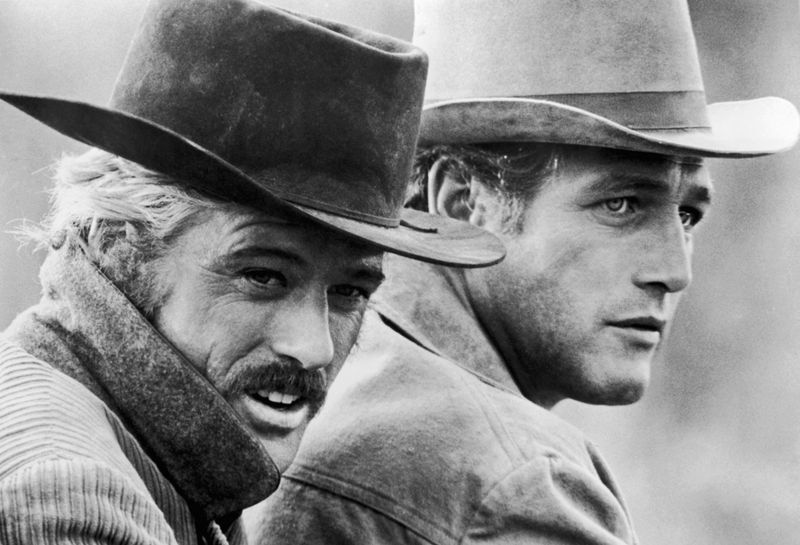
Paul Newman and Robert Redford riding side by side made outlaws look like the most charming pals in the West.
This 1969 Western leans as much on banter as it does on bullets.
George Roy Hill directed the film, loosely based on real outlaws Robert LeRoy Parker and Harry Longabaugh.
Newman plays Butch, the talker with big ideas.
Redford plays Sundance, the quiet sharpshooter.
After a string of train robberies, a determined posse chases them relentlessly.
Eventually the pair flees to Bolivia with Etta Place, played by Katharine Ross.
It was the highest-grossing film of 1969 and won four Academy Awards.
The song Raindrops Keep Fallin’ on My Head, featured in a playful bicycle scene, became a hit too.
Many Boomers saw it during their late teens and twenties.
The easy chemistry between the leads felt fresh, and the duo reunited a few years later for The Sting.
For a fun double feature, pair the two movies on a lazy weekend.
You’ll get to compare Newman and Redford’s teamwork in two very different settings, from dusty trails to Depression-era Chicago.
14. Raiders of the Lost Ark
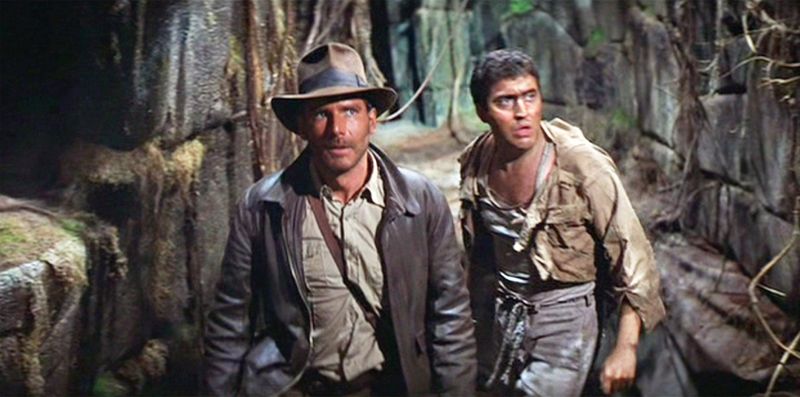
George Lucas loved the cliffhanger movie serials he watched as a boy.
In 1981, that childhood love turned into a fedora, a bullwhip, and one of the most fun adventures on film.
Steven Spielberg directed the movie, starring Harrison Ford as archaeologist Indiana Jones.
Set in 1936, the story sends Indy racing against Nazi agents to find the Ark of the Covenant.
Legend says the ancient artifact can make an army unbeatable.
Karen Allen plays Marion Ravenwood, a tough match for Indy in every way.
Paul Freeman plays his rival Belloq, and John Rhys-Davies plays loyal friend Sallah.
It was the highest-grossing movie of 1981 and brought adventure films roaring back.
It also launched a franchise that has continued for decades.
For Boomers, the throwback style hits a sweet spot.
It captures the thrill of old-time Saturday matinees while delivering bigger stunts and sharper humor.
The opening scene, with a giant rolling boulder, is pure fun.
If you’re introducing the series to younger relatives, start here, then let them decide whether they’re ready for snakes.