 MomSkoop
American food culture is one of the most creative and eclectic in the world, mixing flavors and textures in ways that surprise people from other countries. From sweet and savory combinations to deeply regional dishes, some American staples leave international visitors completely baffled.
What feels totally normal at a diner or family dinner in the U.S. can seem downright strange to someone from Europe, Asia, or beyond. Get ready to explore 15 beloved American foods that the rest of the world finds genuinely puzzling.
1. Peanut Butter and Jelly Sandwich
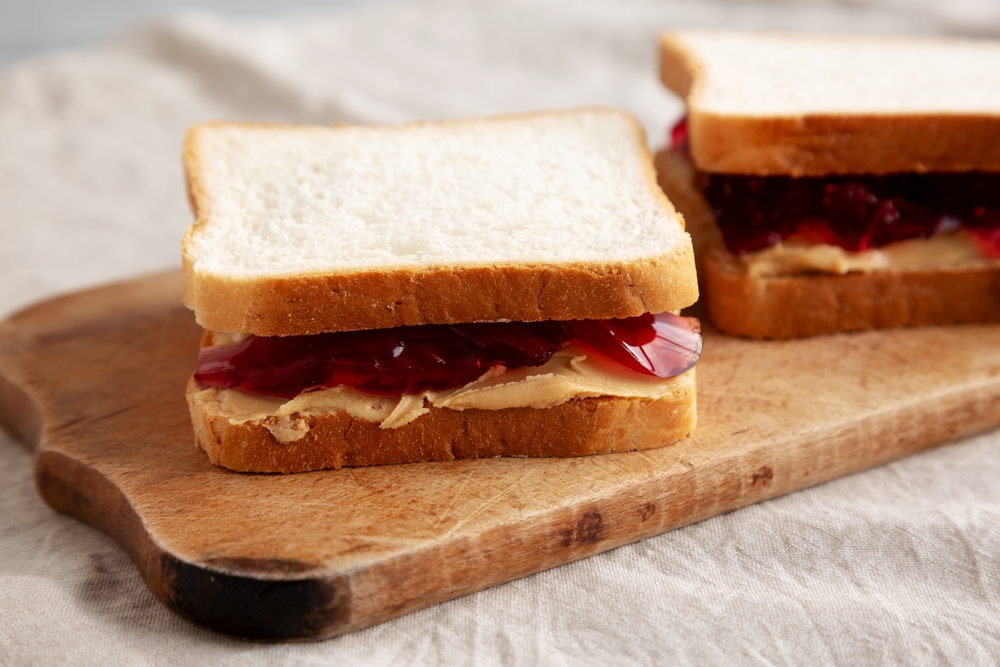
Ask any American kid what their favorite lunch is, and there is a very good chance peanut butter and jelly will top the list.
The combo of creamy or crunchy peanut butter spread thick alongside sweet, sticky jelly on soft white bread is pure comfort food in the U.S.
But people from other countries are often baffled by this pairing.
In many parts of Europe and Asia, mixing a savory nut paste with fruit preserves on bread sounds unappetizing.
Yet over 2.5 billion PB&J sandwiches are eaten in America every year, proving its legendary status.
2. Cheez Whiz
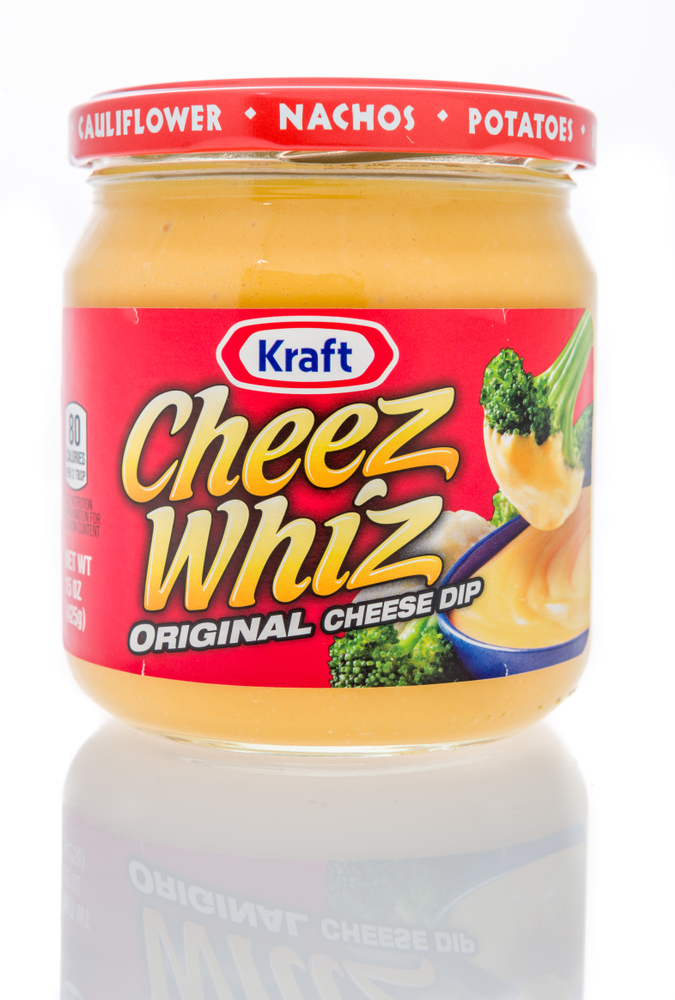
Bright orange, unnervingly smooth, and spreadable straight from the jar — Cheez Whiz is one of America’s most polarizing pantry staples.
Created in 1952, it was originally marketed as a quick cheese sauce for busy home cooks.
Today, it is an essential topping on a Philly cheesesteak and a beloved dip for pretzels and crackers.
Visitors from countries with strong cheese traditions, like France or Italy, tend to recoil at the idea of processed cheese product in a jar.
Real cheese, they argue, should never be shelf-stable.
Americans, however, beg to differ with every cheesy bite.
3. Sweet Potato Casserole
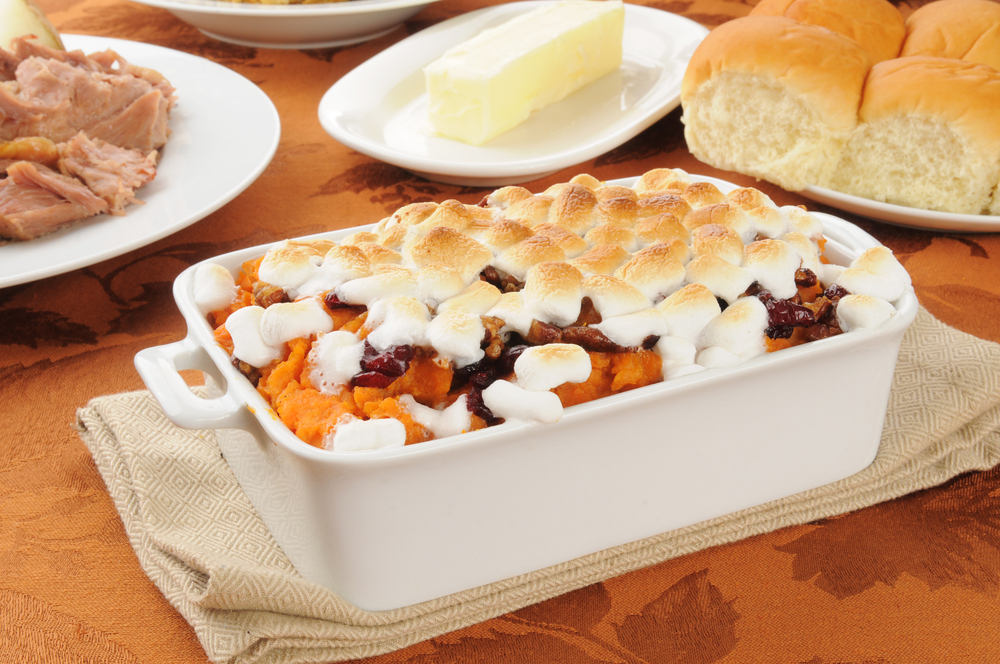
Marshmallows belong on hot chocolate or a campfire s’more — at least, that is what most people outside the U.S. would say.
Americans, though, have been piling them on top of mashed sweet potatoes and baking the whole thing into a bubbly, golden casserole since the early 1900s.
It is a Thanksgiving table staple that blurs the line between side dish and dessert.
International guests at American holiday dinners often do a double-take when they see this dish.
The idea of sugary marshmallows melted over vegetables is genuinely shocking to many cultures, yet it remains a warm, nostalgic tradition for millions of American families.
4. Ambrosia Salad
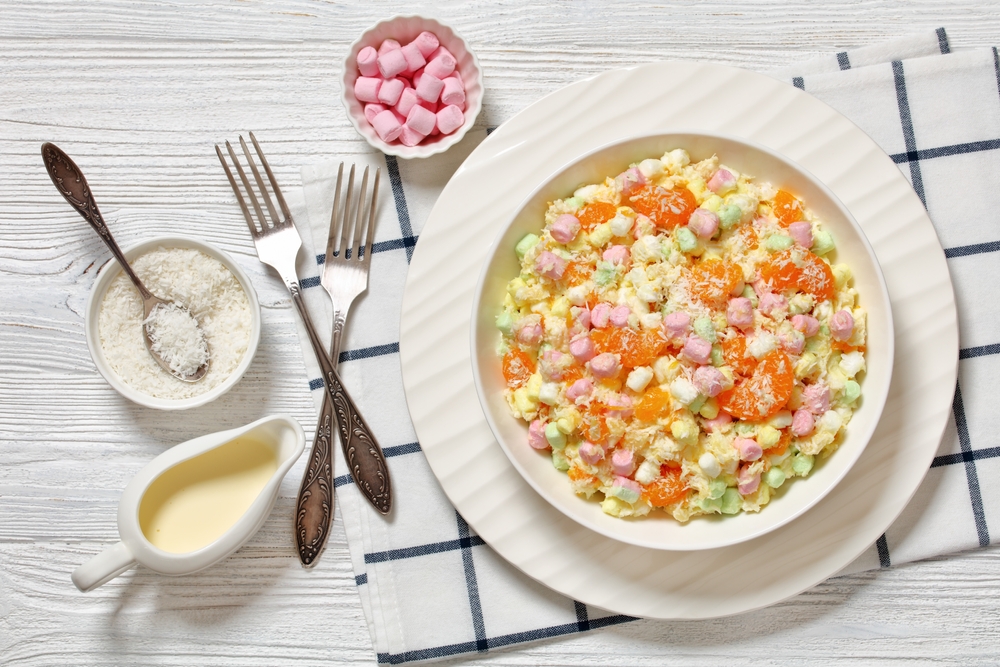
Named after the food of the Greek gods, ambrosia salad has a very different kind of divine status in American households — especially at potlucks and holiday gatherings.
It typically combines canned fruit, mini marshmallows, shredded coconut, and whipped cream or sour cream into something that is hard to classify as either salad or dessert.
People from other countries are genuinely confused when they hear the word “salad” used to describe something this sweet.
In most cultures, a salad means vegetables with dressing.
Ambrosia flips that expectation completely upside down, and Americans have been happily eating it since the late 1800s.
5. Egg Cream
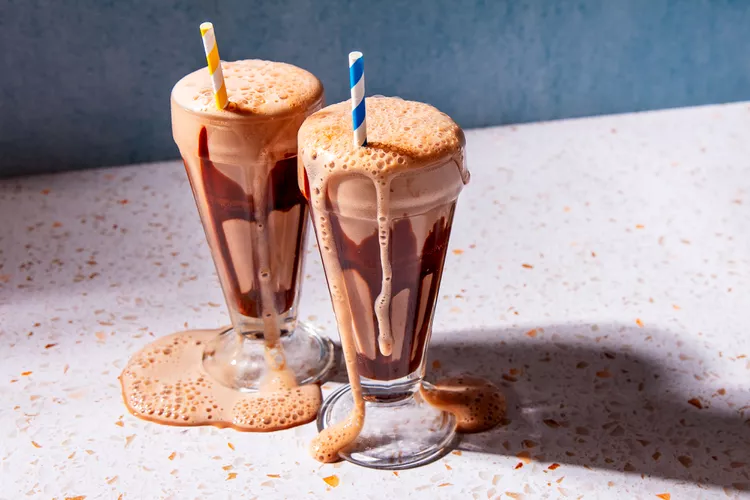
No eggs.
No cream.
Just chocolate syrup, cold milk, and fizzy seltzer water — that is the surprisingly delicious truth behind the New York egg cream.
The name confuses almost everyone who hears it for the first time, especially visitors from abroad.
The drink became a staple of Jewish delis and soda fountains in New York City during the early 20th century.
Getting the perfect egg cream requires a specific pouring technique to create a frothy, foamy top.
It tastes like a lighter, less sweet chocolate milkshake.
Once you try one, the bizarre name suddenly seems like the least important thing about it.
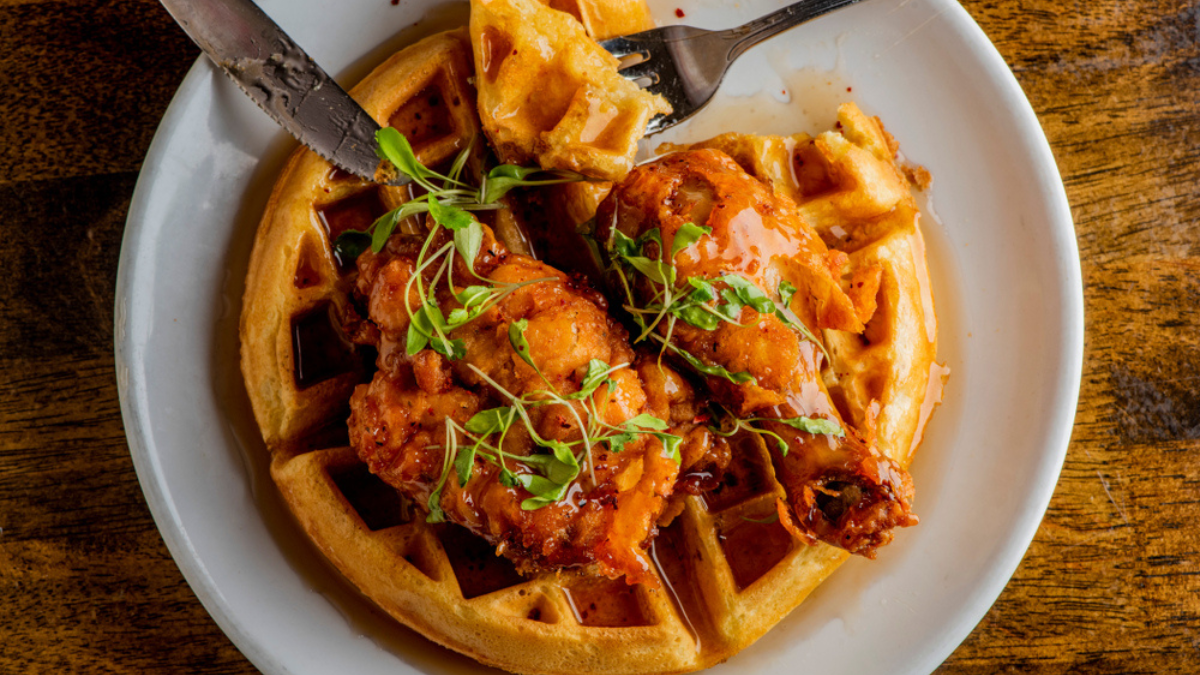
6. Chicken and Waffles
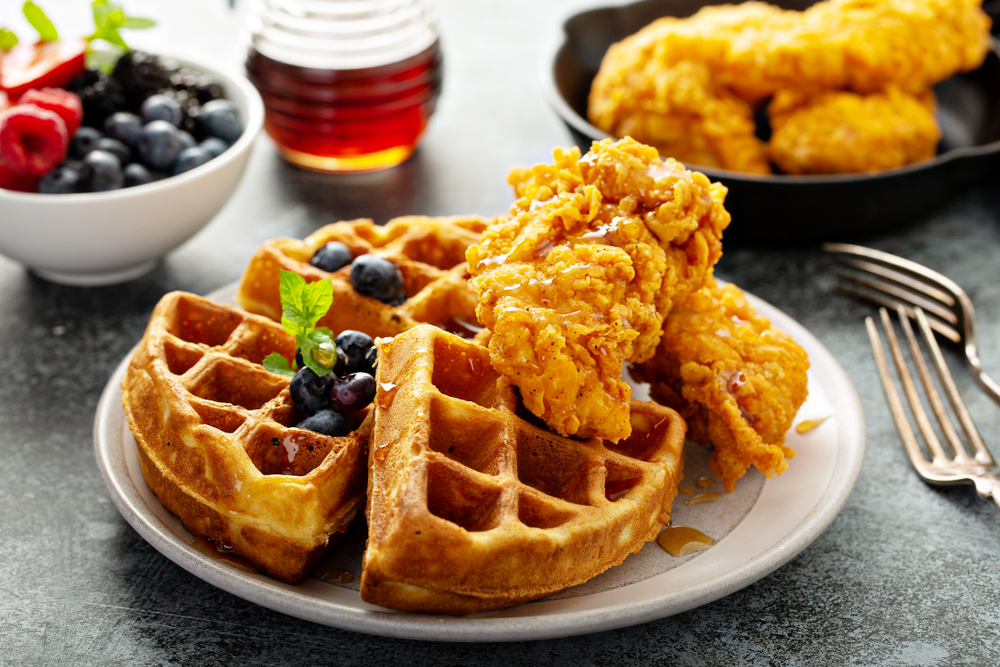
Crispy fried chicken sitting directly on top of a fluffy waffle, drenched in maple syrup — this is the kind of dish that makes first-timers stop and stare.
The sweet-and-savory combination has deep roots in Southern American cooking and has been a soul food staple for generations.
Harlem, New York, and Atlanta, Georgia, both claim proud histories with this iconic pairing.
People visiting from other countries often cannot decide if this is breakfast, lunch, or dinner — and that ambiguity is exactly the point.
Once the syrup hits the crispy chicken skin, the flavor combination makes complete and total sense in the most satisfying way possible.
7. Chicken-Fried Steak
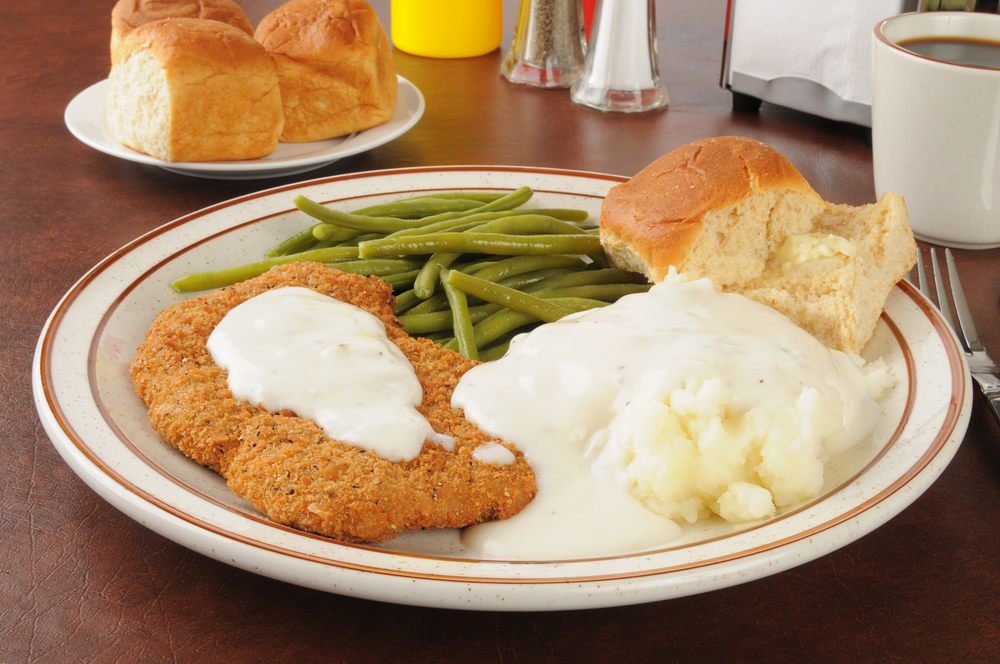
Despite the name, there is absolutely no chicken involved in chicken-fried steak — which is the first thing that confuses people hearing about it for the first time.
It is a beef cutlet, pounded thin, breaded and fried just like fried chicken, then smothered in thick white cream gravy.
It is a hearty, filling dish that is deeply beloved across Texas and the broader American South.
Germans who immigrated to Texas in the 1800s are often credited with inspiring the dish, based on their tradition of schnitzel.
Still, the American version went its own direction entirely, and no other country quite replicates the sheer comfort of this gravy-drenched plate.
8. Root Beer Float
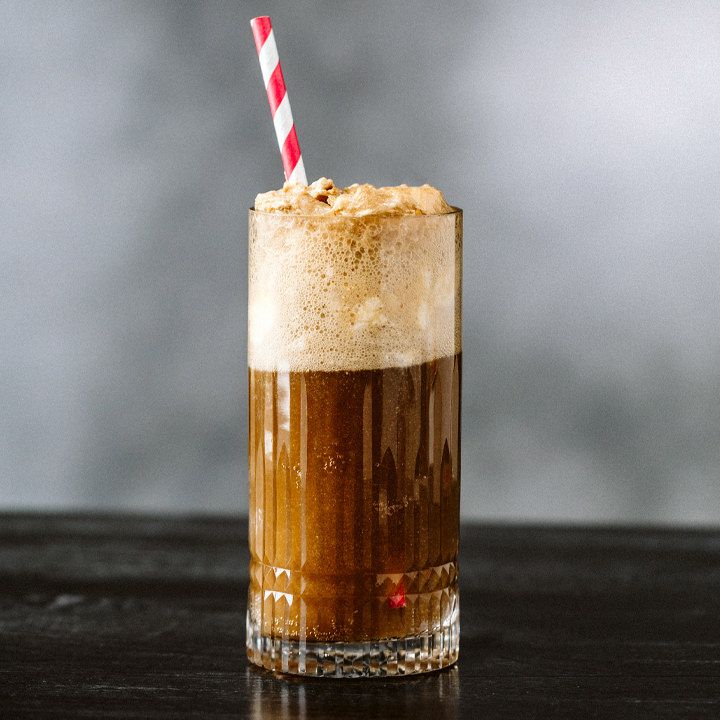
Root beer itself is already unusual enough to baffle most international visitors — its flavor, derived from sassafras bark and various herbs, tastes like medicine to many people outside North America.
Now add two scoops of vanilla ice cream and watch the foam rise up over the glass rim.
That is the root beer float, a beloved American classic since 1893.
In other countries, the idea of dropping ice cream into a fizzy drink seems bizarre.
But in the U.S., it is a nostalgic treat tied to summer afternoons and old-fashioned diners.
The creamy, fizzy contrast is something truly unique to American food culture.
9. Corn Dogs
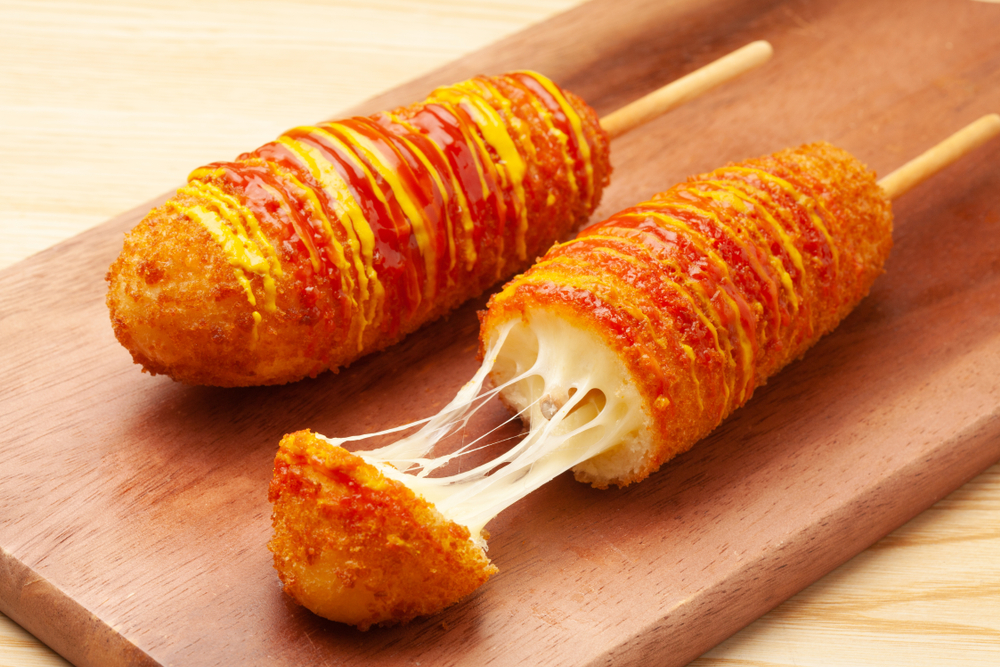
State fairs and corn dogs go together like summer and sunshine in America.
A hot dog skewered on a stick, dipped in thick cornmeal batter, and deep-fried to golden perfection — it sounds simple, but it is deeply satisfying.
The corn dog became popular at the 1942 Texas State Fair and has been a fairground icon ever since.
People from other countries are usually fine with a hot dog on a bun, but the idea of wrapping it in sweet cornbread batter and frying it on a stick adds a level of indulgence that surprises many visitors.
It is messy, portable, and undeniably American.
10. Jell-O Salad
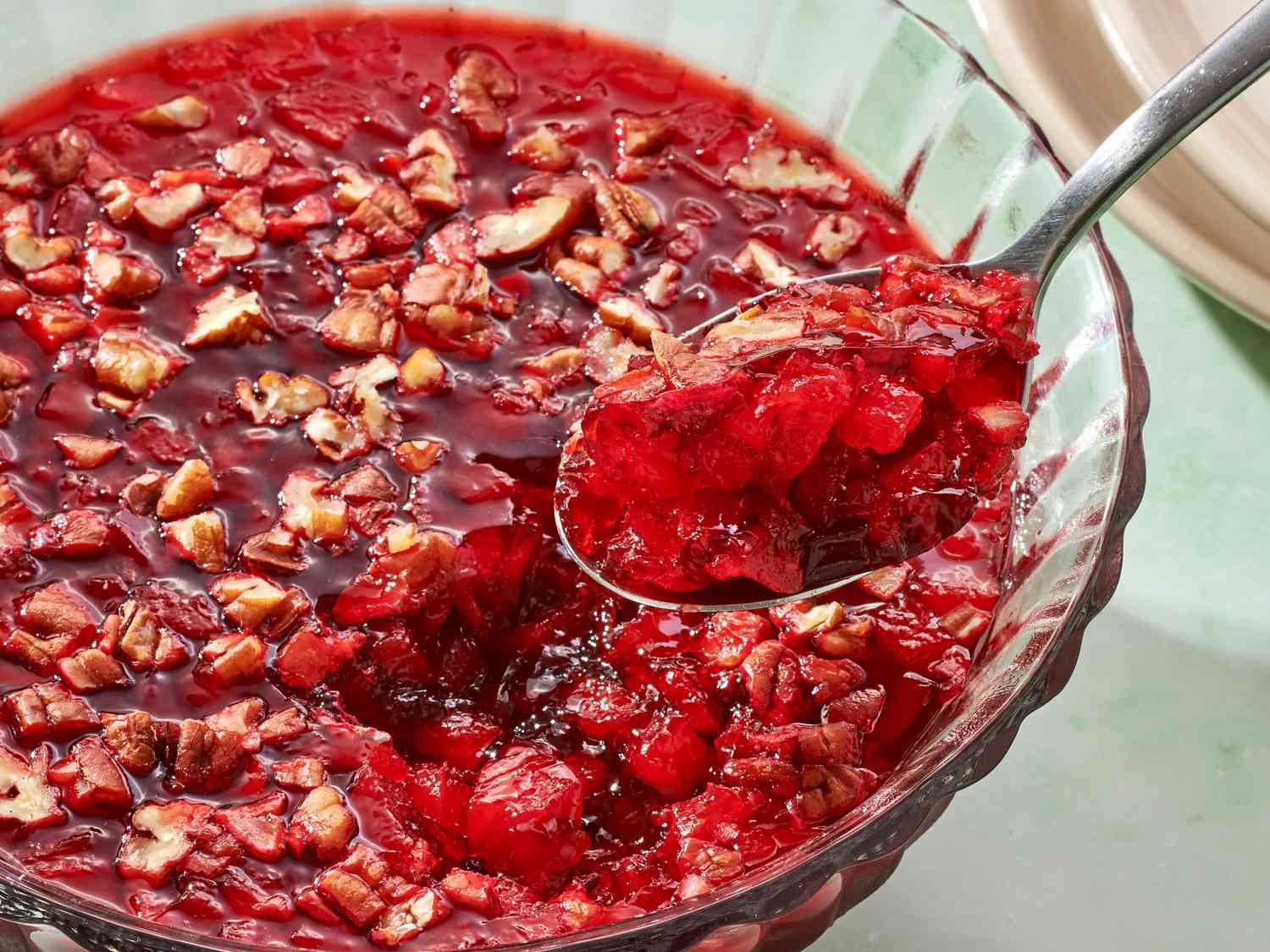
Somewhere in mid-century America, someone decided that vegetables and fruit suspended inside a wobbly gelatin mold was a perfectly reasonable thing to serve at dinner — and millions of people agreed.
Jell-O salads were wildly popular from the 1950s through the 1970s, appearing at church potlucks and family gatherings across the country.
Some versions were sweet, others were savory, and many combined both in deeply confusing ways.
People from other countries find the concept hard to process.
Gelatin is typically a dessert ingredient worldwide, not a salad base.
Yet in the American Midwest especially, Jell-O salad still holds a treasured place on the holiday table.
11. Tater Tots
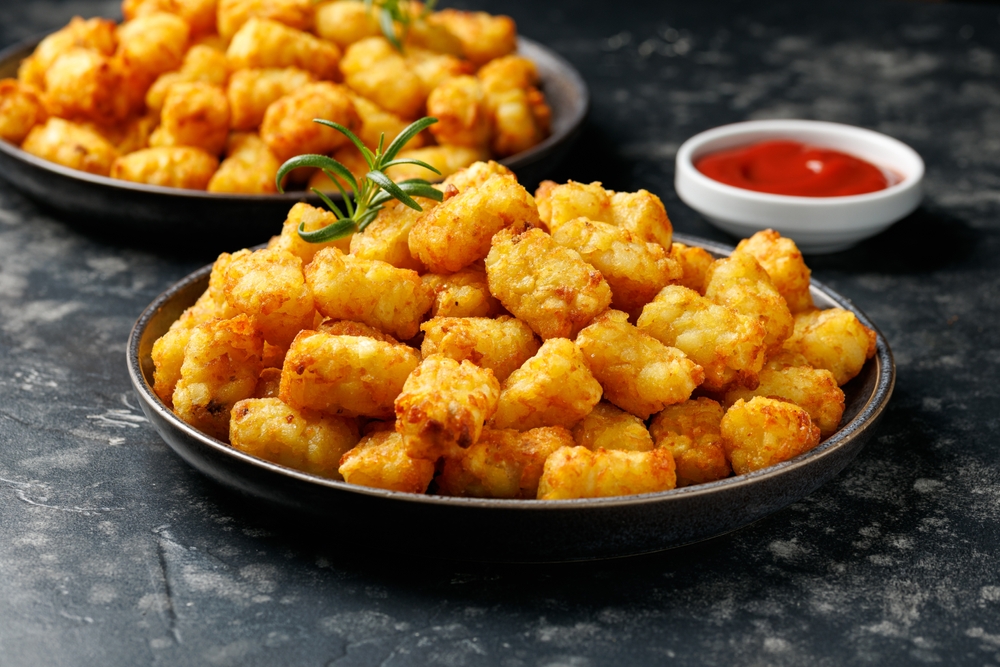
Tater tots were born out of practicality — in 1953, the Ore-Ida company figured out how to use leftover potato shavings by forming them into small, cylindrical nuggets and frying them until crispy.
What started as a clever way to reduce food waste became one of America’s most beloved side dishes, especially among kids.
School cafeterias across the country have served them for decades.
Visitors from other countries are not opposed to fried potatoes — those are universal — but the specific shape and texture of tater tots seems oddly engineered to them.
Americans, however, would never question the genius of a perfectly crispy tot.
12. Grits
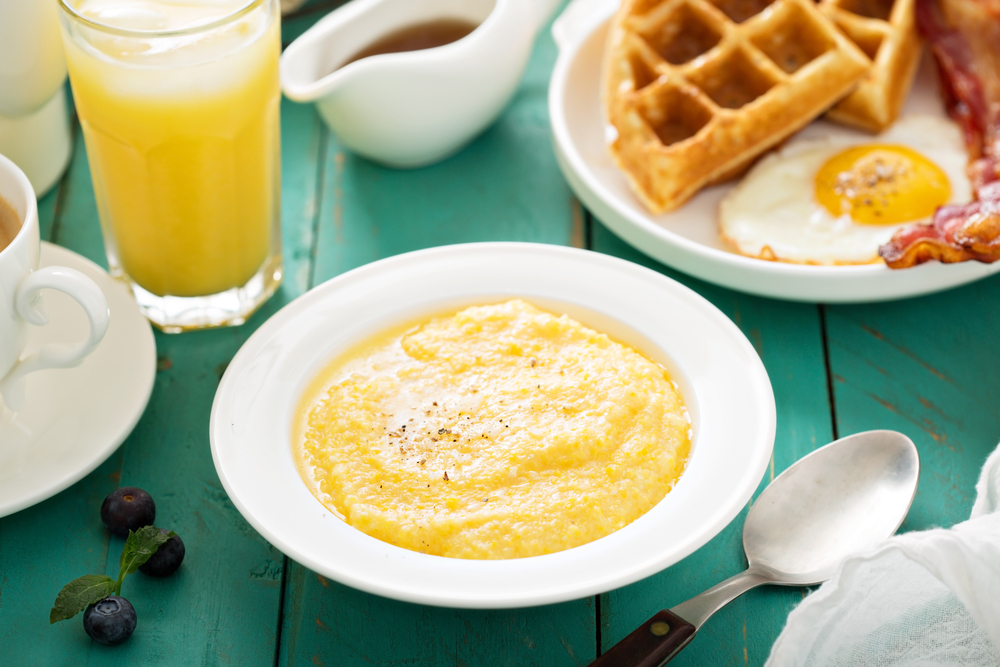
Grits are one of the oldest American foods still eaten today, with roots going back to Native American cooking long before European settlers arrived.
Made from ground dried corn cooked slowly in water or milk until thick and creamy, grits are a breakfast staple across the American South.
They can be served plain with butter, loaded with cheese, or topped with shrimp in the famous Low Country dish shrimp and grits.
People from outside the South — including many from other countries — often find the texture off-putting on first try.
Thick, porridge-like, and starchy, grits require an open mind and a generous pat of butter to fully appreciate.
13. Sloppy Joe
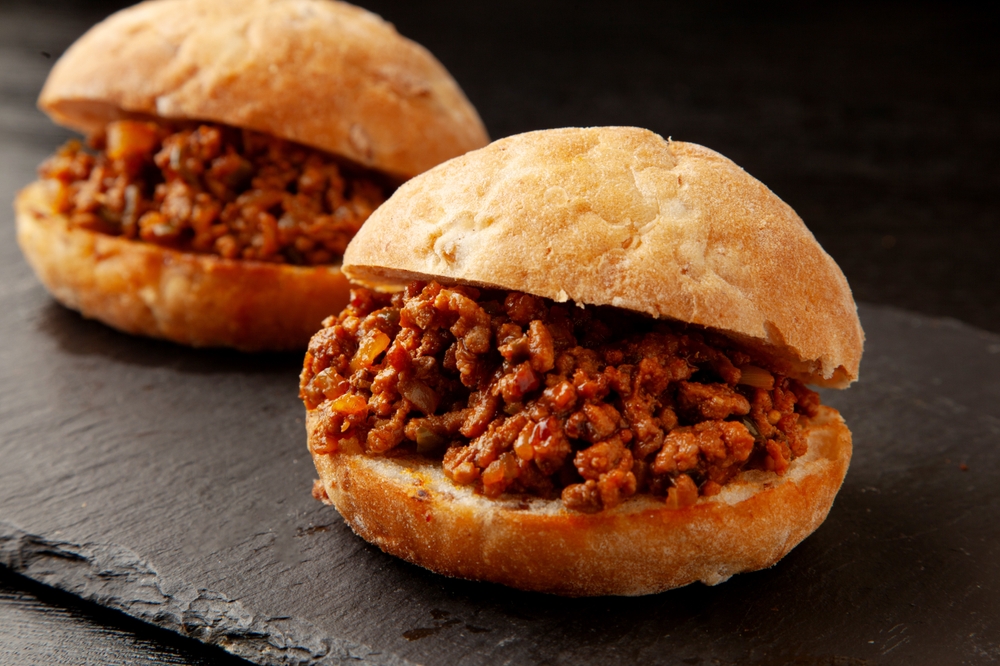
The name says it all — a sloppy joe is not a meal you eat while wearing a white shirt.
Seasoned ground beef cooked in a sweet and tangy tomato-based sauce, then piled high on a soft hamburger bun, this sandwich is gloriously messy and deeply beloved in American homes and school cafeterias.
The exact origin is debated, but many food historians trace it back to a cook named Joe in a Sioux City, Iowa, diner in the 1930s.
People from other countries are puzzled by both the name and the texture.
A filling that resembles loose meat sauce on a bun is not a common concept anywhere else in the world.
14. Cobb Salad
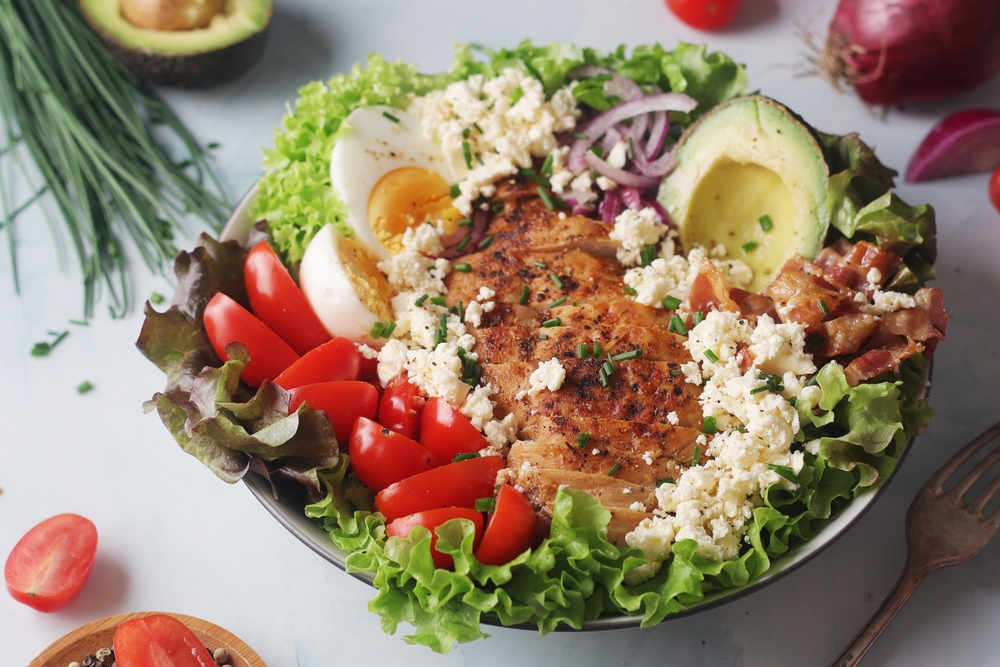
At first glance, the Cobb salad looks like an entire meal that accidentally landed on a bed of lettuce — and that is kind of the point.
Invented at the Brown Derby restaurant in Hollywood, California, around 1937, the Cobb salad layers grilled chicken, crispy bacon, hard-boiled eggs, avocado, blue cheese, and tomatoes in tidy rows over romaine lettuce.
It is hearty, colorful, and unmistakably American in its generosity.
International visitors sometimes raise an eyebrow at the sheer volume of toppings.
In many countries, salads are lighter and simpler.
The Cobb salad, by contrast, is unapologetically loaded and proud of every single ingredient on the plate.
15. Biscuits and Gravy
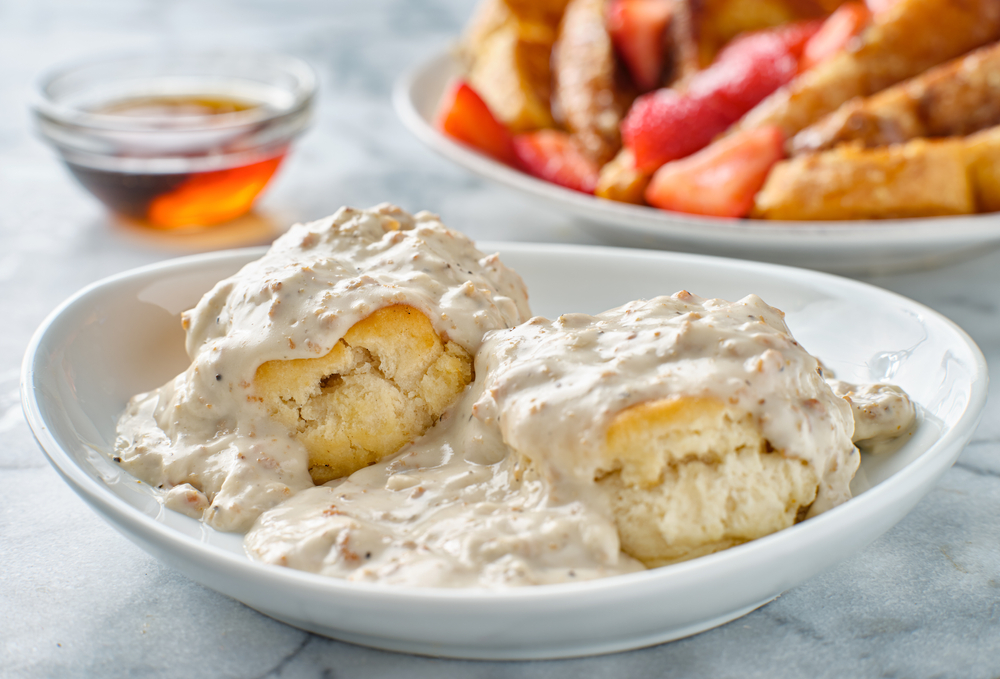
Thick, fluffy buttermilk biscuits split in half and drowned under a heavy white gravy loaded with crumbled sausage — biscuits and gravy is the kind of breakfast that keeps you full until dinner.
It is a morning staple across the American South and Midwest, served at diners, truck stops, and kitchen tables with equal pride.
The dish has humble roots, developed in the post-Revolutionary War era when affordable ingredients were a necessity.
People visiting from the U.K. are especially thrown off, since British biscuits are cookies and their gravy is brown and meaty.
White sausage gravy poured over a fluffy bread roll is a concept that exists almost nowhere else on earth.