 MomSkoop
School in the 1970s looked very different from what students experience today. Rules that seem shocking or even unfair by today’s standards were completely normal back then.
From physical punishment to strict dress codes, the policies of that era reflected a time when student rights were rarely questioned. Looking back at these forgotten rules gives us a clearer picture of how much schools have changed over the past five decades.
1. Corporal Punishment Was Allowed in Many Schools

Back in the 1970s, getting sent to the principal’s office could mean a lot more than just a stern talking-to.
Many schools across the United States allowed teachers and principals to physically discipline students using a wooden paddle.
This practice, known as corporal punishment, was considered a normal part of maintaining order.
Students who misbehaved in class, talked back, or broke school rules could be paddled right there at school.
Parents often accepted this without complaint, viewing it as part of a tough but effective system.
Today, most states have banned corporal punishment in public schools entirely.
Modern students would likely find it unthinkable that adults were legally allowed to cause physical pain as a form of discipline.
2. Strict Dress Codes for Girls

Imagine being told you absolutely cannot wear pants to school, no matter how cold the weather gets outside.
That was the reality for many girls attending public schools in the early 1970s.
Skirts and dresses were required, and showing up in trousers could get a girl sent home to change immediately.
This rule was rooted in traditional ideas about how girls were supposed to look and behave.
Many parents and administrators believed a proper appearance reinforced good values.
Thankfully, as the women’s rights movement gained momentum throughout the decade, these restrictions began to loosen.
By the late 1970s, most schools had updated their dress codes to allow girls the same clothing freedom that boys had always enjoyed.
3. Hair-Length Rules for Boys

Long hair on boys was a symbol of rebellion and counterculture in the 1970s, and many school administrators were not fans.
Schools across the country had official policies stating that male students’ hair could not touch their collar, ears, or fall past a certain length.
Boys who violated this rule risked suspension or being sent home.
Some students and their families actually went to court over these hair-length rules, arguing they violated personal freedom.
A few courts agreed, but many schools kept enforcing the policies anyway.
It sounds almost unbelievable today, but a student’s haircut was once considered serious enough to interrupt their education.
Modern schools generally have no restrictions on how long a boy can grow his hair.
4. Smoking Areas for Students

It sounds almost impossible today, but some high schools in the 1970s actually set aside official areas where students could smoke cigarettes during breaks.
These designated smoking sections were seen as a practical compromise, keeping smokers in one spot rather than letting them light up anywhere on campus.
The legal smoking age varied by state, and enforcement was inconsistent at best.
Many students smoked openly, and some teachers and administrators smoked right alongside them.
The health risks of cigarettes were known but not yet taken as seriously as they are today.
By the 1980s and 1990s, growing public health awareness led to the elimination of student smoking areas entirely.
Now, tobacco use of any kind is strictly banned on virtually every school campus in the country.
5. Mandatory Standing for the Pledge of Allegiance
Every morning in most 1970s classrooms, students were expected to stand, place their hand over their heart, and recite the Pledge of Allegiance without question.
While the Supreme Court had ruled as far back as 1943 that students could not be forced to participate, many schools simply ignored or were unaware of that ruling.
Teachers who enforced mandatory participation rarely faced pushback from parents or administrators.
Students who refused to stand risked punishment, embarrassment, or conflict with authority figures.
Today, students are generally informed of their right to sit or remain silent during the Pledge.
The shift reflects a broader cultural change toward recognizing individual rights and freedoms, even for young people inside a public school building.
6. Teachers Could Search Lockers With Little Notice
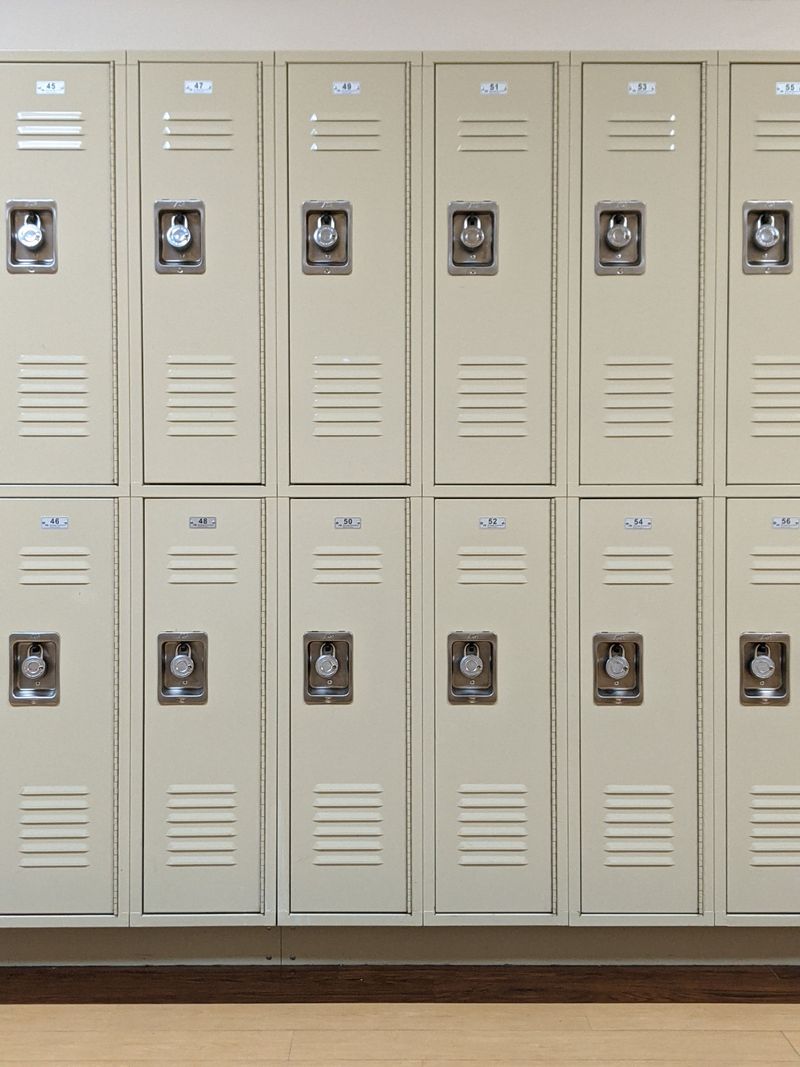
Privacy was not something 1970s students could count on at school.
Teachers and administrators could open and search a student’s locker with little or no warning, and there was rarely any formal process required beforehand.
Lockers were considered school property, which meant students had almost no legal say in the matter.
Random locker checks were sometimes carried out school-wide, especially if administrators suspected drug use or other rule-breaking.
Students had no real way to object, and complaints were rarely taken seriously.
Over time, court cases began to establish clearer guidelines about student privacy rights.
Today, while schools still retain some authority to search lockers, students have greater legal protections and schools must often have reasonable cause before conducting a search.
7. Girls Were Often Barred From Certain Sports

Before Title IX was fully enforced, girls in many schools had shockingly few athletic opportunities compared to their male classmates.
Boys had access to football, basketball, baseball, and track, while girls were often limited to cheerleading or a single gym class.
Some schools had no competitive sports programs for girls at all.
Title IX, passed in 1972, prohibited sex-based discrimination in schools receiving federal funding, including in athletics.
But implementation was slow and uneven throughout the decade.
Many schools dragged their feet, and girls continued to be excluded from sports teams well into the late 1970s.
The transformation in girls’ athletics since then has been remarkable.
Today, female student-athletes compete at every level, from local school teams all the way to the Olympics.
8. Pregnancy Could Lead to Expulsion or Forced Withdrawal

For pregnant teenagers in the 1970s, continuing their education was often an uphill battle.
Many schools pressured pregnant students to withdraw voluntarily, transferred them to separate programs away from the main campus, or outright expelled them.
The reasoning was usually framed around protecting other students from a bad influence.
Title IX technically prohibited schools from expelling students solely due to pregnancy, but enforcement was inconsistent and many students were unaware of their rights.
The stigma surrounding teen pregnancy made it even harder for young women to advocate for themselves.
Thankfully, legal protections have strengthened significantly since then.
Today, pregnant students have a clear right to remain enrolled in their regular school and must be provided with equal access to educational programs and extracurricular activities.
9. Left-Handed Students Were Sometimes Discouraged

Writing with your non-dominant hand all day sounds exhausting and frustrating, but that was the experience of some left-handed students in the 1970s.
Although the practice of forcing left-handed children to use their right hand had been declining for decades, it had not disappeared entirely by the time the 1970s rolled around.
Some teachers believed right-handed writing was simply more correct or proper, and a few still actively discouraged or penalized left-handed students.
Children who resisted sometimes faced criticism or extra pressure from well-meaning but misguided adults.
Research has since made it crystal clear that handedness is a natural neurological trait and cannot be changed without causing confusion or emotional harm.
Today, left-handed students are fully accommodated without question in virtually every classroom.
10. Strict Gender-Based Classes

Home economics for girls, shop class for boys.
That was the unspoken rule in many 1970s schools, and it was enforced without much debate.
Girls were guided toward cooking, sewing, and household management, while boys were pointed toward woodworking, auto mechanics, and industrial arts.
Crossing those lines was unusual and sometimes actively discouraged.
These divisions were rooted in deeply held beliefs about gender roles and what each sex would need in adult life.
The idea that a girl might want to fix a car engine, or that a boy might enjoy learning to cook, was treated as strange or even inappropriate.
Thanks to Title IX and shifting cultural attitudes, gender-segregated elective classes are now largely a thing of the past.
Students today are free to explore any subject that interests them.
11. Public Posting of Grades

Picture walking into your school hallway and seeing your test score posted on the wall for everyone to read.
That kind of public grade display was surprisingly common in 1970s schools.
Teachers sometimes posted ranked lists of scores, honor rolls with specific grades, or class standings where any student or parent passing by could see them.
The intent was usually to motivate students through competition and public recognition.
However, it also meant that students who struggled academically faced public embarrassment on a regular basis.
Today, privacy laws like FERPA strictly protect student educational records, including grades, from being shared without consent.
The shift reflects a much greater awareness of how public shaming can affect a student’s self-esteem, mental health, and overall relationship with learning.
12. Little Accommodation for Learning Disabilities

Students with dyslexia, ADHD, and other learning differences in the 1970s often found themselves labeled as lazy, slow, or difficult rather than receiving the support they genuinely needed.
Formal diagnosis and accommodation systems were almost nonexistent in most public schools.
Many of these students simply fell behind, dropped out, or were placed in classes that did not match their actual abilities.
The Education for All Handicapped Children Act, passed in 1975, began to change things by requiring schools to provide appropriate education for students with disabilities.
But full implementation took years, and many students slipped through the cracks throughout the decade.
Today, Individualized Education Programs and 504 plans ensure that students with learning differences receive tailored support, fair testing accommodations, and access to the same educational opportunities as their peers.
13. Teachers Could Use Collective Punishment
One student misbehaves, and the entire class loses recess.
Sound familiar?
Collective punishment was a widely accepted classroom management tool in the 1970s, and many teachers used it without hesitation.
If a few students acted up, the whole class might get extra homework, lose a privilege, or stay after school together.
The logic behind it was that peer pressure would keep troublemakers in line.
In reality, it often just bred resentment among students who had done nothing wrong.
Being punished for someone else’s choices felt deeply unfair, even to kids who could not fully articulate why.
Modern educational research strongly discourages collective punishment, recognizing that it damages classroom trust and morale.
Today, most schools focus on individual accountability and restorative practices rather than group-wide consequences.
14. Zero Tolerance for Nonconforming Appearance

Afros, long sideburns, bell-bottoms, and other fashion statements of the era were not always welcome inside school buildings.
Many administrators in the 1970s viewed nonconforming appearance as a direct challenge to authority and school order.
Students who showed up with bold hairstyles or unconventional clothing could be pulled aside, sent home, or even suspended.
Black students wearing natural hairstyles like Afros faced a particularly harsh and often racially charged version of these policies.
What was celebrated as cultural pride outside of school was sometimes treated as a problem inside it.
Lawsuits over appearance-based discrimination helped chip away at these policies over time.
Today, schools are far more likely to celebrate cultural expression and individuality, and many states have passed laws explicitly protecting natural hairstyles from discrimination.
15. Limited Due Process for Suspensions

Getting suspended in the 1970s often meant being told to leave with very little explanation and almost no chance to tell your side of the story.
Students had few procedural protections before being removed from school, and administrators held enormous power to act quickly and without much formal process.
Appealing a suspension was rare and often ineffective.
The landmark Supreme Court case Goss v.
Lopez, decided in 1975, changed this by ruling that students facing suspension have a constitutional right to at least a basic hearing.
The decision was a turning point in recognizing that students do not give up their legal rights when they walk through the school doors.
Today, schools are required to follow clear disciplinary procedures that give students a fair opportunity to be heard before serious consequences are imposed.