 MomSkoop

By the time your 50th birthday rolls around, you’ve probably picked up more than a few habits, expectations, worries, and possessions along the way. Some have served you well, while others may be taking up space in your home, your schedule, or your mind without adding much to your life.
Turning 50 is a good opportunity to take stock of what you’re carrying and decide what’s still worth keeping. That doesn’t mean making sweeping changes or reinventing yourself overnight. Sometimes, it’s simply about letting go of the things that no longer deserve your time, energy, or attention.
1. The Need for Constant Approval

Waiting for a thumbs-up before you trust your own choices is exhausting.
It turns small decisions into group projects nobody signed up for.
Approval from other people feels great, but it fades fast.
One compliment lifts you for an afternoon, then you need another.
Building trust in your own judgment tends to create a steadier sense of self that doesn’t swing with every comment or like.
A simple place to start is noticing when you ask for opinions you don’t really need.
Maybe you text three friends before buying a lamp.
Next time, pick the lamp, enjoy it, and skip the poll.
Another helpful habit is naming your values on paper.
If honesty, family time, or creativity tops your list, you can measure choices against that instead of guessing what others prefer.
Decisions that line up with your priorities usually feel better later, even if someone raises an eyebrow.
Feedback still has a place, of course.
Asking a trusted friend about a job offer or a big move makes sense.
The shift is about asking because you want input, not because you need permission.
By fifty, you’ve earned the right to sign off on your own life, and that lamp looks fantastic.
2. Old Grudges

Grudges are like carrying a backpack full of rocks up a hill nobody asked you to climb.
The other person often has no idea you’re still hauling it.
Staying angry keeps the body in a stress mode, and that ongoing tension can show up as a racing heart, tight muscles, and higher blood pressure.
Forgiveness has been linked to lower anxiety and better heart health, which is a pretty good return on letting something slide.
Letting go doesn’t mean pretending the hurt never happened.
It also doesn’t require inviting the person back into your life or sending a long, emotional email.
Forgiveness can be a quiet decision you make for your own peace.
Try writing the story down once, all of it, then closing the notebook.
Some people find it useful to talk it through with a counselor or a friend who listens well.
Others simply notice when the old replay starts and choose to change the channel.
You might keep the lesson and drop the resentment.
That ex-coworker who took credit for your work taught you to document your projects.
Keep the spreadsheet habit, lose the mental rerun, and enjoy how much lighter that hill feels on the way up.
3. Excess Clutter

Somewhere in your house sits a drawer of mystery cables for devices you no longer own.
Nearly every home has one, and it rarely sparks anything except confusion.
Physical mess can make a space feel chaotic, and that chaos can make it harder to focus or relax.
Clearing things out often brings a sense of calm and a small, satisfying win you can see right away.
Fifty is a smart time to rethink what you store.
Kids may have moved out, hobbies may have changed, and that treadmill doubling as a coat rack deserves an honest look.
Ask whether each item serves the life you have now, not the one you had in 2005.
You don’t need to clear the whole house in a weekend.
Pick one shelf, one closet, or one junk drawer, and set a timer for twenty minutes.
Donate what works, recycle what you can, and toss the rest.
Sentimental items are trickier, so give yourself grace there.
Photograph a few keepsakes before releasing them, or choose one box for treasures.
Budgets, living spaces, and family needs vary, so your version of tidy can look different from a magazine spread.
Those mystery cables, however, can go.
4. People-Pleasing Habits

Saying yes to the bake sale, the carpool, and your cousin’s moving day can turn one weekend into a marathon.
People-pleasers know that schedule well.
Constantly putting others first can lead to stress, burnout, and a creeping feeling of resentment.
Self-care slides off the list, and sometimes your own preferences get so buried you forget what they were.
That’s a lot to give up just to avoid an awkward moment.
Boundaries help protect your time and energy.
They don’t make you cold or selfish.
They make your yeses more meaningful, because people know you actually mean them.
Practice with low-stakes situations first.
Tell a server your order is wrong, or admit you’d rather see a different movie.
Small moments build the muscle for bigger ones.
A handy phrase is “Let me check and get back to you.” It buys time to decide whether a request fits your week.
Many people respect a clear, kind no more than a reluctant yes delivered through gritted teeth.
You can still be generous and helpful while keeping some room for yourself, and your cousin can probably rent a dolly.
5. Perfectionism

A perfectly folded fitted sheet is a myth, and chasing it is a fine metaphor for perfectionism.
You can spend twenty minutes on corners nobody will ever see.
Demanding flawless results from yourself is linked to anxiety, burnout, and low self-esteem.
Fear of mistakes can also lead to procrastination, because not starting feels safer than doing something imperfectly.
Aiming high isn’t the problem.
Trouble starts when “good enough” never feels allowed, even on tasks that barely matter.
Try sorting jobs into two piles: ones that deserve your best effort and ones that just need finishing.
Your tax return might belong in the first pile.
The birthday card for a coworker probably goes in the second.
Spending perfectionist energy only where it counts frees up hours for things you enjoy.
Hobbies are a great place to practice.
Take a pottery class, learn a song on guitar, or try watercolors, and let the results be lumpy.
Treating mistakes as part of learning makes it easier to try new things without dread.
Plus, a slightly crooked mug still holds coffee, and you can roll that fitted sheet into a ball with zero shame.
6. Toxic Relationships

Some friendships feel like a sunny porch.
Others feel like a phone call you have to brace yourself for.
Harmful relationships often involve patterns like control, jealousy, manipulation, constant criticism, or a lack of support.
Over time, those dynamics can wear down self-esteem and leave you anxious, drained, and doubting yourself.
Nobody deserves that, at any age.
Spotting the pattern is the first step.
Notice how you feel before and after spending time with someone.
If you regularly leave feeling smaller, that’s worth paying attention to.
Responses can range widely depending on the situation.
You might see a person less often, change the topics you share, or step away completely.
Family ties and work relationships make this harder, so limiting contact may be more realistic than cutting it off.
If a relationship involves abuse or fear, reaching out to a counselor or a support hotline is a strong move.
For less serious cases, give yourself permission to invest in people who cheer you on.
A smaller circle of reliable friends often beats a crowded calendar full of draining obligations, and that sunny porch is always open.
7. Putting Off Money Planning

Compound interest rewards early birds, but it still pays latecomers.
That’s good news if your retirement plan currently lives in a mental folder labeled “someday.”
Money grows over time because earnings start earning too.
Starting sooner gives that growth more years to work.
Waiting usually means you need bigger contributions later to reach the same goal.
In the US, people 50 and older can make extra catch-up contributions to 401(k) plans and IRAs.
That rule exists precisely because plenty of people get serious about saving in their fifties.
You’re not behind so much as right on schedule for a second wind.
Start with a clear picture.
List your accounts, debts, and monthly spending, then check your estimated Social Security benefit on the SSA website.
Seeing numbers on paper often feels less scary than guessing.
A fee-only financial planner can help if budgets allow.
Free tools from your employer or bank are another option.
Health insurance, long-term care, and timing for Social Security are worth exploring, since claiming age affects monthly benefits.
Every situation is different, so focus on progress instead of comparing your balance to a stranger’s.
Future you will appreciate the effort.
8. Sitting Still All Day

Plenty of modern jobs involve a chair, a screen, and the occasional heroic walk to the printer.
Bodies, unfortunately, weren’t built for that routine.
Too little movement raises the risk of heart disease, type 2 diabetes, high blood pressure, and some cancers.
It also contributes to weaker muscles and bones, which matter more with each birthday.
Inactivity is also linked to higher rates of anxiety and depression.
The CDC suggests adults aim for about 150 minutes of moderate activity a week, plus muscle-strengthening work twice a week.
That works out to roughly 30 minutes, five days a week.
Brisk walking counts, and so do dancing, gardening, and cycling.
Strength training deserves a special shout-out after fifty.
Resistance bands, light weights, or bodyweight moves like squats help keep muscles working for everyday tasks like carrying groceries.
Small changes add up.
Stand during phone calls, take the stairs, or walk after dinner.
If you have health conditions, checking with a doctor before starting something new is wise.
Pick activities you like, because the best routine is the one you’ll actually keep.
The printer will still be there.
9. A Diet Built on Processed Foods

Snack aisles are engineered to be hard to walk past.
Bright packaging and endless flavors make chips and pastries feel like a perfectly reasonable dinner.
Ultra-processed foods are often high in added sugar, unhealthy fats, and salt while running low on fiber and nutrients.
Heavy intake has been linked to obesity, type 2 diabetes, and heart disease.
Meals built around whole and minimally processed foods give your body more of what it actually uses.
No one is asking you to swear off cookies forever.
The goal is shifting the balance, not chasing purity.
Think of it as adding more good stuff rather than banning favorites.
Try a few simple swaps.
Plain oatmeal with fruit can replace a sugary cereal.
Roasted chickpeas or nuts can stand in for a bag of chips.
A big pot of soup on Sunday can cover several weekday lunches.
Frozen vegetables and canned beans are affordable, nutritious shortcuts, so healthy eating doesn’t have to mean fancy grocery stores.
Reading ingredient lists helps too, since shorter lists often mean less processing.
Budgets and schedules vary, so aim for progress you can sustain, and save room for a really good slice of birthday cake.
10. Bad Sleep Habits

Scrolling in bed at midnight feels harmless until the alarm rings at six.
Then that “one more video” suddenly looks like a terrible deal.
The CDC notes that about one in three US adults doesn’t get the recommended seven or more hours of sleep.
Ongoing short sleep is linked to heart disease, type 2 diabetes, obesity, and depression.
It also affects mood, focus, and memory, which explains a lot about grumpy Monday mornings.
Good sleep habits are mostly about consistency.
Going to bed and waking up around the same time, even on weekends, helps your body find a rhythm.
A dark, cool, quiet bedroom makes a big difference too.
Screens are tricky because they keep your brain busy.
Try charging your phone outside the bedroom and picking up a paper book instead.
Cutting caffeine in the afternoon can help as well.
Sleep often changes around midlife, and things like hot flashes, snoring, or frequent waking can play a role.
If you’re tired despite good habits, talking with a doctor is a smart move, since sleep apnea and other conditions are treatable.
Rest isn’t lazy.
It’s maintenance, like oil for a car you plan to drive for decades.
11. Comparing Yourself to Others

Social media is a highlight reel with excellent lighting.
Nobody posts the burnt casserole, the parking ticket, or the argument in the car on the way to the beach.
Measuring your life against those curated moments can chip away at self-esteem.
It tends to spotlight what you lack while hiding how far you’ve come.
Envy and dissatisfaction aren’t great travel companions for a milestone birthday.
Comparison isn’t limited to phones, either.
Class reunions, holiday letters, and neighbors with suspiciously perfect lawns can trigger the same feeling.
Noticing the pattern is half the battle.
One practical fix is curating your feed.
Mute accounts that leave you feeling worse and follow ones that teach, inspire, or make you laugh.
Setting time limits on apps can also help.
Another idea is comparing yourself to your past self instead of others.
Maybe you’ve learned to cook, paid off a loan, or finally figured out your printer.
Those wins count.
Keeping a short list of accomplishments from the past year can be surprisingly encouraging.
Other people’s timelines were never meant to be your instruction manual, and that perfect lawn probably has its own secrets.
12. Outdated Fashion Rules

Somebody, somewhere, decided that women over a certain age should stop wearing jeans.
That person was clearly never consulted on fashion again.
Old advice about “dressing your age” often included covering arms and knees, avoiding denim, and sticking to plain, muted colors.
Those rules feel out of step today.
Personal style, comfort, and confidence matter far more than a birthday number.
Fit is a smarter guide than any age chart.
Clothes that sit well on your shoulders and waist usually look polished, whatever the style.
A tailor can adjust hems and waistbands for a reasonable cost and make older pieces feel new.
Color is another area worth exploring.
A cobalt sweater, a red coat, or a floral print can be fun to wear, and it’s fine to experiment and see which shades you enjoy.
Mixing bold pieces with basics keeps outfits balanced if you’re easing in.
Your closet should reflect who you are now.
If certain pieces belong to a past job or a phase you’ve outgrown, consider donating them.
Style is personal, so wear sneakers with dresses, try the wide-leg pants, or keep your favorite jeans.
The jeans police have no jurisdiction here.
13. An Overloaded Calendar
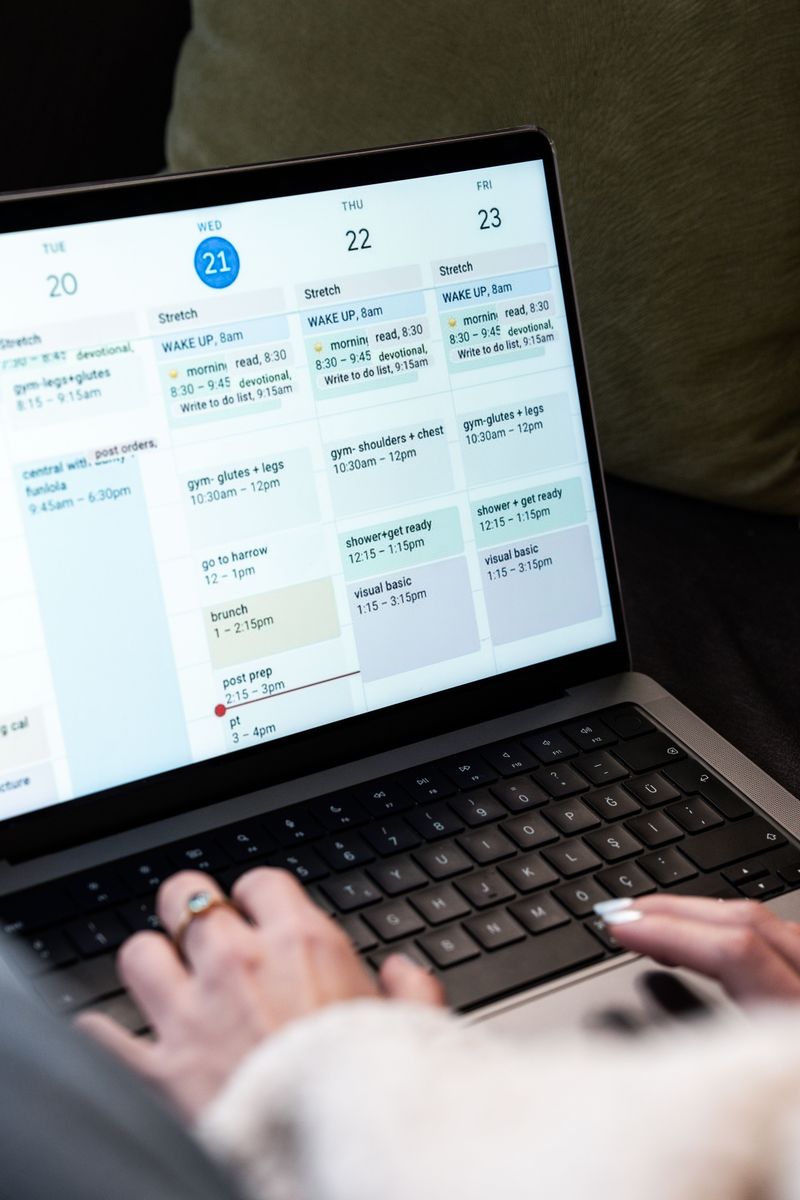
Calendars can fill up like a carry-on bag before a long trip.
A little extra here, one more thing there, and suddenly the zipper won’t close.
Constant overcommitment brings real costs.
Chronic stress, burnout, and irritability often follow, especially when your effort goes unnoticed.
Your own needs keep getting bumped to next week, which somehow never arrives.
Overloading and people-pleasing are cousins, but this one is often about pride or habit.
Some folks simply love being busy, and that energy is great until it isn’t.
Fifty is a good checkpoint to ask whether your schedule matches your priorities.
Try an audit of the past month.
Highlight activities that energized you in one color and ones that drained you in another.
The pattern usually jumps off the page.
From there, trim gently.
Step down from one committee, rotate hosting duties, or schedule “nothing” blocks that get treated like real appointments.
Empty space isn’t wasted time.
It’s where rest, spontaneity, and that long-postponed lunch with an old friend can finally happen.
Your calendar should feel like a plan you chose, not a suitcase you’re sitting on to force shut.
14. Fear of Failing

Vera Wang didn’t design her first wedding dress until she was around 40.
Julia Child published her first cookbook at 49, after years of testing recipes.
Those stories matter because fear of failure keeps a lot of people from starting anything new.
That dread can lead to avoidance and procrastination, and it’s linked to anxiety and low self-esteem.
When the fear is intense and persistent, it even has a name: atychiphobia.
Calculated risks, on the other hand, can build confidence and resilience.
Each small attempt proves you can handle the outcome, whatever it is.
Failure becomes information instead of a verdict.
Start with low-stakes experiments.
Sign up for a beginner class, apply for a role slightly above your experience, or share a piece of writing with a friend.
Expect wobbles.
It helps to define what success looks like before you start.
Maybe success just means showing up three times, not mastering the skill.
That way, progress is easy to spot.
If fear feels overwhelming or constant, a therapist can offer tools to manage it.
Plenty of people find their boldest chapters after fifty, so the surfboard, cello, or small business idea might be right on time.
15. Unrealistic Beauty Standards

Gray hair has gone from something to hide to a look plenty of people choose on purpose.
Silver strands now show up proudly in ads, on runways, and in salon chairs.
Still, pressure to look young remains loud.
Media and advertising often tie beauty and value to youth, which can fuel body dissatisfaction, anxiety, and a fear of aging.
Many midlife women say they rarely see themselves represented, and that absence sends its own message.
Your face tells the story of decades of laughing, squinting at menus, and surviving some questionable haircuts.
Lines and changes are part of being a person with a history.
Nothing about that needs fixing unless you want to change something for your own reasons.
Care routines are a personal choice.
Sunscreen, moisturizer, hair color, or none of the above can all fit a happy life.
The difference is whether you’re choosing out of enjoyment or out of fear.
Following people who show real, unfiltered aging can shift what feels normal.
Notice the qualities you admire in older friends, like their humor or kindness.
Appearance changes over time, but your worth was never tied to a wrinkle count.
Fifty looks good on people who stop apologizing for it.