 MomSkoop

Every new relationship feels exciting at first, but sometimes certain warning signs show up early that are hard to ignore. Knowing what to look for can save you from a lot of heartbreak down the road.
Some patterns that appear in the beginning tend to get worse over time, not better. Recognizing these signals early gives you the power to make smarter choices about your future.
1. You Can’t Communicate Openly

Healthy relationships run on honest, open conversation.
When every serious talk turns into a shouting match, a cold silence, or complete avoidance, that is a serious problem worth paying attention to.
Communication is how two people solve problems, share feelings, and grow closer together.
Without it, small issues pile up like unread mail until the whole stack falls over.
If you find yourself tiptoeing around topics just to keep the peace, something important is missing.
A partner who shuts down or explodes instead of talking things through is showing you how conflicts will be handled for the long haul.
That pattern rarely fixes itself without real effort from both sides.
2. Trust Issues Appear Right Away

Trust is the foundation every solid relationship is built on, and when cracks appear in the very beginning, they tend to spread fast.
Jealousy, constant suspicion, or checking each other’s phones early in a relationship is not a sign of love.
It is a sign of insecurity that can quickly become controlling behavior.
Some people explain this away by saying they have been hurt before, and while past pain is real, it should not be taken out on a new partner unfairly.
Healthy trust is built gradually through honesty and consistency.
When distrust shows up before trust even has a chance to grow, it signals a rocky road ahead for the relationship.
3. Your Core Values Clash

Opposites can attract, but when two people disagree on the big stuff, attraction alone will not carry things very far.
Core values include beliefs about marriage, children, money, religion, and how to live daily life.
These are not small preferences like favorite movies or food choices.
When two people want fundamentally different things and neither is open to compromise, someone always ends up resentful.
That resentment tends to build quietly until it becomes impossible to ignore.
It is worth having those honest, sometimes uncomfortable conversations early on rather than years later when both of you are more deeply invested.
Shared values do not have to be identical, but they do need to be compatible enough to move forward together.
4. One Person Controls the Other

Control in a relationship does not always look like obvious aggression.
Sometimes it starts with small comments about what you wear, who you hang out with, or how you spend your own money.
Over time, those small comments turn into firm rules, and suddenly your independence has quietly disappeared.
A partner who needs to manage your choices is not being protective.
They are being controlling, and there is a real difference between the two.
Healthy relationships are built on mutual freedom and respect, where both people feel safe to make their own decisions.
If you feel like you need permission to live your own life, that is a major warning signal that should not be brushed aside or minimized.
5. Mutual Respect Goes Missing

Respect is not just about being polite.
It means valuing your partner’s thoughts, feelings, and boundaries even when you disagree.
When insults, sarcasm, or belittling comments become a regular part of how you speak to each other, the relationship has entered dangerous territory.
Dismissing someone’s emotions or laughing at their ideas sends a clear message that their inner world does not matter.
Over time, that kind of treatment chips away at a person’s self-worth in ways that are hard to rebuild.
A relationship without mutual respect is exhausting and demoralizing to be in.
Love should make you feel seen and valued, not small and constantly criticized.
If mockery has replaced kindness, that tells you a great deal about where things are headed.
6. Everything Feels One-Sided

Relationships take effort from two people, not just one.
When you are always the one reaching out, planning dates, offering emotional support, or making sacrifices, it starts to feel less like a partnership and more like a solo project.
At first, you might make excuses for your partner, telling yourself they are just busy or going through something.
But when the imbalance never shifts, that excuse wears thin.
Feeling consistently unappreciated or invisible in your own relationship is a heavy burden to carry.
A partner who rarely puts in emotional or practical effort is showing you exactly how much they are willing to invest.
Genuine love shows up in actions, not just words spoken at convenient moments.
7. Conflicts Never Actually Get Resolved
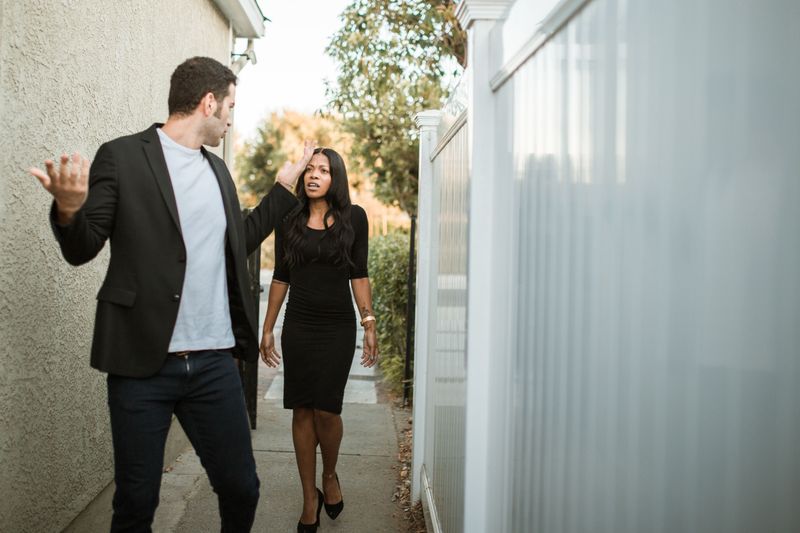
Every couple argues.
That part is completely normal.
What is not normal is having the exact same argument over and over again without anything ever changing.
When conflicts circle back endlessly, it usually means neither person feels truly heard or understood by the other.
Unresolved conflict does not just disappear.
It sits underneath the surface and quietly poisons the good moments in between.
Productive disagreements lead somewhere.
Both people walk away with a better understanding of each other, even if the issue takes time to fully settle.
If your fights feel like reruns of the same episode with no resolution in sight, that is a strong indicator that deeper communication problems need to be honestly addressed before more damage is done.
8. Your Partner Refuses Accountability

Nobody is perfect, and a person who cannot admit that is going to be very difficult to build a healthy relationship with.
When your partner never apologizes, always shifts blame onto you or others, and makes endless excuses for hurtful behavior, accountability has left the building entirely.
An apology is not just words.
It is a signal that someone understands how their actions affected you and genuinely cares enough to do better.
A partner who refuses to own their mistakes puts all the emotional weight on you to manage, absorb, and forgive without ever receiving real acknowledgment.
That dynamic creates deep resentment over time.
Accountability is not weakness.
It is one of the most important signs of emotional maturity in any lasting relationship.
9. You Can’t Be Yourself Around Them

Imagine spending time with someone you genuinely care about but feeling like you have to wear a mask the entire time.
That is exactly what it feels like when you constantly hide your opinions, interests, or real personality just to avoid upsetting your partner.
A relationship should be a safe space where you feel free to be exactly who you are, quirks and all.
When you feel the need to shrink yourself to keep the peace, that freedom is gone.
Self-suppression in a relationship is quietly exhausting.
Over time, you may forget what your authentic self even looks like.
A partner who accepts only a edited version of you is not truly accepting you at all, and that gap tends to widen with time.
10. Major Boundaries Keep Getting Crossed

Boundaries exist for good reason.
They protect your comfort, your privacy, and your sense of self within a relationship.
When a partner repeatedly ignores those limits, even after you have clearly expressed them, it shows a serious lack of respect for who you are as a person.
Boundary violations do not always look dramatic.
Sometimes it is reading your messages without asking, showing up uninvited, or pressuring you to do things you are not comfortable with.
The real concern is not one accidental misstep.
It is the pattern of disregard that follows after you have spoken up.
A partner who continues crossing your boundaries after being told they matter is telling you, through their actions, that your comfort simply does not come first.
11. Lies and Broken Promises Pile Up

Small lies told early in a relationship are easy to brush off as nerves or exaggeration.
But when those little deceptions keep stacking up, they reveal something much more significant about a person’s character and honesty.
Broken promises follow a similar pattern.
One missed commitment might be understandable.
A constant stream of unkept promises signals that your partner’s word simply cannot be relied upon.
Trust is incredibly hard to rebuild once it has been broken repeatedly.
If someone shows you through their behavior that honesty is optional for them, believe what you are seeing.
A relationship built on shaky honesty will eventually collapse under the weight of accumulated disappointments, no matter how much genuine affection exists between the two people involved.
12. You Feel Drained Instead of Supported

Relationships are not supposed to feel like a full-time job with no days off.
When you consistently feel anxious, sad, or completely worn out after spending time with your partner, something is seriously off balance.
Joy and support are not extras in a relationship.
They are the whole point.
A partnership that regularly leaves you feeling empty rather than energized is draining resources you need for your own mental and emotional health.
Pay attention to how you feel after most interactions with your partner, not just the occasional rough day.
If exhaustion has become your default emotional state in the relationship, that is your mind and body sending a very clear and important signal worth listening to carefully.
13. Friends and Family Keep Raising Concerns

The people who love you most often see things you cannot, especially when your heart is involved.
When multiple trusted friends or family members start expressing consistent concerns about your relationship, it is worth pausing to truly hear what they are saying.
That does not mean outsiders are always right or that they understand every detail of your relationship.
But when the same worries come from several different people who care about your well-being, that is not a coincidence worth ignoring.
Love can sometimes act like blinders, making it hard to see patterns that are obvious to everyone else in the room.
Listening to concerned loved ones does not mean giving up your relationship.
It means caring enough about yourself to honestly consider what they have noticed.
14. Signs of Emotional or Physical Abuse Exist

Abuse does not always start with something dramatic or obvious.
It often begins with subtle intimidation, manipulation, or humiliation disguised as jokes, criticism, or expressions of concern.
These early signs are serious and should never be explained away or minimized.
Threats, controlling behavior, and any form of violence, whether emotional or physical, are not relationship problems to work through.
They are safety issues that require immediate attention and support from trusted people.
Nobody deserves to feel afraid of the person they are in a relationship with.
If any of these behaviors sound familiar, please reach out to a trusted adult, counselor, or helpline.
Your safety and dignity matter far more than keeping any relationship intact, no matter how long it has lasted.
15. Your Future Goals Simply Do Not Match

Caring deeply about someone does not automatically make the relationship work long-term.
Two people can have genuine love for each other and still want completely different futures.
Disagreements about where to live, whether to have children, or how to build a career are not small details to figure out later.
Hoping your partner will eventually change their mind about a major life goal is a gamble that rarely pays off the way you hope it will.
Incompatible futures create a slow, painful kind of heartbreak that grows heavier with every passing year.
Having honest conversations about long-term goals early in a relationship is not pessimistic.
It is one of the most loving and practical things two people can do for each other.