Some movies have a way of staying with us long after the credits roll, becoming part of our shared cultural memories and shaping how we think about cinema. Whether it’s an unforgettable performance, a powerful storyline, or a scene that has been referenced countless times, certain films manage to leave a lasting impression across generations. While the definition of a classic can vary from person to person, these movies often share something special that keeps audiences returning to them decades after their original release. From timeless romances and gripping dramas to beloved comedies and groundbreaking adventures, classic films continue to hold a unique place in entertainment history.
What makes a movie a classic isn’t necessarily its age or the number of awards it has won. Sometimes, it’s the emotional connection viewers develop with the characters, the influence a film has on popular culture, or its ability to remain relevant despite changing tastes and trends. Some classics are celebrated for their artistic achievements, while others are remembered simply because they are endlessly entertaining. Whatever the reason, these films have earned a reputation that extends far beyond their initial success. Here are 16 movies that may come to mind when we think of classics, each offering something memorable that has helped secure its place in cinematic history.
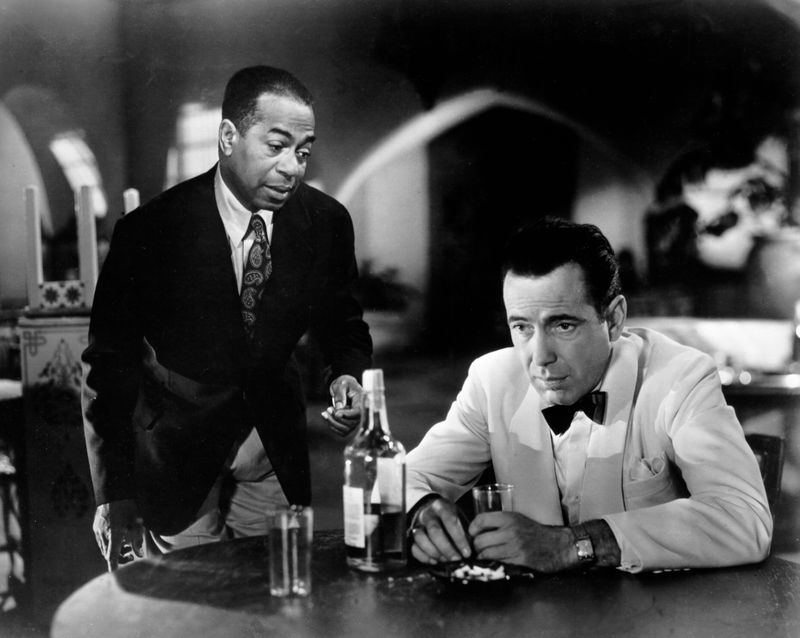
1. Casablanca
Timing helped make this one famous.
The film was rushed into release after the Allied invasion of North Africa, which had happened just weeks before.
It premiered in New York City on November 26, 1942, and reached theaters across the country on January 23, 1943.
Michael Curtiz directed, with Humphrey Bogart as Rick Blaine, Ingrid Bergman as Ilsa Lund, and Paul Henreid as Victor Laszlo.
Rick runs a nightclub in wartime Morocco, and his past walks right through the door.
That setup sounds simple, yet the movie packs in romance, politics, and sharp humor without feeling crowded.
I think the dialogue is the real star here.
Lines like “Here’s looking at you, kid” became so popular that people quote them without knowing where they came from.
You may have heard a few of them in cartoons or commercials already.
Watching the original feels a bit like finally meeting a friend of a friend.
Awards followed, too.
The film won three Oscars, including Best Picture, Best Director, and Best Adapted Screenplay.
For a first viewing, pay attention to Rick’s choices in the final act.
His decisions say more about him than any speech could, and that quiet payoff is why people keep coming back.
2. Citizen Kane
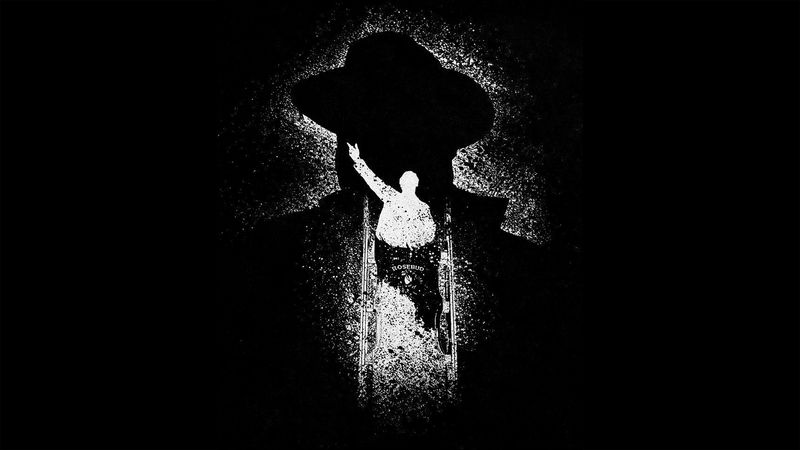
Orson Welles was just 25 when he directed, co-wrote, produced, and starred in this movie.
It was his first feature film, which makes the result even harder to believe.
The story follows Charles Foster Kane, a powerful newspaper man, through the eyes of people who knew him.
Joseph Cotten, Dorothy Comingore, and Everett Sloane round out the cast.
Reporters try to solve the meaning of Kane’s last word, and their search pieces together his life.
Drama happened off screen as well.
Many people saw strong similarities between Kane and publishing baron William Randolph Hearst.
Hearst then launched a campaign against the film before and after its release.
The movie debuted at the Palace Theatre on May 1, 1941, with a general release on September 5.
Film classes still study it closely, especially its camera angles and storytelling structure.
Here’s a tip for modern viewers.
Don’t treat it like homework, because it moves faster than its reputation suggests.
Watch how each storyteller remembers Kane differently.
That shifting viewpoint makes the film feel like a puzzle, and you get to decide what kind of man he really was by the end credits.
3. The Wizard of Oz
Green Bay, Wisconsin, got the first look.
The film premiered there on August 10, 1939, before opening across the United States on August 25.
Judy Garland plays Dorothy Gale, a Kansas girl swept into a magical land.
Ray Bolger, Bert Lahr, and Jack Haley play her famous traveling buddies, the Scarecrow, the Cowardly Lion, and the Tin Man.
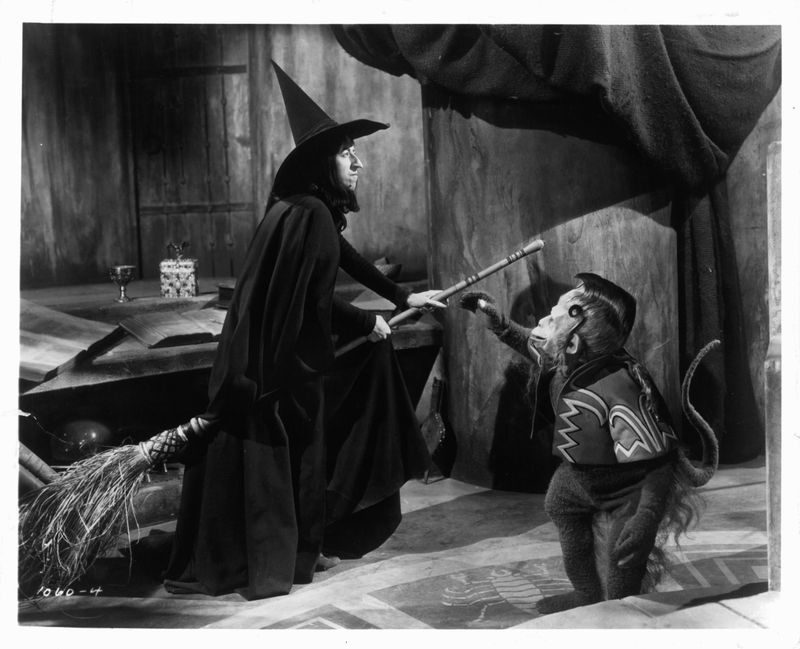
Margaret Hamilton brings the green-faced Wicked Witch of the West to life, and Billie Burke floats in as Glinda.
Making it wasn’t a smooth trip.
Victor Fleming was the main director, King Vidor handled the black-and-white Kansas scenes, and George Cukor offered early creative advice.
The script went through many rewrites along the way.
The switch from sepia Kansas to colorful Oz still feels like a magic trick.
Its three-strip Technicolor looked amazing to audiences then, and it holds up well today.
Songs matter here as much as the story.
You can probably hum at least one tune without trying very hard.
For families, this is an easy pick for a first classic.
Younger kids might find the witch and her flying monkeys a little spooky, so a cushion for hiding behind is a smart idea.
4. Gone with the Wind
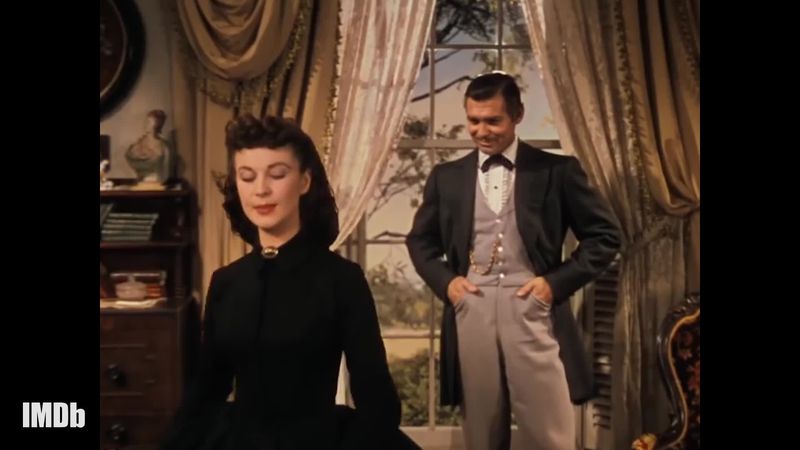
Finding Scarlett O’Hara took a massive search.
About 1,400 unknown women were interviewed for the part before Vivien Leigh landed the role.
Clark Gable plays Rhett Butler opposite her, with Leslie Howard as Ashley Wilkes and Olivia de Havilland as Melanie Hamilton.
The film premiered in Atlanta on December 15, 1939, and it ran long enough to need an intermission.
Behind the scenes, things got bumpy.
George Cukor started as director, Sam Wood briefly stepped in, and Victor Fleming directed most of the final film.
The script was revised many times, and the movie was among the most expensive of its era.
All that effort paid off with ten Academy Awards, including Best Picture.
Its giant scale, sweeping music, and color photography explain why it stays on classic lists.
Modern viewers should know the film presents a romanticized view of the Civil War South and slavery.
Many people watch it today with that history in mind, and some streaming versions include added context.
If you plan to watch, clear your evening.
The runtime is close to four hours, so snacks and a stretch break are basically required equipment.
5. Singin’ in the Rain
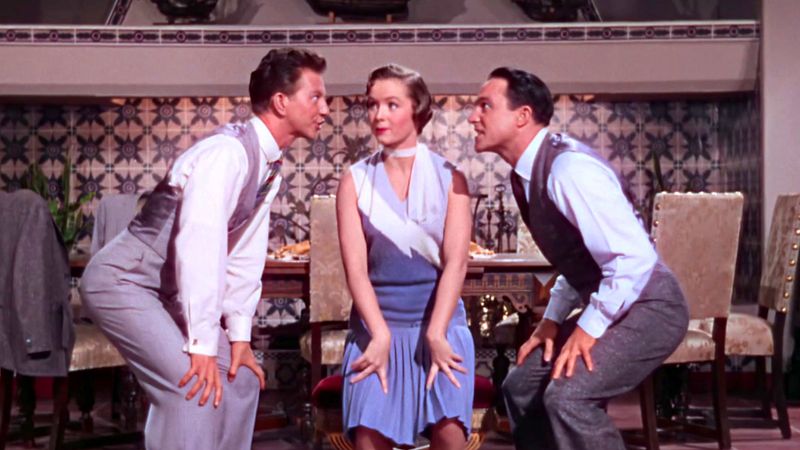
Splashing through puddles never looked so cheerful.
Gene Kelly’s dance in the title number might be the happiest few minutes in movie history.
Kelly co-directed with Stanley Donen and plays silent film star Don Lockwood.
Donald O’Connor plays his pal Cosmo Brown, while Debbie Reynolds plays Kathy Selden.
Jean Hagen steals plenty of scenes as Lina Lamont, a star whose voice doesn’t quite fit the new talking pictures.
That shift is the heart of the story.
Set in late-1920s Hollywood, the film pokes fun at studios scrambling to switch from silent movies to sound.
Microphones hidden in plants and out-of-sync voices lead to some great laughs.
The movie premiered at Radio City Music Hall on March 27, 1952, and opened widely on April 11.
Many critics call it the greatest Hollywood musical ever made.
Even if musicals aren’t your thing, give it a chance.
The jokes land quickly, and O’Connor’s wild “Make ‘Em Laugh” number feels like a live-action cartoon.
Kids often enjoy this one more than adults expect.
Bonus warning, you may catch yourself tap dancing in the kitchen afterward.
6. Some Like It Hot
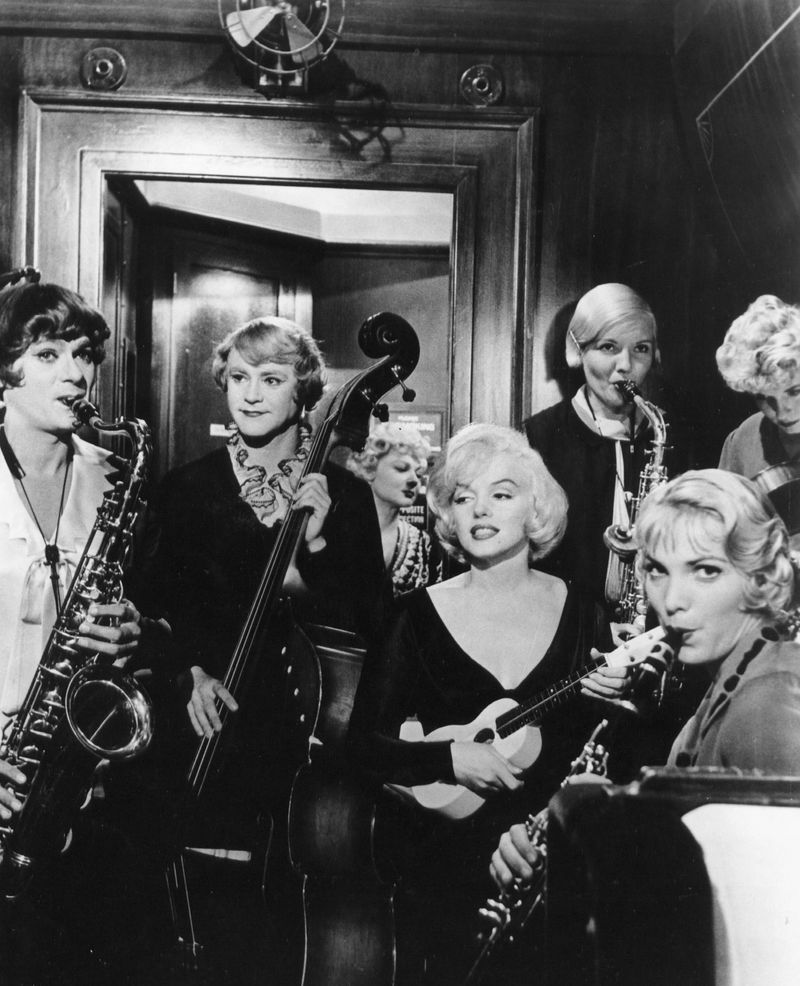
Color film was available, but Billy Wilder chose black and white anyway.
The heavy makeup on the two male leads in drag simply didn’t look convincing in color.
Tony Curtis and Jack Lemmon play Joe and Jerry, two musicians who witness a gangland crime in 1929 Chicago.
To hide, they dress as women and join an all-female band headed to Florida.
Marilyn Monroe plays Sugar Kane Kowalczyk, the band’s singer and ukulele player.
From there, the disguises create one mix-up after another.
Lemmon’s character, Daphne, ends up with a persistent admirer, and their scenes together are pure comedy gold.
Released on March 19, 1959, the film is widely regarded as one of the greatest comedies ever made.
The pacing is quick, and the jokes still feel fresh.
Monroe brings a sweet, funny energy to Sugar that makes her easy to root for.
Her songs add a nice break between the chaos.
Save room for the final line, which many fans count among the best closers in film.
I won’t spoil it here, but it’s the kind of ending you’ll want to rewind and hear again.
7. Psycho
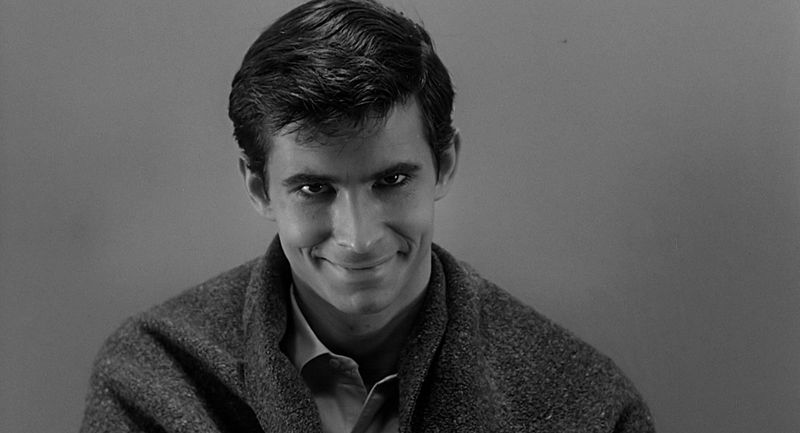
Alfred Hitchcock took a gamble with his own money.
He largely paid for this film himself and used the crew from his TV show, Alfred Hitchcock Presents, to keep costs down.
That thrifty plan gave him freedom to tell a story studios found risky.
Janet Leigh plays Marion Crane, who checks into a quiet roadside motel.
Anthony Perkins plays Norman Bates, the polite young man running the place, and Vera Miles plays Lila Crane.
The famous shower scene used chocolate syrup as fake blood.
It looked right on black and white film, and it’s a fun fact to share at your next movie night.
Psycho premiered in New York City on June 16, 1960, and went wide that September.
Its sharp music, tense editing, and surprise turns shaped plenty of thrillers that came after.
Spoilers have floated around for decades, so try to watch before someone ruins the twist.
Going in fresh makes a big difference.
It’s best for teens and adults who enjoy suspense.
You might also double-check the lock on your bathroom door afterward, which is a perfectly normal reaction.
8. Lawrence of Arabia
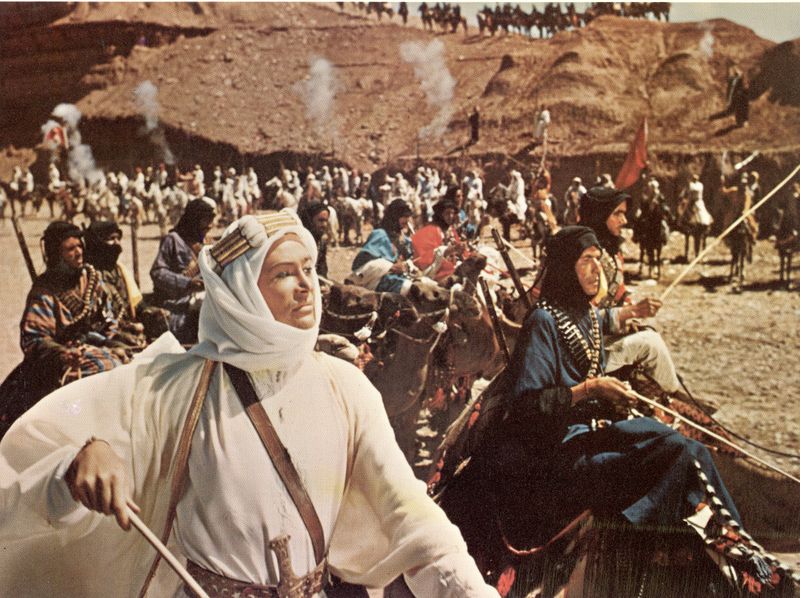
Sand dunes rarely get top billing, but here they almost do.
David Lean filmed huge desert scenes on location in Jordan, Spain, and Morocco.
Peter O’Toole plays T.E.
Lawrence, a British officer caught up in the Arab Revolt during World War I.
Alec Guinness plays Prince Feisal, Anthony Quinn plays Auda abu Tayi, and Omar Sharif plays Sherif Ali.
Sharif’s first entrance, appearing slowly out of a shimmering horizon, stands out as a masterclass in patience.
Released on December 16, 1962, the film won seven Academy Awards.
Best Picture and Best Director were part of that haul.
This is a historical epic in the truest sense.
It’s long, wide, and built for the biggest screen you can find.
If you can catch a theater showing, grab it.
On a small phone, the landscapes lose much of their power.
At home, turn off the lights and turn up the sound.
Lawrence is a complicated hero, and the movie lets you decide how you feel about him.
That open question makes for a great conversation once the credits roll.
9. 2001: A Space Odyssey
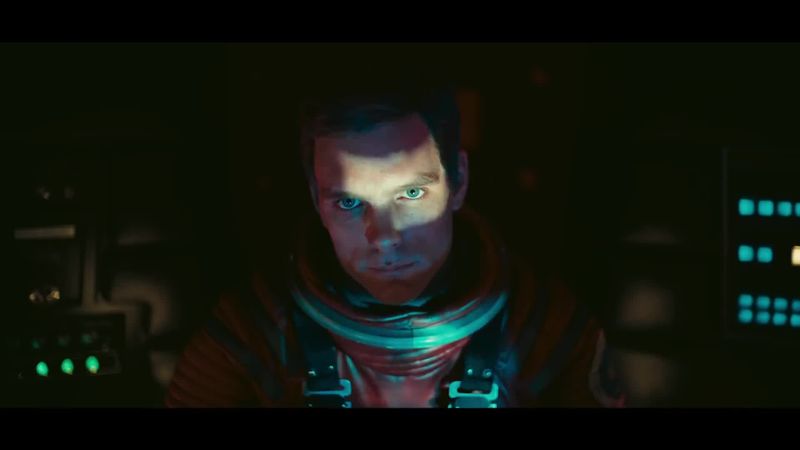
Very few words get spoken in this space adventure.
Long stretches rely only on music and pictures, which was a bold move for a big studio film.
Stanley Kubrick directed, and the movie premiered at the Uptown Theater on April 2, 1968.
Keir Dullea plays Dr. David Bowman and Gary Lockwood plays Dr. Frank Poole.
Douglas Rain voices HAL 9000, the calm onboard computer with a very soft voice.
HAL might be the most memorable character in the film.
That red camera eye shows up in pop culture again and again.
The movie is praised for its realistic look at spaceflight and its groundbreaking special effects.
Considering it came out before astronauts landed on the Moon, the visuals are pretty remarkable.
Big ideas about humans, tools, and the universe fill the story.
You don’t have to understand every scene to enjoy it.
A friendly suggestion is to treat it like a museum visit rather than a fast action movie.
Let the images wash over you.
Some viewers love the strange ending, others scratch their heads, and both reactions make for good debate.
10. The Godfather
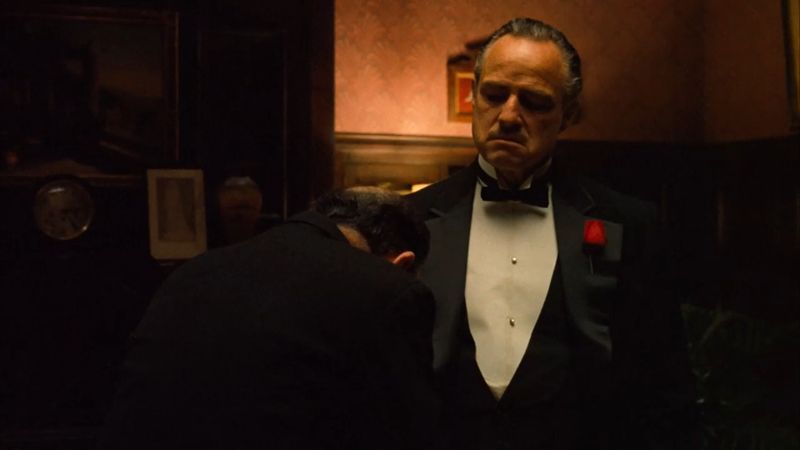
Paramount didn’t originally want Francis Ford Coppola in charge.
He also had to fight studio executives over casting Marlon Brando and Al Pacino.
Those battles turned out to be worth it.
Brando plays Don Vito Corleone, the head of a powerful crime family, and Pacino plays his son Michael.
James Caan, Robert Duvall, and Diane Keaton fill out a cast that still gets praised today.
Michael’s slow change from outsider to family leader drives the story.
Watching it happen scene by scene is part of what makes the film so gripping.
It premiered at Loew’s State Theatre on March 14, 1972, and opened widely on March 24.
The movie won three Academy Awards, including Best Picture.
You’ve probably heard lines from it quoted in sitcoms, sports talk, and maybe your uncle’s toasts.
Seeing the real scenes gives those jokes a lot more meaning.
Fair warning, it’s long and violent, so it fits older teens and adults best.
Plan for a slow start that builds.
By the last scene, you’ll likely understand why so many filmmakers still borrow from Coppola’s playbook.
11. Annie Hall
Characters in this comedy often turn and talk straight to the audience.
That trick, plus split screens showing two conversations at once, made it feel fresh in 1977.
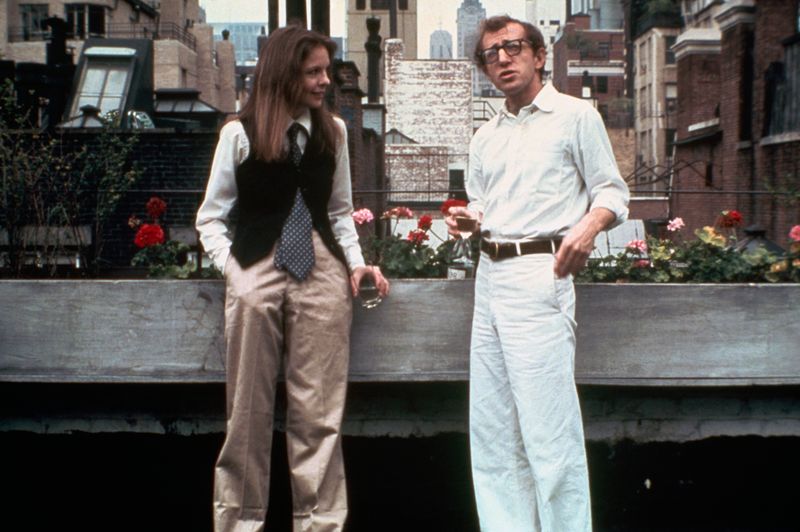
Woody Allen directed and stars as Alvy Singer, a nervous New York comedian.
Diane Keaton plays Annie Hall, the free-spirited woman he falls for.
The film follows their relationship, mostly out of order, as Alvy tries to figure out what went wrong.
Keaton’s outfits in the film, with ties, vests, and wide pants, became a popular style reference.
Her loose, funny performance won her the Oscar for Best Actress.
That wasn’t the only win.
The movie took home four Academy Awards in total, including Best Picture, Best Director, and Best Original Screenplay.
It first screened at the Los Angeles Film Festival on March 27, 1977, then opened widely on April 20.
The humor is talky and quick, so pay attention or you’ll miss a joke.
Many viewers today watch with knowledge of the public controversies around Allen, and you can weigh that as you choose.
The film’s storytelling style still shows up in plenty of modern romantic comedies.
12. Star Wars: Episode IV – A New Hope
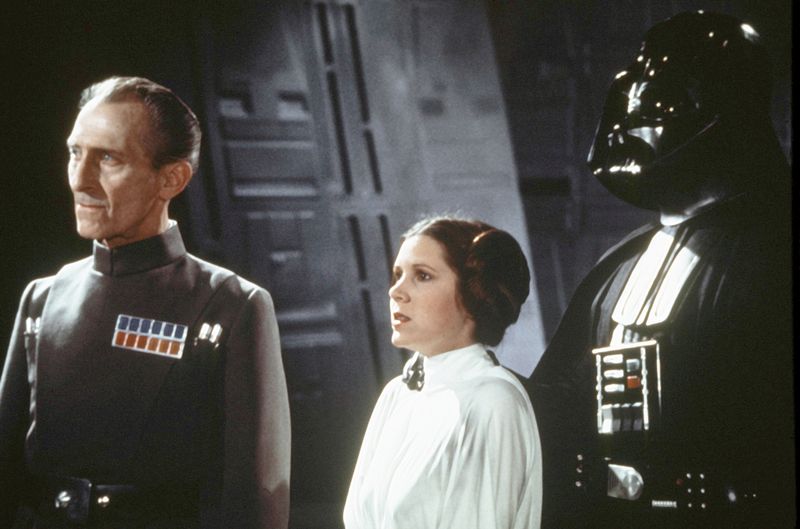
A farm kid on a desert planet ended up launching a giant franchise.
George Lucas’s space adventure opened on May 25, 1977, and quickly became a cultural event.
Mark Hamill plays Luke Skywalker, Harrison Ford plays Han Solo, and Carrie Fisher plays Princess Leia Organa.
Alec Guinness plays wise Obi-Wan Kenobi, while Peter Cushing plays Grand Moff Tarkin.
James Earl Jones supplies the deep voice of Darth Vader.
The special effects changed how studios approached big films.
Its success also helped bring science fiction back into Hollywood’s spotlight.
Watching it now is fun because the story is so simple.
A farm boy, a captured princess, a sarcastic pilot, and a pair of chatty droids team up to take on an empire.
Fans have spent decades arguing over which version to watch, since later releases added changes.
If you’re starting fresh, any version will introduce you to the characters just fine.
It’s a great pick for a family movie night.
Kids pick up on the heroes fast, and parents get to explain why everyone says “May the Force be with you” on May 4th.
13. E.T. the Extra-Terrestrial
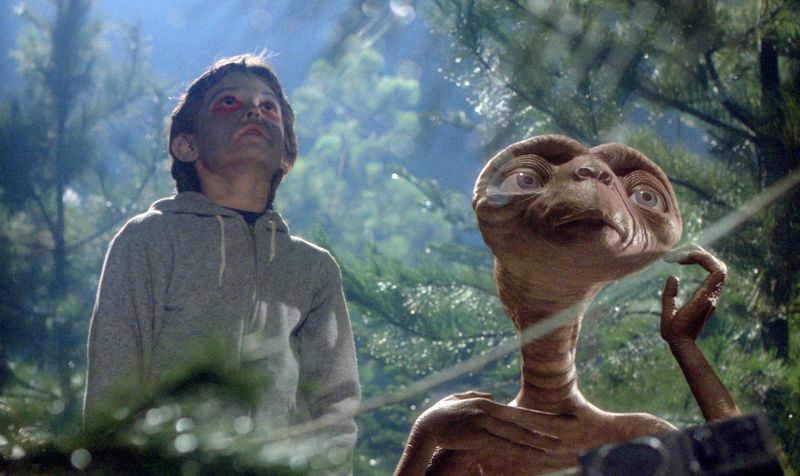
For eleven years, no movie earned more money than this one.
It finally lost the top spot in 1993 to Jurassic Park, another Steven Spielberg film.
Henry Thomas plays Elliott, a lonely boy who finds a stranded alien in his backyard.
Robert MacNaughton and Drew Barrymore play his siblings, Michael and Gertie, while Dee Wallace plays their mom, Mary.
Peter Coyote appears as Keys, a mysterious government agent.
Spielberg shot most of the film in story order.
That choice helped the young actors give more natural emotional performances, especially near the end.
The flying bicycle moment against the moon is a scene many people recognize instantly.
It even became part of Spielberg’s company logo.
The movie premiered at Cannes on May 26, 1982, and opened in the United States on June 11.
It treats kids’ feelings seriously, which may be why so many adults still love it.
Keep tissues nearby, since the final act can get emotional.
Younger children may find a few scenes scary, but most families find it a sweet way to talk about friendship and saying goodbye.
14. Back to the Future
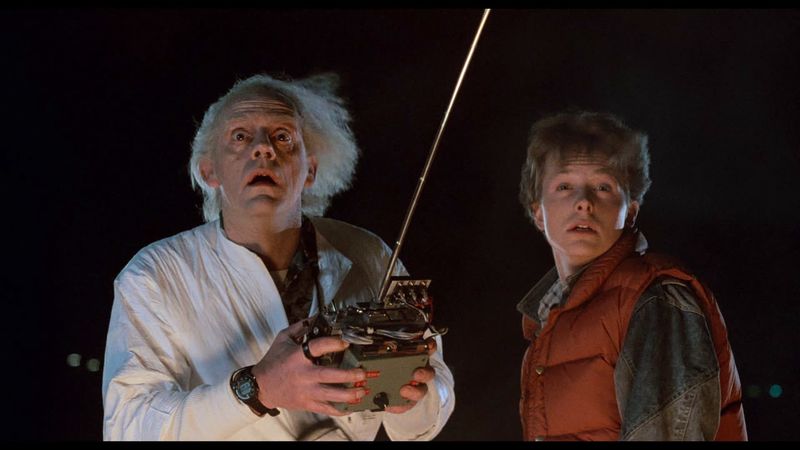
Co-writer Bob Gale once wondered whether he’d have been friends with his dad in high school.
That simple question grew into one of the most loved time-travel movies around.
Robert Zemeckis directed, and the film opened on July 3, 1985.
Michael J.
Fox plays Marty McFly, a teen who accidentally zips back to 1955 in a time machine built by Christopher Lloyd’s Doc Brown.
Fox was the first choice for Marty, but his TV show Family Ties got in the way.
Eric Stoltz was cast and filming started with him.
Later, Fox replaced Stoltz and worked on both the show and the movie at the same time.
Lea Thompson plays Marty’s mom, Lorraine, and Crispin Glover plays his dad, George.
Seeing them as teenagers creates plenty of awkward, funny moments.
The jokes about the 1950s compared with the 1980s still land.
Today, both decades feel like history, which adds another fun layer.
It’s an easy movie for mixed ages.
Younger viewers like the action, and older ones enjoy the clever setups that pay off later.
Watch closely, since tiny details matter.
15. Pulp Fiction
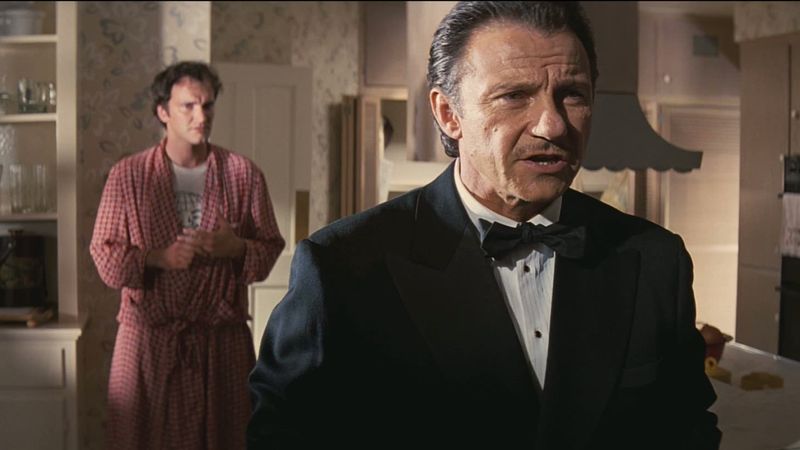
Scenes in this movie jump around in time instead of going in order.
That scrambled structure keeps you guessing about how the stories connect.
Quentin Tarantino directed, and the film won the Palme d’Or at Cannes, where it premiered on May 21, 1994.
It opened in the United States that October.
John Travolta plays Vincent Vega, Samuel L.
Jackson plays Jules Winnfield, Uma Thurman plays Mia Wallace, and Bruce Willis plays Butch Coolidge.
The film gave Travolta’s career a big boost.
It also made Tarantino one of the most talked-about directors of the decade.
Much of the fun comes from the dialogue.
Characters chat about burgers, foot massages, and TV pilots in the middle of tense situations, and those odd conversations stick with you.
The dance scene between Travolta and Thurman gets copied often at costume parties.
You might recognize it before you see the movie.
Fair heads-up, it has strong language and graphic violence, so it’s for adults only.
If that’s fine for you, follow the pieces carefully and enjoy watching the puzzle snap together in the final scenes.
16. The Shawshank Redemption
Not every classic starts as a hit.
This prison drama had a modest run in theaters, then slowly found a huge audience through video rentals and TV airings.
Frank Darabont directed, adapting a Stephen King novella.
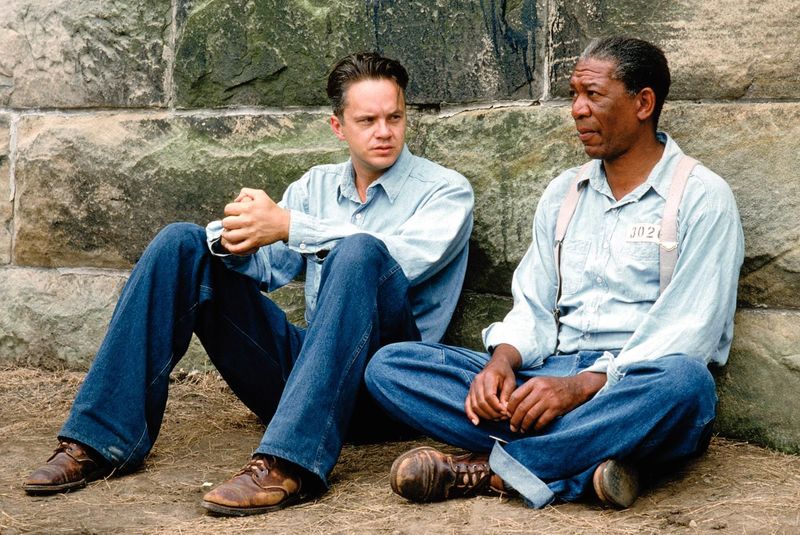
Tim Robbins plays Andy Dufresne, a banker sent to Shawshank prison, and Morgan Freeman plays Ellis “Red” Redding, the inmate who becomes his friend.
Freeman’s narration guides the story like a calm voice reading a letter.
The film premiered at the Toronto International Film Festival on September 10, 1994.
It opened in U.S. theaters on September 23 of that same year.
Today, it regularly lands near the top of popular movie database rankings.
That’s quite a comeback for a film many people skipped in theaters.
Hope is the big theme here, and the movie earns it slowly.
Andy’s patience, small acts of kindness, and quiet plans build toward an ending that’s hard to forget.
Some scenes deal with harsh prison life, so it suits older teens and adults.
For a takeaway, notice how friendship carries both men through.
It’s a reminder that classics sometimes need time, just like Andy did.