 MomSkoop

Some relationship problems are easy to spot right away, but others sneak up on you slowly, disguised as love or loyalty. Many people stay in unhealthy situations because they convince themselves things will get better or that they are overreacting.
Recognizing the warning signs early can save you a lot of heartache and help you make healthier choices. Here are seven red flags that people tend to excuse for way too long.
1. They Constantly Dismiss Your Feelings

Have you ever tried to explain how something hurt you, only to be told you are being “too sensitive” or “dramatic”?
That stinging dismissal is one of the most common red flags people brush off as no big deal.
Over time, being told your emotions are wrong chips away at your confidence.
When a partner consistently invalidates what you feel, you start doubting your own reality.
This is sometimes called emotional invalidation, and it can cause real psychological harm.
Your feelings are not exaggerations.
They are signals worth listening to.
A healthy relationship makes space for both people to express themselves honestly.
If your partner regularly shuts that down, it is a pattern worth taking seriously sooner rather than later.
2. They Apologize but Never Change Their Behavior

Words are easy.
Actions are what actually matter.
A partner who apologizes over and over without making any real effort to change is essentially offering you empty packaging with nothing inside.
Psychologists call this a “cycle of apology,” where someone says sorry just enough to keep the relationship going but never does the internal work to grow.
Each apology resets the clock without fixing the problem.
Sound familiar?
Real accountability means changing the behavior, not just the words.
If someone truly cares about hurting you, they find a way to stop doing it.
Pay attention to patterns, not promises.
A genuine apology is followed by genuine effort, and if that effort never shows up, the apology means very little.
3. They Need to Control Where You Go or Who You See
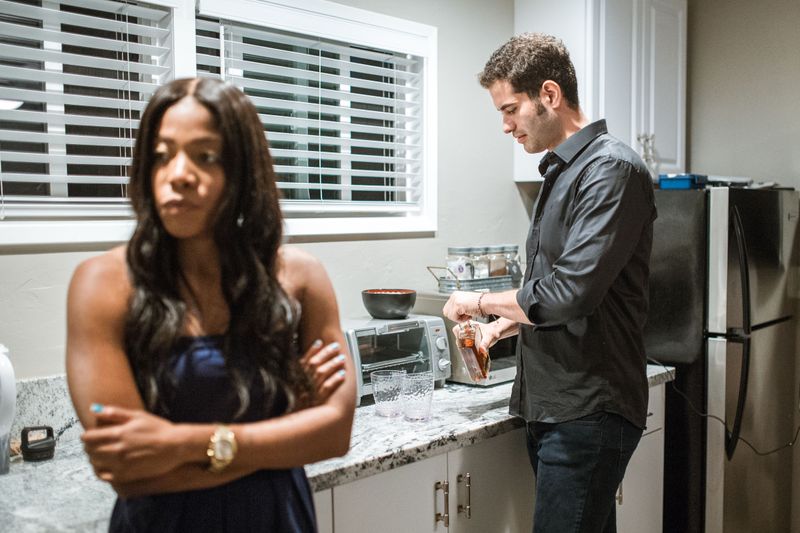
Controlling behavior often starts small.
Maybe your partner gets upset when you spend time with friends, or they ask you to check in constantly when you are out.
At first, it can feel like they just really care about you.
But caring and controlling are very different things.
Love does not require you to shrink your world to keep someone else comfortable.
When a partner monitors your movements or isolates you from people you love, that is a serious warning sign.
Studies on relationship abuse show that isolation is one of the earliest tactics used in controlling relationships.
Trust your gut if something feels off.
You deserve a partner who encourages your independence, not one who quietly dismantles it piece by piece.
4. They Make You Feel Guilty for Having Boundaries

Setting a boundary should not feel like starting a war.
Yet in some relationships, the moment you say “no” or ask for space, the guilt trips begin.
Suddenly, you are the bad guy for simply knowing what you need.
Healthy boundaries are not selfish.
They are a normal part of any respectful relationship.
A partner who punishes you for having them, whether through silent treatment, manipulation, or anger, is sending a clear message that your needs do not matter.
Over time, this pattern trains you to abandon your own limits just to keep the peace.
That is an exhausting way to live.
You are allowed to have needs, set limits, and expect them to be honored without drama or punishment attached.
5. They Only Show Affection When It Benefits Them

Affection that comes with invisible strings attached is not really affection at all.
If your partner is suddenly warm, loving, and attentive only when they want something from you, that is a pattern worth examining closely.
Conditional love keeps you chasing a version of your partner that only shows up on their schedule.
It creates a push-and-pull dynamic that can feel confusing, even addictive.
You find yourself working harder and harder to get back to those good moments.
Real love is not a reward system.
A caring partner does not switch off their warmth the moment their needs are met.
Consistency in how someone treats you matters far more than the occasional grand gesture.
Look for steady kindness, not affection that disappears without warning.
6. They Criticize You More Than They Encourage You

Constructive feedback between partners is healthy.
Constant criticism is something else entirely.
When the person who is supposed to be in your corner spends more time pointing out your flaws than celebrating your strengths, it wears you down slowly.
Researcher John Gottman found that healthy relationships have roughly five positive interactions for every one negative one.
When that ratio flips, people start to feel worthless, unlovable, and deeply insecure about themselves.
Nobody is perfect, and partners should feel safe being imperfect around each other.
But there is a difference between honest communication and someone who uses criticism as a way to feel superior.
If you leave most conversations feeling smaller than before, that relationship is doing more harm than good.
7. They Repeatedly Break Your Trust and Expect Instant Forgiveness

Trust, once broken, takes real time and real effort to rebuild.
A partner who keeps crossing the same lines, whether through lying, cheating, or breaking promises, and then expects you to move on quickly, does not understand how trust actually works.
Rushing forgiveness is not healing.
It is skipping the part where the person who caused hurt actually earns back what they lost.
When someone demands that you “just get over it,” they are prioritizing their own comfort over your very real pain.
You are not obligated to forgive on someone else’s timeline, especially when the behavior keeps repeating.
Forgiveness is a gift, not a requirement.
Healthy relationships are built on earned trust, not on one person endlessly absorbing the consequences of another person’s repeated mistakes.