 MomSkoop

Before you even open your mouth, your partner is already picking up on dozens of tiny signals you might not realize you’re sending. The human brain is wired to read nonverbal cues faster than words can form, making silent communication incredibly powerful in relationships.
Whether you’ve been together for two months or twenty years, these unspoken messages shape how your partner feels around you every single day. Understanding what they notice can help you become more aware, more connected, and a better partner overall.
1. Your Facial Expression

Your face is basically an open book, and your partner has already learned how to read every chapter.
A slight frown, raised eyebrows, or a tense jaw can broadcast your mood before a single word leaves your lips.
These micro-expressions happen in fractions of a second, yet they carry enormous emotional weight.
Research shows that humans can detect facial expressions in as little as 17 milliseconds.
That means your partner often knows how you feel before you do.
Trying to hide frustration or sadness rarely works, because the face tends to tell the truth even when the mouth stays quiet.
Being aware of your expressions helps you communicate more honestly and prevents unnecessary misunderstandings in your relationship.
2. Your Body Language

Crossed arms, slouched shoulders, or a turned-away posture can make your partner feel shut out without you ever realizing it.
Body language accounts for a huge portion of how we communicate, and in close relationships, partners become experts at decoding each other’s physical cues over time.
An open stance signals comfort and willingness to connect, while a closed-off posture can hint at stress, discomfort, or emotional withdrawal.
Even the direction your feet point has been studied as a signal of where your attention and interest truly lie.
Paying attention to how you carry yourself around your partner can dramatically improve the emotional atmosphere between you two, making space for more trust and openness.
3. Your Eye Contact

There is something almost magnetic about the way two people look at each other in a relationship.
Eye contact is one of the most powerful nonverbal tools humans use, capable of expressing love, anger, curiosity, or distance without a single spoken word.
When you avoid your partner’s gaze, they may sense guilt, distraction, or emotional distance, even if that wasn’t your intention.
On the flip side, steady, warm eye contact signals that you’re present, engaged, and genuinely interested in them as a person.
Studies have found that prolonged eye contact between partners can actually increase feelings of closeness and affection.
So next time you walk into a room, let your eyes say hello first.
4. Your Tone of Presence
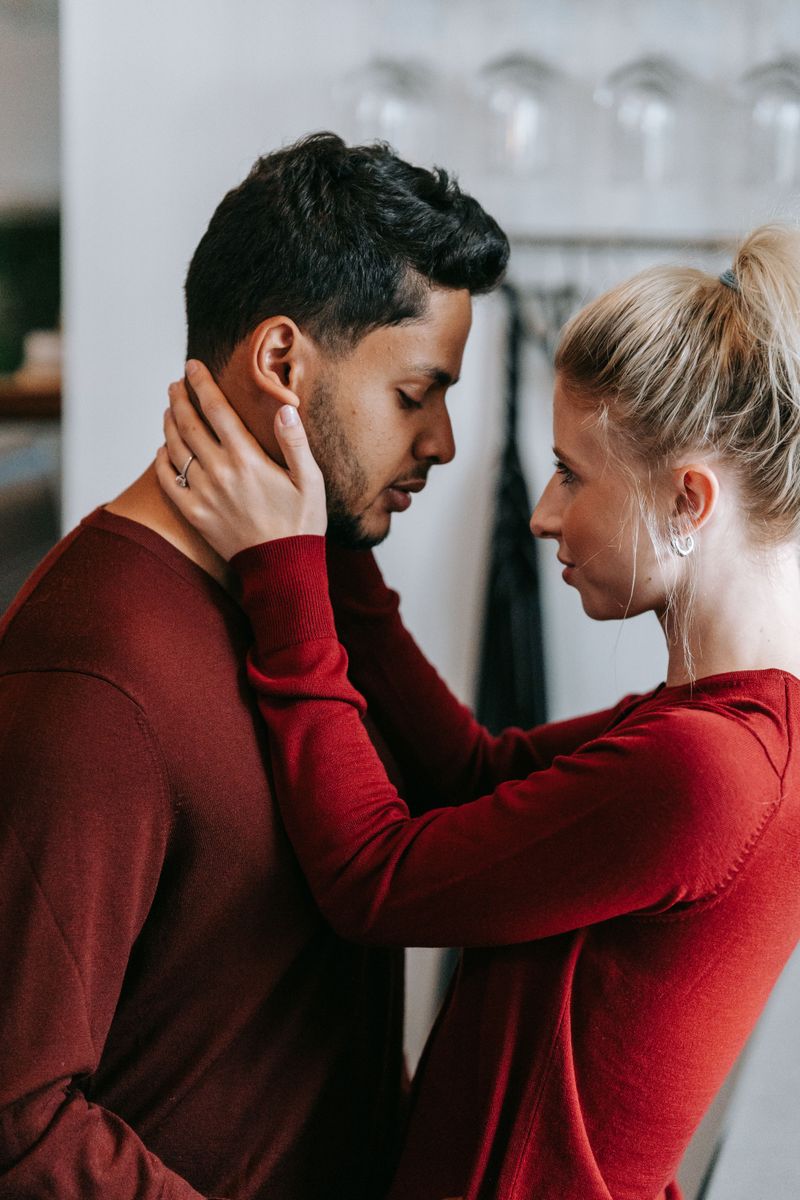
Ever walked into a room and just felt that something was off with someone before they said a word?
That invisible energy is what psychologists call your “presence,” and your partner picks up on it immediately.
Whether you’re carrying calm, anxiety, excitement, or emotional heaviness, it radiates outward like a signal.
Partners in close relationships become highly attuned to each other’s emotional frequencies over time.
Your nervous energy before a tough conversation, or the quiet joy you carry after a great day, is felt before it’s explained.
Being mindful of the energy you bring into shared spaces can set the tone for your entire interaction.
A grounded, calm presence invites connection, while scattered or tense energy can put your partner on edge.
5. Your Appearance and Grooming
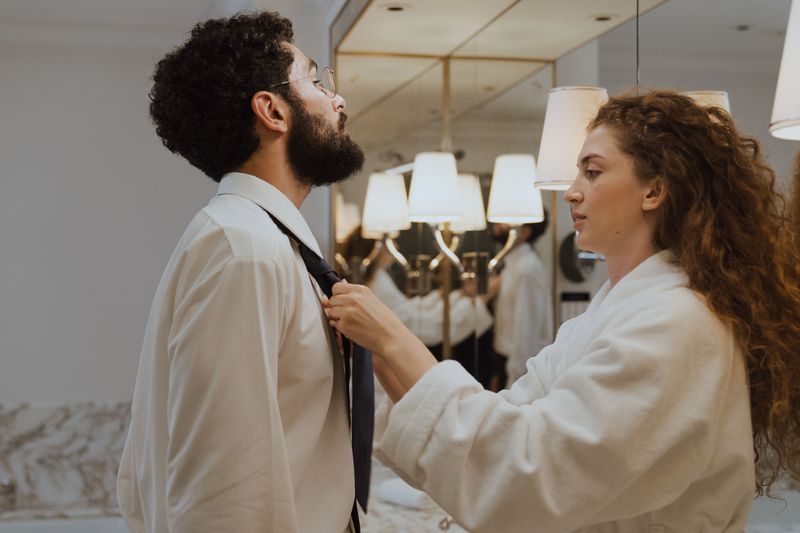
Getting dressed up for a date night is obvious effort, but what about a random Tuesday at home?
The care you put into your appearance on ordinary days quietly communicates how much you value yourself and your relationship.
Your partner notices whether you’ve made an effort, even in small ways.
This isn’t about looking perfect.
It’s about the message your grooming habits send.
Consistently showing up unkempt or disheveled may unintentionally signal that you’ve stopped caring, while a little effort shows pride and respect for the shared space you both inhabit.
Interestingly, studies on attraction show that partners rate each other as more attractive when they feel valued and seen.
A little grooming goes a long way in keeping that spark alive.
6. Your Smile (or Lack of One)

A real smile is almost impossible to fake, and your partner knows the difference between a genuine one and a polite, going-through-the-motions grin.
Scientists call the authentic version a “Duchenne smile,” and it involves the muscles around the eyes, not just the mouth.
Your partner reads this distinction without even thinking about it.
When you greet your partner with a real smile, it instantly communicates warmth, safety, and happiness to be around them.
That small gesture can set a positive emotional tone for the entire evening.
On the other hand, a flat or forced expression when they walk in can leave your partner feeling unwelcome or like a burden.
Never underestimate the quiet power of a genuinely happy smile.
7. How You Move

The way you move tells a story all on its own.
A slow, heavy walk might suggest exhaustion or sadness, while quick, light steps can radiate excitement or nervousness.
Your partner unconsciously interprets your gait, pace, and physical approach as emotional data before you’ve said a thing.
Walking toward someone with open, confident movement signals that you’re happy to be near them.
Turning away, dragging your feet, or moving stiffly can unintentionally communicate reluctance or stress, even when you feel neutral.
Choreographers and actors spend years learning to express emotion through movement alone, because the body speaks a universal language.
In your relationship, the way you move through shared spaces is a constant, silent conversation your partner is always listening to.
8. Your Attention and Focus

Nothing says “you matter to me” quite like putting your phone face-down and actually being present.
Your partner notices almost immediately whether your attention is truly on them or split between the conversation and a screen.
Full presence is one of the greatest nonverbal gifts you can offer someone you love.
Distraction communicates disinterest, even when that’s not your intention.
Scrolling through social media or mentally replaying your workday while your partner is nearby sends a quiet but clear signal that something else feels more important than they do.
Building a habit of genuine focus, even for short moments, strengthens emotional intimacy more than most people realize.
Eye contact, engaged posture, and a quiet phone are small acts that speak volumes before words ever enter the picture.