 MomSkoop

Narcissists are everywhere in movies and TV shows. These characters grab our attention with their ego, charm, and hunger for control.
From ruthless CEOs to manipulative lovers, they show us how dangerous—and sometimes fascinating—self-obsession can be.
1. Gordon Gekko (Wall Street, 1987)
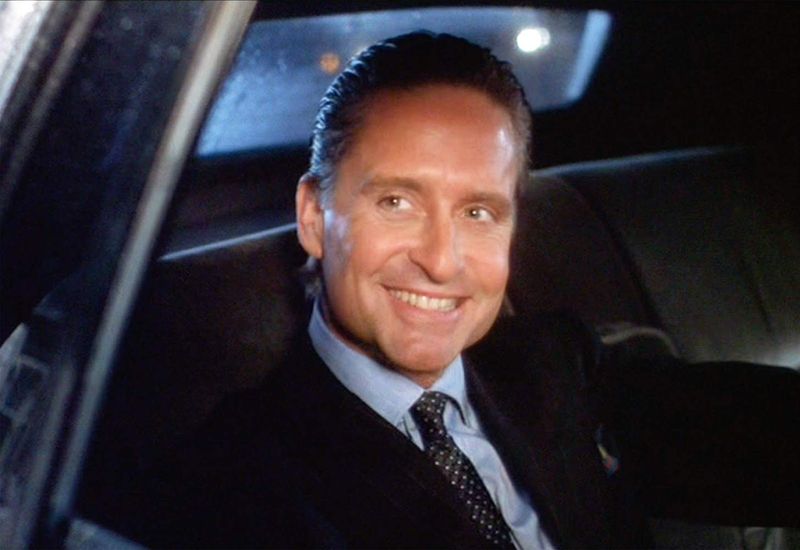
Greed, in Gordon Gekko’s world, isn’t just good—it’s everything.
This Wall Street titan believes he’s smarter, sharper, and more deserving than everyone around him. His charm is a weapon, used to exploit anyone who gets in his way.
Gekko doesn’t see people as human beings; they’re tools to increase his wealth and power.
What makes him terrifying is his conviction. He truly believes his ruthless philosophy is the natural order of things.
No remorse, no second thoughts—just pure, unshakable confidence in his own superiority.
Gekko represents the dangerous glamour of narcissism wrapped in a thousand-dollar suit.
2. Frank Underwood (House of Cards)

Frank Underwood doesn’t just want power—he needs it like oxygen.
Every conversation, every handshake, every smile is calculated for maximum advantage.
People aren’t colleagues or friends to Frank; they’re chess pieces to be moved or removed.
His emotional detachment is chilling because he never pretends otherwise, at least not to the audience watching his every calculated move.
Frank’s narcissism feeds on dominance and control.
When someone challenges him, he doesn’t just defeat them—he destroys them completely.
His entitlement knows no boundaries, moral or otherwise.
He’s proof that charm and intelligence can mask a truly hollow core.
3. Logan Roy (Succession)

Logan Roy built an empire, but he rules it like a tyrant.
His children aren’t loved—they’re tested, humiliated, and pitted against each other for his amusement.
Control is how Logan expresses affection, and cruelty is his language of love.
He can’t separate his self-worth from his company, treating both family and employees as extensions of his massive ego.
What’s fascinating about Logan is how his narcissism masquerades as strength.
He believes his brutality is necessary, even virtuous.
Loyalty must be proven again and again, but approval is never truly given.
Logan shows how narcissism destroys families from the inside out.
4. Miranda Priestly (The Devil Wears Prada)

Miranda Priestly doesn’t raise her voice—she doesn’t have to.
One icy glance from this fashion magazine editor can reduce grown adults to trembling messes.
Her perfectionism isn’t about excellence; it’s about control and validation.
Miranda needs everyone around her to fear and admire her simultaneously, proving her superiority with every impossible demand she makes.
She’s built her entire identity around professional dominance.
Personal relationships crumble because nothing matters more than maintaining her throne in the fashion world.
Miranda’s narcissism is cold, calculated, and utterly uncompromising.
She proves that power doesn’t always shout—sometimes it whispers in designer heels.
5. Tywin Lannister (Game of Thrones)
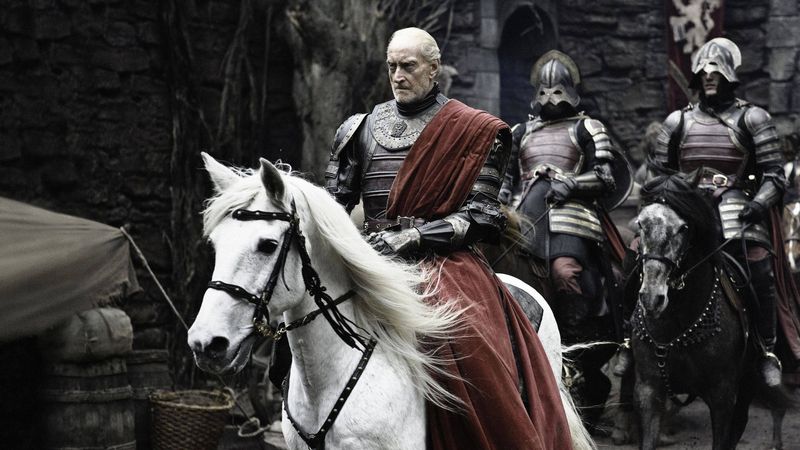
For Tywin Lannister, family isn’t about love—it’s about legacy.
His children exist to serve the Lannister name, which really means serving him.
Tywin’s narcissism hides behind duty and tradition, but it’s just as toxic as any other form.
He sees his kids as disappointing extensions of himself rather than real people with their own dreams and feelings.
Everything Tywin does is about control and reputation.
Weakness, in his view, must be crushed even if it means destroying his own children emotionally.
His obsession with family legacy is really an obsession with himself.
Tywin proves narcissism can wear the mask of honor and tradition.
6. Regina George (Mean Girls)

Regina George rules her high school like a glamorous dictator.
Her power comes from appearance, popularity, and an endless need for validation from everyone around her.
Regina can’t handle anyone threatening her status, even slightly.
One wrong move and she’ll unleash social destruction without a second thought about the damage she causes.
What makes Regina interesting is how fragile her confidence actually is.
Beneath the perfect hair and designer clothes, she’s terrified of becoming irrelevant.
Her narcissism is reactive—always needing to prove she’s the prettiest, most popular, most powerful girl in school.
7. Dorian Gray (The Picture of Dorian Gray, multiple adaptations)

Dorian Gray takes vanity to supernatural extremes.
His obsession with beauty becomes so consuming that he literally sells his soul to preserve his youthful appearance.
Morality, empathy, and human decency all disappear as Dorian prioritizes his reflection above everything else.
People become disposable once they’ve served his pleasure or threatened his perfect image.
What’s chilling about Dorian is how his external beauty masks internal corruption.
He represents narcissism’s ultimate fantasy—eternal youth and beauty without consequences.
But his portrait tells the truth his mirror won’t show.
Dorian proves that vanity taken to its extreme becomes monstrous, destroying everything beautiful it touches.
8. Patrick Bateman (American Psycho)
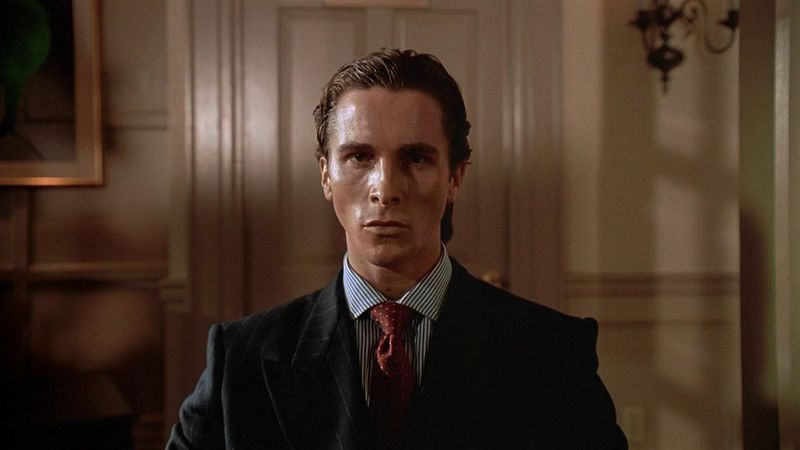
Patrick Bateman is narcissism without a soul.
His entire existence revolves around status symbols—the right business card, the best reservation, the most expensive suit.
But beneath the obsessive perfectionism lies complete emotional emptiness.
Patrick can’t connect with other humans because he doesn’t see them as real; they’re just objects in his carefully curated world.
His superiority complex is pathological.
Patrick genuinely believes he’s better than everyone, yet he’s desperately insecure about every detail of his image.
Violence becomes another way to assert dominance and feel something, anything, in his hollow existence.
Patrick represents narcissism’s darkest extreme—where vanity meets psychopathy.
9. Blair Waldorf (Gossip Girl)

Blair Waldorf lives and breathes status.
Her self-worth depends entirely on being the most stylish, most powerful, most envied girl in Manhattan’s Upper East Side.
Blair swings wildly between grandiosity and crushing insecurity, needing constant validation from everyone around her.
Social hierarchy isn’t just important to her—it’s everything.
What makes Blair compelling is her vulnerability.
Unlike pure narcissists, she occasionally shows real emotion and genuine care for her friends.
But her image obsession always pulls her back toward manipulation and scheming.
Blair demonstrates how narcissistic traits can coexist with moments of authentic humanity, creating a complex and fascinating character.
10. Amy Dunne (Gone Girl)

Amy Dunne is covert narcissism at its most terrifying.
She doesn’t seek obvious attention; instead, she meticulously controls how everyone perceives her.
When her perfect image is threatened, Amy orchestrates elaborate revenge with frightening precision.
She genuinely believes she’s morally justified in destroying anyone who disappoints her impossibly high standards.
What makes Amy dangerous is her strategic brilliance.
She plans every detail, manipulates every person, and never doubts her own righteousness.
Her narcissism hides behind the mask of the perfect wife, perfect daughter, perfect victim.
Amy proves that quiet narcissists can be far more dangerous than loud ones, calculating every move in silence.
11. Walter White (Breaking Bad)
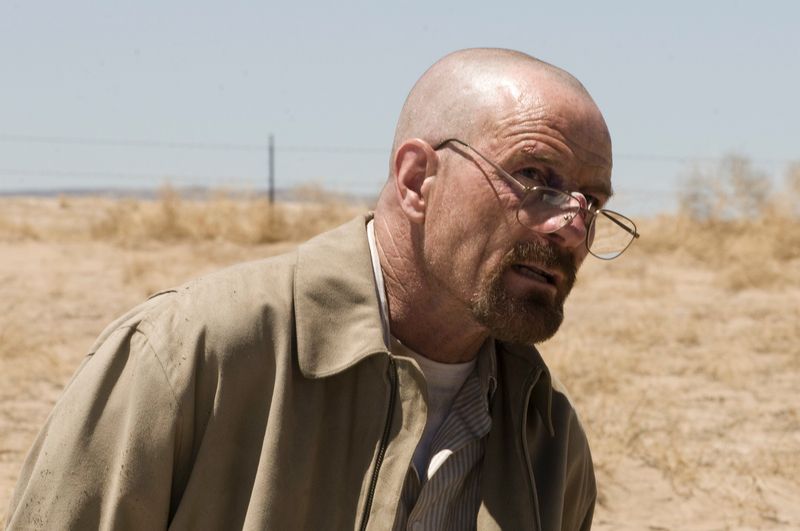
Walter White’s transformation is narcissism in slow motion.
He starts as a wounded ego—underappreciated teacher turned desperate criminal. But as his power grows, so does his grandiosity.
What began as providing for his family becomes about feeding his pride and proving his superiority.
Walter can’t stop because stopping would mean admitting he’s not the genius he believes himself to be.
His narcissism disguises itself as necessity, but it’s really about control and recognition.
Walter needs everyone to acknowledge his brilliance, even if it destroys his family and everyone he claims to love.
Walter shows how narcissism can evolve gradually, consuming a person one prideful decision at a time.
12. Cersei Lannister (Game of Thrones)
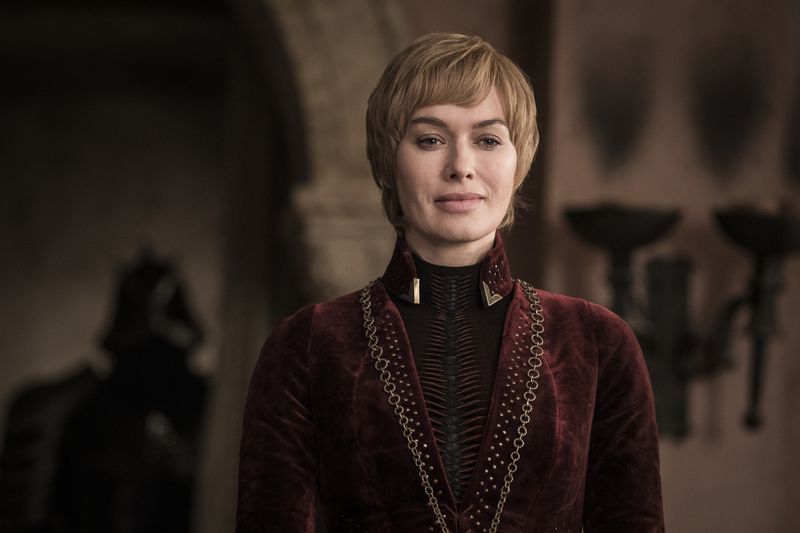
Cersei Lannister sees threats everywhere because she can’t imagine anyone not wanting her power.
Her narcissism combines paranoia with entitlement, creating a toxic mix of defensive aggression.
Anyone who questions her, even slightly, faces disproportionate retaliation.
Cersei believes the world owes her everything because of who she is, and she’ll burn it all down rather than accept defeat.
What makes Cersei fascinating is how her narcissism stems partly from genuine oppression.
She’s been underestimated and controlled, which fuels her desperate need for absolute power.
But her response goes far beyond justice into pure ego and cruelty.
Cersei demonstrates how narcissism and victimhood can intertwine dangerously.
13. Joe Goldberg (You)

Joe Goldberg is narcissism dressed up as romance.
He stalks, manipulates, and murders while genuinely believing he’s the hero of a love story.
Joe’s internal narration reveals someone who sees himself as morally superior, protecting the women he obsesses over from their own bad choices.
His self-delusion is so complete that he can’t recognize his own monstrousness.
What’s terrifying about Joe is how he centers himself in every situation.
Other people’s feelings, safety, and lives matter only as they relate to his narrative.
He frames control and violence as love, never questioning his twisted perspective.
Joe proves that narcissism combined with delusion creates truly dangerous individuals who can’t see reality.
14. Tony Stark / Iron Man (Marvel Cinematic Universe)

Tony Stark knows he’s brilliant—and he wants everyone else to know it too.
His narcissism is loud, performative, and surprisingly self-aware.
Tony craves validation and attention, constantly showing off his intelligence and technology.
But unlike pure narcissists, he’s capable of genuine growth and sacrifice.
His ego is massive, yet it coexists with an actual conscience that occasionally wins internal battles.
What makes Tony interesting is how his narcissism is both his weakness and strength.
His confidence saves the world, but his ego creates problems.
He’s validation-seeking but also heroic, selfish but ultimately selfless.
Tony shows that narcissistic traits don’t always equal narcissistic personality—sometimes they’re just complicated humanity.