 MomSkoop

Walking away from someone you love should be simple, but when that love is toxic, it feels nearly impossible.
Your heart and mind are caught in a battle that leaves you exhausted, confused, and stuck.
Understanding why toxic relationships hold such power can help you see the patterns more clearly and take back control.
1. Intermittent Reinforcement

Unpredictable affection creates a powerful emotional trap.
One moment, your partner is kind and loving; the next, they are cold or cruel.
This inconsistency keeps you hooked because your brain never knows when the next reward is coming.
Psychologists have found that random rewards are more addictive than consistent ones.
Slot machines work the same way—you keep pulling the lever, hoping for a win.
In relationships, you stay longer than you should, chasing those rare moments of warmth.
Breaking free means recognizing that love should not feel like gambling.
Healthy relationships offer steady care, not emotional roulette that leaves you anxious and drained.
2. Trauma Bonding

Pain mixed with affection creates a confusing bond that feels stronger than ordinary love.
When someone hurts you, then comforts you, your nervous system starts linking suffering with connection.
This cycle rewires your brain to believe that intensity equals intimacy.
Trauma bonds form through repeated cycles of abuse followed by kindness.
Your body releases stress hormones during conflict, then relief hormones during reconciliation.
Over time, this pattern becomes addictive, making calm relationships feel boring or wrong.
Healing requires understanding that real love does not require pain to prove its depth.
Safety and consistency build stronger foundations than drama ever could.
3. Hope for the Old Version

You remember how wonderful things were at the beginning, and that memory keeps you trapped.
Your partner was attentive, kind, and made you feel special.
Now you are waiting for that person to return, believing the current version is temporary.
This hope is not foolish—it is human.
We naturally want to believe in the best version of people we love.
However, when months or years pass without lasting change, hope becomes denial that keeps you stuck in a painful cycle.
Moving forward means accepting who someone is now, not who they were or promised to be.
People can change, but only if they genuinely commit to growth, not just words.
4. Neurochemical Addiction

High conflict followed by making up floods your brain with dopamine and oxytocin, creating a chemical rush similar to drug addiction.
The fight triggers stress hormones, then reconciliation brings intense relief and pleasure.
This rollercoaster becomes something your brain craves, even when it hurts.
Research shows that unpredictable emotional highs and lows are more addictive than stable happiness.
Your body starts depending on the drama cycle for its emotional regulation.
Leaving feels like withdrawal because, in many ways, it is.
Recovery involves retraining your brain to find comfort in calm, steady connections.
It takes time, but peace eventually feels better than chaos.
5. Erosion of Self-Trust

Gaslighting and constant invalidation make you doubt your own judgment.
When your partner tells you that your feelings are wrong or your memories are false, you start questioning everything.
Over time, you lose confidence in your ability to make good decisions.
This erosion happens gradually, like water wearing down stone.
Small dismissals build into major self-doubt.
Eventually, leaving feels terrifying because you no longer trust yourself to know what is real or right.
Rebuilding self-trust starts with validating your own experiences.
Journaling, therapy, and trusted friends can help you reconnect with your inner voice and remember that your perceptions matter.
6. Identity Entanglement

Over time, your sense of who you are becomes wrapped around the relationship.
Your hobbies, friends, and goals fade as your partner becomes your whole world.
Separation feels like losing yourself because you have forgotten who you are without them.
This entanglement happens slowly.
You make small compromises that seem harmless, but they add up.
Eventually, you cannot remember what you enjoyed before or what made you feel alive independently.
Rediscovering yourself requires courage and patience.
Start small—reconnect with old interests, reach out to friends, and explore what brings you joy.
Your identity is still there, waiting to be reclaimed.
7. Fear of Emotional Withdrawal

The crash after leaving—loneliness, grief, emptiness—can feel unbearable compared to familiar pain.
Even though the relationship hurts, it is a hurt you know.
The unknown territory of being alone feels scarier than staying in dysfunction.
This fear is not weakness; it is a natural response to anticipated loss.
Your brain prefers predictable suffering over uncertain freedom.
The emotional withdrawal symptoms can be intense, making you second-guess your decision to leave.
Pushing through requires support and self-compassion.
The emptiness is temporary, but the freedom and peace that follow are lasting.
Healing happens on the other side of that initial discomfort.
8. Responsibility Distortion
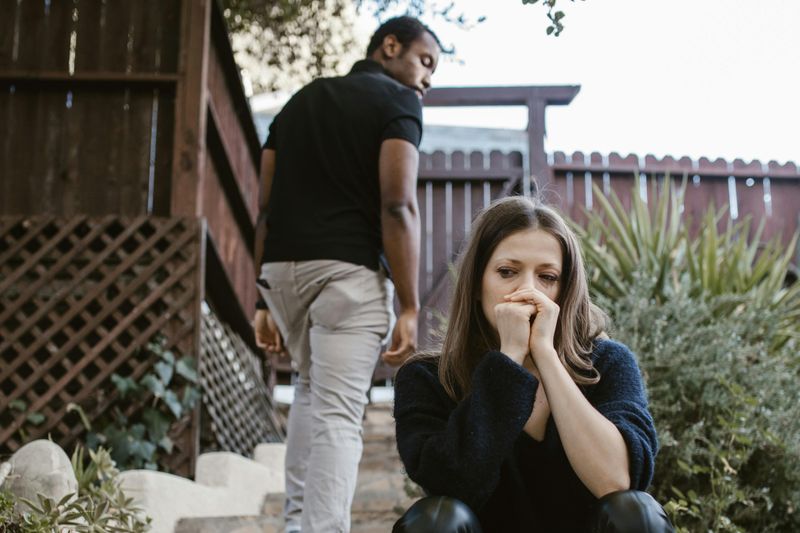
You have been led to believe their behavior is your fault, or that fixing them is your job.
Maybe they say things would be better if you just tried harder, loved them more, or stopped making them angry.
This twisted logic keeps you trapped in a cycle of blame.
Taking responsibility for someone else’s actions is exhausting and impossible.
No amount of effort will change someone who is not willing to change themselves.
Yet, you keep trying, convinced that the right approach will finally work.
Freedom comes from recognizing where your responsibility ends and theirs begins.
You are not their therapist, parent, or savior.
You deserve a partner who takes ownership of their own behavior.
9. Normalization of Harm

What once felt unacceptable slowly becomes routine, lowering your internal alarm system.
The first time something hurtful happens, you are shocked.
By the tenth time, it barely registers.
Your tolerance for mistreatment expands until you cannot remember what normal even feels like.
This normalization is a survival mechanism.
Your brain adapts to protect you from constant distress.
Unfortunately, this adaptation also keeps you stuck, unable to recognize how far things have deteriorated.
Waking up requires stepping back and imagining what you would tell a friend in your situation.
Outside perspectives help reset your internal compass and remind you that harm is never okay, no matter how common it becomes.
10. Social Isolation

Toxic dynamics often weaken outside support systems, leaving you with fewer anchors to pull you out.
Your partner may criticize your friends, demand all your time, or create drama that drives others away.
Gradually, you become isolated, with no one to offer perspective or help.
Isolation is not always intentional, but it is effective.
Without outside input, you only hear your partner’s version of reality.
Friends and family who might challenge the dysfunction are gone, leaving you alone in an echo chamber.
Reconnecting with your support network is crucial.
Reach out, even if it feels awkward or embarrassing.
True friends will welcome you back and help you find your way out of the fog.
11. Sunk Cost Fallacy

Time, effort, and sacrifice already invested make leaving feel like admitting failure.
You have given so much—years of your life, emotional energy, compromises—that walking away feels like wasting it all.
The thought of starting over is overwhelming and discouraging.
This fallacy is a mental trap.
Past investment should not dictate future decisions.
Staying in a harmful situation does not honor what you have given; it only guarantees more loss.
The best time to leave a bad investment is now, not after losing even more.
Reframing your perspective helps.
View your time as valuable lessons learned, not wasted years.
Every experience shapes you, and leaving opens the door to something better worth your future investment.
12. Love Without Safety

You may genuinely love them—but love alone, without emotional safety, clarity, and respect, keeps you stuck in survival mode.
Love is real and powerful, but it is not enough to sustain a healthy relationship.
Without safety, love becomes a prison instead of a partnership.
Many people confuse intensity with depth, believing that suffering proves commitment.
However, true love should bring peace, not constant anxiety.
You can love someone deeply and still recognize that the relationship is harming you.
Choosing yourself does not mean love was fake.
It means understanding that love must be paired with respect, trust, and safety.
You deserve all of these things, not just one.