 MomSkoop

Marriage is meant to be a partnership built on love, trust, and shared dreams.
But sometimes, feelings shift in ways that are hard to name or admit.
When regret quietly enters a relationship, it doesn’t always announce itself with big fights or dramatic exits—it shows up in small, everyday changes that speak louder than words.
1. Relief in Solitude Rather Than Longing

Alone time transforms from something she tolerates into something she craves deeply.
Breathing feels easier when the door closes behind her partner, not because anger fills the space, but because peace finally does.
Her shoulders drop, her jaw unclenches, and suddenly the quiet house feels like sanctuary rather than loneliness.
She doesn’t miss him when he’s gone—she thrives.
This shift is subtle but powerful, replacing the ache of missing someone with the comfort of their absence.
Guilt might flicker briefly, but it fades beneath the overwhelming sense of freedom that washes over her every time she finds herself truly alone again.
2. Confiding in Friends or Online Spaces Instead of Her Spouse
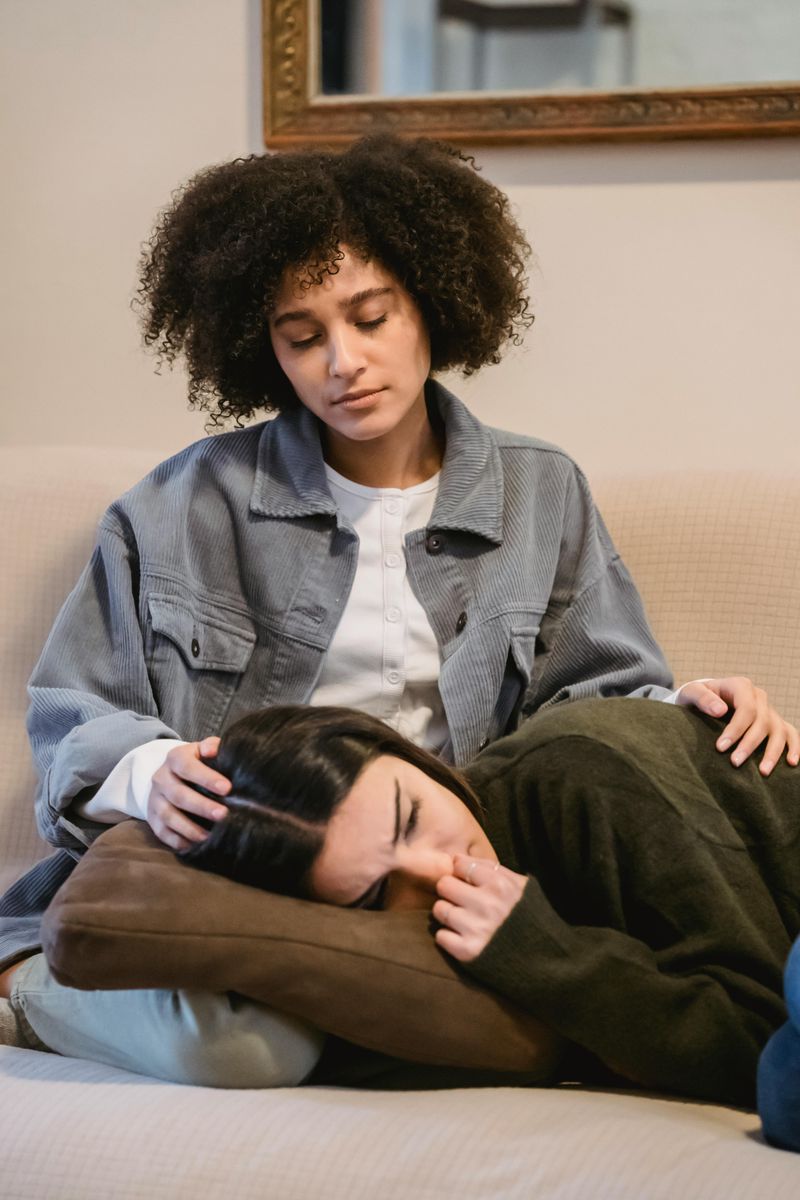
Major life thoughts and emotional moments get shared everywhere except with the person sleeping beside her.
Friends become her sounding board, online communities her safe harbor, and journaling her therapy.
Her partner remains in the dark about worries, dreams, and daily struggles that once would have been pillow talk.
The emotional intimacy has quietly relocated outside the marriage walls.
She finds herself typing paragraphs to strangers on forums or texting friends late into the night, seeking connection and understanding.
Her spouse might ask how her day was, but the real answer lives in group chats and private messages, never crossing back over the threshold of their shared life.
3. Conversations Reduced to Logistics Only

Dialogue between them becomes a checklist rather than connection.
Who’s picking up groceries?
What time is the appointment?
Did you pay the electric bill?
Emotional topics get sidestepped with practiced ease, conversations ending before they can deepen.
She’s mastered the art of surface-level communication that keeps the household running while her heart stays locked away.
Vulnerability has left the building, replaced by practical exchanges that could be handled through text messages.
When he tries to go deeper, she redirects or shuts down, protecting herself from the exhaustion that emotional engagement now brings.
The marriage functions like a business partnership, efficient but emotionally bankrupt.
4. Mental Rehearsals of an Independent Future

Her mind wanders to imaginary scenarios where she lives alone, makes decisions solo, and answers to nobody.
These daydreams aren’t concrete escape plans—no lawyers or moving trucks yet—but they’re vivid and recurring.
She pictures herself in a small apartment with plants on the windowsill, her own schedule, her own rules.
The fantasy brings comfort rather than fear.
During mundane moments—washing dishes, driving to work, lying awake at night—she mentally tests out independence like trying on clothes in a dressing room.
The fit feels surprisingly good, and that realization both relieves and terrifies her.
She’s not ready to leave, but she’s definitely rehearsing the possibility in her mind’s quiet theater.
5. Investing in Personal Growth Away From the Relationship

Suddenly she’s taking classes, joining gyms, updating her wardrobe—not to please her partner or improve the marriage, but to reclaim herself.
Energy flows toward personal development that has nothing to do with being someone’s wife.
She’s reading self-help books, learning new skills, and caring about her appearance in ways that exclude him entirely.
This isn’t about attracting others; it’s about reconnecting with who she was before everything felt so heavy.
Her investments—time, money, emotional energy—get directed toward building a version of herself that exists independently.
The relationship receives whatever’s leftover, which increasingly isn’t much.
She’s growing, just not alongside him anymore, and that divergence speaks volumes about where her heart truly resides.
6. Delaying the Return Home Each Evening

Errands that could take twenty minutes somehow stretch to two hours.
She volunteers for extra projects at work, takes the long route home, or sits in the car scrolling her phone before going inside.
Home has stopped feeling like a destination and started feeling like an obligation.
The dread is subtle but persistent, making her feet drag as she approaches the front door.
She fills evenings with distractions—book clubs, gym sessions, coffee with acquaintances she barely knows—anything to delay facing what waits inside.
When she finally crosses the threshold, exhaustion serves as her shield against deeper engagement.
The house that once meant comfort now represents everything she’s trying to avoid, so she stays away as long as socially acceptable.
7. Arguments Cease Due to Emotional Disengagement
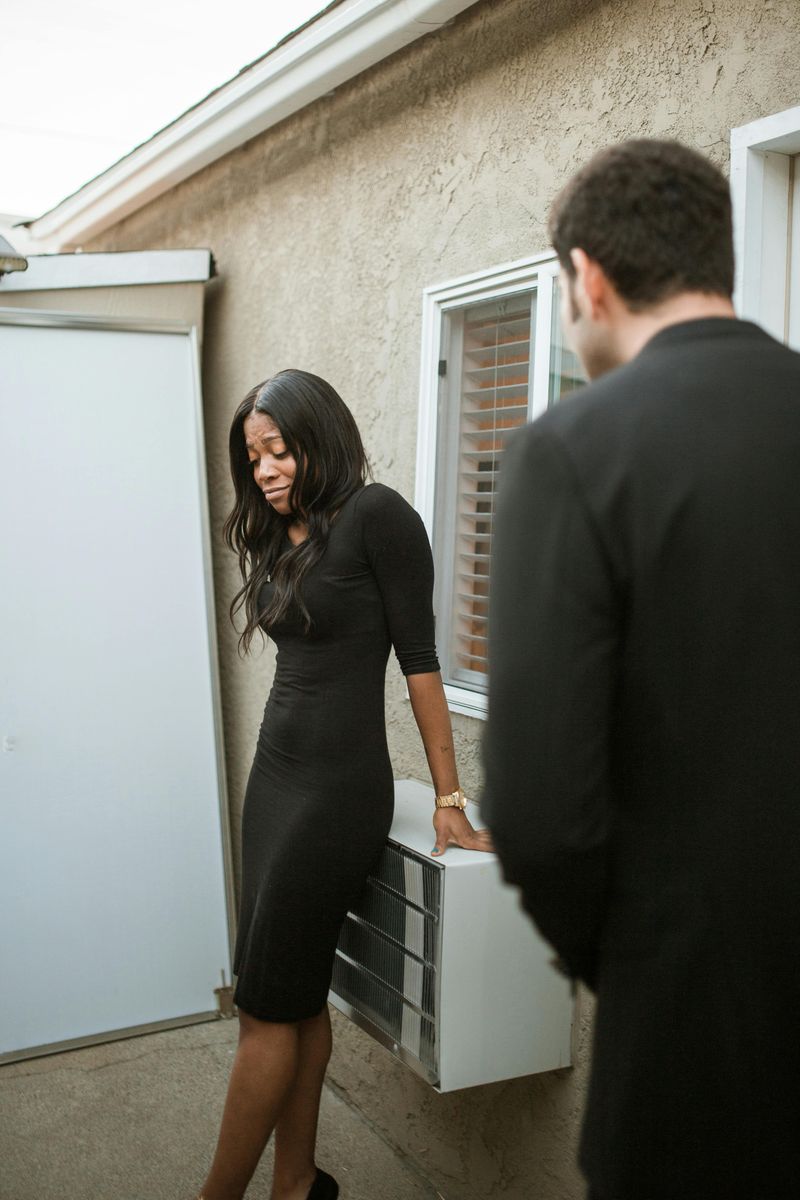
Fighting requires caring enough to battle for change, and she’s simply stopped caring that intensely.
Disagreements that once sparked heated debates now get met with shrugs or silence.
He might mistake this for peace, but it’s actually the opposite—it’s the quiet that comes when someone has emotionally checked out.
She’s not fine; she’s just finished fighting.
Her indifference confuses him because conflict was at least engagement, proof that emotions still ran hot.
Now everything rolls off her back with eerie calm.
She’s conserving energy, no longer willing to invest in battles that won’t change the fundamental problems.
The absence of fighting doesn’t signal healing; it signals that she’s already begun the internal process of letting go.
8. Feeling Emotionally Heavier at Home Than Elsewhere

Crossing the threshold into her own house feels like putting on a weighted blanket made of sadness.
At work, with friends, running errands—she feels lighter, younger, more herself.
But home drains that energy instantly, replacing it with fatigue that sits deep in her bones.
She notices the contrast sharply now, how her spirit dulls the moment she enters their shared space.
Other places allow her to breathe fully, laugh freely, exist without the constant low-grade tension that home brings.
She feels decades older within those walls, burdened by disappointment and unmet expectations.
The geographic shift between outside world and home life marks a stark emotional divide that grows more pronounced with each passing day.
9. More Patience for Strangers Than Her Partner

A stranger’s minor inconvenience gets met with understanding smiles and gracious patience.
Her husband’s similar mistake triggers immediate irritation that she struggles to hide.
She’ll cheerfully help a confused customer at the store but can barely tolerate her spouse asking where the remote is.
The imbalance is glaring once she notices it.
Somehow she’s saved all her kindness for people who don’t share her last name, while resentment has claimed the space where marital grace should live.
Every small thing he does grates on her nerves, while identical behaviors from strangers barely register.
This reversed priority system reveals how depleted her emotional reserves have become specifically within the marriage, where compassion should flow most naturally but now runs completely dry.
10. Shared Long-Term Goals Lose Their Vivid Detail
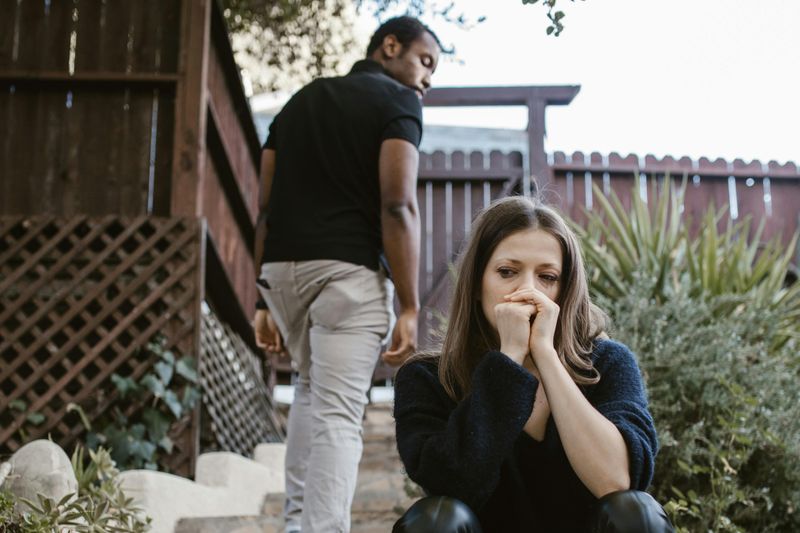
Future plans that once excited her—dream vacations, retirement visions, anniversary celebrations—now feel abstract and colorless.
She can’t picture them with any real enthusiasm or clarity anymore.
When he talks about their ten-year plan, she nods but internally feels nothing.
The shared future has become fuzzy, like trying to remember a dream after waking.
Where she once imagined specific details—what their future home would look like, how they’d spend their golden years—now there’s just blank space.
Her mind refuses to commit to visualizing a distant future together because subconsciously, she’s not sure she’ll be there.
The dreams have faded not from lack of imagination but from lack of genuine belief in their longevity as a couple.
11. Neutral Comments Feel Draining Rather Than Connecting
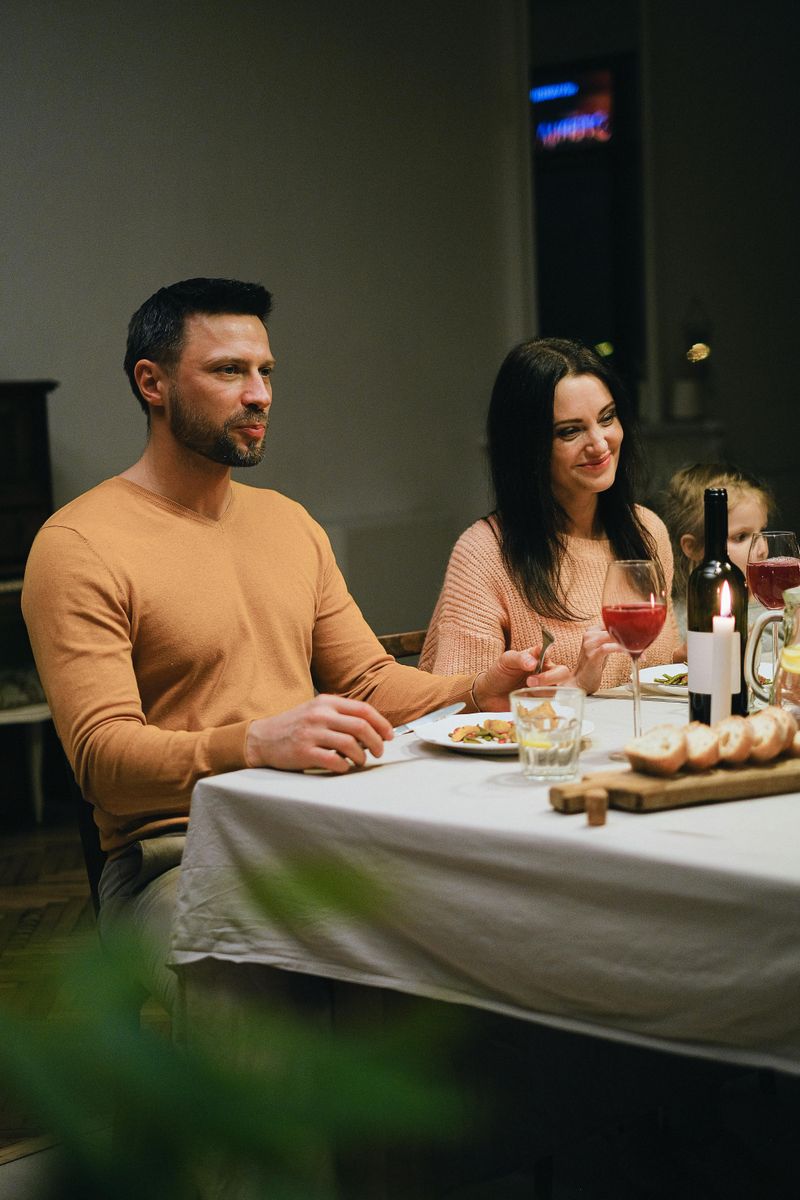
He mentions the weather, comments on dinner, or shares something from work—completely neutral content—but it exhausts her anyway.
Every interaction, no matter how benign, feels like it requires energy she doesn’t have.
What should be simple connection points instead feel like obligations to respond, engage, and pretend everything’s fine.
Even his pleasant small talk becomes something to endure.
She finds herself wishing he’d just be quiet, not because he’s saying anything wrong, but because any exchange at all feels like too much.
The emotional labor of basic conversation within the marriage has become unexpectedly heavy, revealing how disconnected she’s become.
Normal couple communication that should be effortless now requires conscious effort she’s increasingly unwilling to give.
12. Avoiding Initiating Affection Out of Emotional Fatigue

Physical touch—holding hands, hugs, kisses—used to come naturally but now requires conscious decision-making she’d rather skip.
It’s not anger preventing affection; it’s pure exhaustion.
Initiating intimacy feels like climbing a mountain when she’s already tired from the day.
She’s not withholding out of spite but protecting her depleted emotional reserves.
He might reach for her and she’ll allow it passively, but she never starts these moments herself anymore.
Affection has become something she receives rather than gives, a one-way street that reflects her withdrawn state.
The energy required to be vulnerable and tender has evaporated, leaving her touch-averse not from disgust but from the overwhelming fatigue that intimacy now demands from her empty well.
13. Feeling Unseen in Daily Moments Without Trying to Fix It
Small gestures go unnoticed, efforts unacknowledged, and she feels invisible in her own marriage—but she’s stopped pointing it out.
Earlier, she would’ve said something, tried to make him understand.
Now she just accepts it as the permanent state of things, letting the loneliness settle like dust on furniture.
The invisibility hurts less when she stops expecting to be seen.
She’s tired of explaining her needs, teaching him how to notice her, and feeling like she’s begging for basic attention.
So she’s gone quiet about it, not because the problem is solved but because she’s accepted it won’t be.
This resignation marks a dangerous turning point where hope for change has been replaced by numb acceptance of emotional neglect.
14. Reframing Unhappiness as Normal Marriage Reality

She’s started telling herself that this hollow feeling is just what marriage becomes after the honeymoon phase ends.
Maybe everyone feels this way, she thinks, convincing herself that disappointment is universal and expected.
This mental reframing protects her from facing harder truths about her specific situation.
If all marriages are like this, then leaving seems dramatic and ungrateful.
She compares her relationship to others and finds evidence—real or imagined—that everyone settles eventually, that passion fades, that this is simply adulthood.
The dangerous part is how this narrative keeps her stuck, normalizing pain that shouldn’t be normal.
By accepting unhappiness as standard, she avoids the scary work of admitting something is genuinely wrong in her particular marriage.
15. Brief Guilt-Free Happiness Only in His Absence

Joy arrives unexpectedly during a solo weekend or when he’s traveling for work—pure, uncomplicated happiness that exists only when he’s not around.
She laughs harder, relaxes deeper, and feels genuinely content.
The correlation between his absence and her happiness becomes impossible to ignore, though acknowledging it brings uncomfortable questions.
Why does freedom from her spouse equal freedom to feel good?
These moments reveal what she’s been missing: herself, unburdened by the weight of a struggling marriage.
When he returns, the heaviness comes back with him, confirming what she’s been slowly realizing.
Happiness and her husband have become mutually exclusive experiences, a heartbreaking truth that grows harder to deny with each joyful moment spent alone.