 MomSkoop

We all grow up hearing certain “facts” that just seem too obvious to question.
From what doctors once told patients to what parents warned kids about, many of these widely accepted beliefs have been passed down for generations.
The problem?
Science has since proven a surprising number of them flat-out wrong.
Get ready to rethink a few things you probably believed your whole life.
1. Smoking Was Once Considered Healthy

Believe it or not, doctors once appeared in cigarette ads, claiming certain brands were good for your throat.
Throughout the 1940s and 1950s, smoking was marketed as relaxing, sophisticated, and even medically approved.
Millions of people lit up without a second thought.
Today, we know the truth is devastating.
Smoking is one of the leading causes of lung cancer, heart disease, stroke, and early death worldwide.
It harms nearly every organ in the body.
This belief did not just fade quietly — it took decades of research and millions of lives lost before the world finally accepted the real danger.
2. Babies Do Not Feel Pain Like Adults Do

For much of the 20th century, medical professionals genuinely believed that newborns could not feel pain the same way older humans do.
Shockingly, some infants underwent surgeries with little to no anesthesia because of this assumption.
Doctors thought undeveloped nervous systems meant reduced pain sensitivity.
Modern research completely overturned this idea.
Studies confirm that newborns not only feel pain but may actually be more sensitive to it than adults.
Their nervous systems are active and reactive from birth.
Thankfully, proper pain management for infants is now standard practice in hospitals, protecting the tiniest and most vulnerable patients from unnecessary suffering.
3. Cracking Your Knuckles Causes Arthritis

Generations of parents scolded their kids with a firm warning: “Stop cracking your knuckles or you will get arthritis!”
It became one of those household rules that felt almost medical in authority.
Few people ever stopped to question whether it was actually true.
Turns out, it is not.
Large, long-term studies have found zero connection between knuckle cracking and arthritis.
The popping sound comes from gas bubbles releasing in the fluid around your joints, not from any damaging friction or wear.
One dedicated researcher even cracked knuckles on only one hand for 60 years to prove the point.
His arthritic results?
Identical in both hands.
4. You Must Wait 24 Hours to Report a Missing Person

You have probably heard it in movies or from a well-meaning neighbor: “Police will not take a missing person report until 24 hours have passed.”
This idea is so widespread that many people hesitate to call for help right away, fearing they will be turned away.
In reality, this rule does not exist in most countries.
Law enforcement agencies, especially in cases involving children, encourage people to report immediately.
Every hour matters when someone goes missing.
Delaying a report because of this false belief can cost precious time.
If someone you know goes missing, call authorities right away without waiting.
5. Humans Only Use 10% of Their Brains
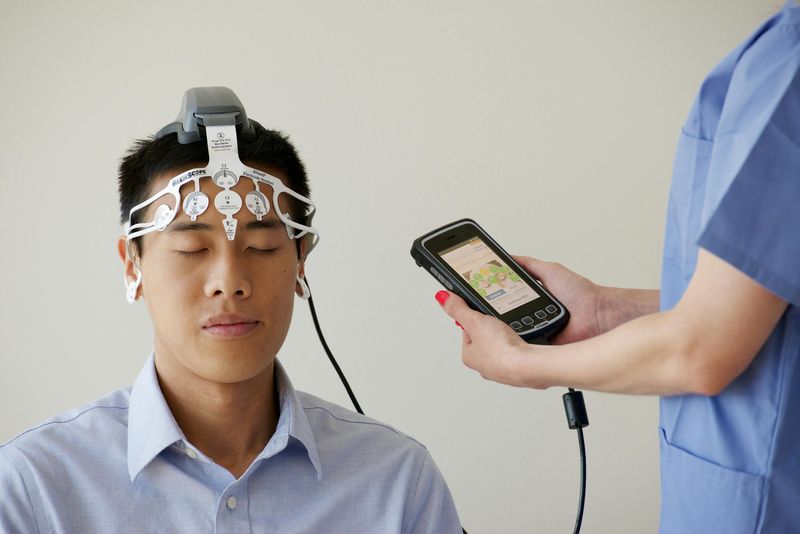
The idea that we only tap into 10% of our brain’s potential sounds like the perfect setup for a superhero movie — and it literally was, inspiring films like Lucy and Limitless.
People love the idea that untapped mental power is just waiting to be unlocked.
Brain imaging technology tells a completely different story.
Virtually every region of the brain shows activity at some point, even during routine tasks like walking or daydreaming.
No large section sits permanently idle.
While not every neuron fires at the exact same moment, the 10% claim has no scientific backing whatsoever.
Your brain is already working hard around the clock.
6. Goldfish Have a 3-Second Memory

Poor goldfish.
For years they have been the butt of every forgetfulness joke, endlessly lapping their tiny bowls as if each lap is a brand-new adventure.
The 3-second memory claim became one of those “facts” everyone repeated without questioning.
Scientists, however, have shown that goldfish can remember things for months.
Researchers trained them to press levers for food at specific times of day, and the fish remembered the schedule reliably.
They can even learn to navigate simple mazes.
So next time someone calls you forgetful and compares you to a goldfish, you can correct them with confidence.
Goldfish are smarter than their reputation suggests.
7. Sugar Makes Kids Hyperactive

Every parent at a birthday party has watched kids bounce off the walls and thought, “It must be all that cake and soda.”
The sugar-hyperactivity link feels completely obvious.
It is one of those beliefs so deeply embedded in parenting culture that questioning it almost feels absurd.
Controlled scientific studies, however, consistently show that sugar does not cause hyperactivity in children.
In double-blind experiments where neither parents nor kids knew who got sugar, behavior showed no real difference.
What actually drives the chaos at parties is excitement, social energy, and late bedtimes.
Our expectations shape what we think we see more than sugar ever could.
8. Shaving Makes Hair Grow Back Thicker and Darker

Ask almost anyone who started shaving as a teenager, and they likely heard a warning: shave too early and your hair will come back thicker, darker, and more noticeable.
For some people, that warning was enough to delay picking up a razor for months.
Dermatologists have thoroughly debunked this one.
A razor only cuts hair at the skin’s surface.
It has absolutely no effect on the hair follicle underneath, which is what controls thickness, color, and growth rate.
What makes regrown hair feel stubbly and look darker is simply the blunt edge of the cut shaft.
Compared to a natural tapered tip, it just feels coarser.
Nothing more to it.
9. Reading in Dim Light Ruins Your Eyesight

Countless kids have been told to put the book down and turn on a proper light, or risk ruining their eyes forever.
It is a classic parental caution, usually delivered with total confidence.
The image of squinting in candlelight making eyes permanently worse felt completely logical.
Eye doctors confirm that reading in low light does not cause lasting damage.
Your eyes work harder and may feel tired or strained, but that discomfort is temporary and disappears with rest.
Permanent vision problems come from other causes, like genetics, disease, or injury.
So while good lighting is definitely more comfortable, sneaking a chapter under the covers will not cost you your eyesight.
10. Everyone Needs 8 Glasses of Water Every Day

“Eight glasses a day keeps the doctor away” may not be the exact saying, but it might as well be.
This hydration rule has been plastered on health posters, repeated by nutritionists, and treated as universal medical gospel for decades.
The reality is more flexible.
How much water a person needs depends on their body size, activity level, climate, and the foods they eat.
Fruits, vegetables, soups, and even coffee contribute to daily fluid intake.
Major health organizations now agree there is no one-size-fits-all number.
Thirst is actually a pretty reliable guide.
Listening to your body tends to work better than counting glasses.
11. MSG Is Dangerous for Most People

Back in the late 1960s, a letter published in a medical journal described headaches and discomfort after eating at Chinese restaurants.
The culprit?
MSG, or monosodium glutamate. “Chinese Restaurant Syndrome” quickly became a widely accepted phenomenon, and MSG earned a scary reputation almost overnight.
The problem is that the original report was anecdotal, and follow-up studies could never reliably reproduce the symptoms in controlled settings.
Major health organizations, including the FDA, consider MSG safe for the general population.
MSG is found naturally in tomatoes, cheese, and mushrooms.
The fear surrounding it was largely built on bias and weak early research rather than solid scientific evidence.
12. Cold Weather Directly Causes Colds

“Put on your jacket or you will catch a cold!”
Few warnings from childhood feel more instinctively true than this one.
The timing seems obvious — cold weather arrives, cold season follows.
Surely there is a direct connection, right?
Viruses cause colds, not temperature.
Rhinoviruses and other cold-causing bugs spread through contact with infected people or surfaces, regardless of the weather outside.
Cold air alone cannot make you sick.
What winter does do is push people indoors where germs spread more easily in close quarters.
So the season matters, but not for the reason most people assume.
Wash your hands and you are already doing more than any jacket could.