 MomSkoop

Talking to your spouse about a past relationship can feel awkward and scary. But sometimes, the person who loves you most is the one who can help you finally move on. When I opened up to my wife about my ex, I expected judgment—instead, I got wisdom. Her advice changed how I think about the past, and it might help you too.
1. Acknowledge What You Truly Miss

Sometimes what we miss is not the person—it is the feeling they once gave us.
Maybe it was excitement, being understood, or simply feeling young and free.
My wife helped me see that missing a feeling is very different from missing someone specific.
Once I identified what I truly missed, I realized I could find those same feelings in my life today.
Naming the real emotion behind the longing takes away its power.
You stop chasing a ghost and start appreciating what already surrounds you.
That honest moment of self-reflection was the first step toward real freedom.
2. Eliminate Unnecessary Contact

Checking an ex’s social media “just once” rarely stays at once.
Every glance reopens a wound you are trying to heal.
My wife pointed out that I was keeping a small door cracked open without even realizing it.
Eliminating unnecessary contact—whether online or in person—is not about being cold or dramatic.
It is about protecting your own peace.
Unfollow, mute, or block if you need to.
There is no shame in setting boundaries for your own mental health.
Closing that door does not erase good memories—it simply stops new pain from walking through.
Your healing deserves that kind of protection.
3. Stop Idealizing the Story

Memory is a sneaky editor—it cuts out the boring parts, the arguments, and the tears, leaving only the highlight reel.
When I described my ex to my wife, she gently asked, “But what was it really like day to day?” That question cracked the illusion wide open.
Idealized memories feel more like fairy tales than real life because we unconsciously polish them over time.
Forcing yourself to remember the full picture—the frustrations, the incompatibilities, the reasons it ended—brings balance back.
A realistic view replaces longing with understanding.
You begin to see the relationship for what it was, not what you wish it had been.
4. Reinforce Your Current Commitment

Healing from the past is not just about removing something—it is also about building something stronger in its place.
My wife suggested we create new traditions together, small rituals that felt exclusively ours.
That advice shifted my focus from what was behind me to what was right in front of me.
Investing energy into your current relationship is one of the most powerful ways to crowd out old attachments.
Plan a trip, cook a new meal together, or simply spend an evening talking without phones.
Reinvesting in your present love reminds your heart where home actually is.
The past loses its grip when the present feels rich and meaningful.
5. Organize Your Memories Deliberately
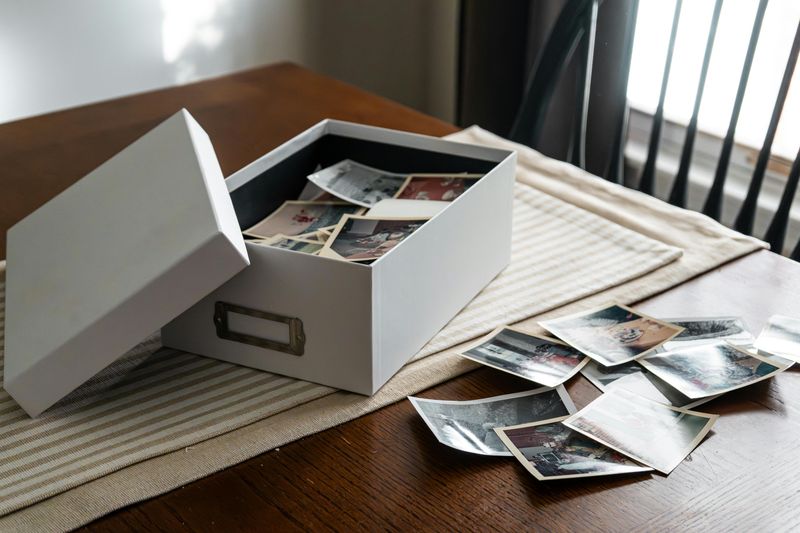
Letting go does not mean pretending the past never happened—it means deciding where it lives in your mind.
My wife compared memories to old photographs: you do not have to burn them, but you do not need them scattered all over the floor either.
Putting them in a box—mentally or literally—gives them a proper place without letting them take over your present.
When a memory surfaces, acknowledge it briefly, then consciously return your attention to today.
You are not suppressing emotions; you are managing where they live.
Over time, those memories visit less often because you have stopped giving them a permanent seat at the table.
6. Distinguish Memory from Intention

There is a big difference between remembering someone and wanting them back.
Mixing those two things up causes a lot of unnecessary confusion and guilt.
My wife helped me understand that a memory can exist without carrying a wish attached to it.
Just because a song or a place brings someone to mind does not mean your heart is pulling you in that direction.
Learning to observe a memory without assigning hidden meaning to it is surprisingly freeing.
You can think of someone from your past and simply let the thought pass like a cloud.
Not every memory is a message—sometimes it is just your brain filing old information.
7. Create Meaningful Experiences Now

One of the sharpest pieces of advice my wife gave me was simple: fill your life with experiences worth remembering right now.
When your present is exciting and fulfilling, the past naturally shrinks in importance.
Boredom and routine are actually some of the biggest reasons people drift back to old memories—the mind wanders when it has nothing new to explore.
Sign up for that class you keep putting off.
Plan an adventure.
Try something completely new with your partner or even on your own.
Creating fresh, vivid memories gives your brain better material to work with.
The past stops feeling like the best chapter when you are busy writing an even better one.
8. End Internal Conversations

Without realizing it, many people carry on imaginary conversations with their ex long after the relationship ends.
You rehearse what you would say, imagine their response, and replay old arguments in your head.
My wife called this “keeping the relationship alive in your mind” even after it ended in real life.
Ending those internal dialogues is one of the quietest but most powerful steps toward healing.
When you catch yourself mid-conversation, gently redirect your thoughts.
Say something like, “That chapter is closed.” It feels strange at first, but with practice it becomes natural.
Silence those imaginary exchanges and you free up mental space for things that actually matter today.
9. Accept Unanswered Questions

Not every relationship ends with a clean explanation, and waiting for one can keep you stuck for years.
My wife reminded me that some questions simply do not have answers—and demanding answers from the universe is exhausting work.
Accepting that you may never fully understand why something ended is not weakness; it is maturity.
Closure is something you give yourself, not something another person hands you.
When you stop chasing explanations, you stop handing your peace over to someone who is no longer even in your life.
Sit with the uncertainty, breathe through it, and trust that you can move forward even without every piece of the puzzle neatly in place.
10. Decide Consciously to Let Go

Letting go is rarely something that happens to you—it is something you choose, often more than once.
My wife said something I will never forget: “You do not wait until you feel ready to let go.
You decide to let go, and the feelings follow.” That reframing changed everything for me.
Waiting to feel differently before acting keeps you permanently stuck.
Make the decision deliberately, even if your emotions have not fully caught up yet.
Write it down if it helps.
Say it out loud.
Commit to it the way you commit to anything else important in your life.
The act of choosing is itself the beginning of freedom—and freedom, it turns out, was always yours to claim.