 MomSkoop

Most people think cheating is the number one reason marriages fall apart, but research tells a different story.
The real culprits are often small, everyday habits that slowly chip away at love, trust, and connection.
These quiet patterns can do far more damage than a single dramatic betrayal.
Recognizing them early could be the most important thing you ever do for your relationship.
1. Contempt: The Silent Poison

Eye-rolling, sarcasm, and mockery might seem harmless in the moment, but they send a devastating message: “I think I’m better than you.”
Contempt is consistently ranked by relationship researchers as the single strongest predictor of divorce.
It corrodes the emotional foundation of a marriage faster than almost anything else.
When one partner regularly treats the other with a sense of superiority, it creates deep shame and resentment.
Over time, the person on the receiving end stops feeling safe, valued, or even liked.
Replacing contempt with genuine appreciation and curiosity is one of the most powerful shifts a couple can make.
2. Attacking Character Instead of Behavior

“You’re so selfish” hits very differently than “I felt hurt when you forgot our plans.”
Criticizing who your partner is as a person, rather than addressing a specific action, puts them on the defensive immediately.
Nobody can fix their entire personality, so character attacks leave people feeling hopeless and attacked.
This habit turns disagreements into identity battles, where the goal shifts from solving a problem to winning or surviving.
Marriages stuck in this pattern often become emotionally exhausting.
Learning to separate the behavior from the person keeps conversations productive and preserves the mutual respect every healthy relationship depends on.
3. Defensiveness That Shuts Conversations Down

Defensiveness feels like self-protection, but it actually signals to your partner that their concerns don’t matter.
When every complaint is met with a counter-complaint or a list of excuses, nothing ever gets resolved.
The original issue gets buried under layers of “But what about what YOU did?”
Couples who rely heavily on defensiveness spend years circling the same arguments without any real resolution.
It’s exhausting and demoralizing.
Taking even a small amount of responsibility, even just acknowledging your partner’s feelings without immediately defending yourself, can completely change the temperature of a difficult conversation and open the door to real healing.
4. Stonewalling: Going Emotionally Offline

Stonewalling happens when one partner completely shuts down during conflict, going silent, leaving the room, or staring at their phone as if the other person isn’t there.
It often develops as a way to cope with feeling overwhelmed, but to the other partner, it feels like total rejection.
Studies show that stonewalling spikes stress hormones in both people, making real communication nearly impossible.
Over time, the partner who gets stonewalled starts to feel invisible and unimportant.
If you feel flooded during arguments, taking a brief, agreed-upon break and returning to the conversation is far healthier than going completely offline emotionally.
5. Keeping Score Like a Referee

“I cooked three times this week. You owe me.”
Scorekeeping might feel like fairness, but it turns a partnership into a competition nobody wins.
When love becomes transactional, the warmth and generosity that make a marriage feel good slowly disappear.
People who constantly tally who did what often feel chronically underappreciated, which feeds resentment over time.
The truth is, partnership rarely divides 50/50 on any given day.
Some weeks one person carries more; other weeks it flips.
Choosing to give freely, without always expecting equal return, builds the kind of trust and goodwill that sustains a marriage through hard seasons.
6. Avoiding Conflict at All Costs

It might seem like avoiding arguments keeps the peace, but unaddressed problems don’t disappear.
They pile up quietly until they become impossible to ignore.
Conflict avoidance often masquerades as being “easygoing,” but underneath, it’s usually fear of rejection, anger, or making things worse.
Couples who never argue aren’t necessarily happy.
They’re often just postponing pain.
Small grievances that go unspoken can fester into massive resentments over months or years.
Healthy conflict, approached with respect and a genuine desire to understand each other, is actually a sign of a relationship where both people feel safe enough to be honest.
7. Harsh Start-Ups That Blow Up Conversations

“You NEVER listen to me” or “You ALWAYS do this” are conversation grenades.
Research by Dr. John Gottman found that how a difficult conversation begins predicts how it will end with remarkable accuracy.
A harsh, accusatory opening almost guarantees the other person will become defensive or shut down entirely.
Starting with “always” or “never” is rarely accurate and almost always unfair.
It backs your partner into a corner before the conversation even begins.
A softer start, something like “I’ve been feeling disconnected lately and I’d love to talk about it,” creates space for actual dialogue rather than an emotional battle neither person wants.
8. Chronic Negativity Toward the Relationship

When one or both partners consistently expect the worst from their relationship, that pessimism becomes a self-fulfilling prophecy.
Chronic negativity clouds every interaction, making it hard to notice or appreciate the good moments that do exist.
A negative filter literally changes what you see in your partner.
Gottman’s research suggests a healthy relationship needs roughly five positive interactions for every negative one.
When the ratio tips too far toward the negative, couples start feeling like roommates who don’t even like each other.
Deliberately noticing what your partner does right, not just what they do wrong, is a small habit that can genuinely shift the relationship’s emotional climate.
9. Emotional Disengagement and Indifference

Indifference is often more damaging than anger.
When a partner stops caring enough to even argue, it signals that the emotional investment in the relationship has quietly dried up.
Emotional disengagement can creep in gradually, often going unnoticed until one person realizes they feel completely alone inside their marriage.
Partners who feel chronically ignored begin to stop bringing their real selves to the relationship.
They share less, need less, and eventually want less connection.
Rebuilding engagement takes intentional effort: asking real questions, showing up fully during conversations, and demonstrating through small daily actions that your partner still matters deeply to you.
10. Disrespect in Tone, Humor, and Body Language

Sometimes disrespect doesn’t come in obvious words.
It shows up in a dismissive wave of the hand, a mocking tone disguised as a joke, or a heavy sigh that says “you’re exhausting me.”
These small signals accumulate over time and leave a partner feeling routinely belittled or unvalued.
Humor in relationships should bring people closer, not put one person down to get a laugh.
When sarcasm becomes a default communication style, it creates emotional distance even between people who genuinely love each other.
Choosing a warm, respectful tone, even during disagreements, sends a message that your partner’s dignity always matters to you.
11. Never Apologizing or De-Escalating After Arguments

Every couple fights.
What separates thriving marriages from struggling ones isn’t the absence of conflict, it’s the ability to repair after things go wrong.
Couples who never apologize, never reach out after an argument, or refuse to de-escalate tend to leave emotional wounds open and festering.
Repair attempts, even simple ones like “I’m sorry I raised my voice” or “Can we start over?”, act like emotional first aid.
They signal that the relationship matters more than being right.
Without this habit, arguments pile on top of each other and the emotional safety of the marriage slowly erodes, brick by brick, until very little warmth remains.
12. Turning Away From Bids for Connection
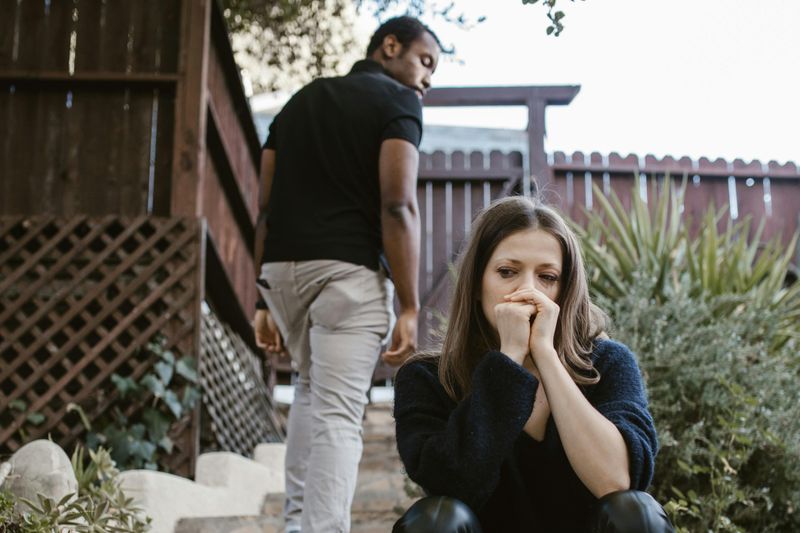
A “bid for connection” is any small attempt to reach your partner, a funny comment, a touch on the shoulder, a question about their day.
When these bids are consistently ignored or brushed off, the person reaching out quietly stops trying.
It doesn’t happen dramatically; it happens in dozens of tiny, forgettable moments.
Gottman’s research found that couples who turned toward each other’s bids about 86% of the time stayed together, while those who turned away divorced at much higher rates.
Putting the phone down, making eye contact, and responding warmly to these small moments builds the emotional bank account that sustains a marriage through genuinely hard times.
13. Living Parallel Lives With No Shared Meaning

Two people can share a home, a bed, and a last name while living completely separate emotional lives.
This is one of the quietest and most dangerous ways a marriage can unravel.
There are no dramatic fights, just a slow drift until one day both people realize they feel like strangers.
Shared meaning, whether through rituals, traditions, goals, or simple routines like morning coffee together, is the glue that keeps couples genuinely connected.
Without it, a marriage becomes purely logistical: managing schedules, splitting bills, raising kids.
Investing in friendship with your partner, not just coexisting, is what transforms a household into a home where both people actually want to stay.