 MomSkoop

Staying focused has never felt harder, especially when your phone is basically begging for your attention every five minutes.
Gen Z grew up surrounded by endless notifications, short videos, and constant digital noise — and now they’re fighting back.
A growing number of young people are quietly adopting simple, science-backed habits that actually help them concentrate, get things done, and feel less mentally drained.
These tricks don’t require expensive apps or extreme willpower — just small, smart changes that make a surprisingly big difference.
1. Dopamine Delay Before Work

Scrolling through TikTok the moment you wake up might feel harmless, but it’s actually hijacking your brain before your day even starts.
When you flood your mind with fast, exciting content first thing in the morning, normal tasks — like homework or reading — start to feel unbearably dull by comparison.
Gen Z has started calling this a “dopamine delay.”
The idea is simple: give your brain 30 to 60 minutes of calm, low-stimulation time before touching your phone.
Try stretching, eating breakfast, or just sitting quietly.
Your focus will thank you later.
2. The Single-Tab Rule

Here’s a wild experiment: close every browser tab except one and see how differently your brain feels.
Most students work with 10, 15, even 20 tabs open at once — and each one is quietly pulling your attention away from what actually matters.
The single-tab rule is brutally simple.
When you sit down to do focused work, keep only one tab or window open.
Park everything else, close the extras, and eliminate the visual noise.
Less clutter on your screen means less mental switching happening in your head.
Productivity goes up fast when your eyes have nowhere else to wander.
3. The 2-Minute Friction Reset

You know that restless, itchy feeling when you just can’t stop thinking about checking your phone?
That’s your brain craving stimulation — and fighting it with willpower alone rarely works.
There’s a smarter move.
Try the 2-minute friction reset: when distraction hits hard, put your phone down and do absolutely nothing for two full minutes.
No fidgeting, no music, no snacking.
Just sit.
It sounds almost too easy, but this short pause actually resets your brain’s urge to seek stimulation.
After those two minutes, re-engaging with your task becomes noticeably easier.
Gen Z calls it a “brain palate cleanser.”
4. Background Boredom Instead of Background Noise

Lo-fi playlists and study podcasts feel productive, but your brain is still splitting its attention every time a new beat drops or a new word catches your ear.
Silence, it turns out, is wildly underrated.
Swapping background music for neutral ambient sounds — or pure quiet — allows your brain to fully lock onto one thing.
Some people use very soft white noise or nature sounds, but the goal is to stop feeding your mind extra content to process.
Once you get used to the quiet, the depth of your focus changes completely.
It feels uncomfortable at first, then almost addictive.
5. Phone Out of Reach, Not Just Face Down

Flipping your phone face down feels like a solid move — but research shows that just having your phone visible nearby still drains mental energy, even if you never touch it.
Your brain keeps quietly monitoring it in the background.
Physical distance is the real game-changer.
Put your phone in another room, toss it behind you, or lock it in a drawer while you work.
Out of sight genuinely means out of mind.
Gen Z students who started doing this reported feeling calmer and more focused within days.
Willpower is limited — removing temptation entirely is just smarter strategy.
6. Micro-Deadlines and 10-25 Minute Sprints

Big tasks are focus killers because your brain can’t see the finish line.
When something feels endless, your mind starts wandering almost immediately.
Micro-deadlines fix this by making every task feel urgent and short.
Set a timer for 10 to 25 minutes and race to make progress before it goes off.
The ticking clock creates just enough pressure to keep you locked in, and finishing a sprint gives your brain a small but real reward.
String a few of these together and you’ll accomplish more in two hours than most people do in an entire day.
No burnout required.
7. Intentional Distraction Breaks

Fighting the urge to scroll constantly is exhausting — and usually backfires.
The more you tell yourself not to check your phone, the louder the craving gets.
Gen Z figured out a smarter workaround: schedule the distraction instead of banning it.
Pick specific times during your study session when you’re allowed to scroll, watch a reel, or text back.
Knowing a break is coming soon makes it much easier to stay focused in the meantime.
The urge to sneak distractions mid-task drops dramatically.
You get your social media fix, guilt-free, without wrecking your concentration.
It’s about working with your brain, not against it.
8. Visual Progress Tracking
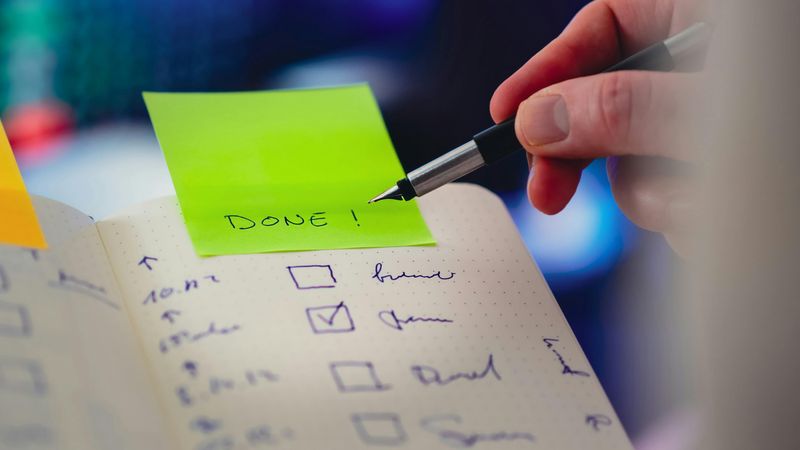
Your brain absolutely loves seeing progress.
There’s a reason video games use health bars and experience meters — watching something move forward triggers a feel-good response that keeps you engaged.
You can borrow this exact trick for real life.
Use a simple checklist, draw a progress bar on a sticky note, or use a timer app that shows how far you’ve come.
Watching your progress in real time gives your brain a steady stream of small rewards, which keeps motivation from fading mid-task.
Even crossing off one tiny item feels surprisingly satisfying.
Visual tracking turns boring work into something your brain actually wants to finish.
9. Monotask Warm-Up

Staring at a blank page waiting for motivation to show up is one of the biggest focus traps out there.
Motivation almost never arrives before you start — it shows up after.
That’s exactly why the monotask warm-up works so well.
Pick the easiest, smallest version of your task and just begin.
Write one sentence.
Solve one math problem.
Read one paragraph.
Once you’re moving, momentum builds naturally and attention follows along for the ride.
Gen Z calls this “tricking yourself into starting.” It sounds almost too simple, but getting started is genuinely the hardest part — and this habit makes it almost effortless.
10. End Sessions Mid-Task on Purpose

Most people try to finish everything before stopping, but Gen Z has flipped this idea on its head — and it works surprisingly well.
Stopping mid-task on purpose actually makes it easier to come back and focus again later.
When you quit while you still have momentum and clarity about what comes next, your brain stays mentally “hooked” on the task.
Psychologists call this the Zeigarnik effect: unfinished things stick in your memory more than completed ones.
Leave a sentence half-written, a problem half-solved, or a note that says “next step is…”
Re-entering your work the next day feels smooth instead of painful.