 MomSkoop

Some hobbies do more than just pass the time — they actually shape the way a person thinks, learns, and solves problems. Research has shown that certain activities can sharpen the mind, boost creativity, and even improve emotional intelligence.
Smart women often share a surprising number of these hobbies in common. Here are 11 pastimes that tend to show up in the lives of exceptionally sharp, curious, and driven women.
1. DIY Projects
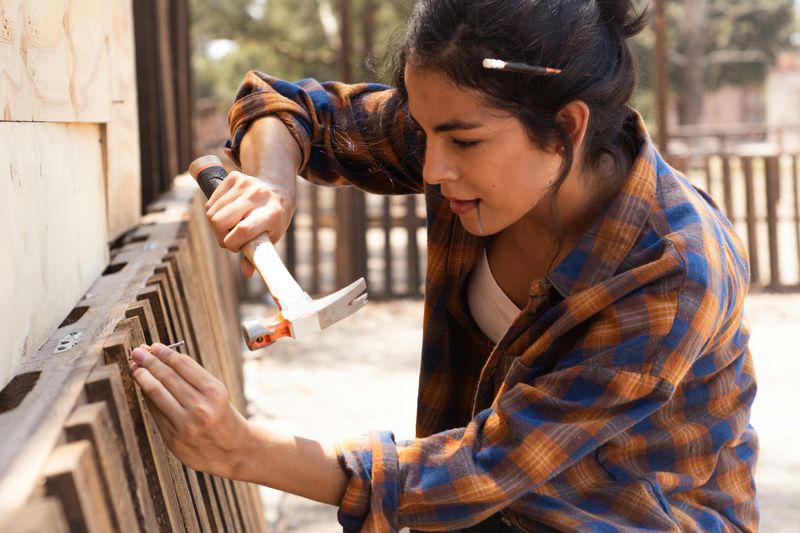
There is something deeply satisfying about building something with your own two hands — and it turns out, it is also incredibly good for your brain.
Women who enjoy DIY projects are constantly problem-solving, measuring, and thinking spatially.
These skills translate directly into stronger logical reasoning and creative thinking.
Every project requires planning, adjusting when things go wrong, and learning from mistakes.
That kind of hands-on learning builds mental flexibility that no classroom can fully replicate.
Studies suggest that working with your hands activates multiple brain regions at once.
So next time you pick up a hammer or paintbrush, know that you are doing your mind a real favor.
2. Reading Complex Literature

Not all reading is created equal.
Women who regularly tackle dense, challenging books are exercising their brains in ways that casual scrolling simply cannot match.
Complex literature forces you to track multiple characters, understand layered themes, and sit with ambiguity — all of which build critical thinking and emotional depth.
Researchers at Emory University found that reading literary fiction actually increases neural connectivity in the brain.
That means the story stays with you long after you turn the last page.
Beyond brain benefits, women who read widely tend to develop stronger empathy and communication skills.
A well-worn bookshelf often belongs to someone with a remarkably well-developed mind.
3. Learning New Languages

Picking up a second — or third — language is one of the most mentally demanding hobbies a person can take on.
It requires memory, pattern recognition, and the ability to think in entirely new ways.
Women who pursue language learning are constantly switching between mental frameworks, which strengthens what scientists call cognitive flexibility.
That skill helps in everything from negotiating to creative writing.
Bilingual and multilingual individuals also show a delayed onset of cognitive decline as they age.
The brain, it seems, rewards the challenge.
Beyond the science, speaking another language opens doors to new cultures and perspectives — and that kind of broad worldview is a hallmark of true intelligence.
4. Learning Random Facts

Some people call it trivia obsession.
Others call it an insatiable curiosity.
Either way, women who love collecting random facts are quietly building one of the most powerful mental habits there is.
Storing diverse bits of information across many subjects helps the brain form unexpected connections.
That cross-domain thinking is exactly how breakthrough ideas and creative solutions are born.
Curiosity itself has been linked to higher intelligence and academic achievement in multiple studies.
Wanting to know “why” and “how” about everything is not just a quirky trait — it is a cognitive superpower.
Women who chase random knowledge tend to be brilliant conversationalists too, making every discussion richer and more surprising.
5. Playing Chess

Chess has a reputation as a game for geniuses — and honestly, playing it regularly might just help you become one.
Every move on the chessboard demands forward thinking, pattern recognition, and strategic planning.
Women who play chess are essentially running mental simulations dozens of times per game.
Research published in the New England Journal of Medicine found that mentally stimulating activities like chess significantly reduce the risk of cognitive decline.
The brain thrives on that kind of structured challenge.
Beyond competition, chess teaches patience, resilience after losing, and the ability to stay calm under pressure.
Those qualities do not just make a great player — they make a sharper thinker in everyday life.
6. Exploring Nature

Heading outside with a curious mind does something remarkable to the brain.
Women who regularly explore nature — whether hiking, birdwatching, or simply wandering through parks — tend to notice patterns and details that others walk right past.
A Stanford University study found that spending time in nature reduces rumination and boosts creative thinking.
The quiet of the outdoors gives the mind space to process and generate new ideas.
Nature exploration also builds observational skills.
Spotting a rare bird or identifying a plant species requires focus, memory, and a sharp eye for detail.
Over time, these habits train the brain to be more present, more analytical, and surprisingly more imaginative in daily life.
7. Writing

Writing is thinking made visible.
Women who write regularly — whether journaling, blogging, or crafting fiction — are constantly organizing complex thoughts into clear, meaningful language.
That process alone strengthens analytical reasoning, self-awareness, and the ability to communicate persuasively.
Few hobbies demand such a precise combination of logic and creativity at the same time.
Expressive writing has also been shown to reduce stress and improve emotional processing, which keeps the mind sharp and balanced.
A calmer brain is a more capable brain.
Many of history’s most influential thinkers were devoted writers long before they became famous.
The habit of putting thoughts on paper has a way of quietly refining the mind over time.
8. Playing a Musical Instrument

Did you know that learning an instrument is one of the most comprehensive workouts the human brain can get?
Music engages the visual, auditory, and motor systems simultaneously — all at once.
Women who play instruments regularly show measurable improvements in memory, attention span, and fine motor coordination.
The discipline required to master even one song builds patience and mental endurance.
Playing music also strengthens the connection between the brain’s two hemispheres, which improves creative and analytical thinking at the same time.
That is a rare combination most hobbies cannot offer.
Whether it is classical piano or a ukulele on the porch, making music is one of the kindest things a person can do for their brain.
9. Traveling Solo

Booking a solo trip and actually going through with it takes a particular kind of boldness — and a particular kind of brain.
Women who travel alone must navigate unfamiliar places, adapt to unexpected situations, and make dozens of independent decisions every day.
That constant problem-solving is an intense and rewarding mental workout.
Exposure to different cultures also challenges assumptions and expands perspective in ways that are difficult to replicate at home.
Open-mindedness and adaptability are both closely linked to higher cognitive flexibility.
Solo travel builds deep self-trust too.
Knowing you can figure things out on your own — in a foreign country, with a language barrier — is confidence that carries over into every area of life.
10. Meditating

Meditation might look like doing nothing, but inside the brain, quite a lot is happening.
Regular meditators show measurable increases in gray matter density in areas linked to learning, memory, and self-awareness.
Women who meditate tend to have stronger emotional regulation, meaning they can think clearly even in stressful situations.
That ability to stay grounded under pressure is a powerful intellectual advantage.
Focused attention meditation, in particular, trains the brain to hold concentration for longer periods.
That skill pays off in everything from studying to strategic decision-making.
Over time, a consistent meditation practice quietly reshapes the way the mind works — making it calmer, sharper, and more capable of deep, sustained thought.
11. Pottery
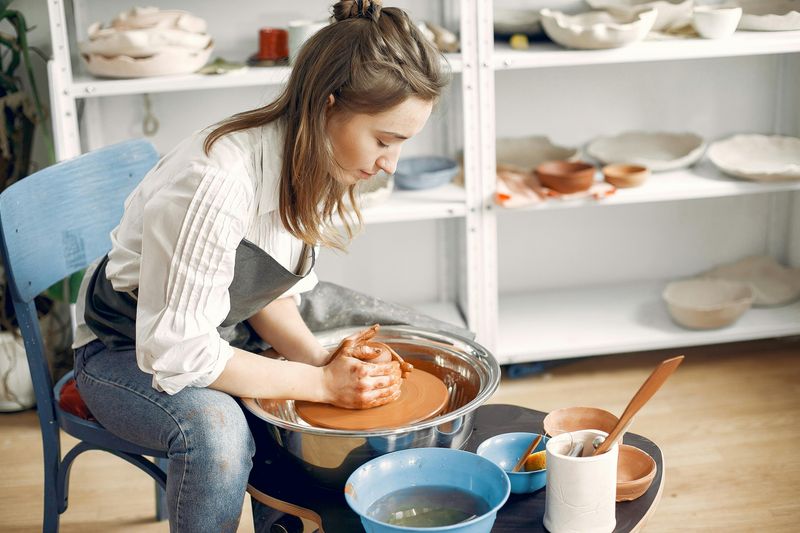
There is an ancient, almost meditative quality to shaping clay with your hands — and science is beginning to explain why it feels so good for the mind.
Pottery demands total concentration, fine motor precision, and a deep understanding of how materials behave.
Women who practice pottery are developing spatial reasoning and tactile intelligence with every session.
The creative problem-solving required when a bowl collapses or a glaze misfires builds resilience and adaptive thinking.
Failure is simply part of the process, and learning to work through it is genuinely valuable.
Art therapists have long used pottery to boost cognitive function and emotional well-being.
It turns out that getting your hands dirty might be one of the smartest things you can do.