 MomSkoop

Something quietly shifts for many women once they reach their 40s. After years of patience, compromise, and effort, some simply choose to walk away from relationships — often without a long explanation.
This isn’t coldness or cruelty; it’s the result of deep self-awareness built over time. Understanding why this happens can open your eyes to patterns you may have never noticed before.
1. Repeated Disrespect

There’s a quiet breaking point that happens when disrespect becomes the norm rather than the exception.
It might show up as dismissive comments, eye rolls, or simply not being heard — over and over again.
After a while, those moments stack up into something impossible to ignore.
A woman in her 40s has lived long enough to know the difference between a rough patch and a pattern.
When respect consistently goes missing, no amount of love can fill that gap.
Walking away isn’t an overreaction — it’s a response to something that’s been building for far too long.
Respect is the foundation, and without it, nothing else holds.
2. Emotional Exhaustion

Carrying a relationship mostly on your own shoulders is exhausting — and after years of doing exactly that, the energy simply runs out.
Emotional exhaustion doesn’t happen overnight.
It builds slowly through countless conversations that led nowhere and efforts that were never returned.
By the time many women reach their 40s, they’ve already tried everything.
They’ve communicated clearly, adjusted their approach, and given second — and third — chances.
At some point, the tank hits empty and staying starts to feel more damaging than leaving.
Walking away quietly isn’t giving up — it’s choosing to protect what little energy they have left for themselves and the people who truly matter.
3. Lack of Reciprocity

Giving endlessly while receiving very little is a slow kind of heartbreak.
Over time, a one-sided relationship starts to feel less like a partnership and more like a solo project with a plus-one.
Women in their 40s have usually been through enough to recognize this imbalance clearly.
The small signs — unanswered needs, forgotten gestures, absent emotional support — add up into a loud truth that’s hard to unhear.
When effort stops being matched, the motivation to keep trying fades.
Walking away from a relationship that only takes and rarely gives isn’t selfish — it’s survival.
Reciprocity isn’t a luxury in a healthy relationship; it’s the bare minimum two people owe each other.
4. Boundaries Being Ignored

Boundaries aren’t walls built to keep people out — they’re guidelines that show others how to treat you with care.
But when those lines are repeatedly crossed without remorse, something shifts permanently.
For women over 40, boundaries are no longer up for debate.
Decades of life experience have made it crystal clear which limits are non-negotiable.
When a partner keeps pushing past them anyway, explanation starts to feel pointless.
Actions have already spoken loudly enough.
The decision to leave isn’t dramatic — it’s logical.
Once someone proves they won’t honor your boundaries no matter how clearly they’re communicated, protecting your peace becomes the only reasonable next step forward.
5. They’ve Already Communicated Enough

Here’s something people often get wrong: walking away without explanation doesn’t always mean nothing was said.
More often than not, everything was already said — multiple times, in multiple ways — and nothing changed.
Many women over 40 have had the same conversation so many times it starts to feel rehearsed.
They’ve explained their feelings, asked for change, and outlined exactly what they needed.
The silence at the end isn’t mystery — it’s exhaustion from repeating themselves.
When someone has communicated clearly and consistently with no real response, the final departure needs no grand speech.
The relationship already had its explanations.
Leaving quietly is simply the last word in a very long conversation.
6. Loss of Trust

Trust, once broken, leaves behind something that doesn’t fully heal — no matter how many apologies follow.
Whether it was dishonesty, broken promises, or constant inconsistency, the damage tends to compound over time.
Women who’ve spent years trying to rebuild trust often reach a point where they ask themselves an honest question: is this worth it anymore?
And the answer, after enough letdowns, starts to shift.
Choosing to walk away from a relationship where trust has eroded isn’t giving up too easily — it’s being honest about what’s actually there.
You can love someone and still recognize that the foundation between you has crumbled beyond what either of you can reasonably repair.
7. Prioritizing Peace Over Conflict

There comes a time when the appeal of drama completely disappears.
Constant tension, recurring arguments, and emotional turbulence stop feeling like signs of passion and start feeling like warning signs.
Women over 40 have often been through enough conflict to know what it costs them — mentally, physically, and emotionally.
At some point, peace stops being a preference and becomes a priority.
A quiet life starts to look more attractive than a loud relationship.
Leaving without a dramatic scene isn’t avoidance — it’s a conscious choice to stop feeding cycles that never resolve.
Sometimes the most powerful thing a person can do is simply choose stillness over chaos, without needing anyone else to understand why.
8. Emotional Maturity Gap

Growing at different speeds is one of the quieter relationship killers.
When one person is doing the inner work — building accountability, processing emotions, taking responsibility — and the other simply isn’t, the gap between them grows wider every year.
For women over 40, emotional immaturity in a partner can feel increasingly unbearable.
Deflection, blame-shifting, and resistance to growth aren’t just annoying — they become deal-breakers.
Staying in a dynamic where you feel more like a parent than a partner is draining in a very specific way.
When the emotional maturity gap becomes too wide to bridge, walking away isn’t abandonment — it’s choosing a connection that actually meets you where you are.
9. Self-Worth Has Increased

Age has a funny way of clearing things up.
Behaviors that once seemed tolerable — or were explained away with excuses — suddenly look completely different through the lens of self-respect.
Women in their 40s often describe a shift that feels less like a decision and more like a realization: they simply no longer accept what they used to rationalize.
Higher self-worth doesn’t make people harder to love — it makes them harder to mistreat.
When you know your value, settling stops feeling like compromise and starts feeling like a loss.
Walking away from relationships that don’t honor who you’ve become isn’t arrogance — it’s the natural result of finally understanding your own worth completely.
10. Patterns That Won’t Change

Apology.
Temporary effort.
Slow slide back to the same behavior.
Repeat.
If that cycle sounds familiar, you already know how soul-crushing it is to live inside it.
Recognizing a pattern is one thing — staying in it knowing nothing will change is another.
Women who’ve been through enough cycles develop a sharp eye for them.
The good weeks after a blowup, the promises that last just long enough, the gradual return to old habits — it all becomes predictable.
Once the pattern is fully visible, hope starts to fade.
Leaving isn’t giving up on the person — it’s refusing to keep auditioning for a role in a story that never changes its ending no matter how many times it’s replayed.
11. Closure Comes from Within
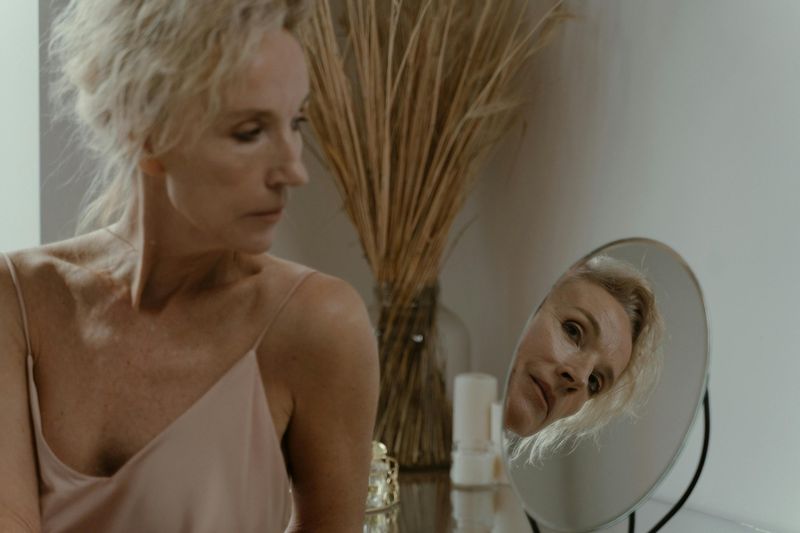
Not every ending needs a final conversation to feel complete.
One of the most powerful shifts that comes with age is realizing that closure isn’t something another person can hand you — it’s something you build yourself.
Women over 40 often leave quietly not because they don’t understand what happened, but because they already do.
The internal processing has already taken place.
The questions have been answered privately, and the decision has been made with clarity rather than chaos.
Waiting for external validation or a perfect goodbye can actually delay healing.
When you’ve made peace with a situation on your own terms, walking away without explanation isn’t unresolved — it’s the most resolved thing you can do.