 MomSkoop

Some lessons sound old-fashioned until life tests you and proves why they lasted. Many Boomers grew up with rules that were not always comforting, but they built grit, patience, and personal responsibility.
These habits shaped a generation that learned to keep going without constant praise or easy shortcuts. If you have ever wondered where that toughness came from, these 15 lessons tell the story.
1. Life Isn’t Always Fair

One of the toughest lessons handed down was that life does not always balance out neatly.
You could do everything right and still lose, get overlooked, or face a setback that felt undeserved.
Instead of dwelling on fairness, people were expected to adjust, regroup, and keep moving.
That mindset could feel blunt, but it built emotional endurance over time.
When you stop expecting perfect outcomes, you become better at handling frustration without falling apart.
Many Boomers carried that lesson into adulthood, using it to survive job losses, family stress, and everyday disappointments with a steadier sense of perspective.
2. Finish What You Start

Plenty of kids heard the same message when a task got boring or difficult: finish it anyway.
Whether it was mowing the lawn, writing a paper, or sticking with a summer job, quitting halfway was rarely praised.
Completion mattered because it showed character, discipline, and respect for commitments.
This lesson taught people how to push through the dull middle, where real growth usually happens.
You learn that motivation comes and goes, but follow-through is what gets results.
Many Boomers became dependable adults because they were trained early to stay with a responsibility until the job was actually done.
3. Work Comes Before Play

Before free time came into the picture, responsibilities usually had to be handled first.
Homework, chores, and part-time jobs were treated as priorities, while fun was something you earned afterward.
That order taught kids to connect effort with reward instead of assuming pleasure should come first.
It also built a practical rhythm that served people well later in life.
When you learn to tackle obligations before distractions, you become better at managing time, money, and stress.
Many Boomers carried that structure into adulthood, approaching work with seriousness and enjoying leisure without guilt because they knew they had already done their part.
4. Respect Is Given Until It’s Lost

Respect used to be taught as a starting point, not a reward people had to fight to receive.
Parents, teachers, coaches, and elders were generally addressed with courtesy, even when their decisions were not popular.
The idea was simple: you showed basic respect first, and only withdrew it if someone truly abused it.
That habit created social order and taught kids how to navigate disagreements without constant defiance.
You can challenge authority without becoming rude, and that distinction matters in real life.
Many Boomers grew up understanding that civility opens more doors than hostility, especially when emotions run high and relationships still need to function.
5. Learn to Solve Your Own Problems

Before instant answers and constant support, many kids were expected to try figuring things out on their own.
If something broke, got confusing, or went wrong, the first response was often,
6. You Don’t Need the Latest Thing

Growing up without endless upgrades taught people to separate wants from needs.
Clothes were worn again, appliances were repaired, and perfectly good items stayed in use long after newer versions appeared.
That mindset made consumption feel like a choice, not a nonstop pressure.
There is real freedom in not chasing every trend that flashes across the market.
When you learn to make do with what already works, money stretches further and envy loses some of its power.
Many Boomers developed a practical kind of contentment because they were raised to value usefulness, durability, and common sense over novelty.
7. Hard Work Matters More Than Excuses

Another common lesson was that explanations only go so far if the work never gets done.
Complaining, blaming, or making excuses rarely impressed anyone when effort was the real expectation.
Kids learned that persistence often counted more than perfect conditions or endless self-justification.
This did not mean life was easy or obstacles were imaginary.
It meant you still had to show up, try again, and do what you could with what you had.
Many Boomers carried that ethic into jobs, families, and setbacks, trusting steady effort more than dramatic talk because results usually come from work, not excuses.
8. Keep Your Word

For many people, a promise was not casual language you could revise whenever it became inconvenient.
Saying you would do something meant others were allowed to depend on you, whether the commitment was large or small.
A handshake, a date, or a simple promise carried real moral weight.
That lesson built trust in families, neighborhoods, and workplaces where reliability mattered deeply.
You may not control every outcome, but you can control whether your word means something.
Many Boomers were raised to see dependability as a form of honor, and that reputation often became one of their strongest tools in adult life.
9. Take Responsibility for Your Mistakes

Mistakes were not usually framed as someone else’s fault by default.
If you messed up, the expectation was to admit it, face the consequences, and learn from the experience instead of dodging blame.
That could be uncomfortable, but it taught accountability in a very direct way.
Owning your errors builds credibility faster than pretending you did nothing wrong.
People trust you more when you are honest about failures and willing to fix what you can.
Many Boomers grew up believing maturity starts the moment you stop making excuses for every bad decision and start taking responsibility for your part.
10. Save for What You Want

Before one-click shopping and easy credit, wanting something often meant waiting for it.
Kids saved allowance money, worked small jobs, and learned that desire did not automatically create entitlement.
Delayed gratification was not presented as punishment, but as a normal part of getting what you valued.
That habit taught patience, planning, and a better relationship with money.
When you save before spending, you think harder about what is truly worth buying.
Many Boomers entered adulthood with a stronger sense of budgeting because they were taught early that financial discipline creates options, while impulsiveness often creates problems that linger.
11. Be On Time

Being late was often treated as more than a scheduling problem.
It suggested carelessness, disrespect, or poor planning, especially when other people were waiting on you.
Showing up on time was one of the easiest ways to prove you were dependable before you even said a word.
That lesson seems simple, but it shapes reputation in powerful ways.
When you respect time, you communicate seriousness, self-control, and consideration for others.
Many Boomers learned early that punctuality could open opportunities, smooth relationships, and quietly signal character, which is why being on time stayed important long after childhood rules faded.
12. Do Your Share
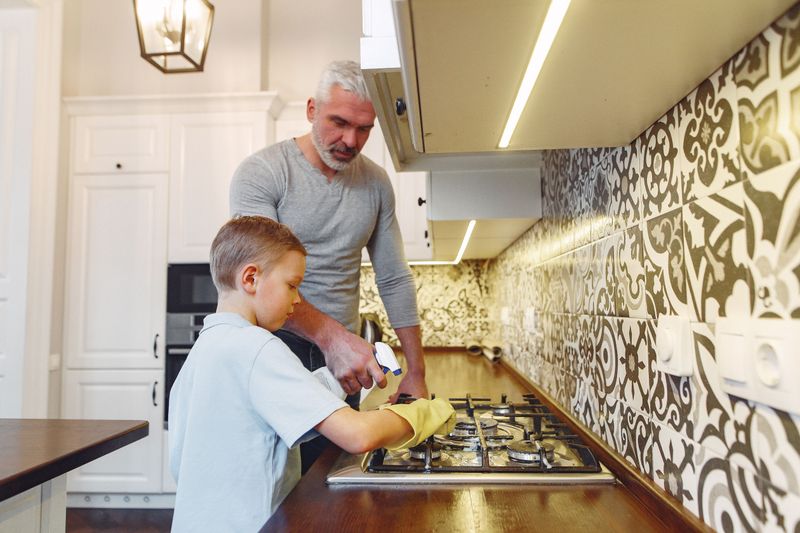
In many homes, everyone was expected to contribute in some practical way.
Chores were not always negotiable, and helping the family run smoothly was part of daily life.
Doing your share taught kids that a household works better when responsibility is shared instead of dumped on one person.
It also built a sense of accountability that carried into adult relationships and workplaces.
When you are used to pitching in, you notice what needs doing and handle it without constant reminders.
Many Boomers developed a strong team mindset because they were raised to understand that membership in any group comes with obligations, not just benefits.
13. Don’t Expect Constant Praise

Approval was not usually handed out for every basic task or expected behavior.
Praise tended to be reserved for genuine effort, major progress, or work that clearly stood out.
As a result, many kids learned to keep going without needing nonstop validation from the people around them.
That could feel tough, but it also strengthened internal motivation.
When you do things well because they matter, not because applause is guaranteed, your confidence becomes more durable.
Many Boomers were shaped by this quieter style of encouragement, which taught them to value competence, persistence, and self-respect over constant reassurance or public recognition.
14. Adapt to Difficult Situations

Resilience often came from necessity rather than inspirational slogans.
Limited resources, job uncertainty, personal losses, and sudden problems were met with a practical question: what now?
Instead of waiting for ideal conditions, people were encouraged to adjust, improvise, and move forward with whatever tools were available.
That ability to adapt became one of the generation’s defining strengths.
You may not choose every hardship, but you can choose how flexibly you respond to it.
Many Boomers learned that survival sometimes depends less on comfort or certainty and more on keeping your footing while plans change and circumstances refuse to cooperate.
15. Independence Is a Strength

From walking to school alone to handling early jobs, many kids were pushed toward independence sooner than people might expect today.
The message was not that support was unavailable, but that capability mattered and dependence should not become a habit.
Learning to manage yourself was seen as part of growing up well.
That early self-sufficiency built confidence that lasted into adulthood.
When you know how to solve problems, earn money, and handle everyday responsibilities, you move through life with more steadiness.
Many Boomers became resilient because they were taught that independence is not isolation, but the strength to stand on your own when needed.