 MomSkoop

Being the dependable one can look admirable from the outside, but it often comes with a hidden cost. When everyone leans on you, it gets easy to ignore the quiet ways your own needs are slipping through the cracks.
Strength is not supposed to mean endless self-sacrifice, and pretending otherwise can wear you down faster than you realize. If these signs feel uncomfortably familiar, it may be time to give yourself the same care you so freely give everyone else.
1. You Say You’re Fine Even When You’re Not

You have gotten so used to saying you are fine that the words come out automatically, even when your chest feels tight and your mind is racing.
It can seem easier to keep things light than to explain the truth, especially when people count on you to stay steady.
Over time, though, that reflex can make you feel invisible in your own life.
When you constantly minimize your pain, you teach others to miss it too.
You may even start doubting whether your feelings deserve attention at all.
Being honest about how you are doing is not weakness – it is a necessary step toward feeling supported, seen, and emotionally safe again.
2. You Struggle to Ask for Help

Asking for help can feel strangely uncomfortable when you are known as the capable one.
You might worry about burdening people, appearing needy, or losing the identity you built around being dependable.
So instead, you carry more than you should and tell yourself you will handle it alone somehow.
The problem is that self-reliance can become a lonely trap when it turns into emotional isolation.
Everyone needs support, including the people who seem strongest on the surface.
Letting someone show up for you does not erase your resilience – it reminds you that strength and vulnerability can exist together without canceling each other out.
3. You Feel Guilty When You Rest

Rest does not feel relaxing when your mind immediately fills with everything you should be doing instead.
You may sit down for a moment and suddenly feel restless, guilty, or undeserving of the break.
Somewhere along the way, productivity started feeling like proof that you matter.
When being useful becomes tied to your worth, slowing down can feel almost threatening.
But your body does not interpret guilt as recovery, and eventually it will demand what your mind keeps postponing.
Real rest is not laziness – it is maintenance for your nervous system, your emotions, and your ability to keep showing up without completely draining yourself.
4. People Assume You Can Handle Everything

When you have a history of holding everything together, people start expecting it from you without thinking twice.
They hand you the extra task, the emotional mess, or the last-minute emergency because they trust you will manage.
What often goes unseen is how heavy that constant expectation becomes over time.
Being competent should not automatically make you the default container for everyone else’s needs.
The pressure to always cope can leave you exhausted, resentful, and strangely trapped by the image others have of you.
You are allowed to have limits, to disappoint expectations sometimes, and to remind people that capable does not mean endlessly available.
5. You Bottle Up Your Emotions

You may have learned that keeping your emotions contained helps everyone else stay comfortable.
Instead of expressing anger, sadness, or fear, you tuck it away and keep functioning like nothing happened.
On the outside you seem composed, but inside there is often a growing pressure that never truly leaves.
Bottled emotions do not disappear just because you ignore them for a while.
They tend to leak out through irritability, numbness, headaches, exhaustion, or moments when you suddenly feel overwhelmed by something small.
Giving your feelings room to exist does not make you dramatic – it helps you process what is real before it turns into a deeper emotional burden.
6. You Keep Your Problems to Yourself
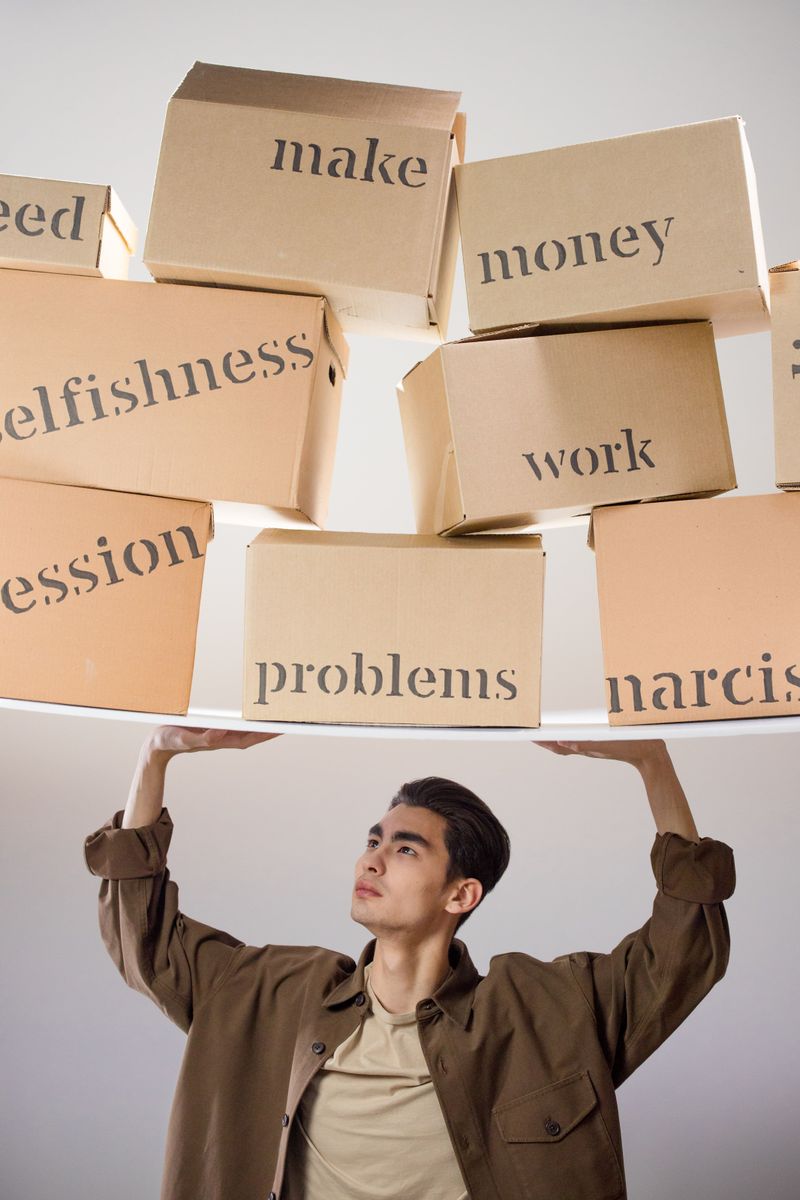
You might share advice easily while hiding your own struggles with almost no one.
It can feel safer to keep your problems private than risk being misunderstood, judged, or seen differently by people who rely on you.
So you process everything internally, even when it is clearly too much to carry alone.
Holding everything in can make your inner world feel crowded and painfully quiet at the same time.
The longer you stay silent, the harder it becomes to imagine anyone truly knowing what you are dealing with.
Opening up does not have to mean telling everyone everything – it can start with one honest conversation that lets some of that weight finally breathe.
7. You Feel Responsible for Everyone Else’s Well-Being

You care deeply, but sometimes that care turns into feeling responsible for everyone’s mood, choices, and stability.
If someone is upset, struggling, or disappointed, you immediately look for what you should fix, say, or do.
That constant emotional vigilance can leave you feeling drained before your own day even begins.
Compassion is beautiful, but carrying other people’s lives on your shoulders is too much for one person.
You can support others without making yourself accountable for outcomes that were never yours to control.
Learning that difference may feel uncomfortable at first, yet it creates healthier relationships and gives you permission to protect your energy without feeling selfish.
8. You Don’t Know What You Need Anymore

When you spend years responding to what everyone else needs, your own inner voice can grow faint.
Simple questions like what sounds good, what would help, or what you actually want may suddenly feel hard to answer.
You become skilled at adapting, but disconnected from yourself in the process.
This kind of numbness does not mean you are broken or ungrateful.
It often means you have been in survival mode so long that your needs stopped feeling urgent compared with everyone else’s.
Relearning yourself takes patience, quiet, and small moments of honesty.
The more gently you listen inward, the easier it becomes to remember that your needs matter too.
9. You Secretly Wish Someone Would Check on You

You are usually the one reaching out, remembering details, and asking how everyone else is doing.
Because of that, there may be a quiet ache when no one checks in on you unless you speak up first.
You tell yourself it should not matter, but deep down, you wish someone would notice without being asked.
That longing is not childish or needy – it is deeply human.
Being strong does not cancel your desire to feel cared for, pursued, and emotionally held by the people you love.
If this hits hard, it may be a sign that you have been giving from an empty place.
You deserve relationships where concern flows both ways, not just outward from you.
10. You Stay Strong During Crises but Crash Later

In the middle of chaos, you often become calm, focused, and impressively capable.
You know how to organize, comfort, decide, and keep moving while everyone else is unraveling.
The crash comes later, once the emergency ends and your body finally realizes how much it just carried.
That delayed collapse can look like tears out of nowhere, total exhaustion, irritability, or feeling emotionally flat for days.
People may praise how well you handled everything without seeing the aftermath you deal with alone.
Surviving the crisis is only part of the story.
Recovery matters too, and if you never give yourself space for it, each hard moment leaves a little more damage behind.
11. You Feel Lonely Despite Being Surrounded by People

It is possible to be loved, included, and constantly surrounded, yet still feel profoundly alone.
When people only know the version of you that is helpful, upbeat, or composed, connection can start to feel one-sided.
You are present with others, but not truly met where you are emotionally.
That kind of loneliness is especially painful because it is easy to question whether you should even feel it.
Still, being physically around people is not the same as feeling understood, safe, and emotionally known.
If you keep most of yourself hidden, closeness will naturally feel limited.
Real connection begins where performance ends and honest presence finally has room to exist.
12. You Have a Hard Time Accepting Support

Even when support is offered, you may instinctively downplay your needs or pull back from receiving it.
Maybe you say you are okay, change the subject, or feel awkward when someone tries to care for you.
If you are used to being the giver, receiving can feel unfamiliar and strangely exposed.
Sometimes accepting support requires trusting that you do not have to earn care by staying useful.
That can be hard when your identity has long been wrapped around independence and emotional control.
Still, letting people help is not a failure of strength.
It is a way of building deeper trust, softer relationships, and a life where you are not always carrying everything alone.
13. You’re Running on Empty but Keep Pushing Forward

You know you are tired, but stopping does not feel like an option, so you keep going anyway.
You push through the fatigue, ignore the emotional wear, and promise yourself rest later after one more task, one more favor, one more hard week.
At some point, functioning becomes your only measure of whether you are okay.
But running on empty is not sustainable, no matter how skilled you are at masking it.
The cost often shows up as numbness, resentment, brain fog, physical exhaustion, or a sudden breakdown that seems to come from nowhere.
You do not need to wait until you completely collapse to take your pain seriously.
Your limits deserve attention now, not later.