 MomSkoop

Every generation has its strengths, and Baby Boomers are no exception. While Gen Z has grown up mastering technology, social media, and digital communication, there are still plenty of areas where the older generation has a clear edge.
From handling tough conversations face-to-face to navigating without GPS, Boomers built skills through real-world experience that are hard to replicate. These ten areas show just how much wisdom and practical know-how the older generation still brings to the table.
1. Face-to-Face Communication

There is something powerful about looking someone in the eye when it matters most.
Boomers grew up in a world where phone calls and in-person meetings were the only options, so they learned early how to hold their own in difficult conversations without hiding behind a screen.
That skill is rarer than you might think today.
Many younger people feel more comfortable sending a text than sitting down to talk things through.
Boomers, on the other hand, tend to read the room, pick up on body language, and stay calm under pressure during face-to-face discussions.
Learning to communicate in person builds trust and respect in ways that a perfectly worded DM simply cannot match.
2. Patience and Delayed Gratification

Before Netflix autoplay and two-hour delivery windows, waiting was just part of life.
Boomers grew up saving up for things they wanted, watching one TV show per week, and understanding that good things genuinely take time.
That mindset shaped a generation with serious staying power.
Delayed gratification is actually a superpower.
Research has shown that people who can resist immediate rewards tend to be more successful in school, careers, and relationships over the long haul.
Boomers practiced this without even realizing it.
When a goal feels far away or a task feels slow, that early training kicks in.
They push through frustration rather than clicking away or giving up when results do not come instantly.
3. Basic Home Repairs

Ask a Boomer how to fix a running toilet or patch a hole in the wall, and there is a good chance they already know the answer.
Growing up in an era when calling a repairman was expensive and often unnecessary, many Boomers picked up hands-on skills that saved their households real money over the years.
Changing a car battery, unclogging a drain, or replacing a light switch might sound intimidating, but these are tasks many Boomers tackled without a YouTube tutorial.
They figured things out by reading manuals, watching others, and simply trying.
That kind of practical confidence is genuinely useful.
Knowing how to handle small repairs means fewer emergency calls and a lot more self-sufficiency around the house.
4. Sticking With One Job or Career
Job-hopping has become the norm for younger workers, and while switching roles can boost a paycheck, there is something to be said for the loyalty and depth that comes from staying put.
Boomers often built entire careers at one or two companies, climbing the ladder through dedication rather than constant movement.
That kind of commitment taught them patience, institutional knowledge, and the art of working through hard times instead of walking away.
They learned how organizations actually function from the inside out, which made them invaluable over time.
Long-term career loyalty also builds deep professional relationships and a strong reputation.
Employers knew they could count on Boomers to show up, grow, and invest in the company’s success year after year.
5. Budgeting Without Apps

Long before Mint or budgeting spreadsheets went digital, Boomers were balancing their finances with a pen, a checkbook, and a sharp eye for where every dollar went.
Cash envelope systems, handwritten ledgers, and careful weekly reviews kept households running without ever touching a smartphone.
There is a certain clarity that comes from handling physical money.
When you can see exactly how much cash is left in your grocery envelope, overspending becomes a lot harder to ignore.
That tactile relationship with money created habits that stuck for life.
Many financial advisors still recommend old-school methods for people who struggle with digital budgeting.
Boomers were ahead of the curve by necessity, and their money management instincts remain impressively sharp today.
6. Navigating Without GPS

Pull up Google Maps and your route appears in seconds.
But flip back a few decades, and getting somewhere new meant studying a paper map the night before, memorizing key turns, and trusting your own sense of direction once you hit the road.
Boomers made that work every single time.
Reading a map is actually a complex spatial skill.
It requires understanding scale, orienting yourself relative to landmarks, and mentally translating a flat image into a real-world path.
Boomers practiced this constantly and became genuinely good at it.
Even today, many Boomers feel comfortable navigating unfamiliar places without relying on a phone.
That quiet confidence in their own internal compass is something worth admiring, and maybe even trying to rebuild.
7. Writing Formal Letters and Emails

Professional writing is a skill that takes real practice, and Boomers had plenty of it.
Before emails replaced memos and texts replaced letters, formal correspondence followed specific rules of tone, structure, and etiquette.
Learning those rules early gave Boomers a lasting edge in professional communication.
A well-written email can open doors that a casual message might close.
Knowing how to address someone properly, structure a clear request, and close with professionalism signals competence and respect.
Many Boomers do this almost automatically because it was drilled into their working lives from day one.
In a world where many emails read like text messages, that formal writing ability still stands out.
Hiring managers and clients notice the difference immediately, and it leaves a lasting impression.
8. Building Relationships in Person

Friendships built over shared meals, neighborhood block parties, and years of showing up tend to run deeper than a follow request.
Boomers built their social circles the slow way, and many of those connections have lasted for decades.
That kind of relational staying power is genuinely rare.
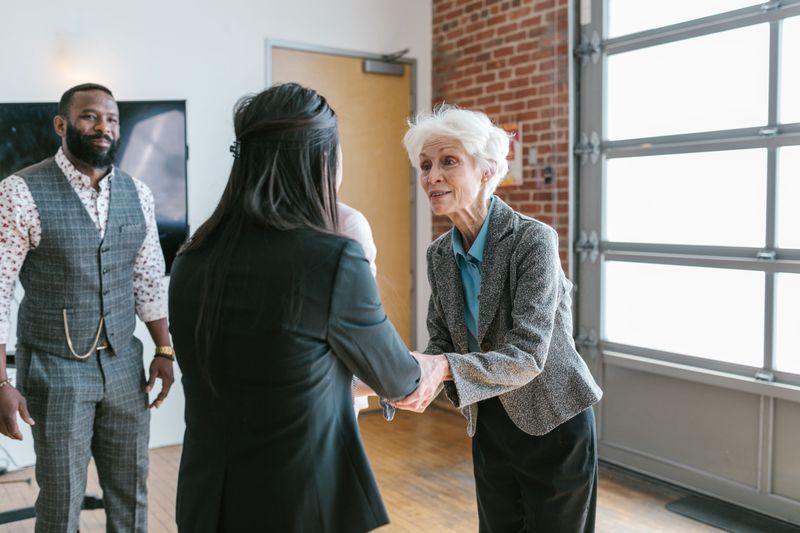
Networking before LinkedIn meant attending events, introducing yourself with a firm handshake, and following up with a phone call.
Boomers became skilled at reading people, remembering names, and nurturing relationships through consistent real-world contact over time.
Strong in-person relationship skills translate directly into career success, community involvement, and emotional well-being.
The Boomers who mastered this art built networks that no algorithm could replicate, and those networks have proven to be incredibly resilient and meaningful throughout their lives.
9. Handling Boredom

Boredom used to be a doorway.
Without a phone to grab or a streaming service to flip on, Boomers had to get creative when downtime arrived.
Some picked up instruments.
Others built things, gardened, wrote, or simply sat with their thoughts long enough to come up with something interesting to do.
That ability to sit with discomfort and turn it into something productive is a form of mental resilience.
Boredom, it turns out, is actually good for creativity.
The brain needs unstructured time to wander, wonder, and generate original ideas, something endless scrolling actively prevents.
Boomers developed hobbies that became lifelong passions precisely because they had no other option.
That self-reliance in quiet moments built character and creativity in ways that constant digital stimulation simply cannot replicate.
10. Remembering Life Before the Internet

Boomers carry something truly unique: the lived memory of a world without the internet.
They remember when news came once a day in a printed paper, when shopping meant walking into a store, and when staying in touch required actually writing a letter.
That perspective is more valuable than it might seem.
Understanding how profoundly technology has reshaped daily life gives Boomers a broader historical lens.
They can compare the before and after in ways that younger generations simply cannot, which helps them evaluate new technology with healthy skepticism rather than automatic acceptance.
That context shapes how they approach privacy, communication, and information.
Having lived through the transformation firsthand, Boomers often recognize what has been gained and, just as importantly, what has quietly been lost along the way.