 MomSkoop

Marriage has looked very different depending on which generation you ask. Boomers grew up with a clear set of rules about when to marry, how to live, and what a family should look like.
Gen Z is rewriting those rules in bold, unapologetic ways. From skipping the altar entirely to rethinking who pays the bills, younger generations are challenging nearly every traditional idea about what marriage should mean.
1. Marriage Is the Ultimate Life Goal

Not every dream ends with a wedding ring.
For decades, getting married was treated like the finish line of adulthood, the moment everything finally clicked into place.
Boomers planned their lives around it, and society reinforced that message at every turn.
Gen Z sees things differently.
Marriage might be wonderful, but so is building a career you love, traveling the world, or simply living on your own terms.
Personal fulfillment comes in many shapes, and a wedding is just one of them.
Young people today are asking bigger questions about what a meaningful life actually looks like.
Spoiler: the answer does not always include a spouse.
2. You Should Marry Young

Boomers often walked down the aisle before their 25th birthday, and society applauded every step.
Early marriage was a sign of maturity, stability, and doing life the right way.
That pressure was real, and most people felt it deeply.
Gen Z is pushing back hard.
Many young adults are spending their 20s finishing degrees, launching careers, exploring the world, and figuring out who they actually are before committing to a partner for life.
That is not avoiding responsibility; that is being smart about it.
Research even supports waiting.
Couples who marry later tend to have stronger, longer-lasting relationships.
Gen Z is simply choosing quality over speed.
3. Marriage Comes Before Living Together

Living together before marriage used to be scandalous.
Many boomer-era families considered it a moral failure, something to whisper about at family dinners.
The rule was simple: you get married first, then you move in together.
Gen Z finds that logic a little backwards.
Moving in together first lets couples learn each other’s real habits, routines, and quirks before making a lifelong legal commitment.
Think of it like a test drive before buying the car.
Studies show that attitudes toward premarital cohabitation have shifted dramatically across generations.
For most Gen Z adults, sharing a home before marriage is just practical, not scandalous.
It is about making an informed decision, not breaking a rule.
4. One Partner Should Be the Primary Breadwinner

For much of the boomer generation, one person brought home the paycheck while the other managed the household.
That arrangement felt natural because society was built around it, from tax codes to workplace policies to neighborhood expectations.
Gen Z couples are far more likely to split financial responsibilities down the middle.
Both partners working is not just common; it is often the plan from the very beginning.
Shared income means shared power, and that matters to younger adults who value equality in relationships.
With the rising cost of living, dual incomes are also just practical.
But beyond money, Gen Z sees financial balance as a sign of mutual respect and partnership in every sense of the word.
5. Gender Roles Are Important in Marriage

Who cooks?
Who cleans?
Who handles the money?
For boomers, those answers often came pre-assigned based on gender.
The husband managed finances; the wife managed the home.
It was a system that felt orderly, even if it was not always fair.
Gen Z couples are tossing that script out entirely.
Household tasks, financial decisions, and emotional labor are increasingly seen as shared responsibilities rather than gender assignments.
Who does what is based on skill, availability, and preference, not tradition.
This shift is about more than chores.
Rejecting rigid gender roles creates relationships built on actual partnership.
When both people contribute based on their strengths rather than stereotypes, marriages tend to feel more balanced and respectful.
6. Marriage Should Last No Matter What
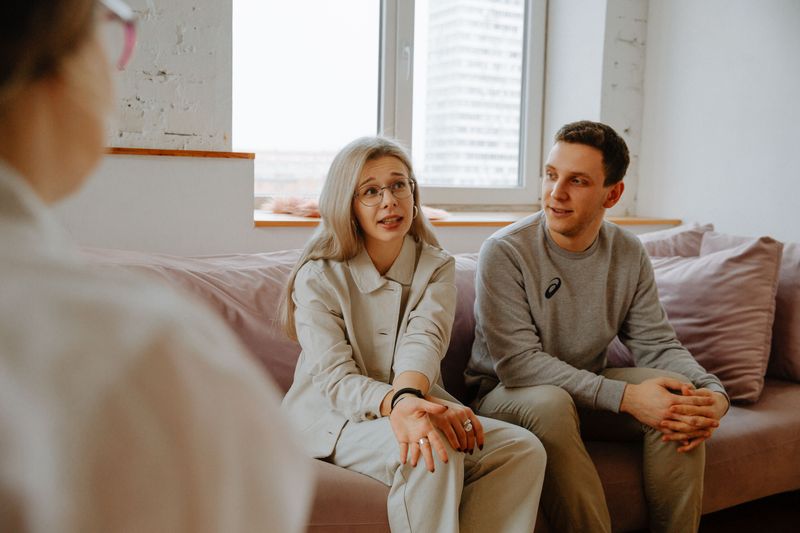
“Till death do us part” carried enormous weight for the boomer generation.
Divorce was often seen as a failure, something shameful that reflected badly on both partners and their families.
Many couples stayed together through serious unhappiness simply because leaving felt unthinkable.
Gen Z takes a different view.
Staying in a relationship that is harmful, unfulfilling, or toxic is not loyalty; it is self-neglect.
Personal well-being matters, and a marriage that damages someone’s mental or emotional health is not worth preserving just for appearances.
That does not mean Gen Z takes commitment lightly.
It means they believe commitment should be healthy.
Choosing to leave a bad marriage can be just as brave as choosing to stay in a good one.
7. Having Children Is a Natural Next Step

Marry, buy a house, have kids.
That was the boomer blueprint, and deviating from it raised eyebrows.
Parenthood was not really a choice; it was just what came next after the wedding cake was eaten and the honeymoon ended.
Gen Z is questioning that assumption out loud.
An increasing number of young adults are choosing child-free marriages or pushing parenthood so far into the future that it may never happen.
That decision is met with far less judgment among peers than it would have been a generation ago.
Climate concerns, financial pressures, and personal values all factor into the choice.
Gen Z sees parenthood as a meaningful decision that deserves real thought, not just a box to check on the life timeline.
8. Couples Should Share Everything

Merging everything into one life sounds romantic in theory.
Joint bank accounts, shared friend groups, identical weekend plans.
For many boomers, that kind of total togetherness was the goal, proof that a marriage was truly unified and strong.
Gen Z couples often find that approach suffocating.
Separate bank accounts, solo hobbies, independent friendships, and personal space are not signs of distance; they are signs of healthy boundaries.
Two people can be deeply committed while still maintaining individual identities.
Psychologists actually back this up.
Couples who preserve some independence alongside their shared life often report higher satisfaction.
Gen Z seems to have figured out what many boomers learned the hard way: you do not have to lose yourself to love someone well.
9. Marriage Is More Important Than Career Ambitions

There was a time when choosing a career over a marriage, or even alongside one, was considered selfish, especially for women.
The expectation was clear: family first, personal ambitions second.
Ambition was something you quietly set aside once you said “I do.”
Gen Z refuses that trade-off.
Young adults today are unwilling to shrink their professional goals to fit a traditional marital mold.
Career success, creative pursuits, and personal growth are non-negotiable parts of who they are, not extras to be sacrificed at the altar.
The good news is that modern partnerships increasingly support this.
Many Gen Z couples actively cheer each other’s ambitions rather than compete with them, building marriages where both people get to thrive professionally and personally.
10. A Successful Marriage Requires Traditional Family Structures

The classic image: a husband, a wife, two kids, and a dog in a suburban home.
That picture dominated boomer ideas about what a real family looked like.
Anything outside that frame was considered unconventional at best, problematic at worst.
Gen Z grew up surrounded by far more variety.
Blended families, same-sex parents, single-parent households, chosen families, and non-traditional partnerships are all part of the world they know.
Diversity in family structure is not a novelty; it is simply reality.
Acceptance of different family models is one of Gen Z’s defining traits.
For them, a successful marriage or family is measured by the love, stability, and respect inside it, not by whether it matches a 1950s greeting card.
11. You Should Stay Married for the Sake of the Kids

“Stay together for the children” was practically a boomer mantra.
The idea was that keeping the family unit intact, no matter the tension, conflict, or unhappiness, was the most loving thing parents could do.
Children needed both parents under one roof, full stop.
Gen Z pushes back on that logic with something simpler: kids need peace more than they need a nuclear family.
Growing up watching two unhappy people pretend to be fine is not stability; it is a masterclass in what love should not look like.
Children raised by parents who are genuinely healthy, whether together or apart, tend to thrive more than those in high-conflict intact homes.
Gen Z understands that good parenting does not require a marriage certificate.
12. Marriage Is Primarily About Duty and Commitment

Duty.
Obligation.
Sacrifice.
Those were words boomers often associated with a strong marriage.
You committed, and then you honored that commitment regardless of how you felt day to day.
Love was important, but sticking it out was what really counted.
Gen Z sees emotional fulfillment as just as essential as commitment.
A marriage that checks all the traditional boxes but leaves both people feeling unseen, unheard, or unfulfilled is not something to celebrate.
Compatibility, emotional safety, and personal growth matter just as much as loyalty.
That does not mean Gen Z avoids commitment.
It means they want commitment that actually feels good, not just commitment for its own sake.
Love, connection, and mutual happiness are not optional extras; they are the whole point.
13. Your Spouse Should Be Your Everything

Romance movies love this idea: one person who is your best friend, confidant, adventure partner, therapist, and soulmate all wrapped into one.
Boomers often bought into it fully, placing the spouse at the absolute center of their social and emotional universe.
Gen Z finds that expectation a little exhausting, and honestly, a little unfair.
Putting all your emotional needs onto one person is a recipe for burnout and resentment.
Strong friendships, family bonds, and personal interests are not threats to a marriage; they make it healthier.
When both partners have full, rich lives outside their relationship, they bring more energy and joy into it.
Gen Z understands that a great marriage is not about becoming everything to someone; it is about growing alongside them.
14. Marriage Is a Necessity for Long-Term Commitment

Ask many boomers what a serious, committed relationship looks like and the answer involves a wedding.
Legal marriage was the ultimate proof that two people were truly devoted to each other.
Without the certificate, the commitment somehow did not fully count.
Gen Z disagrees pretty openly.
Plenty of young adults are building long-term, deeply committed partnerships without ever filing the paperwork.
Love, shared values, mutual respect, and a genuine future together do not require a government document to be real.
Some choose commitment ceremonies.
Others simply choose each other, every day, without the legal label.
For Gen Z, the quality and depth of a relationship matters far more than whether it fits the traditional definition of marriage.
The heart of commitment lives in the people, not the paperwork.