 MomSkoop

Some of the most powerful lessons in life don’t come from a classroom — they come from years of experience, mistakes, and moments you wish you could do over. Most people spend decades figuring out things that, if known earlier, could have changed everything.
These lessons aren’t complicated, but they’re easy to overlook when you’re young and busy living. The sooner you learn them, the better your life can be.
1. Time Is Your Most Valuable Asset

Every single day, you’re spending something you can never get back — time.
Money lost can be earned again.
Opportunities missed can sometimes return.
But an hour wasted is gone forever, and no amount of effort can bring it back.
Young people often treat time like it’s unlimited, saying “I’ll do it later” or “I have plenty of years ahead.” That habit quietly steals your dreams.
The people who build meaningful lives start treating time like gold early on.
Ask yourself: Is what I’m doing right now worth the time I’m giving it?
Small daily choices about how you spend your hours add up to the entire shape of your life.
2. Your Health Is a Long-Term Investment

Picture yourself at 60, unable to climb stairs or play with your grandchildren because of choices you made at 25.
That’s not a scare tactic — it’s the reality many people face.
Your body keeps a detailed record of everything you put it through.
Skipping sleep, eating junk food, avoiding exercise — none of it feels dangerous in your 20s.
But those habits quietly build up, like interest on a debt you don’t even know you owe.
Treating your health like a priority now, not someday, is one of the smartest moves you can make.
Even small steps like walking daily or drinking more water can create massive changes over time.
3. Who You Spend Time With Shapes Who You Become

There’s an old saying that goes: you are the average of the five people you spend the most time with.
It sounds simple, but most people underestimate just how true it really is.
Your habits, your mindset, and even your ambitions are quietly influenced by the people around you.
Spending time with negative, unmotivated, or toxic people slowly pulls you down — even if you don’t notice it happening.
On the flip side, being around driven, kind, and curious people lifts you up in ways you can’t fully measure.
Choose your circle carefully.
You don’t need a huge group of friends — just a few genuinely good ones who challenge and support you.
4. Saying No Is a Superpower

For years, many people say yes to everything — extra projects, social events they dread, favors for people who wouldn’t return them.
It feels polite.
It feels safe.
But slowly, it drains your energy and pulls you away from what actually matters to you.
Learning to say no is not selfish.
It’s one of the most respectful things you can do — for yourself and for others.
When you say yes to everything, your yes stops meaning anything.
Every no you say to the wrong thing is a yes to something better.
Guard your time, energy, and attention like they’re precious — because they absolutely are.
Boundaries aren’t walls; they’re doors you control.
5. Failure Is a Teacher, Not a Verdict

Most people grow up terrified of failure.
Schools grade it, parents scold it, and society treats it like something shameful.
So people play it safe, avoid risks, and never reach their full potential — all to escape something that was never the enemy.
Here’s the truth: every successful person has a long list of failures behind them.
Thomas Edison failed thousands of times before inventing the lightbulb.
Failure teaches you what doesn’t work, sharpens your skills, and builds resilience that success alone never could.
The goal isn’t to fail less — it’s to fail forward.
Each stumble carries a lesson if you’re willing to look for it.
Stop fearing failure and start respecting it as part of the process.
6. Comparison Steals Your Joy

Social media has turned comparison into a full-time sport.
You scroll through highlight reels — vacations, promotions, perfect relationships — and suddenly your own life feels small.
But here’s what nobody tells you: you’re comparing your behind-the-scenes to everyone else’s best moments.
Comparison doesn’t motivate you to do better — it just makes you feel worse about where you are.
It pulls your focus away from your own path and plants seeds of jealousy and self-doubt that are hard to uproot.
Your journey has its own timeline, its own shape, and its own value.
Measuring your progress against someone else’s is like judging a fish by its ability to climb a tree.
Run your own race.
7. Emotional Intelligence Matters More Than IQ

You can be the smartest person in the room and still struggle in life if you can’t manage your emotions or understand others.
Emotional intelligence — the ability to recognize, understand, and handle feelings — is what helps people build strong relationships, lead teams, and navigate tough situations.
Studies show that emotional intelligence is often a stronger predictor of success than academic ability.
People who can stay calm under pressure, listen deeply, and communicate with empathy tend to go further in both careers and relationships.
The good news?
Unlike IQ, emotional intelligence can be developed at any age.
Start by paying attention to your reactions, practicing empathy, and learning to pause before responding when emotions run high.
8. Gratitude Rewires Your Brain for Happiness

It sounds almost too simple to be powerful, but science backs it up: regularly practicing gratitude actually changes how your brain works.
People who make a habit of noticing what’s good in their lives report higher levels of happiness, better sleep, and lower stress — even when life gets hard.
Most people spend their days focused on what’s missing, what went wrong, or what they haven’t achieved yet.
That mental habit creates a constant undercurrent of dissatisfaction, no matter how much good is already present.
Starting a gratitude practice doesn’t require perfection.
Even jotting down three things you’re thankful for each morning can shift your entire outlook over time.
Happiness isn’t found — it’s practiced, one small grateful thought at a time.
9. Money Habits Formed Early Define Your Future

Nobody hands you a manual on money when you turn 18, and that gap in education costs people decades.
The habits you form around spending, saving, and debt in your 20s quietly shape the financial reality you’ll live in at 40 and 50.
Spending everything you earn, ignoring savings, or racking up credit card debt might feel harmless when you’re young.
But compound interest works both ways — it can either build your wealth or bury you in debt, depending on your choices.
Learning the basics — budgeting, saving a portion of every paycheck, avoiding unnecessary debt — isn’t glamorous.
But it’s the foundation of financial freedom.
The earlier you build smart money habits, the more choices you’ll have later in life.
10. Your Relationship With Yourself Sets the Tone for Everything
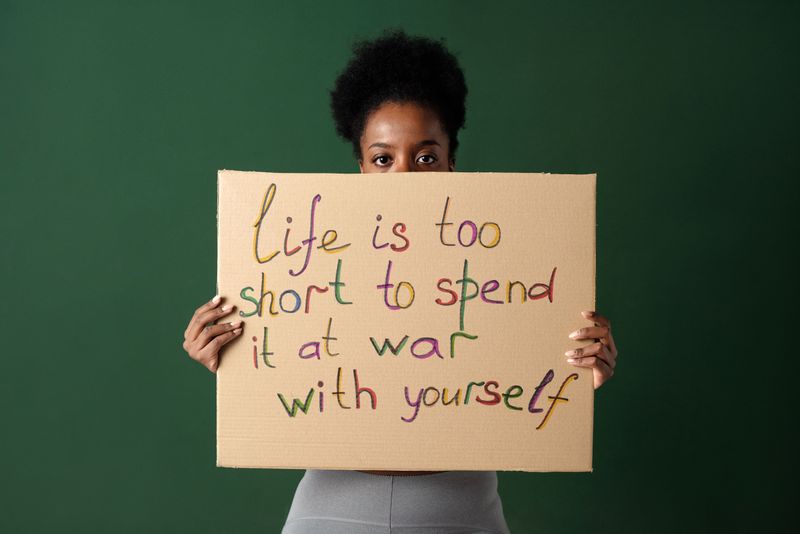
Before you can truly connect with anyone else, you have to know yourself.
How you talk to yourself, what you believe you deserve, and how you treat your own needs all ripple outward into every relationship, job, and decision in your life.
People who struggle with low self-worth often accept less than they deserve — in friendships, in careers, and in love.
They say yes when they mean no, shrink themselves to keep others comfortable, and chase approval instead of living authentically.
Building a healthy relationship with yourself isn’t vanity — it’s the foundation of a good life.
Practice self-compassion, set standards for how you want to be treated, and remember: the way you see yourself teaches others how to see you too.
11. Most Worries Never Actually Happen

Research suggests that roughly 85 percent of the things people worry about never actually come true.
Think about that for a moment.
Most of the mental energy spent on dread, anxiety, and worst-case scenarios is being used on problems that don’t even exist yet — and usually never will.
Worry has a sneaky way of feeling productive.
It makes your brain think you’re preparing for danger.
But most of the time, it’s just mental noise that exhausts you without solving anything.
This doesn’t mean ignoring real problems.
It means learning to separate genuine concerns from imaginary ones.
When a worry pops up, ask: Is this something I can act on right now?
If not, let it go.
Your peace of mind is worth protecting.
12. Listening Is a Skill Most People Never Truly Develop

Most people don’t actually listen — they wait for their turn to talk.
There’s a big difference between hearing words and truly understanding what someone is trying to say.
Real listening requires patience, presence, and the willingness to set your own thoughts aside for a moment.
The ability to listen well is rare, and people notice it immediately.
It builds trust, deepens relationships, and often reveals solutions to problems that no amount of talking would uncover.
Leaders, great parents, and beloved friends all share this one quiet skill.
Practice listening without planning your response.
Make eye contact, ask follow-up questions, and resist the urge to jump in with your own story.
You’ll be amazed at what you learn — and how much people appreciate it.
13. Kindness Is Never Wasted

In a world that often rewards being loud, aggressive, or ruthlessly competitive, kindness can feel like a weakness.
But that couldn’t be further from the truth.
Kindness takes courage — it means choosing to treat people well even when you don’t have to, even when no one is watching.
Acts of kindness, no matter how small, create ripple effects you may never fully see.
A kind word at the right moment can change someone’s entire day — or even their life.
And research shows that being kind actually makes you happier too.
You’ll rarely regret being too kind, but you’ll often regret moments of cruelty or indifference.
In the long run, how you made people feel is one of the most lasting things you’ll ever leave behind.
14. It’s Never Too Late to Start Over

One of the most paralyzing beliefs people carry is that they’ve missed their window.
That they’re too old to change careers, go back to school, fix a broken relationship, or pursue a dream they set aside years ago.
That belief has kept more people stuck than almost anything else.
Colonel Sanders didn’t franchise KFC until he was 65.
Julia Child published her first cookbook at 49.
History is full of people who started over — and thrived.
The idea that there’s one perfect moment to begin something meaningful is a myth worth letting go of.
Starting over doesn’t erase what came before.
It builds on it.
Every experience, even the painful ones, becomes part of the foundation for what comes next.
Your next chapter can still be your best one.