 MomSkoop

Understanding how men handle their emotions can feel like trying to read a book written in a different language. Many women are left wondering why the men in their lives go silent, crack jokes during serious moments, or suddenly disappear into a project when things get tough.
The truth is, men often process feelings in ways that are deeply wired by upbringing, culture, and biology. Getting a peek behind the curtain can make relationships a whole lot smoother for everyone involved.
1. They Go Quiet Instead of Talking

Silence from a man does not always mean he is shutting you out.
For many men, going quiet is actually the first step in working through something emotionally heavy.
Before they can put words to what they feel, they need time to sort through it on their own.
Think of it like a computer running a scan in the background.
Nothing looks like it is happening, but a lot of processing is going on inside.
Women who are used to talking through emotions right away may read this silence as coldness or disinterest, when it is really just a different starting point.
Giving him a little space often leads to a much more open and honest conversation later on.
2. They Focus on Solving the Problem

Picture this: you share something upsetting, and within seconds, he is already listing ways to fix it.
No hug, no “that sounds really hard” — just a rapid-fire list of solutions.
It can feel dismissive, but his brain is actually wired to respond to your pain by trying to eliminate it.
For many men, solving a problem is an act of love.
Fixing what hurts you is how they show they care.
It is not that they are ignoring your feelings — they are just skipping ahead to the part where things get better.
Letting him know you want to be heard first, before problem-solving kicks in, can make a big difference in how the conversation goes.
3. They Need Time Alone

Alone time is not a punishment — at least not for most men.
When emotions run high, retreating into solitude is one of the most effective tools many men have for calming down and thinking clearly.
It is their version of hitting the reset button.
Research in psychology actually backs this up.
Men tend to experience emotional flooding — a state where feelings become so intense that thinking clearly becomes almost impossible — more quickly than women.
Stepping away helps bring that intensity back down to a manageable level.
Rather than chasing him into that quiet space, try trusting that he will return once he has had a chance to breathe.
That patience usually pays off with a much calmer, more connected version of him.
4. They Express Feelings Through Actions
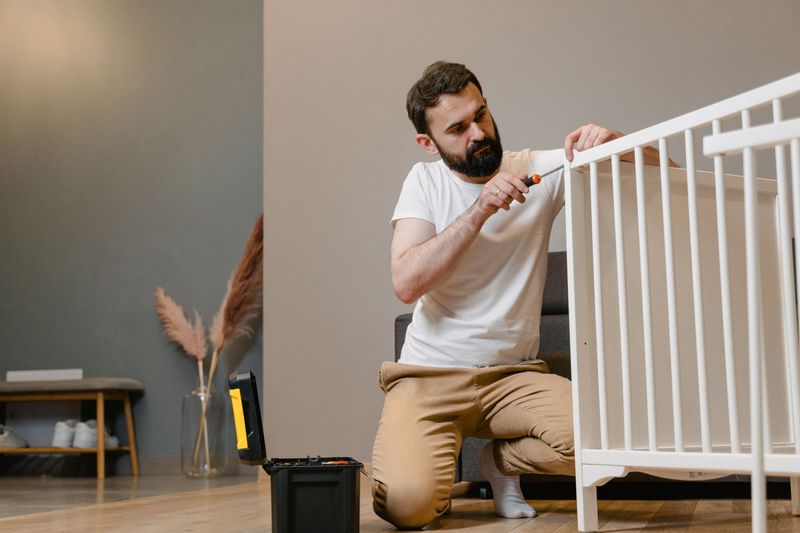
Words are not always his love language, but actions might be speaking volumes.
When a man fixes your car without being asked, shows up on time every single time, or quietly handles a problem you mentioned once in passing, that is emotional expression in action form.
Growing up, many boys were not encouraged to talk openly about feelings.
Instead, they learned that being dependable, protective, and useful were the most respected ways to show they cared.
Those patterns stick around well into adulthood.
Learning to recognize his acts of service as emotional communication can completely change how connected you feel.
Next time he quietly refills your gas tank or assembles that shelf you mentioned, know that he is saying something important without using a single word.
5. They Use Humor to Cope

Ever noticed how he cracks a joke right when things get serious?
That is not him being careless — it is actually a coping strategy that many men rely on without even realizing it.
Humor acts like a pressure valve, releasing emotional tension before it builds too high.
Studies on stress responses show that laughter genuinely lowers cortisol levels, the hormone linked to stress.
So while a well-timed joke might seem tone-deaf, it is his nervous system trying to stabilize during a difficult moment.
Of course, humor has its limits, and timing matters a lot.
But understanding that laughter is often his way of staying emotionally afloat — rather than avoiding the conversation — can make it easier not to take the jokes personally when feelings are running high.
6. They Become More Quiet Under Stress

Stress does not always look like yelling or complaining.
For many men, stress shows up as a kind of emotional retreat — fewer words, shorter answers, and a general pulling inward.
Women who expect stress to be expressed outwardly can easily misread this as anger or emotional distance.
In reality, quieting down under pressure is a self-regulating move.
By reducing stimulation and social interaction, many men are trying to conserve mental energy to deal with whatever is weighing on them.
It is not personal, even when it feels that way.
Checking in with a simple, low-pressure question like “Hey, you doing okay?” — without expecting a long answer — can go a long way.
It signals that you notice him without adding more pressure to an already full plate.
7. They Distract Themselves With Work or Hobbies

When something is emotionally overwhelming, many men head straight for the gym, the garage, a video game, or a work project.
It might look like avoidance — and sometimes it is — but often it serves a real emotional function.
Physical or focused activity helps the brain shift out of a stress response.
Psychologists call this behavioral activation, and it is actually a recognized tool in managing difficult emotions.
Doing something productive or physical can interrupt a cycle of rumination that would otherwise spiral into anxiety or low mood.
The key difference between healthy distraction and avoidance is whether he eventually comes back to the issue.
Most men who use activity to regulate emotions do return, once they feel more grounded.
Giving him that outlet, rather than pulling him away from it immediately, often speeds up the process.
8. They May Struggle to Name What They’re Feeling

Emotional vocabulary is a skill, and like any skill, it has to be taught and practiced.
Many men grew up in households or cultures where talking about feelings was discouraged, seen as weakness, or simply never modeled.
As adults, they are left trying to describe an inner world they were never given the words for.
This is not stubbornness or manipulation — it is a genuine gap in emotional language.
A man who says “I don’t know” when asked how he feels is often telling the truth.
He genuinely cannot locate the right word for what is happening inside him.
Helping by offering options — “Does it feel more like frustration or disappointment?” — can be surprisingly effective.
It gives him a starting point without putting him on the spot or making him feel judged for not already knowing.
9. They Prefer One Deep Conversation Over Many Small Ones

Many women feel closer through frequent check-ins and casual emotional exchanges throughout the day.
For many men, that pattern feels exhausting or even invasive.
They would rather wait, gather their thoughts fully, and then have one meaningful, in-depth conversation.
This preference is not about caring less — it is about processing style.
Men often need to have their thoughts organized before they feel comfortable sharing them.
Talking before they are ready can feel like being asked to show someone a half-finished painting.
Respecting that timeline, while also making it clear that you are available and interested when he is ready, creates the kind of emotional safety that actually encourages more sharing over time.
Patience here is one of the most effective relationship tools available.
10. They Show Vulnerability Selectively

Vulnerability does not come easily for most men, and that is not a character flaw — it is often the result of years of messaging that emotions equal weakness.
So when a man does open up, it is usually with someone he trusts completely and has known for a long time.
This selectivity can confuse or even hurt a partner who feels shut out.
But understanding that his emotional openness is something he guards carefully — and shares only when he feels genuinely safe — reframes it as a form of deep respect when he does share with you.
Building that level of trust takes time and consistency.
Every moment you respond to his vulnerability without judgment or dismissal is a deposit into that emotional trust account, making it easier for him to open up again in the future.
11. They Recover by Doing, Not Just Talking

After a difficult emotional event, many men do not heal by replaying the conversation again and again.
They recover by moving forward — finishing a project, going for a long run, building something with their hands, or spending an afternoon outdoors doing something active.
Action-oriented recovery is just as valid as talk-based recovery.
For many men, doing something tangible restores their sense of control and competence, which are often the first things to take a hit when emotions get overwhelming.
It is a form of self-soothing that works from the outside in.
Encouraging this style of recovery, rather than insisting on extended emotional debriefs, shows genuine respect for how his mind works.
You can always circle back to a deeper conversation once he has had a chance to reset through action.