 MomSkoop

Conflict is something everyone faces, whether it’s with a friend, family member, or coworker. What separates mature people from the rest isn’t that they never argue — it’s how they handle themselves when things get heated.
The way you behave during a disagreement says a lot about your character and emotional intelligence. Learning what not to do can be just as powerful as knowing the right thing to say.
1. Resorting to Personal Attacks Instead of Addressing the Issue

There is a big difference between attacking a problem and attacking a person.
Mature people understand that calling someone names or insulting their character during an argument only makes things worse.
It shifts the focus away from the real issue and causes lasting emotional damage.
When you go after who someone is rather than what they did, you lose the argument before it even begins.
The other person shuts down, gets defensive, and the real problem never gets solved.
Personal attacks are a sign that someone has run out of reasonable things to say.
Focusing on the behavior or situation — not the person — keeps conversations productive and respectful, even when emotions are running high.
2. Bringing Up Every Past Mistake to Win the Argument

Dragging old mistakes into a current argument is like fighting with a backpack full of rocks — it weighs everything down and gets you nowhere fast.
Mature people know that each conflict deserves its own conversation, not a highlight reel of every wrong thing that ever happened.
Using someone’s past against them is a manipulation tactic, even if it doesn’t feel that way in the moment.
It makes the other person feel cornered and judged rather than heard.
The argument spirals out of control and the original issue disappears completely.
Staying focused on what is happening right now shows emotional discipline.
It signals that you actually want resolution, not just the satisfaction of winning.
3. Raising Their Voice Just to Intimidate Someone
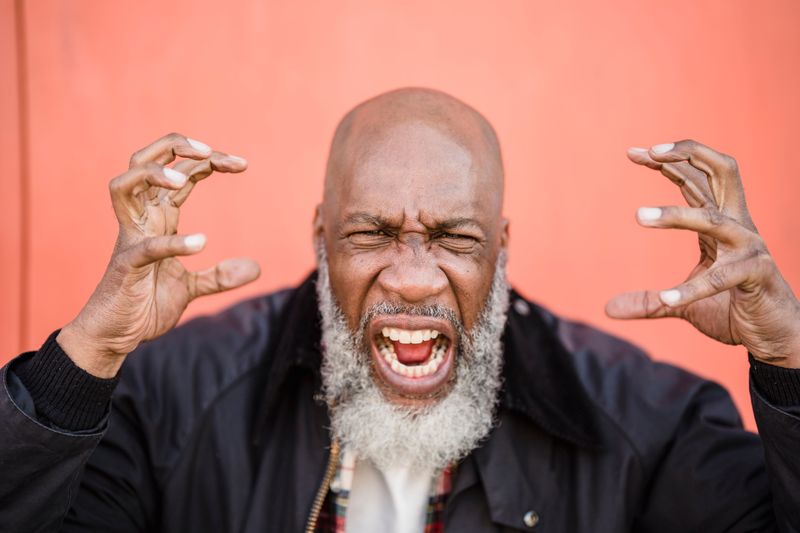
Yelling might feel powerful in the moment, but it rarely convinces anyone of anything useful.
Mature people recognize that raising their voice to dominate a conversation is just another way of saying, “I don’t have a real argument, so I’ll use volume instead.”
Intimidation through shouting creates fear, not understanding.
The person on the receiving end stops listening to the words and starts focusing on protecting themselves emotionally.
That means communication breaks down completely, and nothing gets resolved.
Keeping a calm, steady voice — even when you’re frustrated — is one of the most powerful tools in any conflict.
It signals confidence, self-control, and genuine respect for the other person involved in the conversation.
4. Refusing to Listen While the Other Person Is Speaking

Half-listening is not really listening at all.
Mature people understand that conflict resolution requires both sides to feel genuinely heard, and that means putting down your mental rebuttal list and actually paying attention to what the other person is saying.
When someone refuses to listen, they send a loud message: “My perspective is the only one that matters.” That attitude kills any chance of finding common ground.
It also makes the other person feel dismissed and unimportant, which only deepens the conflict.
Active listening — nodding, making eye contact, and repeating back what you heard — shows respect.
Even if you disagree with every word, truly hearing someone out is the foundation of any mature, productive conversation.
5. Giving the Silent Treatment as a Form of Punishment

Silence can be golden — but not when it’s used as a weapon.
Giving someone the silent treatment is a passive-aggressive way of punishing them without having to explain why you’re upset.
It creates anxiety, confusion, and emotional distance that can be hard to repair.
Mature people know that withholding communication is not the same as setting a healthy boundary.
One is about protecting yourself; the other is about controlling someone else’s emotions through withdrawal.
There’s a meaningful difference between the two approaches.
If you need time to cool down, say so clearly and kindly.
Something like, “I need an hour to think before we talk,” is honest and respectful — and it keeps the door open for real resolution later.
6. Twisting Someone’s Words to Score Points

Ever said something and then watched someone turn it into something completely different?
Word-twisting is a frustrating and dishonest tactic that mature people refuse to use.
It takes what someone genuinely meant and warps it to make them look bad or wrong.
This kind of behavior destroys trust fast.
Once someone realizes their words are being manipulated, they stop being open and honest — and that shuts down any real chance of working through the problem together.
The conflict becomes about defending what you said rather than solving anything meaningful.
Mature communicators ask clarifying questions instead of assuming the worst interpretation.
Saying “Did you mean…?” shows good faith and keeps the conversation focused on truth rather than scoring cheap points.
7. Blaming Everyone Else for the Problem

Accountability is one of the hardest things to practice, especially in the heat of an argument.
Mature people resist the urge to point fingers at everyone else and instead ask themselves honestly: what role did I play in this situation?
Constant blame-shifting is exhausting for everyone involved.
It signals that someone is more interested in protecting their ego than actually fixing the problem.
And when no one takes responsibility, nothing ever changes — the same conflicts keep happening over and over again.
Owning even a small part of a conflict takes real courage.
Saying “I could have handled that better” can completely change the tone of a disagreement and open the door to genuine understanding and lasting resolution between both parties.
8. Making Threats They Never Intend to Carry Out

“If you do that one more time, I’m done!” Sound familiar?
Empty threats are a common but destructive habit during conflict.
They’re designed to scare or control the other person, but they almost always backfire when nothing actually follows through.
Over time, repeated empty threats train people to stop taking you seriously.
Your words lose weight, your credibility shrinks, and the other person learns they can ignore what you say without any real consequences.
That’s a terrible dynamic to create in any relationship.
Mature people say what they mean and mean what they say — or they stay quiet.
If a boundary needs to be set, it should be communicated calmly and clearly, with every intention of actually following through when necessary.
9. Walking Away Without Agreeing to Revisit the Conversation

Sometimes stepping away from a conflict is the smart move — but there’s a right way and a wrong way to do it.
Storming off without any plan to continue the conversation leaves the other person hanging and the problem completely unresolved.
That’s not maturity; that’s avoidance dressed up as strength.
Mature people know that a temporary break is healthy when emotions are too high for productive conversation.
But they always communicate that they’ll come back.
Saying “I need a break, but let’s talk about this tonight” makes all the difference in the world.
Agreeing to revisit a conversation shows commitment to the relationship and to finding a real solution — not just escaping the discomfort of a difficult moment.
10. Mocking, Belittling, or Humiliating the Other Person

Sarcasm, eye-rolling, and condescending laughter during an argument are all forms of contempt — and research consistently shows that contempt is one of the most damaging things you can bring into a conflict.
It signals deep disrespect for the other person as a human being.
Mocking someone might feel satisfying for half a second, but it leaves deep emotional wounds that take a long time to heal.
The person on the receiving end feels small, stupid, and worthless — none of which leads to any kind of productive conversation or resolution.
Mature people treat others with dignity even when they’re furious.
Disagreeing with someone’s choices or actions doesn’t mean you get to humiliate them.
Respect should always remain on the table, no matter how heated things get.
11. Assuming They Already Know What the Other Person Is Thinking

“I know exactly what you meant by that.” Famous last words in the middle of any argument.
Assuming you already know someone’s intentions or thoughts without asking is one of the fastest ways to turn a small disagreement into a full-blown blowup.
Mature people ask questions instead of filling in the blanks with their own assumptions.
Minds are not transparent — what you think someone meant and what they actually meant can be completely different things.
Acting on assumptions without checking is like building a case on evidence you invented yourself.
Curiosity is a conflict superpower.
Asking “What did you mean when you said that?” shows emotional intelligence and gives the other person a fair chance to explain themselves clearly and honestly.
12. Turning a Disagreement Into a Competition to Be Right

Some people walk into a conflict with one goal: winning.
But here’s the thing — in most personal disagreements, there is no trophy for the person who “wins.” If the relationship suffers, everyone loses, regardless of who made the better argument.
Mature people care more about understanding than about being right.
They’re willing to say “You make a good point” or “I hadn’t thought of it that way” without feeling like they’ve lost something important.
That kind of flexibility takes real confidence and emotional security.
Shifting from a win-lose mindset to a problem-solving mindset changes everything about how a conflict unfolds.
When both people focus on finding a solution together, the conversation becomes collaborative instead of combative — and real progress actually becomes possible.
13. Letting Their Emotions Dictate Every Decision They Make

Feelings are valid — always.
But letting your emotions run every decision during a conflict is like letting a toddler drive the car.
Things are going to go sideways fast.
Mature people feel their emotions fully while still choosing their responses carefully and deliberately.
Emotional hijacking happens when anger, fear, or hurt take over so completely that rational thinking goes out the window.
In that state, people say things they don’t mean, make promises they can’t keep, and make situations significantly worse than they need to be.
Pausing before reacting — even just taking three slow breaths — gives your brain a chance to catch up with your feelings.
That small habit can prevent enormous damage and keep conflicts from spinning completely out of control.