 MomSkoop

Deciding whether to end a relationship is one of the hardest choices a person can face. Your feelings might be all over the place, and it can be tough to know what to do next.
Before you make any big decisions, it helps to slow down and ask yourself some honest questions. These 12 questions can guide you toward a clearer, calmer answer about what is truly right for you.
1. Am I Generally Happy in This Relationship?
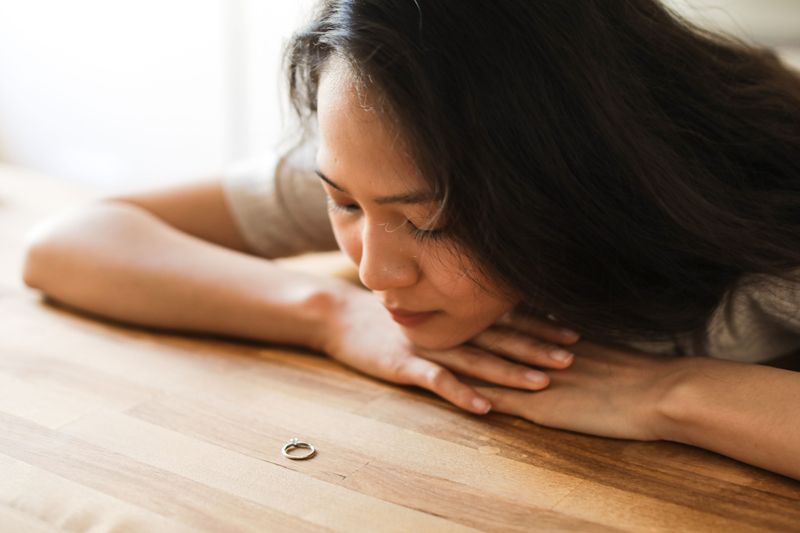
Happiness is not something you should have to fight for every single day.
Think about how you feel most of the time when you are with your partner.
Do you laugh together?
Do you feel at ease, or are you constantly tense and drained?
Occasional rough patches are completely normal in any relationship.
But if sadness, frustration, or emptiness are your everyday emotions, that is worth paying close attention to.
Your overall happiness matters more than just the good days.
Be honest with yourself here.
Nobody else can answer this question for you.
If your gut keeps telling you something feels off, that quiet inner voice deserves your full attention and respect.
2. Do I Feel Respected and Valued by My Partner?

Respect is the foundation of any healthy relationship.
When your partner truly values you, they listen when you speak, honor your boundaries, and treat your feelings as something that matters.
You should never feel invisible or dismissed.
Ask yourself if your opinions are taken seriously.
Does your partner acknowledge your efforts, or do they often criticize and belittle you?
Feeling consistently undervalued can quietly chip away at your self-worth over time.
You deserve a partner who sees your strengths and appreciates who you are, not just what you do for them.
If respect feels like something you are constantly chasing in your relationship, that is a significant sign worth examining carefully.
3. Have We Genuinely Tried to Resolve Our Biggest Problems?

Every couple faces problems, but what separates strong relationships from struggling ones is the willingness to actually work through them.
Before calling it quits, ask yourself if both of you have put in real, honest effort to fix what is broken.
Have you talked openly about the core issues?
Have you considered couples therapy, read books together, or tried new approaches?
Sometimes problems that feel impossible actually have solutions, but only if both people are genuinely committed to finding them.
If one or both of you have stopped trying, that itself is a telling answer.
Effort from both sides is not optional.
A relationship cannot heal when only one person is doing all the heavy lifting.
4. Can I Trust My Partner, and Do They Trust Me?

Trust is not just about avoiding lies.
It is about feeling safe enough to be completely yourself around another person.
When trust is solid, you do not spend your days worrying, second-guessing, or checking up on your partner.
Think about whether your partner has been honest with you, even when the truth was uncomfortable.
Consider also whether you have been fully open with them.
Trust works both ways, and a relationship missing it on either side tends to feel exhausting and unstable.
Broken trust can sometimes be rebuilt, but it takes time, transparency, and genuine accountability.
If trust has been shattered repeatedly without real repair, it is fair to ask whether the foundation of your relationship is still strong enough to stand on.
5. Are Our Long-Term Goals Still Compatible?

Falling in love is wonderful, but love alone cannot bridge every gap.
Two people can care deeply for each other and still want completely different futures.
Think about where you both see yourselves in five or ten years.
Do you agree on big topics like marriage, children, where to live, or financial priorities?
If your visions of the future are heading in opposite directions, that tension rarely gets easier to manage as time goes on.
Compatibility on life goals is not about being identical.
It is about having enough common ground to build something meaningful together.
Honest conversations about the future, even uncomfortable ones, can reveal whether your paths are growing together or quietly drifting apart.
6. Do We Bring Out the Best in Each Other More Often Than the Worst?

A great relationship should feel like a team.
The right person tends to inspire you, challenge you in healthy ways, and help you become a better version of yourself.
That kind of positive energy is something truly worth holding onto.
Now flip the question.
Do you find yourself becoming more anxious, more irritable, or less confident since being in this relationship?
Sometimes without realizing it, certain dynamics can quietly bring out frustration, jealousy, or insecurity instead of growth.
Pay attention to who you are when you are around your partner most of the time.
The people we choose to love have an enormous influence on our character and mindset.
Make sure that influence is mostly lifting you up, not pulling you down.
7. Are Recurring Conflicts Improving, Staying the Same, or Getting Worse?

Every couple argues.
That is completely normal.
What matters far more than the fact that you fight is whether those fights ever actually lead anywhere productive.
Are your recurring conflicts moving toward resolution, or are they just going in circles?
Think about the arguments you have had three times, five times, maybe ten times.
Has anything genuinely changed?
Patterns that stay stuck or keep escalating over time are a serious warning sign that the relationship may lack the tools to grow through conflict.
Improving conflict means both people feel heard, adjust their behavior, and make real progress over time.
If every argument ends in the same place with no change, ask yourself honestly how long you are willing to keep having the same fight.
8. Am I Staying Because I Want To, or Because I’m Afraid to Leave?

Fear is a surprisingly powerful reason people stay in relationships that no longer serve them.
The fear of being alone, starting over, hurting someone, or facing an unfamiliar life can feel overwhelming enough to keep you stuck for years.
Ask yourself honestly: if fear were completely removed from the equation, would you still choose this relationship?
There is a big difference between staying because you genuinely want the relationship and staying because leaving feels too scary or complicated to face.
Choosing a relationship out of love and genuine desire is healthy and meaningful.
Staying out of fear, guilt, or obligation tends to build quiet resentment over time.
You deserve to be somewhere you truly want to be, not somewhere you feel trapped.
9. Do I Feel Emotionally and Physically Safe in This Relationship?

Safety in a relationship goes far beyond physical wellbeing.
Emotional safety means you can express your feelings without fear of ridicule, punishment, or manipulation.
It means your vulnerabilities are treated with care, not used against you later.
If you regularly feel anxious about your partner’s reactions, walk on eggshells before speaking honestly, or feel controlled in any way, those are serious red flags.
No relationship is worth sacrificing your sense of personal safety or emotional peace.
Physical safety is equally non-negotiable.
Any form of physical harm or intimidation is never acceptable, regardless of the circumstances or history.
If you feel unsafe in any way, please reach out to a trusted person or professional resource for support right away.
10. Can I Realistically Accept My Partner as They Are Right Now?

One of the most common relationship traps is staying with someone not for who they are today, but for who you hope they will eventually become.
Believing your partner will change can feel hopeful, but it can also keep you waiting indefinitely for something that may never happen.
Ask yourself honestly whether you can genuinely accept your partner exactly as they are at this moment, flaws and all.
Not a future, improved version of them, but the real person standing in front of you right now.
People can and do change, but only when they truly want to.
You cannot love someone into becoming different.
If your happiness depends on a version of your partner that does not yet exist, that is a difficult position to sustain long term.
11. Would I Choose This Relationship Again If We Were Meeting Today?

Imagine you are meeting your partner for the very first time today.
You know everything you know now about them, about yourself, and about how your relationship has unfolded.
Would you still choose to pursue a relationship with them?
This question cuts through nostalgia and habit in a powerful way.
Sometimes people stay in relationships simply because of history and shared memories, not because the present connection is actually fulfilling or right for them anymore.
Your answer does not have to be a dramatic yes or no. But if your honest gut reaction is hesitation, uncertainty, or even a quiet no, that is meaningful information.
The past shaped you, but it does not have to determine where your future goes from here.
12. If Nothing Changed in Five Years, Would I Still Want to Be Here?

Picture your life five years from now, with everything exactly as it is today.
Same arguments, same distance, same unresolved issues, same patterns.
Would you be content living inside that version of your life for the long haul?
This question is not meant to be pessimistic.
It is designed to cut through wishful thinking and help you see your relationship with clear, honest eyes.
Hope is valuable, but it should not be your only reason for staying.
If the thought of nothing changing fills you with dread rather than peace, that feeling carries real weight.
You get one life, and the relationships you invest in should genuinely add to it.
Your future self deserves honesty from you today, not just hope.