 MomSkoop

Getting older comes with a lot of wisdom, but it also comes with a shorter fuse for certain everyday annoyances. Things that once seemed easy to brush off can start to feel genuinely frustrating as the years go by.
Whether it’s waiting in long lines, dealing with rude service, or sitting through pointless meetings, tolerance tends to shrink with time. Here’s a look at 18 things that tend to test the patience of older adults more than ever before.
1. Long Waits in Customer Service Lines

Nobody enjoys standing in a line that barely moves, but ask anyone over 50 and they’ll tell you it hits differently now.
Time feels more precious as we age, and spending 30 minutes waiting for basic help feels like a genuine waste of it.
Older adults often have a clearer sense of how they want to spend their day, and a crawling customer service queue simply doesn’t fit the plan.
The frustration isn’t just about the wait itself.
It’s about feeling like your time doesn’t matter to the business.
Calling ahead, using online services, or visiting during off-peak hours can help cut down on the wait and save a whole lot of stress.
2. Loud Conversations in Public Places

There’s something about a booming voice in a quiet space that gets under your skin more as you get older.
Whether it’s someone shouting into their phone at a coffee shop or a group cackling in a movie theater, the tolerance for unnecessary noise tends to shrink significantly with age.
Part of this comes from a growing appreciation for peace and quiet.
Older adults often seek calm environments to relax, think, or simply enjoy their surroundings without a soundtrack of other people’s drama playing in the background.
Using headphones, speaking at a reasonable volume, and being aware of your surroundings are small habits that make shared spaces far more enjoyable for everyone around you.
3. Slow Drivers Who Block Traffic

Few things on the road are more maddening than being stuck behind a driver going 15 miles under the speed limit in the passing lane.
For older adults who have been driving for decades, this kind of behavior feels both inconsiderate and completely avoidable.
With age comes a sharper awareness of road etiquette.
Experienced drivers know the unspoken rules, and watching someone ignore them can feel like a personal offense.
It’s not just about getting somewhere fast.
It’s about respecting the flow of traffic and the time of everyone around you.
Staying right except to pass, keeping pace with traffic, and staying alert behind the wheel are habits every driver should practice from day one.
4. People Constantly Checking Their Phones During Conversations
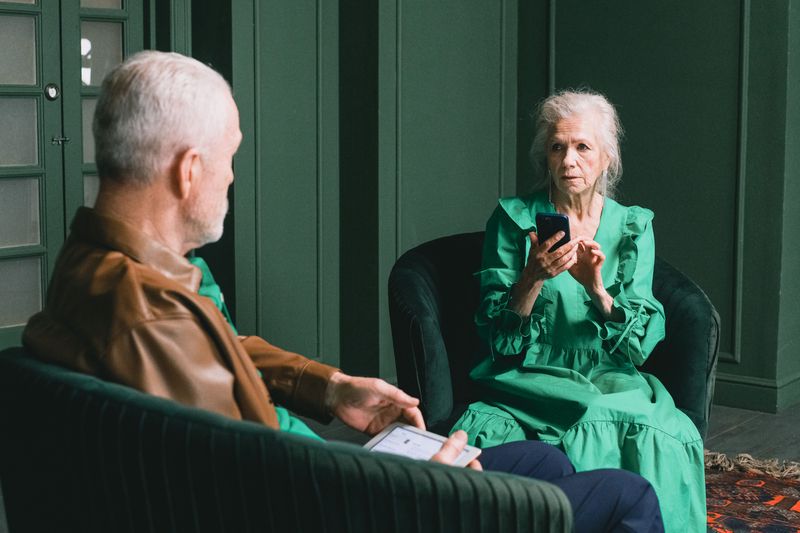
Picture this: you’re sharing something meaningful, and the person across from you is scrolling through social media.
For older adults, this habit feels deeply disrespectful, and rightfully so.
Genuine human connection becomes more valued with age, making distracted conversations feel especially hollow.
There’s a generational gap here that makes it even sharper.
Many older adults grew up in a time when sitting across from someone meant being fully present.
Watching that standard disappear into a glowing screen is genuinely frustrating.
Putting the phone face-down during meals or conversations is a small gesture that makes a huge difference.
It signals that the person in front of you matters more than whatever notification just popped up.
5. Unnecessary Workplace Meetings That Could Have Been Emails

Ask any seasoned professional what drains their energy the most, and a pointless two-hour meeting will likely top the list.
As people accumulate years of work experience, they develop a finely tuned radar for when a gathering is genuinely necessary versus when it’s just filling calendar space.
Older employees often carry more responsibilities and tighter schedules, making wasted meeting time feel especially costly.
They’ve seen enough inefficiency to know that most updates can be shared in a clear, concise email that people can read on their own time.
Respecting colleagues’ time by keeping meetings short, purposeful, and well-structured isn’t just good manners.
It’s smart leadership that every workplace should strive to build into its culture from the ground up.
6. Poor Customer Service or Lack of Basic Courtesy

Having lived through decades of both excellent and terrible service, older adults have a well-developed sense of what basic courtesy looks like.
A dismissive tone, an eye roll, or a complete lack of acknowledgment from a service worker can feel surprisingly hurtful and infuriating.
It’s not about being treated like royalty.
It’s about being treated like a human being.
As people age, they often become less willing to quietly accept rudeness just to avoid a scene.
Life experience teaches you that you deserve to be treated with respect, full stop.
Speaking calmly but firmly, asking for a manager when needed, and leaving honest reviews are all reasonable ways to address poor service without letting the frustration fester inside.
7. Last-Minute Changes to Plans

Older adults often run their lives on a carefully organized schedule, so when plans suddenly shift at the last minute, the ripple effect can be genuinely stressful.
It’s not just about inconvenience.
It’s about the mental energy required to readjust everything that was already set in motion.
With age, spontaneity can feel less exciting and more exhausting.
Many people in their 50s and beyond have built routines that support their health, relationships, and well-being.
A sudden change can throw all of that off balance in ways that younger people might not fully appreciate.
Communicating changes as early as possible, offering a genuine apology, and proposing a new plan right away can go a long way toward easing the frustration that comes with unexpected schedule shifts.
8. Clutter and Unnecessary Household Items

Something shifts in the mind as people grow older.
Suddenly, all that stuff accumulated over the years starts to feel more like a burden than a collection.
Clutter stops being background noise and becomes a source of real daily stress and mental fatigue.
Many older adults find themselves drawn to simplicity.
A clean, organized space feels calming, while piles of unused items feel chaotic and suffocating.
This isn’t just a personality quirk.
Research actually suggests that cluttered environments can raise stress hormones and reduce focus.
Starting small by clearing one drawer or shelf at a time, donating unused items regularly, and resisting impulse purchases are practical habits that can transform a home into a genuinely peaceful and refreshing place to live.
9. Repeating the Same Instructions Multiple Times

There’s a particular kind of exhaustion that comes from explaining something three times and still getting a blank stare.
For older adults who value efficiency and clear communication, having to repeat themselves over and over again can feel genuinely draining and disrespectful of their time.
Whether it’s at work, at home, or in any everyday situation, the expectation that instructions should be heard and followed the first time around isn’t unreasonable.
Years of experience teach people that active listening is a skill, and one that not everyone bothers to practice.
Writing things down, asking clarifying questions upfront, and confirming understanding before walking away are simple habits that can prevent the frustrating cycle of endless repetition in both personal and professional settings.
10. Technology That Is Overly Complicated to Use

Remember when updating your phone meant pressing one button?
Now it involves navigating through layers of menus, agreeing to terms no one reads, and figuring out why the app you used yesterday looks completely different today.
For older adults, overly complicated technology isn’t just annoying.
It can feel genuinely alienating.
The frustration often isn’t about being unable to learn.
It’s about constant, unnecessary change with no clear benefit.
Many older users are perfectly capable with technology when it’s designed thoughtfully, but bloated interfaces and frequent redesigns make the learning curve feel never-ending.
Seeking out tech tutorials tailored for older users, asking family members for help without shame, and sticking to simpler devices when possible can make the digital world feel far less overwhelming and more manageable.
11. Chronic Lateness From Friends or Family

Waiting for someone who is habitually late is one of those small frustrations that compounds over years into something much bigger.
Older adults, who often guard their time carefully, find chronic tardiness increasingly hard to overlook.
It signals a lack of respect, whether intentional or not.
There’s a reason the saying goes that being late is a form of stealing someone’s time.
When you’re younger, you might shrug it off.
But after decades of waiting for the same people to show up 30 minutes past the agreed time, the patience simply wears thin.
Setting clear expectations, suggesting earlier meeting times as a buffer, or simply being honest about how the lateness affects you can help address the pattern before it becomes a relationship strain.
12. Small Talk That Never Gets to the Point

Pleasantries have their place, but there comes a point in life when endless chit-chat about the weather starts to feel like a genuine waste of breath.
Older adults often crave meaningful conversation and find themselves growing impatient with small talk that circles endlessly without going anywhere real.
With age comes a sharper awareness of what truly matters.
Deep conversations about life, family, ideas, and experiences feel nourishing.
Surface-level filler talk, on the other hand, can feel hollow and even a little exhausting after a while.
Steering conversations toward more meaningful topics, asking thoughtful questions, and being honest about your interests can naturally move past the small talk phase and build the kind of genuine connection that actually leaves you feeling energized and understood.
13. Loud Music in Restaurants or Cafes

Going out for a quiet dinner shouldn’t require earplugs.
Yet many restaurants crank the music up so high that a normal conversation becomes a shouting match.
For older adults, this isn’t just annoying.
It can actually make the experience genuinely unpleasant and even physically uncomfortable.
Hearing often becomes more sensitive with age, and loud environments can cause real fatigue.
The irony is that restaurants do this to create energy, but for many older patrons, it has the opposite effect.
It drives them away and toward quieter alternatives.
Choosing restaurants known for quieter atmospheres, asking to be seated away from speakers, or visiting during off-peak hours when music tends to be lower are practical ways to enjoy a meal without the noise battle.
14. Gossip and Unnecessary Drama

Life has a funny way of teaching you what actually matters, and gossip rarely makes the cut.
Many older adults reach a point where they simply have no appetite for hearing who said what about whom or getting wrapped up in someone else’s manufactured drama.
The whole thing starts to feel like a colossal waste of energy.
Years of experience show that gossip rarely helps anyone and almost always creates more problems than it solves.
Older adults tend to value honesty, directness, and conversations that actually build something rather than tear people down behind their backs.
Politely redirecting conversations away from gossip, choosing company that prefers substance over rumor, and simply walking away from toxic drama are all healthy ways to protect your peace and your valuable time.
15. Standing in Long Checkout Lines

Six items in your cart, twenty people ahead of you, and only two registers open.
Sound familiar?
For older adults who remember a time when stores were properly staffed and lines moved quickly, this scenario is a recurring source of real frustration that never quite gets easier to accept.
Physical discomfort also plays a role.
Standing for long periods can be tiring and even painful for many older adults, making a long checkout line more than just an inconvenience.
It can feel like a genuine ordeal that could easily be avoided with better planning on the store’s part.
Using self-checkout when comfortable, shopping at less busy times, or switching to grocery delivery services are all smart ways to sidestep the checkout line stress entirely and reclaim your time.
16. Spam Calls and Unsolicited Sales Pitches

The phone rings.
You stop what you’re doing, walk across the room, and answer it, only to hear a robotic voice trying to sell you an extended car warranty you never asked for.
For older adults, this daily ritual of spam calls has become one of the most reliably maddening parts of modern life.
Beyond the pure annoyance, there’s a real safety concern.
Scammers frequently target older adults with convincing pitches, making every unknown number a potential threat.
The emotional toll of constantly being on guard is exhausting and completely unfair.
Registering with the National Do Not Call Registry, using call-blocking apps, and simply not answering numbers you don’t recognize are effective steps to dramatically reduce the flood of unwanted calls and reclaim some much-needed daily peace.
17. People Who Interrupt While Others Are Speaking

Few things feel as dismissive as being cut off mid-sentence.
For older adults who have spent years developing their thoughts and communication style, being interrupted repeatedly sends a clear message: your words don’t matter.
And that message stings more sharply with every passing year.
Interrupting isn’t always intentional, but the effect is the same regardless of the intent.
It derails the speaker, disrupts the natural flow of conversation, and creates a subtle but real power imbalance.
Older adults, having experienced this dynamic enough times, tend to have very little patience left for it.
Practicing active listening, waiting for a natural pause before speaking, and genuinely focusing on what the other person is saying are habits that transform conversations from battles for airtime into real, rewarding exchanges worth having.
18. Wasting Time on Things That Don’t Feel Meaningful

At some point, spending an entire evening watching mindless content or attending an event you have zero interest in starts to feel almost painful.
Older adults often develop a heightened awareness of time, and with that comes a strong pull toward spending it on things that actually matter to them personally.
This shift isn’t about becoming a hermit or refusing to have fun.
It’s about becoming more intentional.
When you’ve lived long enough to understand that time is genuinely finite, you become far less willing to give it away to activities, people, or obligations that leave you feeling empty.
Saying no more often, prioritizing hobbies and relationships that bring real joy, and reflecting on what truly adds value to your life are all meaningful steps toward spending your days with purpose and genuine satisfaction.