 MomSkoop

How you feel about your body affects so much more than just the way you look in the mirror. Low body confidence can quietly shape your daily choices, your social life, and even your mood.
Many people develop habits without realizing those habits might be making things worse. Recognizing these patterns is the first step toward feeling more comfortable and confident in your own skin.
1. Frequently Comparing Yourself to Others

Scrolling through social media and thinking, “Why don’t I look like that?” is something a lot of people do without even noticing.
Comparing your body to someone else’s can quietly chip away at how you feel about yourself.
The tricky part is that comparisons are almost never fair.
You’re looking at someone’s highlight reel, not their real life.
Nobody posts their bad days or their insecurities online.
When you measure yourself against an edited or carefully chosen image, you’re setting an impossible standard.
Try catching yourself mid-comparison and redirecting that energy.
Ask what your body has done for you today instead of how it stacks up against someone else’s.
2. Avoiding Photos Whenever Possible

Ducking behind friends in group photos or pretending to be busy when someone pulls out a camera might seem harmless.
Over time, though, dodging photos can actually reinforce the idea that your appearance is something to hide.
That belief does real damage to how you see yourself.
Photos capture memories, not flaws.
When you avoid them, you end up missing out on moments that matter.
Years from now, you might wish you had more pictures from a time in your life you can never get back.
Starting small helps.
Let yourself be in one photo without editing or deleting it.
Practicing this gradually can shift your relationship with your own image in a positive direction.
3. Constantly Criticizing Your Appearance
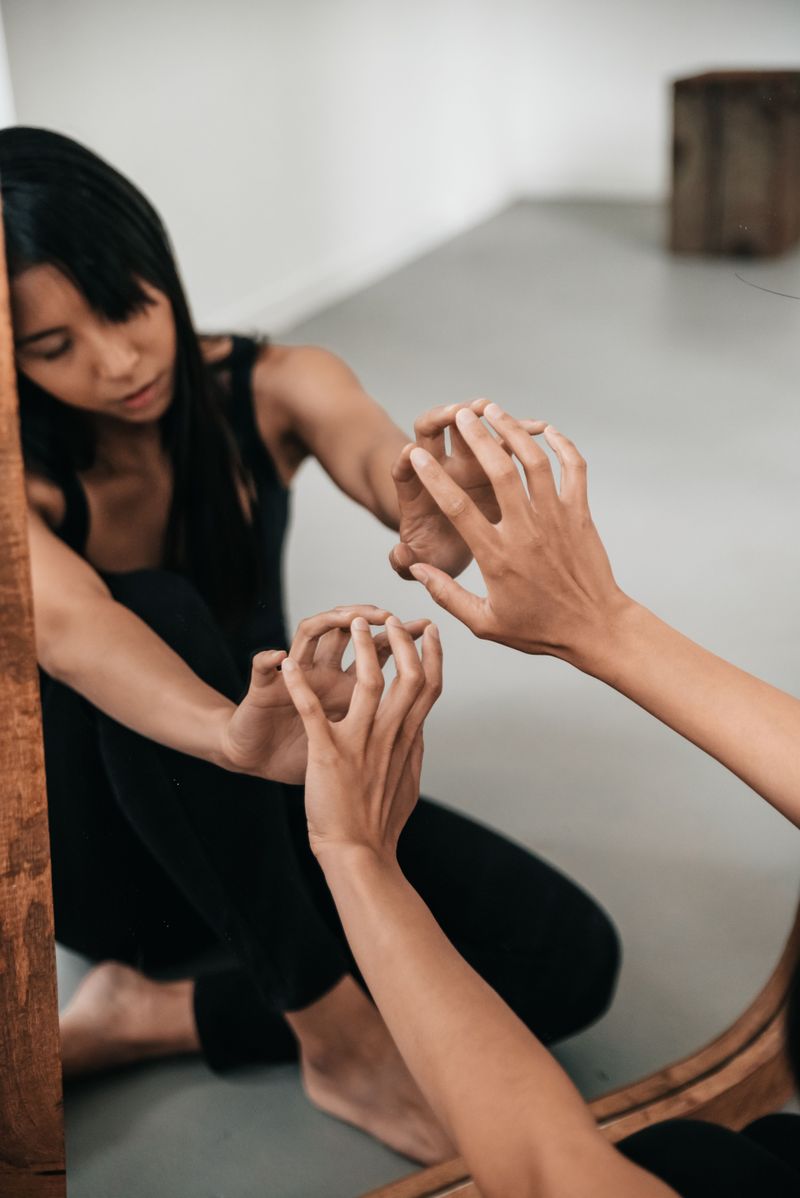
Most people have an inner voice, but when that voice spends most of its time pointing out everything wrong with your face or body, it becomes a real problem.
Constant self-criticism is one of the most draining habits tied to low body confidence.
It keeps your focus locked on what you dislike.
The words you use about yourself matter more than you might think.
Calling yourself ugly, fat, or broken trains your brain to believe those things.
Over time, those thoughts become automatic and hard to shake.
Replacing harsh self-talk with neutral or kind observations is a skill worth building.
You don’t have to love everything about yourself right away, but you can choose to speak to yourself with a little more respect.
4. Hiding Your Body Under Certain Clothes

Reaching for the baggiest shirt or the darkest colors every single day might feel like a comfort zone, but it can also signal something deeper going on.
Dressing to hide your body rather than to express yourself often comes from a place of shame.
That’s worth paying attention to.
Clothes can be a form of armor, and there’s nothing wrong with dressing for comfort.
The difference is whether you’re choosing an outfit because you love it or because you’re trying to disappear inside it.
One feels empowering, and the other quietly reinforces the idea that your body needs to be covered up.
Experimenting with one piece of clothing that fits well can be a small but meaningful shift in how you carry yourself through the day.
5. Checking the Mirror Excessively
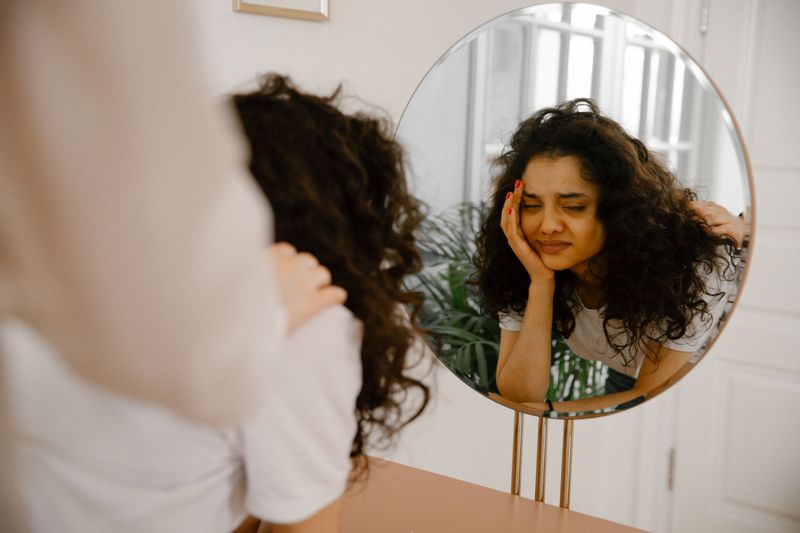
Checking the mirror once before heading out is totally normal.
Checking it every few minutes, or feeling a wave of anxiety when you can’t find one, is a different story.
Excessive mirror-checking is often a sign that you’re searching for reassurance your reflection can’t actually give you.
Here’s the frustrating part: the more you check, the more flaws you tend to find.
Your brain zooms in on tiny details that most people around you would never notice.
It becomes a loop that feeds on itself and leaves you feeling worse, not better.
Setting limits around mirror use, especially before going out, can help break the cycle.
Focusing on how you feel physically rather than how you look visually is a healthier habit to build.
6. Avoiding Social Events Because of Appearance Concerns

Turning down birthday parties, school events, or hangouts because you don’t feel good enough about how you look is more common than people admit.
It might feel like a way to protect yourself, but skipping social events because of appearance worries can make loneliness and low confidence grow even stronger.
The people who invited you want you there, not a version of you that meets some imaginary standard.
Missing out on connection to avoid judgment is a trade-off that rarely feels worth it once the night is over.
Challenging yourself to show up, even when you feel unsure, is one of the bravest things you can do.
Real connections are built on presence, not on looking perfect when you walk through the door.
7. Seeking Frequent Reassurance About Your Looks

Asking “Do I look okay?” once in a while is perfectly normal.
Needing constant reassurance from friends, family, or even strangers before you feel okay leaving the house is a pattern worth examining.
The reassurance feels good for a moment, but the relief never lasts very long.
That’s because the problem isn’t actually about how you look.
It’s about the anxiety underneath.
No amount of “You look great!” from someone else can fix a belief you hold about yourself deep down.
The compliments slide off because they can’t reach the root of the issue.
Working on building inner confidence, rather than borrowing it from others, is a more lasting solution.
Therapy, journaling, or simply noticing when you’re seeking reassurance can be a great starting point.
8. Focusing Heavily on Perceived Physical Flaws
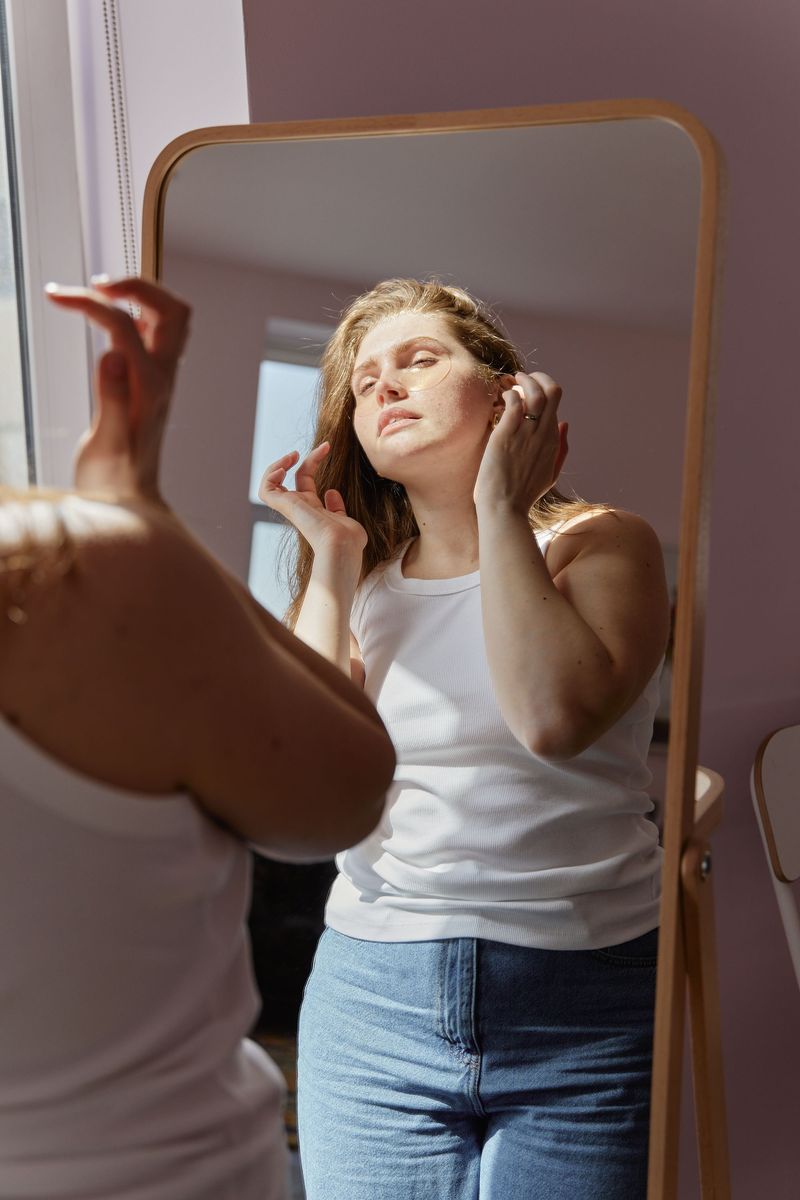
Everyone has things about their body they wish were different.
But when one “flaw” takes up most of your mental energy throughout the day, it stops being a passing thought and starts becoming an obsession.
Zooming in on a scar, a stretch mark, or a crooked feature can make it feel much larger than it actually is.
People around you are almost certainly not fixated on the thing you’re worried about.
Research actually shows that others notice our perceived flaws far less than we expect them to.
Our brains are wired to magnify our own imperfections.
Practicing the habit of zooming out, literally and mentally, can help restore perspective.
Shifting attention to what your body can do, rather than how one part of it looks, makes a real difference over time.
9. Feeling Guilty After Eating Certain Foods

Food guilt is sneaky.
One minute you’re enjoying a slice of pizza or a handful of chips, and the next you’re flooded with shame and thoughts about how you “shouldn’t have.” Tying your self-worth to what you eat is a habit that can seriously damage your relationship with both food and your body.
No single food has the power to make you a bad person or ruin your health.
Labeling foods as “good” or “bad” sets up a mental game that’s almost impossible to win.
Every time you eat something on the “bad” list, guilt follows close behind.
Learning to see food as nourishment, not a moral test, takes practice.
Speaking with a school counselor or a nutritionist can help you build a healthier and more balanced mindset around eating.
10. Changing Outfits Repeatedly Before Going Out

Trying on outfit after outfit before finally giving up or being late is a frustrating cycle that many people with low body confidence know well.
It often has very little to do with the clothes and everything to do with how you feel about the body wearing them.
No outfit feels right when your confidence is shaky.
This habit can eat up time, energy, and emotional bandwidth before your day has even started.
Arriving somewhere already exhausted from the getting-ready battle makes it harder to enjoy yourself once you’re there.
Laying out clothes the night before can reduce the pressure in the moment.
More importantly, working on how you feel about your body, rather than searching for the perfect outfit to fix it, gets to the real root of the struggle.
11. Avoiding Activities That Put Your Body on Display

Sitting out of swimming, skipping gym class, or refusing to dance at a party because you don’t want people looking at your body is a habit that quietly shrinks your world.
Each time you opt out to avoid being seen, you reinforce the idea that your body is something to be ashamed of.
The activities you avoid might actually be the ones you’d enjoy most.
Swimming, dancing, and sports are fun, freeing, and great for your mental health.
Missing them to avoid judgment means you’re giving up real joy for a fear that may never fully go away on its own.
Starting with lower-stakes situations and building up gradually can help.
Remind yourself that most people at the pool or dance floor are too focused on their own fun to be judging you.
12. Judging Your Worth Based on Your Appearance

When your sense of value as a person rises and falls based on how you look on a given day, that’s a painful and exhausting way to live.
Tying your worth to your appearance means a bad hair day or a bloated stomach can feel like a personal failure.
That’s a heavy burden to carry.
Your value as a human being has nothing to do with your dress size, your weight, or the symmetry of your face.
Kindness, creativity, humor, loyalty, and resilience are the things that make a person truly worthwhile, and none of them show up in a mirror.
Practicing affirmations, journaling about your non-physical strengths, or talking to a trusted adult can help you start separating your identity from your appearance in a meaningful way.
13. Dismissing Compliments About Your Looks
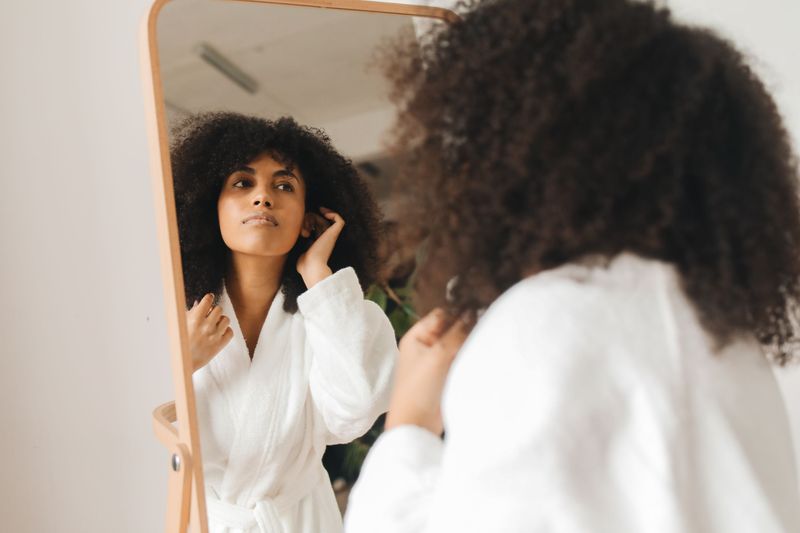
Someone tells you that you look nice, and your automatic response is “No I don’t” or “You’re just saying that.” Sound familiar?
Brushing off compliments feels humble in the moment, but it’s actually a sign that you struggle to believe positive things about your appearance.
That disbelief is worth exploring.
When you reject a compliment, you’re essentially telling yourself the person giving it is wrong.
Over time, that habit makes it harder to absorb any positive feedback at all, which keeps your self-image stuck in a negative loop.
Practicing a simple “Thank you” when someone offers a kind word is a small but powerful habit shift.
You don’t have to fully believe the compliment yet.
Just letting it land without pushing it away is a meaningful first step.