 MomSkoop
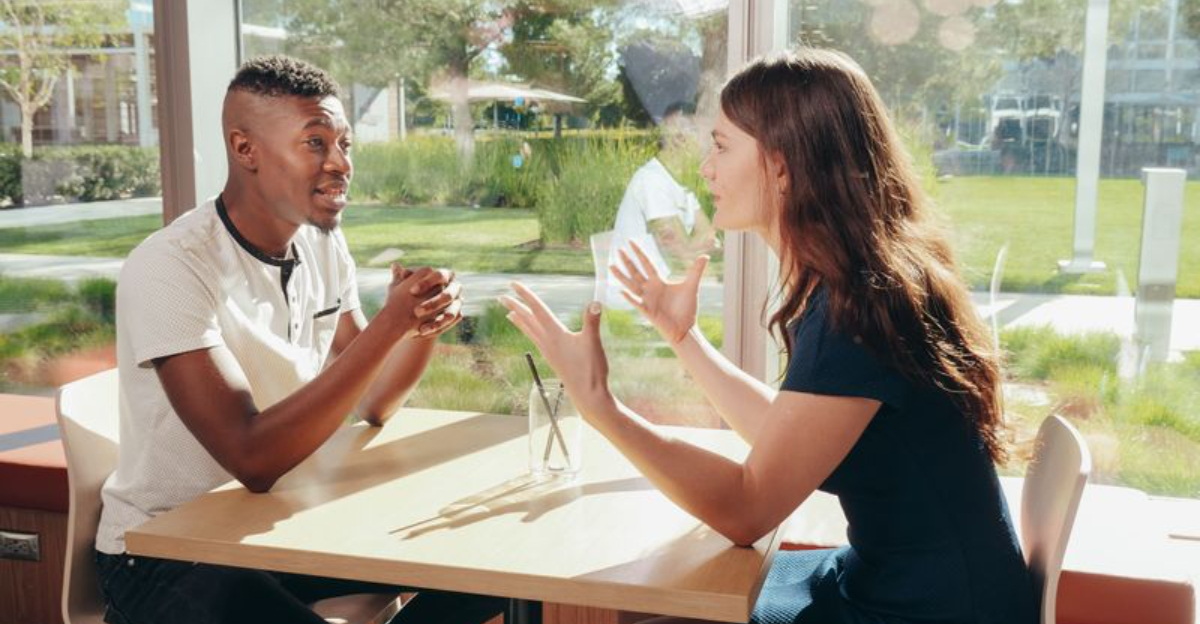
Not every topic is fair game for small talk, and many women know this feeling well. Some subjects feel too personal, too complicated, or just too exhausting to bring up with people who may not fully understand.
Whether it is a nosy question at a family gathering or an awkward comment from a coworker, certain topics can make a conversation feel uncomfortable fast. Here is a look at twelve subjects that many women would rather keep private.
1. Personal Finances and Salary

Money talk can feel surprisingly invasive, even among close friends.
Many women feel uncomfortable sharing their salary or financial struggles because it opens the door to judgment or unwanted comparisons.
Society has long attached a person’s worth to their bank account, which makes these conversations feel loaded.
Asking someone what they earn can unintentionally make them feel either embarrassed or defensive.
Financial situations are deeply personal and often tied to complex life circumstances.
A friend going through debt or financial hardship may not want to explain every detail over coffee.
Respecting someone’s financial privacy is a simple but powerful form of kindness.
If someone wants to share, they will bring it up themselves.
2. Weight or Body Changes

Few things sting quite like an unsolicited comment about someone’s body.
Whether someone has gained weight, lost it, or simply looks different than before, pointing it out rarely leads anywhere helpful.
Bodies naturally change over time, and those changes often carry deeply personal stories behind them.
Illness, stress, pregnancy, and medication are just a few reasons a person’s body might shift.
Commenting on those changes without knowing the full picture can cause real emotional harm.
A woman who has been struggling with her health does not need a reminder that others have noticed.
Keeping body-related observations to yourself shows respect.
Complimenting someone’s energy, smile, or spirit is almost always a better choice.
3. Fertility and Pregnancy Plans

“So, when are you having kids?” might seem like a friendly question, but for many women, it lands like a punch to the stomach.
Fertility is an incredibly private matter, and the road to parenthood is not always simple or straightforward.
Some women are quietly battling infertility, recovering from loss, or simply choosing not to have children.
Assuming that every woman wants children or is planning for them is an outdated idea that still causes real pain.
A casual question can unknowingly reopen wounds that someone has been working hard to heal.
Pregnancy plans are deeply tied to a woman’s body, relationships, and life goals.
Letting her bring it up on her own terms shows genuine respect.
4. Relationship Problems

Every relationship has rough patches, but not everyone wants to air them out in public.
Many women choose to keep relationship struggles private because sharing too much can backfire in unexpected ways.
Once the conflict passes, the people they confided in may still hold onto a negative view of their partner.
There is also the vulnerability factor.
Opening up about relationship problems requires trust, and not every social setting offers that kind of safety.
A woman might not want to deal with opinions, comparisons, or advice she never asked for.
Processing relationship challenges is a deeply personal journey.
Some women prefer to work things out quietly, with a therapist or a trusted friend, rather than in group conversations.
5. Past Romantic Relationships

Bringing up someone’s past relationships at the wrong moment can feel intrusive and oddly voyeuristic.
Many women prefer to keep their romantic history to themselves, not because they are hiding something, but because those experiences shaped them in deeply personal ways.
An ex-partner might represent a chapter of grief, growth, or healing that a woman is still working through.
Casually asking about past relationships without reading the room can make someone feel like their personal life is being treated as entertainment.
History does not always need to be shared to be honored.
Many women simply want to move forward without being asked to revisit chapters they have already closed.
A little curiosity goes a long way, but so does restraint.
6. Marriage Plans or Timelines

There is something oddly persistent about the question “When are you getting married?” Many women hear it so often that it starts to feel like a checklist rather than a genuine conversation.
Not every woman is on a timeline, and not every relationship follows the same path.
Some women are happily unmarried by choice.
Others may be in complicated situations involving finances, family dynamics, or personal readiness.
Reducing their entire relationship to a marriage countdown can feel both reductive and exhausting.
Marriage is a major life decision that deserves thoughtful consideration, not social pressure.
When women are ready to talk about those plans, they will.
Until then, asking repeatedly sends the message that their current life is somehow incomplete.
7. Reasons for Being Single

Being asked “Why are you still single?” is one of those questions that sounds innocent but rarely feels that way.
For many women, it implies that being single is a problem that needs explaining.
Singlehood is a valid and often fulfilling life choice, not a mystery to be solved by others.
Some women are single because they are focused on their career, healing from past experiences, or simply enjoying their independence.
Others may be actively dating but not ready to discuss it.
Either way, the reasons are personal and not owed to anyone.
Framing singlehood as something unusual or unfortunate adds unnecessary pressure.
A better approach is to celebrate where someone is in life, rather than questioning why they are not somewhere else.
8. Age and Aging

Age is just a number, but the way society treats it makes it feel like so much more.
Many women feel uncomfortable when age becomes a topic of conversation, especially in cultures that equate youth with value.
Being asked your age, or having someone guess it out loud, can feel strangely personal.
Aging carries different emotional weight for different people.
Some women feel empowered growing older, while others quietly wrestle with societal pressure to look and act younger.
Neither experience needs to be put on display for casual conversation.
Comments like “You look great for your age” may be meant as compliments, but they often carry a subtle sting.
Treating age as a sensitive subject shows maturity and thoughtfulness in any social setting.
9. Family Conflicts

Family life is rarely as picture-perfect as it looks on social media.
Behind many smiling holiday photos are complicated relationships, old wounds, and ongoing tensions.
Most women know this, which is exactly why they tend to keep family conflicts off the casual conversation menu.
Sharing family drama can feel like exposing the people closest to you, even when those relationships are painful.
There is also the risk of oversharing with someone who does not have the full context.
What sounds like a simple conflict might actually be years in the making.
Family struggles often carry layers of guilt, loyalty, and love all at once.
Many women choose to process those feelings privately rather than risk misunderstanding or unsolicited advice from people on the outside.
10. Medical or Health Concerns

Health is one of the most personal things a person can experience, and many women prefer to keep their medical concerns close to the chest.
Whether it is a chronic condition, a recent diagnosis, or an ongoing struggle, health information is not always something people are ready to share openly.
Well-meaning questions like “Are you okay?
You look tired” can feel invasive when someone is already dealing with something difficult.
Unsolicited medical advice or dramatic reactions can make things worse rather than better.
Sometimes, a woman just wants to get through the day without explaining her body to someone else.
Medical journeys are deeply individual.
Allowing someone to share on their own timeline, without prying, is one of the most respectful things you can do.
11. Career Setbacks or Job Insecurity

Losing a job or hitting a career wall is already hard enough without having to explain it to everyone around you.
Many women feel a quiet shame around professional setbacks, even though career challenges are a normal part of working life.
The pressure to always appear successful and put-together makes these conversations feel risky.
Talking about job insecurity requires a level of vulnerability that casual settings rarely support.
Someone asking “So, how is work going?” with genuine curiosity can still trigger anxiety in a person who is quietly struggling.
It is not always easy to separate a question’s intention from its impact.
Career setbacks often come with lessons and resilience built in.
Women navigating these moments deserve space to share when they are ready, not when it is convenient for someone else’s curiosity.
12. Personal Insecurities

Everyone carries something they feel unsure about, but not everyone is ready to talk about it over brunch.
Personal insecurities are tender spots, the places where self-doubt quietly lives.
Many women guard these feelings carefully because they have learned that sharing them does not always lead to support.
Sometimes, opening up about an insecurity invites comparison or dismissal. “Oh, you think that is bad?
Look at me!” is not the empathetic response most people hope for.
Other times, sharing a vulnerability in the wrong setting can leave someone feeling exposed and regretful.
Building the courage to acknowledge personal insecurities is a real achievement.
Women who choose to keep those feelings private are not hiding; they are simply waiting for the right space and the right people to share them with.