 MomSkoop
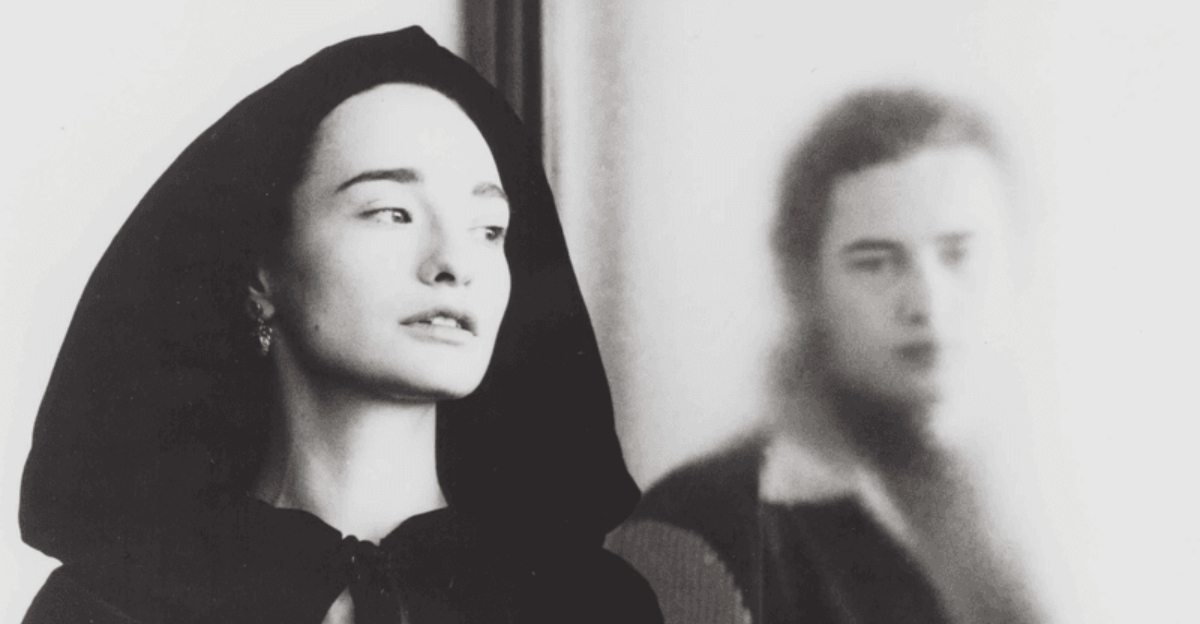
Female vampires have been terrifying and fascinating movie audiences for decades. From ancient queens to modern warriors, these bloodthirsty characters bring power, mystery, and style to the screen.
Some are tragic, some are terrifying, and some are just plain cool. Get ready to meet 15 unforgettable female vampires who left a serious mark on cinema history.
1. Selene – Underworld (2003) – Kate Beckinsale
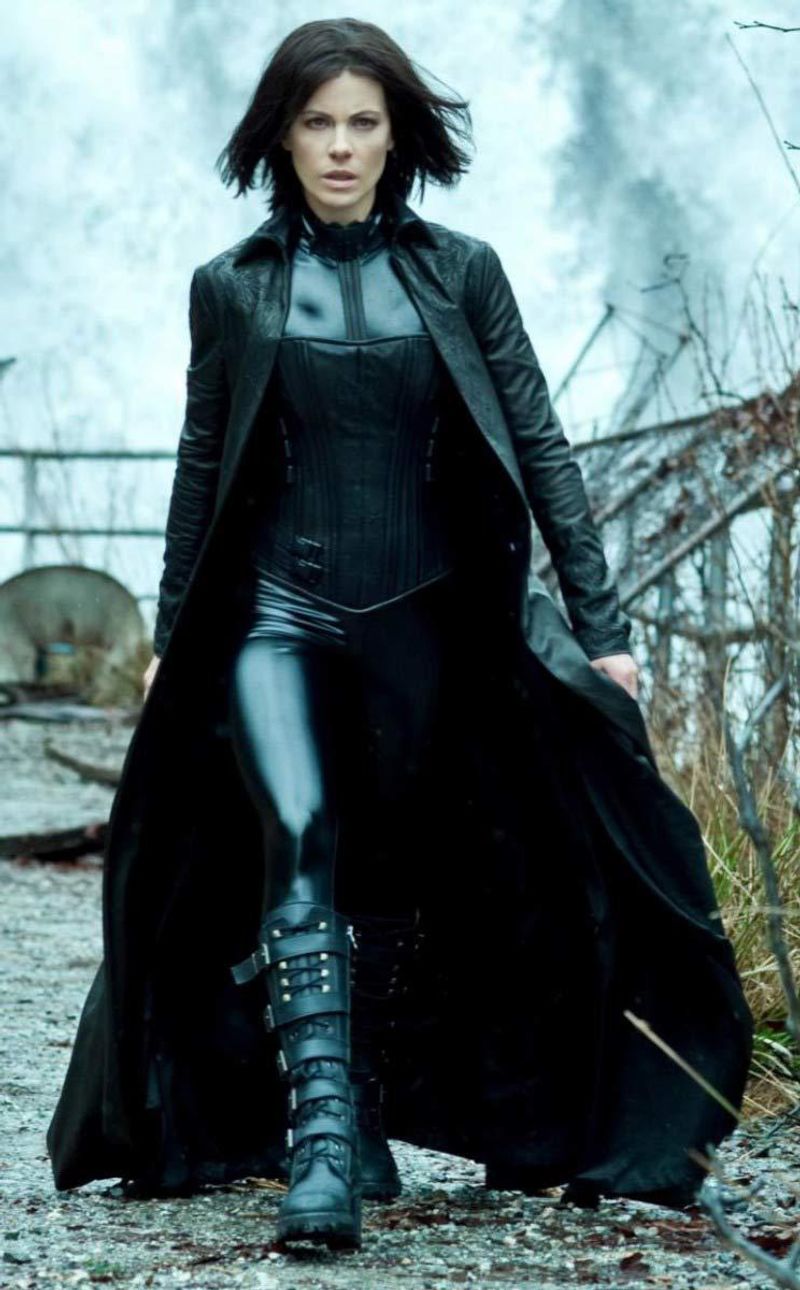
Dressed head to toe in sleek black leather, Selene is the vampire warrior you never want to cross.
Played by Kate Beckinsale, she is a Death Dealer, a vampire soldier trained to hunt werewolves called Lycans.
Her cool, focused attitude made her one of the most iconic action heroines of the 2000s.
What makes Selene stand out is her emotional depth beneath all that toughness.
She starts the story loyal to her vampire clan, but slowly uncovers a shocking truth about her own past.
That mix of action and personal drama kept audiences coming back for multiple sequels.
Beckinsale brought real physical commitment to the role, doing many of her own stunts.
Selene proved female vampires could lead a blockbuster franchise with confidence and style.
2. Akasha – Queen of the Damned (2002) – Aaliyah
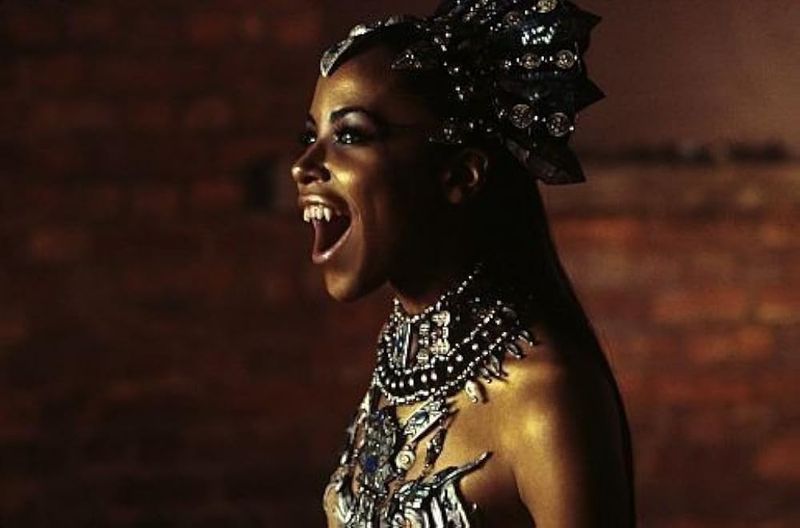
Akasha is not just any vampire.
She is the original, the mother of all vampires, and she wakes up after centuries of sleep absolutely furious.
Played by the late R&B superstar Aaliyah, the character brought a fierce, otherworldly energy that was impossible to ignore on screen.
Aaliyah used her background as a performer to give Akasha a hypnotic, almost musical presence.
Every movement felt deliberate and powerful, like a queen who knows exactly what she is capable of.
The film blended rock music with vampire mythology in a way that felt fresh at the time.
Sadly, Aaliyah passed away before the film was released, making this performance her final on-screen role.
Her portrayal of Akasha remains a bittersweet but genuinely memorable part of vampire movie history.
3. Miriam Blaylock – The Hunger (1983) – Catherine Deneuve
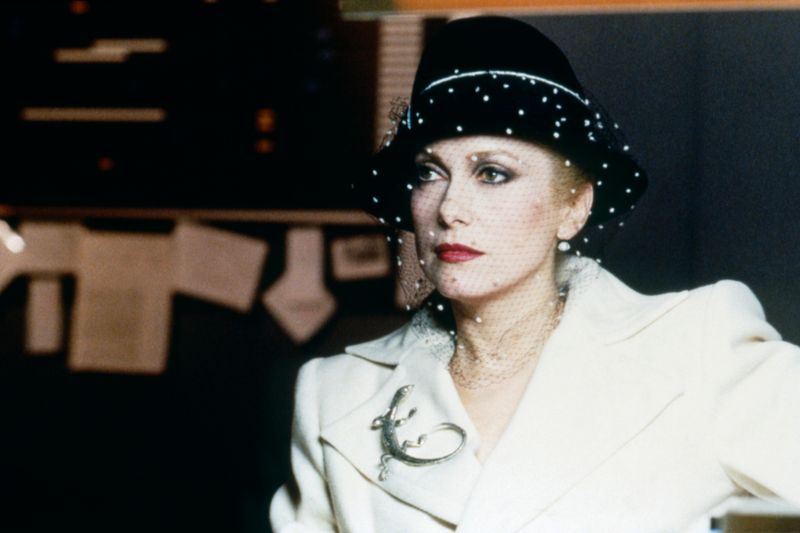
Cool, elegant, and completely terrifying beneath her polished surface, Miriam Blaylock redefined what a vampire could look like in 1983.
Catherine Deneuve played her with a quiet, hypnotic charm that made her feel more dangerous than any growling monster ever could.
Miriam does not chase her victims.
She seduces them.
The film is visually stunning, directed by Tony Scott with a dreamy, almost music-video style.
Miriam offers her human companions eternal life, but there is a devastating catch she never mentions upfront.
Watching the truth unfold is genuinely heartbreaking.
The Hunger tackled themes of desire, aging, and loss in ways most horror films never attempt.
Deneuve brought so much sophistication to the role that Miriam feels less like a monster and more like a tragic force of nature.
4. Clara Webb – Byzantium (2012) – Gemma Arterton
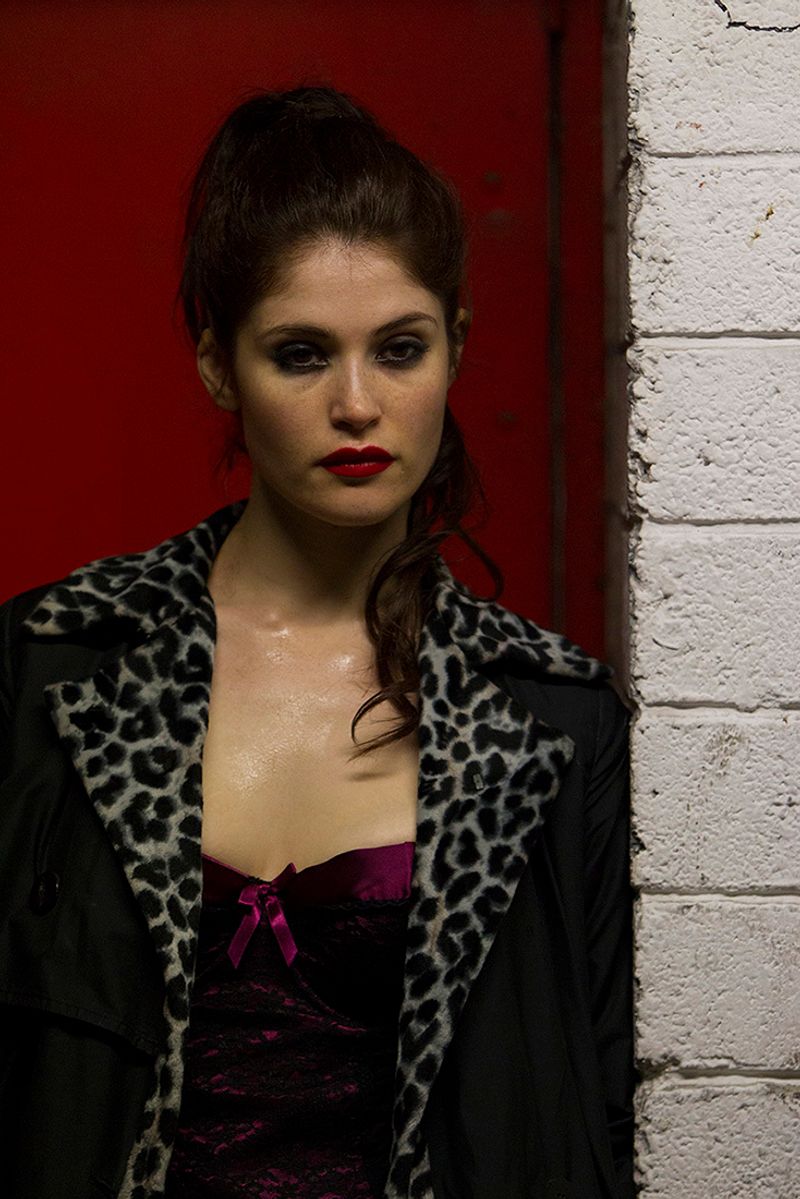
Clara Webb is a survivor in every sense of the word.
Played by Gemma Arterton in Neil Jordan’s Byzantium, Clara has spent two centuries fighting to protect herself and her daughter Eleanor from a secret vampire brotherhood that wants them dead.
She is fierce, resourceful, and refuses to play by anyone else’s rules.
Unlike many fictional vampires who come from wealth or nobility, Clara’s backstory is rooted in poverty and exploitation.
She was a woman with very few options in the 19th century, and becoming a vampire was her way of seizing power.
That history gives her character real emotional weight.
Arterton brings raw energy and warmth to Clara, making her feel completely human even while doing very inhuman things.
She is one of the most complex mother figures in any vampire film.
5. Eleanor Webb – Byzantium (2012) – Saoirse Ronan
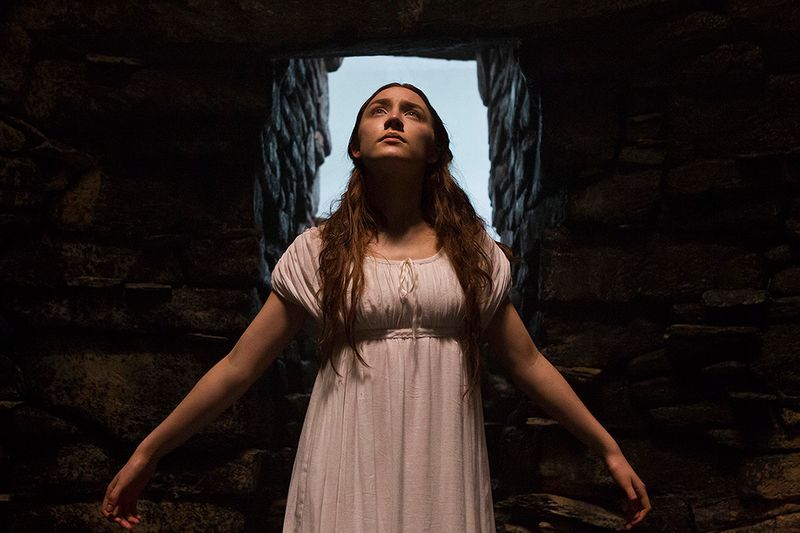
Eleanor Webb carries the weight of two hundred years of memory inside the body of a teenage girl, and that contradiction is what makes her so fascinating.
Saoirse Ronan plays her with quiet intensity, showing a character who longs for real human connection but is always forced to move on before roots can grow.
While her mother Clara fights with fists and survival instincts, Eleanor fights with words.
She writes her story obsessively on scraps of paper and releases them to the wind, hoping someone will finally know the truth about her life.
It is a beautifully poetic habit for a vampire who cannot age.
Ronan’s performance is tender and deeply affecting.
Eleanor feels genuinely lonely in a way that sticks with you long after the credits roll, making Byzantium one of the most emotionally rich vampire films ever made.
6. Mae – Near Dark (1987) – Jenny Wright
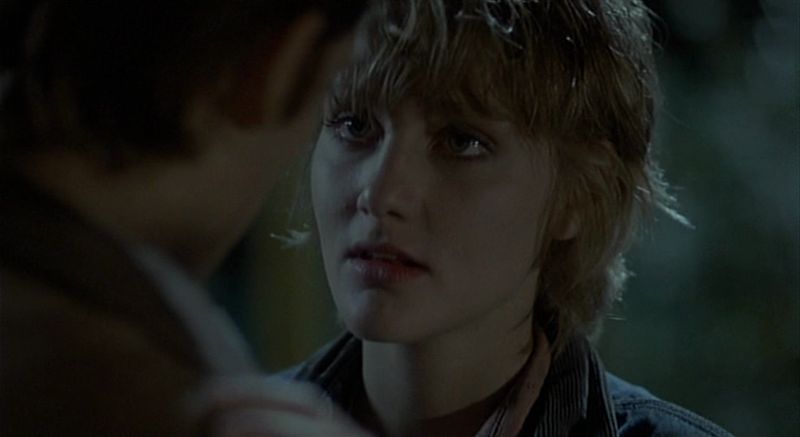
Mae is the vampire who makes you feel sorry for turning someone into a vampire.
Jenny Wright plays her in Kathryn Bigelow’s Near Dark as a young woman traveling with a brutal nomadic vampire gang across the American Southwest.
She is not cruel like her companions.
She is lonely, and that loneliness leads her to make a life-changing mistake.
When Mae turns a young farmboy named Caleb, she does it out of affection rather than hunger.
Then she has to figure out how to keep him alive among a group that sees humans strictly as food.
The tension between her softer feelings and her dangerous world drives the whole film.
Jenny Wright brings a dreamy, melancholy quality to Mae that sets her apart from every other vampire in the movie.
She feels like someone trapped between two worlds, belonging fully to neither.
7. Santanico Pandemonium – From Dusk Till Dawn (1996) – Salma Hayek
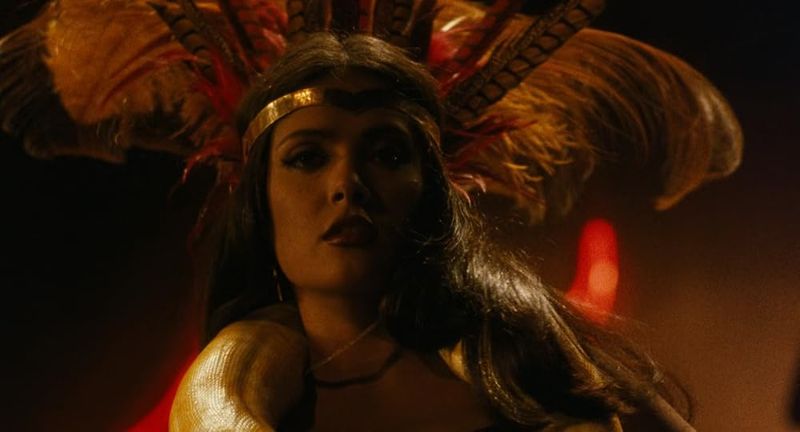
Few movie entrances are as jaw-dropping as Santanico Pandemonium’s.
Salma Hayek walks into the Titty Twister bar carrying an enormous snake, and the entire movie shifts gears in an instant.
One moment you are watching a crime thriller, and the next you are in full-on vampire chaos, and Santanico is the reason for all of it.
Robert Rodriguez and Quentin Tarantino designed the character to be a force of nature, and Hayek delivered exactly that.
Santanico is ancient, powerful, and completely in charge of her domain.
She does not negotiate or explain herself.
She simply attacks.
The character became a cult icon almost immediately after the film’s release.
Hayek later reprised the role in the television series, proving that Santanico’s appeal had serious staying power well beyond a single campy, thrilling film appearance.
8. The Vampire Girl – A Girl Walks Home Alone at Night (2014) – Sheila Vand
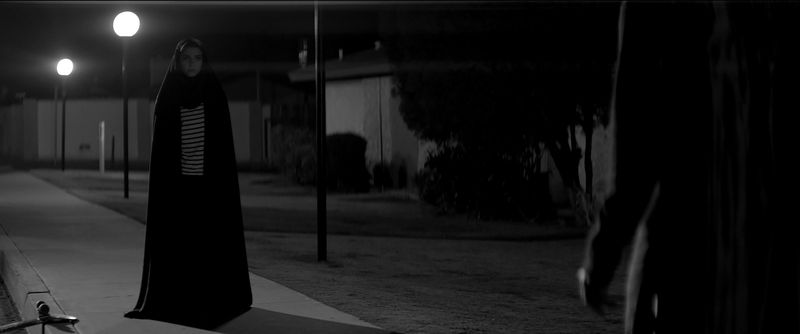
Wearing a black chador and riding a skateboard through empty streets at night, the Girl is one of the most original vampire characters ever put on film.
Sheila Vand plays her in Ana Lily Amirpour’s stunning black-and-white Iranian vampire western, a film that feels like nothing else in the genre.
The character barely speaks, but her silence says everything.
She is a predator, but she only hunts men who hurt women.
That moral code turns her into something closer to a dark guardian than a simple monster.
Watching her choose her victims carefully gives the film a quiet, thrilling tension.
The film was shot in California but feels completely transported to Iran through its language and visual style.
Vand’s performance is hypnotic, built almost entirely on glances, posture, and stillness rather than dramatic speeches or action sequences.
9. Carmilla – The Vampire Lovers (1970) – Ingrid Pitt
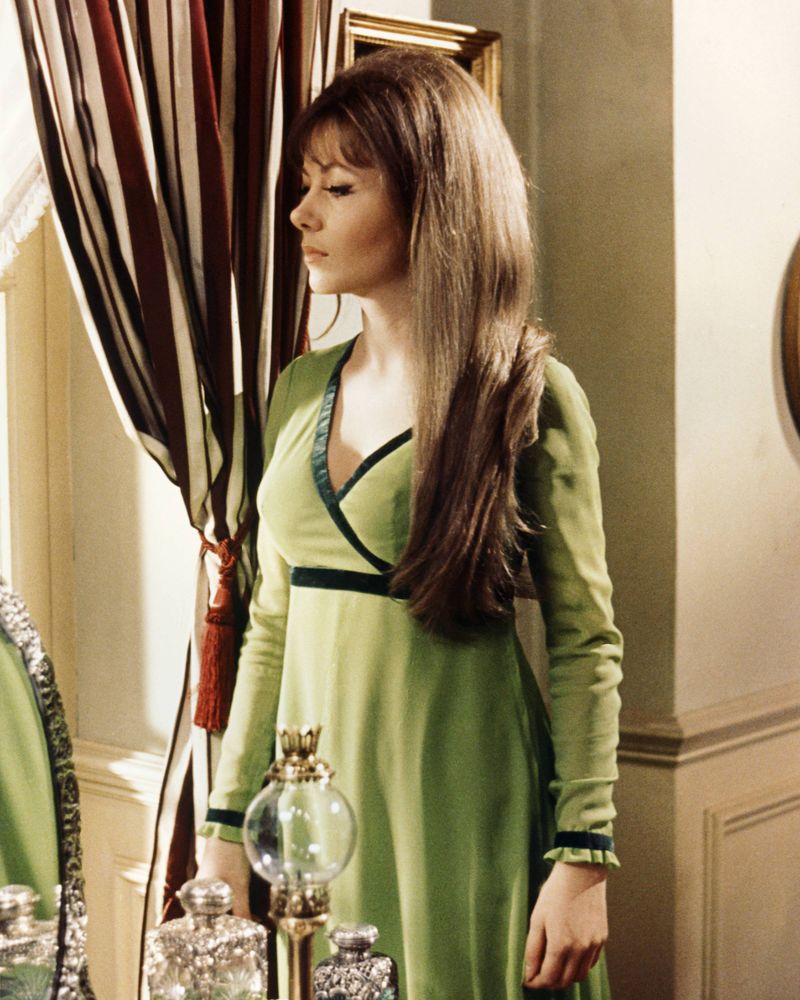
Long before most modern vampire stories explored female bloodsuckers in depth, Ingrid Pitt’s Carmilla was already breaking ground in 1970.
Based on Sheridan Le Fanu’s 19th-century novella, Carmilla is considered one of the earliest vampire stories ever written, and Pitt brought her to life with remarkable authority and presence.
The character is seductive and manipulative, drawing in victims through friendship and affection before revealing her true nature.
Pitt played her with a warm, almost maternal charm that made the horror feel more personal and unsettling than outright terror ever could.
You understand why people trust Carmilla, which makes the betrayal sting.
The Vampire Lovers was considered quite daring for its time.
Pitt’s performance helped cement Carmilla as a foundational figure in vampire cinema, influencing countless female vampire characters that came after her.
10. Countess Marya Zaleska – Dracula’s Daughter (1936) – Gloria Holden
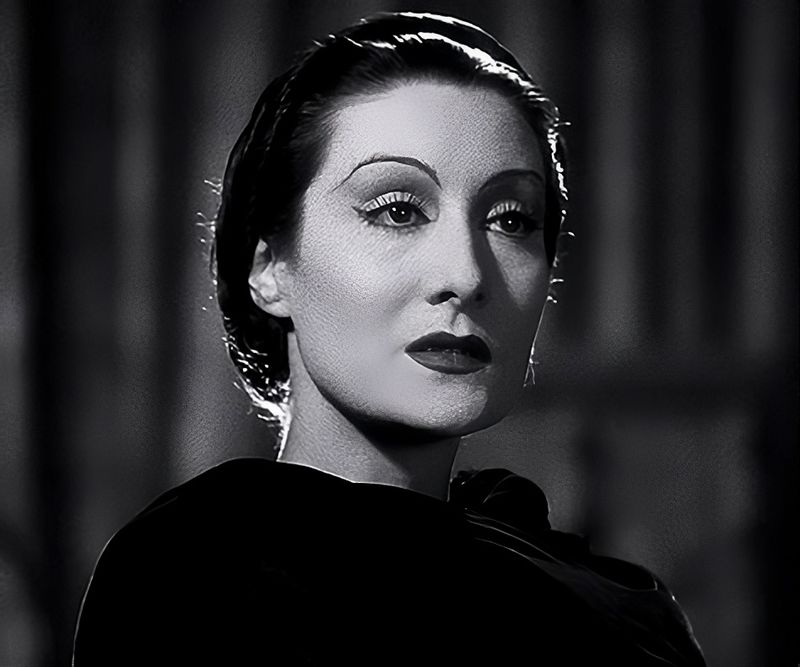
Released just five years after the original Dracula, this 1936 sequel gave audiences something they had never really seen before: a vampire who desperately does not want to be one.
Gloria Holden plays Countess Marya Zaleska as a tragic figure consumed by self-loathing, seeking a cure for her curse rather than reveling in it.
That internal conflict felt remarkably modern for a film made nearly 90 years ago.
Holden reportedly did not enjoy making the film, but her reluctance may have actually helped her performance.
There is a genuine weariness and discomfort in Marya that makes her feel real and sympathetic rather than theatrical.
Film historians now recognize Dracula’s Daughter as a surprisingly layered horror film.
Marya Zaleska stands as one of the earliest examples of a vampire character written with genuine psychological complexity at the center of the story.
11. Lucy Westenra – Bram Stoker’s Dracula (1992) – Sadie Frost
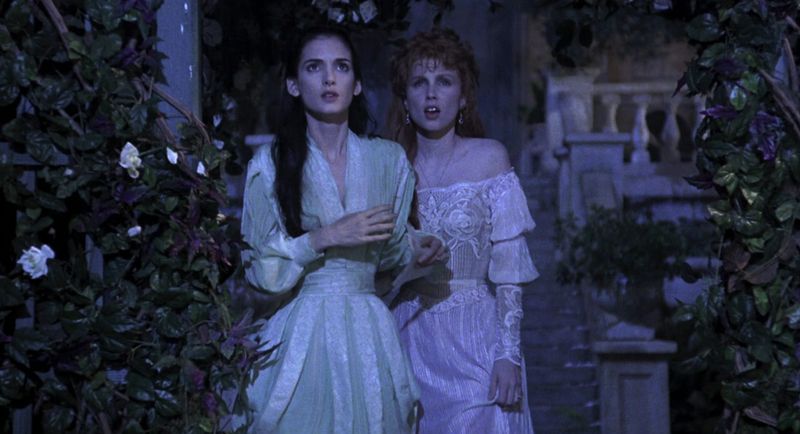
Lucy Westenra starts Francis Ford Coppola’s Bram Stoker’s Dracula as a bubbly, flirtatious young woman, and ends it as something far more dangerous.
Sadie Frost plays the transformation with tremendous commitment, going from giggling socialite to genuinely frightening undead creature in a way that is hard to forget.
The shift is jarring, and that is exactly the point.
In the original Bram Stoker novel, Lucy’s vampiric turn is meant to represent innocence corrupted.
Coppola’s film leans into that theme with lush, Gothic visuals and Frost’s physically daring performance.
She crawls, snarls, and moves in ways that feel animalistic rather than elegant.
Lucy’s storyline is ultimately heartbreaking.
She was simply in the wrong place at the wrong time, and she paid the highest possible price.
Frost made sure audiences felt that tragedy rather than just watching it happen from a distance.
12. Katrina – Vamp (1986) – Grace Jones
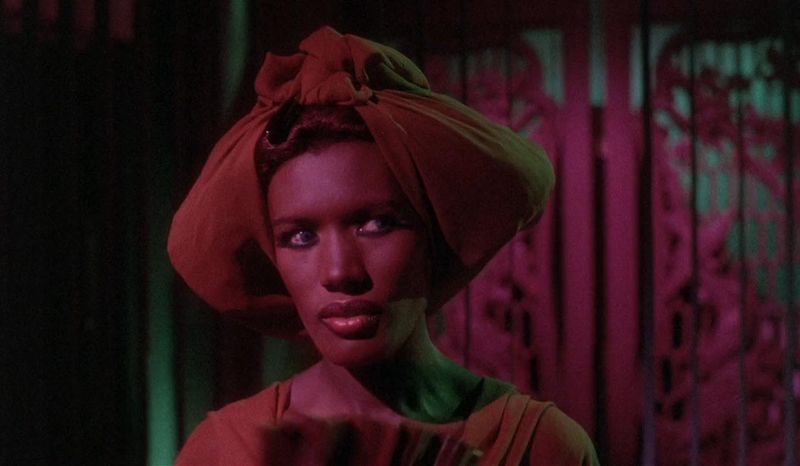
Nobody else could have played Katrina.
Grace Jones brought her own legendary real-life persona so completely into this role that the character feels less like a fictional vampire and more like a genuine force of nature wearing a costume.
In Vamp, she plays the head vampire running a strip club, and her scenes operate on a different level of intensity than everything around them.
Jones barely speaks during her scenes, relying entirely on her extraordinary physicality, painted body, and piercing stare to communicate everything.
It is a bold, avant-garde performance that should not work as well as it does, but somehow it absolutely does.
Vamp is a fun, campy 1980s horror comedy, but Katrina is the reason people still remember it.
Jones turned what could have been a throwaway villain into a genuinely striking screen presence that has aged surprisingly well.
13. Regine Dandrige – Fright Night Part 2 (1988) – Julie Carmen
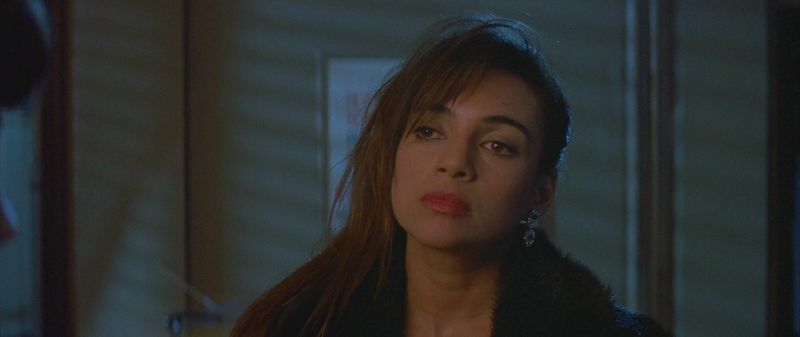
Regine Dandrige comes to town with a very personal mission: revenge.
Julie Carmen plays her in Fright Night Part 2 as the sister of the vampire killed in the original film, and she has not come to make friends.
She is stylish, calculating, and genuinely menacing in a way that makes her a worthy successor to the original film’s villain.
What separates Regine from many horror sequels’ villains is that her motivation is actually understandable.
She loved her brother and she wants the person responsible for his death to suffer.
That emotional core gives Carmen something real to play, and she runs with it.
Carmen brought theatrical flair and dark humor to the role, making Regine feel magnetic even while she is clearly plotting terrible things.
Fright Night Part 2 is often overlooked, but her performance is a genuine highlight of 1980s vampire cinema.
14. Eli – Let the Right One In (2008) – Lina Leandersson
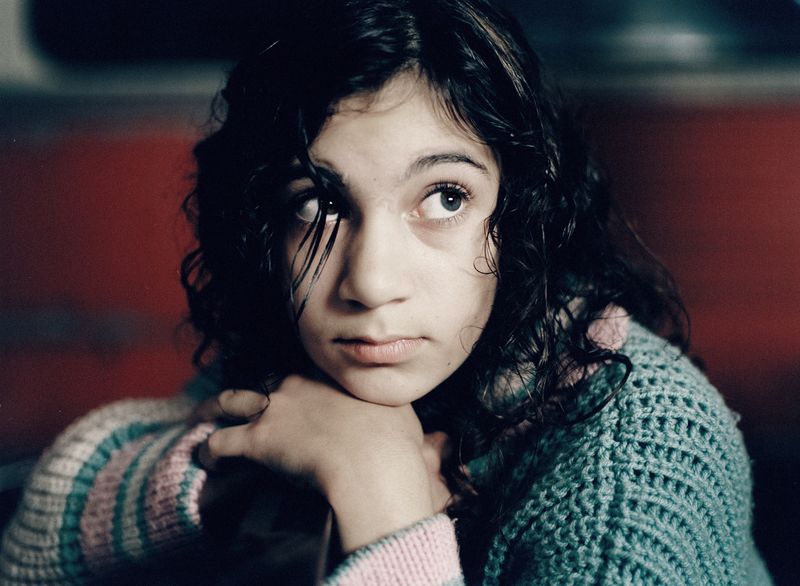
Eli looks like a twelve-year-old child.
She is not.
Lina Leandersson plays this ancient vampire in Tomas Alfredson’s Swedish masterpiece with a stillness and depth that is genuinely eerie for an actress her age.
Eli has been twelve for a very, very long time, and you can feel all those accumulated years behind her calm, patient eyes.
The film centers on her friendship with a bullied boy named Oskar, and their bond is touching in ways that are also quietly disturbing.
Eli is kind to Oskar, but she is also a killer, and the film never lets you forget either of those things at the same time.
Let the Right One In became an international sensation and was remade in Hollywood just two years later.
Leandersson’s original performance remains the definitive version, subtle and haunting in ways that are genuinely difficult to replicate.
15. Nadja – Nadja (1994) – Elina Lowensohn
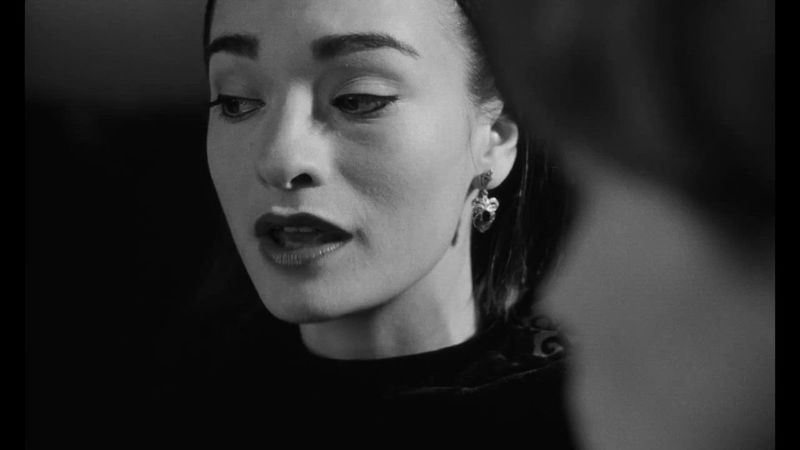
Shot in gorgeous black and white on the streets of New York City, Nadja is a vampire film that feels more like an art-house character study than a horror movie.
Elina Lowensohn plays Dracula’s daughter as a lonely, philosophical creature navigating modern life with the emotional baggage of centuries weighing on her.
She is brooding, witty, and unexpectedly relatable.
Director Michael Almereyda gave the film a lo-fi, dreamlike quality that suits Nadja’s melancholy personality perfectly.
There is even a sequence shot with a Fisher-Price PXL 2000 toy camera, giving certain scenes a blurry, hypnotic texture unlike anything else in vampire cinema.
Lowensohn brings genuine literary depth to the role, making Nadja feel like a character who has read too many books and lived too many lives.
She is weary of immortality in a way that feels fresh and philosophically interesting rather than simply sad.