 MomSkoop

Some people light up when they find a puzzle to solve, a pattern to spot, or a mystery to unravel. If that sounds like you, the right hobby can feel less like a pastime and more like a superpower.
Analytical and curious minds thrive when they have something meaty to think about, whether that means cracking codes, exploring the universe, or building something from scratch. Here are 15 hobbies worth exploring if your brain never really wants to switch off.
1. Chess

Every move in chess is a tiny hypothesis.
You predict what your opponent might do, plan several steps ahead, and adjust when things go sideways.
That kind of thinking sharpens your brain in ways that carry over into everyday decision-making.
Chess rewards pattern recognition above almost everything else.
Over time, you start seeing familiar board positions and knowing instinctively how to respond.
Many players say the game feels less like luck and more like a conversation between two minds.
Getting started is easier than ever, with free platforms like Chess.com and Lichess offering puzzles, lessons, and matches against players at every skill level.
You can improve steadily at your own pace.
2. Programming

There is something deeply satisfying about writing a few lines of text and watching a computer do exactly what you told it to do.
Programming turns logical thinking into a creative act, and that combination is hard to beat.
You do not need a computer science degree to begin.
Languages like Python are beginner-friendly and powerful enough to build real tools, from simple calculators to data scrapers to small games.
The learning curve feels steep at first, but every small win builds momentum.
What keeps analytical minds hooked is that programming is essentially an endless series of problems waiting to be solved.
Each bug you fix and each feature you build teaches you something genuinely new.
3. Astronomy

The universe is approximately 13.8 billion years old, and almost everything about it still raises more questions than answers.
For a curious mind, that is not frustrating.
That is thrilling.
Amateur astronomy ranges from casual stargazing with a basic telescope to tracking satellites, photographing nebulae, or contributing real data to citizen science projects.
You can go as deep as your curiosity takes you, blending observational skill with physics and mathematics.
Apps like Stellarium make it easy to identify what you are looking at on any given night.
Pairing that with books on cosmology or astrophysics turns a relaxing outdoor hobby into one of the most intellectually rich pursuits available to anyone with a clear sky.
4. Logic Puzzles
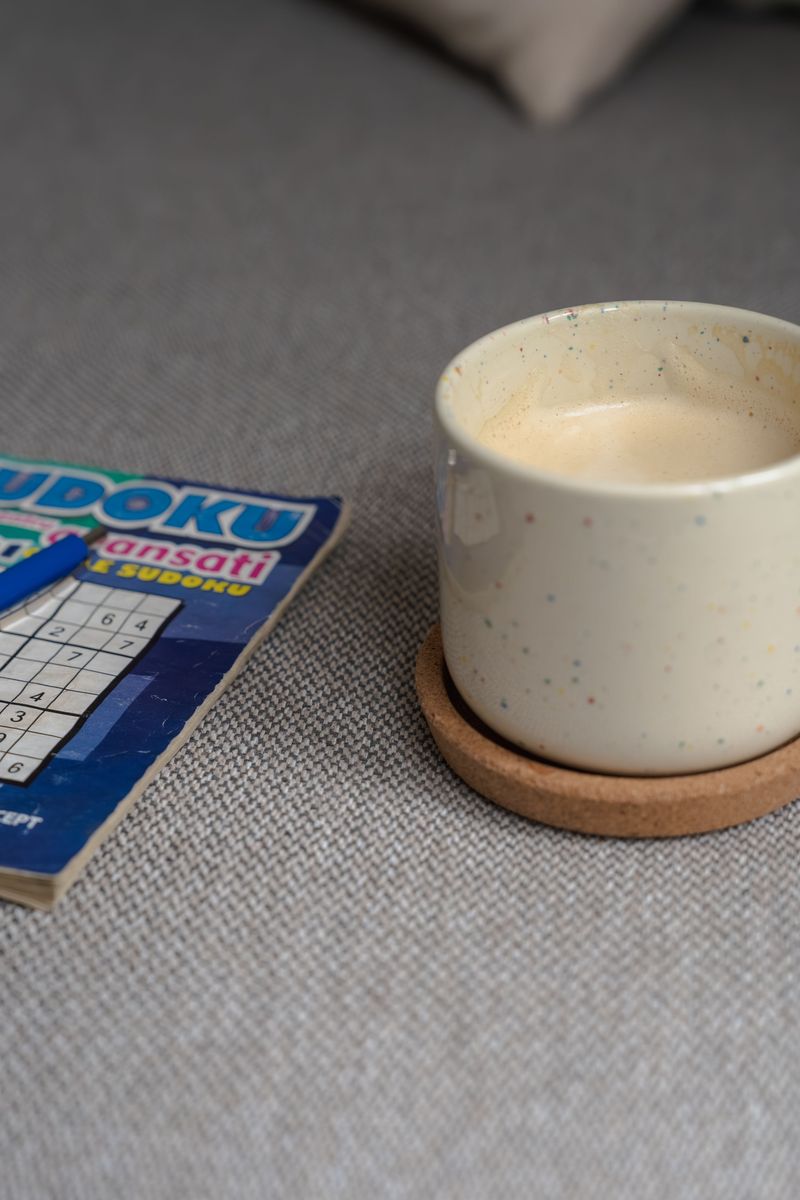
Sudoku, nonograms, cryptic crosswords, and deduction games all share one beautiful quality: the answer is always in there somewhere.
You just have to find the right angle to see it.
That hunt is genuinely addictive for analytical thinkers.
Logic puzzles build skills like elimination reasoning, working memory, and the ability to hold multiple possibilities in your head at once.
These are not just fun party tricks.
They translate directly into clearer thinking in school, work, and everyday life.
The best part is that the hobby scales perfectly.
Start with beginner Sudoku grids and work toward cryptic crosswords or logic grid puzzles.
Each new puzzle type feels like unlocking a new room in a house you thought you already knew well.
5. Learning a Language

Language learning is basically applied linguistics detective work.
Every grammar rule you uncover, every exception you memorize, and every new word you absorb adds another piece to a puzzle that never fully ends.
For curious minds, that open-endedness is the appeal.
Analytical learners often enjoy studying how a language is built rather than just memorizing phrases.
Understanding why Spanish has two forms of the verb “to be” or how Japanese sentence structure flips everything you know about English word order is genuinely fascinating.
Platforms like Anki, Duolingo, and Language Transfer make daily practice manageable.
Combine them with native media like podcasts or TV shows, and you will start seeing patterns emerge faster than you ever expected.
6. Electronics and Arduino Projects
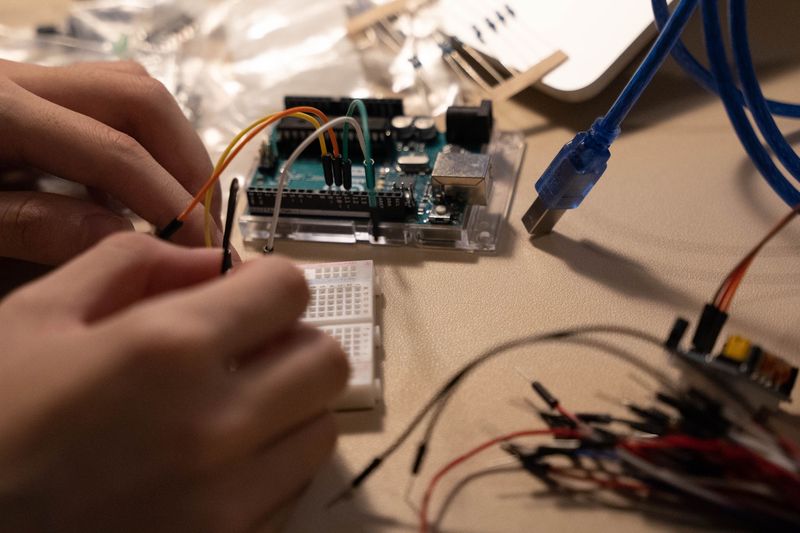
Plug in a sensor, write a few lines of code, and suddenly a tiny device is measuring temperature or blinking in response to sound.
Electronics projects make abstract concepts feel wonderfully concrete, which is part of why they are so satisfying for analytical hobbyists.
Arduino microcontrollers are affordable, beginner-friendly, and supported by a massive online community.
You can find tutorials for almost any project you can imagine, from automated plant waterers to custom game controllers to weather stations.
The hobby naturally blends electronics, programming, and physics into one hands-on experience.
Each project teaches you something new about how the physical world and digital logic connect, and the troubleshooting process alone sharpens your problem-solving instincts considerably.
7. Data Analysis

Hidden inside almost every large dataset is a story that nobody has told yet.
Data analysis is the process of finding that story, and for people who love spotting patterns, it can feel like one long, rewarding treasure hunt.
You do not need to be a professional statistician to enjoy this hobby.
Tools like Google Sheets, Python with pandas, or even Tableau Public let you explore publicly available datasets on topics ranging from climate change to sports statistics to city traffic patterns.
What makes data analysis especially compelling is the moment of surprise, when you find a relationship between two variables that nobody thought to look for.
That unexpected discovery is the analytical equivalent of striking gold, and it keeps practitioners coming back consistently.
8. Photography

Photography sits at an unusual crossroads between technical precision and artistic instinct.
Getting the exposure right requires understanding aperture, shutter speed, and ISO, three variables that interact in ways that reward careful experimentation and logical thinking.
Beyond the camera settings, analytical photographers enjoy studying composition rules like the rule of thirds or leading lines, then deliberately breaking them to see what happens.
Every shot becomes a small experiment with immediate, visible results.
Post-processing in software like Lightroom adds another layer of technical depth, letting you adjust color profiles, sharpness, and tonal curves with real precision.
Many photographers say that the more they understand the technical side, the more creative freedom they actually feel when shooting.
9. Investing Research

Warren Buffett famously reads 500 pages a day to stay informed about the businesses he studies.
You do not need to match that pace, but the core habit, reading deeply and thinking critically about companies and industries, is accessible to anyone willing to start.
Researching investments trains you to evaluate information skeptically, spot misleading statistics, and think about long-term consequences rather than short-term noise.
These are valuable mental habits regardless of whether you ever put real money into the market.
Start by reading annual reports of companies you already use and understand.
Learning to read a balance sheet, an income statement, or a cash flow summary is genuinely interesting once you realize each number is telling part of a larger story.
10. Philosophy

Philosophy asks the questions that most subjects quietly skip over.
What does it mean to know something?
Can a moral rule ever have exceptions?
Is free will compatible with a universe governed by physics?
These are not idle questions.
They are the foundation beneath everything else.
For analytical minds, philosophy is a workout for the part of your brain that evaluates arguments.
You learn to identify logical fallacies, spot hidden assumptions, and build positions that can withstand serious scrutiny.
That skill is useful in nearly every field imaginable.
Start with accessible thinkers like Bertrand Russell or contemporary philosophers like Michael Sandel, whose lectures are freely available online.
Philosophy rewards slow, careful reading and the willingness to change your mind when the argument demands it.
11. Genealogy

Genealogy is part history research, part detective work, and part puzzle assembly.
You start with what you know, a name, a date, a location, and then follow the evidence backward through census records, ship manifests, church registers, and immigration documents.
The thrill comes from those moments when a record suddenly confirms a connection you suspected but could not prove.
Finding a great-great-grandmother listed on a 19th-century passenger manifest feels like cracking a code that nobody else has cracked before you.
Free resources like FamilySearch and Findmypast, combined with DNA testing services, have made genealogy more accessible than ever.
The hobby also has a meaningful emotional dimension, connecting abstract historical events to the very specific people who lived through them.
12. Geocaching
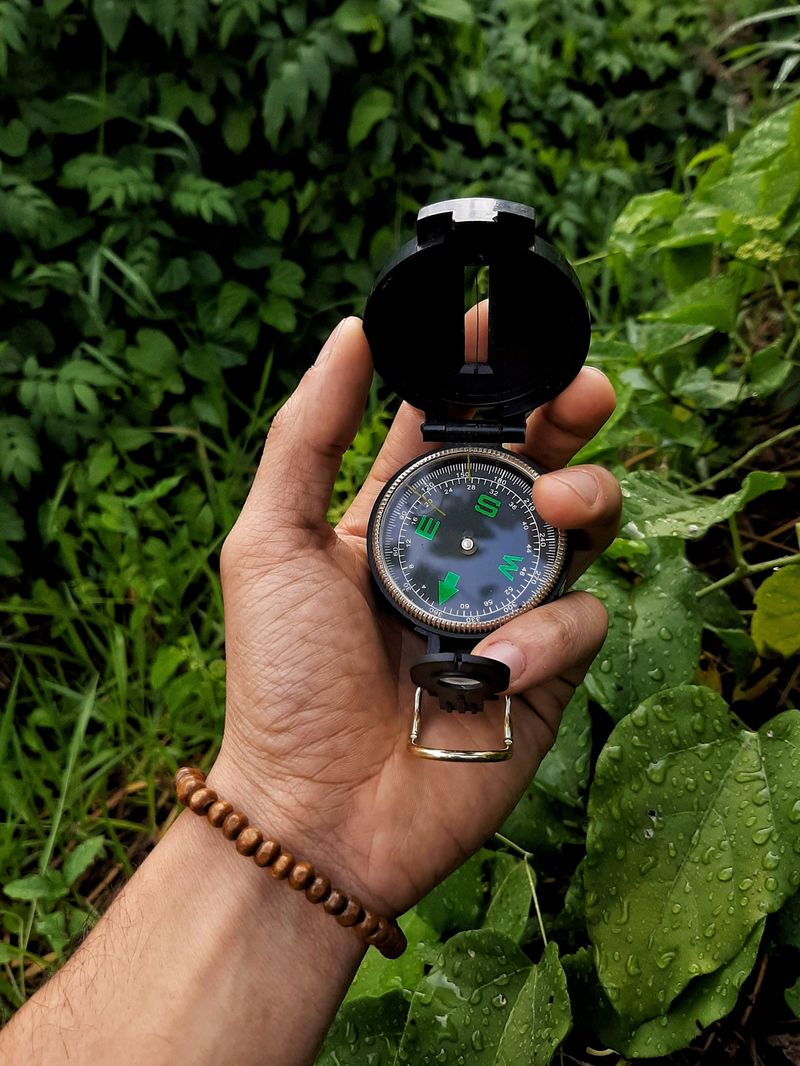
Geocaching turns the entire outdoor world into a giant puzzle board.
Using GPS coordinates, you navigate to a hidden container that someone else placed, sign the logbook, and sometimes swap a small trinket before replacing the cache exactly where you found it.
The problem-solving element goes deeper than simple navigation.
Many caches involve multi-stage puzzles, encrypted coordinates, or clever physical disguises that require genuine lateral thinking to crack.
Some caches have stumped seekers for years before someone finally figured them out.
With over three million active caches worldwide, there is almost certainly one within walking distance of wherever you live right now.
The hobby is free to start, encourages outdoor activity, and combines the satisfaction of puzzle-solving with the reward of genuine physical exploration.
13. Strategy Board Games

Go has only two types of pieces, but its complexity is so vast that computers only surpassed human champions in 2016.
Catan rewards reading social dynamics as much as resource management.
Terraforming Mars asks you to balance short-term efficiency against long-term engine building.
Strategy board games are exceptional for analytical minds because they reward deliberate thinking, planning under uncertainty, and the ability to model how other players might behave.
Each game is a contained system with rules you can learn, master, and eventually exploit creatively.
The board game community has exploded in recent years, with thousands of titles covering everything from economic simulation to abstract logic.
Websites like BoardGameGeek help you find games matched precisely to the kind of thinking you most enjoy.
14. DIY Building and Repair

Taking something apart to understand how it works is one of the purest expressions of curiosity there is.
DIY building and repair rewards that impulse by turning it into a practical skill that saves money and builds genuine confidence over time.
The analytical appeal lies in diagnosis.
When something breaks, you have to reason through what went wrong, test your hypothesis, and apply a fix.
That process mirrors scientific thinking closely, and the feedback loop is immediate.
Either the thing works again or it does not.
Start with small, low-stakes projects like fixing a leaky faucet, building a simple wooden shelf, or repairing a bicycle.
YouTube has tutorials for almost every conceivable repair, and communities like iFixit make electronics repair surprisingly approachable even for complete beginners.
15. Reading Nonfiction Deeply

Reading a book is one thing.
Reading it with a pencil in hand, marking arguments you agree with, questioning claims that seem shaky, and following footnotes into other books entirely, is something richer and more intellectually alive.
Deep nonfiction reading works best when you pick a subject and follow it relentlessly.
Start with one book on behavioral economics, then follow your curiosity to psychology, then to neuroscience, then to philosophy of mind.
Each book opens three more doors than it closes.
This habit builds the kind of broad, connected knowledge base that makes you genuinely interesting to talk to and genuinely better at reasoning across different domains.
The best part is that the only equipment you need is a library card and genuine curiosity.